
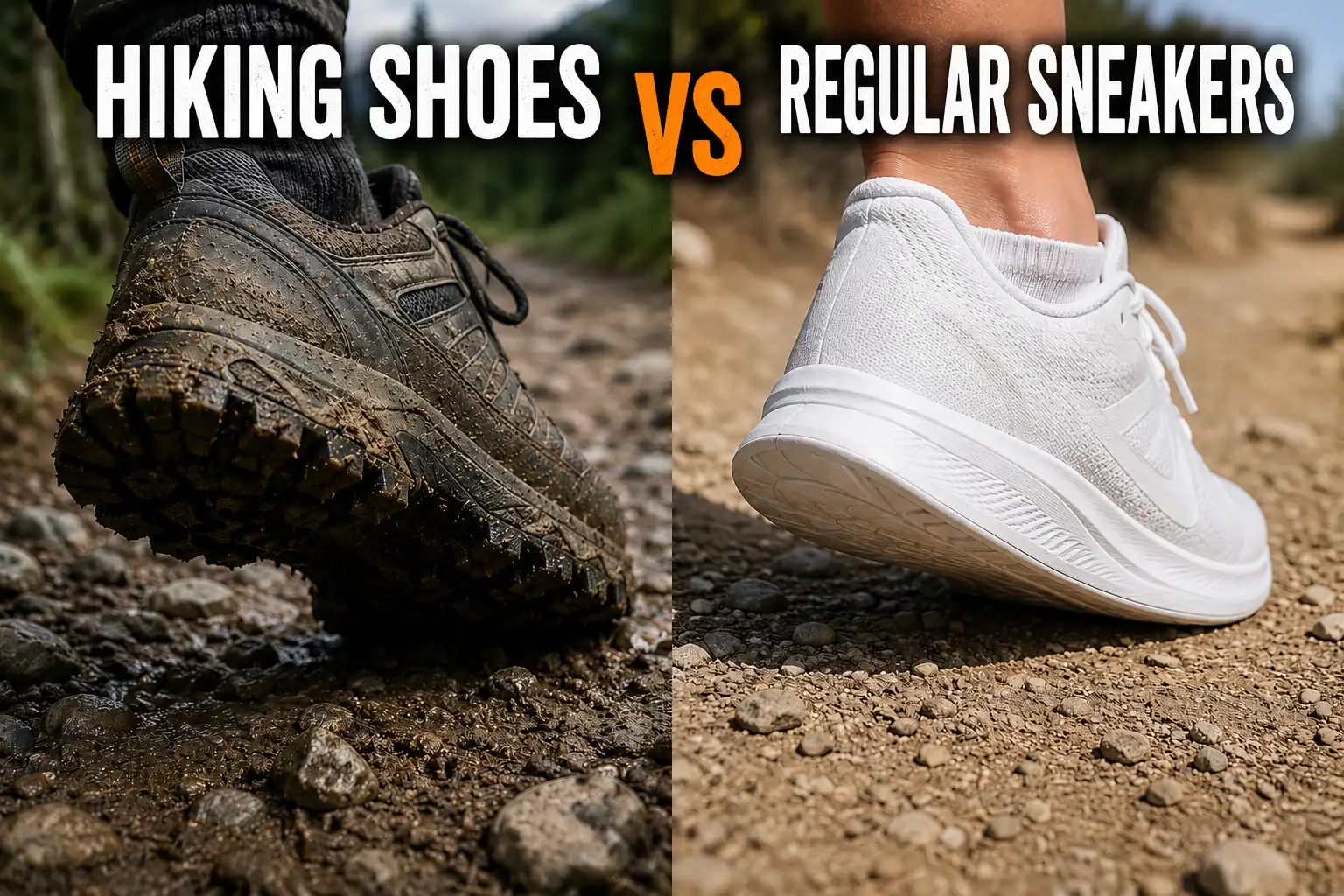
Here’s the thing. I get asked this question all the time: Can I just wear my everyday sneakers on the trail? It is a fair question, especially if you are just getting into hiking and do not want to spend a fortune on new gear right away.
When you are staring at your closet, trying to decide between your comfortable gym shoes and buying a dedicated pair of trail shoes, it can be confusing. Regular sneakers feel great on pavement, so why wouldn’t they work in the woods? Let me explain.
The truth is, the right footwear can make or break your hiking experience. Wearing the wrong shoes can lead to blisters, twisted ankles, or worse, a nasty slip and fall on a steep incline. In this guide, I will break down exactly how hiking shoes differ from your daily sneakers, and help you figure out exactly what you need for your next adventure.
Quick Answer
When comparing hiking shoes vs regular sneakers, the main differences come down to traction, protection, and durability. Hiking shoes feature deep rubber lugs for gripping dirt, mud, and rocks, along with stiff soles to protect your feet from sharp objects. Regular sneakers have flat, soft soles designed for smooth pavement and gym floors. If you are walking on flat, paved, or groomed paths, sneakers are fine. But if you are hitting uneven, rocky, or muddy trails, you absolutely need the grip and support of proper hiking shoes.
What Exactly Makes a Hiking Shoe Different?
To understand why regular sneakers often fail on the trail, you have to look at how both types of shoes are built. Manufacturers design footwear for very specific uses. Running shoes and casual sneakers are built for forward motion on hard, predictable surfaces. Hiking shoes are built for unpredictable terrain.
Here are the core components that set trail footwear apart:
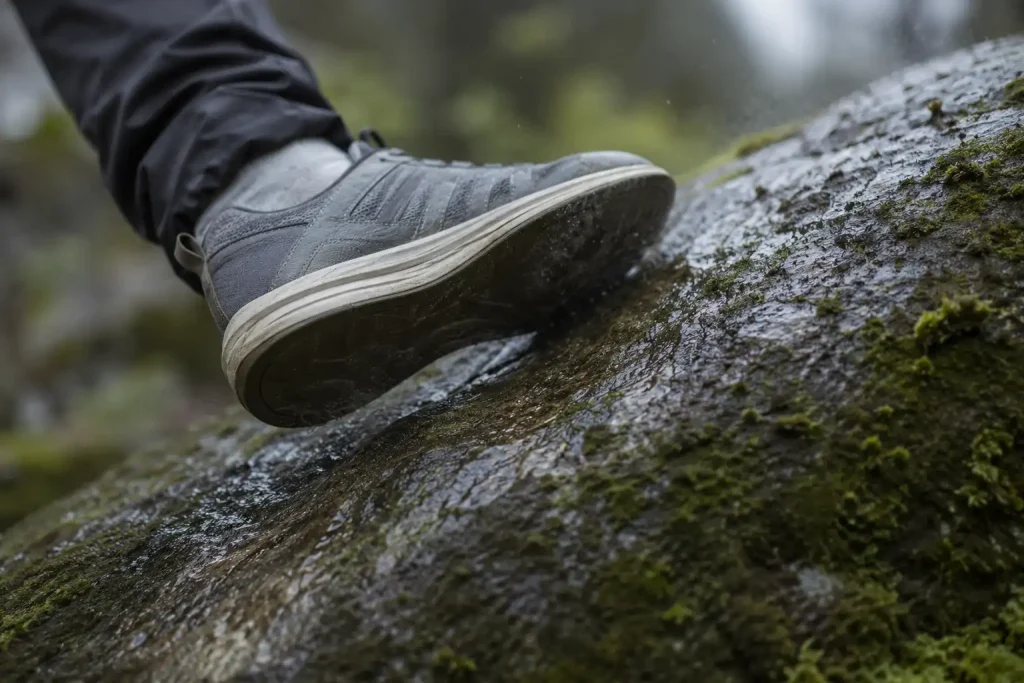
The Outsole (Traction): Hiking shoes have deep, aggressive rubber treads called “lugs.” These bite into loose dirt and mud. Sneakers usually have smooth, flat bottoms that easily slip on wet leaves or loose gravel.
The Midsole (Stiffness): Sneakers are squishy and flexible to absorb the shock of running on concrete. Hiking shoes have stiffer midsoles, often with a hidden “rock plate.” This stops your foot from bending painfully backwards when you step on a sharp rock or tree root.
The Upper (Durability): Sneakers are made from thin, highly breathable mesh to keep your feet cool at the gym. Hiking shoes use tougher, abrasion-resistant materials like thick nylon or leather to survive scraping against rocks and thorny bushes.
Toe Protection: Have you ever stubbed your toe on a rock? It hurts. Proper trail shoes have a thick rubber toe cap to protect your feet from hidden obstacles. Sneakers leave your toes completely vulnerable.
It really comes down to having the right tool for the job. You would not use a butter knife to chop firewood, and you shouldn’t use gym shoes to scale a rocky mountain trail.
How to Tell If You Need Hiking Shoes Instead of Sneakers
The good news is that you do not always need heavy-duty hiking boots or shoes. Your decision should be based entirely on the type of terrain you plan to hike and the current weather conditions.
If you are heading to a local city park with crushed gravel trails, your trusty sneakers will do just fine. But the moment the trail gets steep, wet, or technical, you cross a line where sneakers become a liability. According to outdoor safety guidelines by the American Hiking Society, proper footwear is one of the most critical elements of trail safety.
Here is a simple breakdown to help you decide what to wear for your specific hike:
Terrain & ConditionsCan I Wear Sneakers?Why or Why Not?Paved paths, flat dirt, city parksYesTerrain is predictable; sneakers provide enough comfort and flex.Well-groomed, dry dirt trails with minimal inclineUsually YesAs long as the trail is dry, sneakers offer enough basic grip.Steep hills with loose dirt or gravelNoSneakers will slide out from under you on the way down. You need lugs.Rocky, root-filled, uneven trailsNoSoft sneaker soles will let you feel every sharp rock, causing foot fatigue.Muddy, wet, or snowy conditionsNoSneakers offer zero traction in mud and will soak through immediately.
How to Transition to Proper Trail Footwear Step by Step
If you have decided it is time to upgrade from your daily sneakers to something trail-ready, the sheer number of options can feel overwhelming. Do you buy a trail runner? A hiking shoe? A full boot? Here is a practical, step-by-step guide to finding your perfect fit.
Assess your typical trail: Think about where you hike 80% of the time. If it is mostly dry, packed dirt, a lightweight trail running shoe might be perfect. If it is rocky and wet, you want a dedicated, structured hiking shoe.
Decide on waterproofing: Waterproof shoes (like those with Gore-Tex) keep puddles out but trap sweat in. Non-waterproof shoes breathe better and dry faster. Choose based on your local climate.
Shop at the end of the day: Your feet naturally swell throughout the day, just like they do on a long hike. Always try on hiking shoes in the late afternoon to ensure you don’t buy a pair that is too tight.
Test for toe room: Kick the wall gently when trying them on. If your toes hit the front of the shoe, they are too small. You need at least a thumb’s width of space at the front to prevent losing toenails on steep downhills.
Check the tread: Flip the shoe over. Look for varied, multi-directional rubber lugs. The deeper the lugs, the better they will handle mud and loose dirt.
Oscar’s Tip: Do not just stand in the shoes at the store. Walk up and down the test ramp or stairs. Pay close attention to your heel. If your heel slips up and down even a little bit, try a different lacing technique or a different shoe altogether. Heel slip equals blisters!
Common Mistakes to Avoid When Choosing Trail Shoes
Over the years, I have seen plenty of hikers miserable on the trail because of a few easily avoidable footwear mistakes. Learn from these common errors so you can keep your feet happy.
Wearing old, worn-out sneakers: Even if a trail is flat, an old sneaker with a bald tread is basically a slip-and-slide waiting to happen. If the tread is gone, leave them at home.
Ignoring your socks: You can have the best hiking shoes in the world, but if you wear standard cotton gym socks, you will get blisters. Cotton traps moisture. Always wear wool or synthetic hiking socks.
Buying shoes exactly your normal size: Hiking footwear usually requires sizing up by a half size to account for foot swelling and thicker hiking socks.
Assuming stiffer is always better: A super stiff mountaineering boot is overkill for a day hike in the woods. Match the stiffness of the shoe to the ruggedness of the trail.
Forgetting to break them in: Never take a brand new pair of rigid hiking shoes on a 10-mile trek. Wear them around your house and neighborhood first.
Expert Tips from Oscar for Happy Feet on the Trail
I have logged thousands of miles on the trail, and my feet have paid the price for my early mistakes. Making the jump from casual sneakers to dedicated trail footwear is a game-changer, but there are a few extra tricks you should know.
Learn the “Heel Lock” Lacing Method
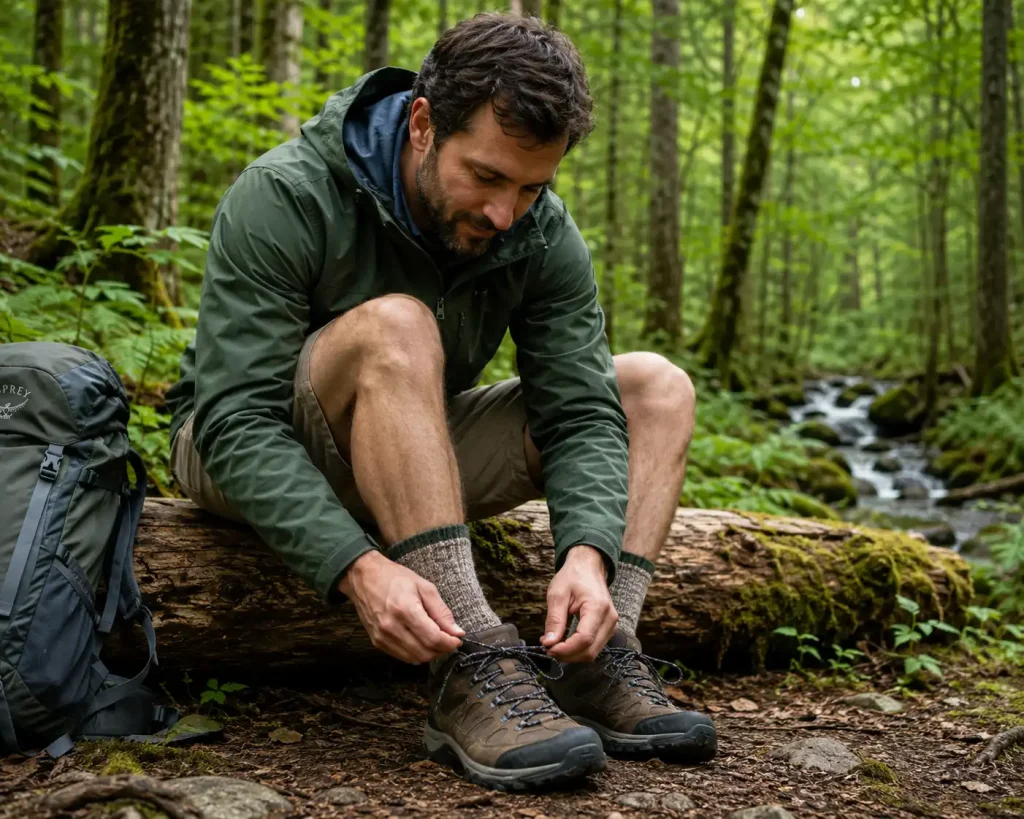
If you find that your foot slides forward in your hiking shoes when walking downhill, do not immediately throw the shoes away. Try the “heel lock” lacing technique (also known as a runner’s loop). This simple trick uses the top extra eyelets to pull your heel firmly into the back of the shoe, preventing both toe-bang and heel blisters.
Invest in Aftermarket Insoles
Here is a secret the outdoor industry does not advertise: the insoles that come with most hiking shoes are cheap and flimsy. If your arches ache after a few miles, rip those factory insoles out and replace them with a supportive pair designed for your specific arch height. It makes a massive difference.
Carry a Blister Kit
Even with the perfect hiking shoe vs regular sneaker comparison in mind, and the best shoes on your feet, blisters can still happen. Friction, sweat, and dirt are a tough combination. I never hit the trail without a small kit containing moleskin, medical tape, and an alcohol wipe. The moment you feel a “hot spot” forming, stop and tape it. Do not wait for it to become a blister.
For more details on what to pack alongside your blister kit, check out my guide on essential day hiking gear to ensure you are fully prepared.
Key Takeaways
Regular sneakers are fine for flat, paved, or well-maintained dry paths, but lack the grip needed for real trails.
Hiking shoes provide deep rubber lugs for traction, protecting you from slips and falls on loose or wet terrain.
Stiff midsoles in trail footwear protect your feet from sharp rocks and roots that would bruise your feet in sneakers.
Always size up slightly when buying hiking shoes to accommodate foot swelling and thick hiking socks.
Ditch the cotton socks; pair your trail shoes with merino wool or synthetic socks to prevent blisters.
Frequently Asked Questions
Can I wear running shoes for hiking?
Standard road running shoes are not ideal for hiking because they lack traction and durability. However, “trail running shoes” are excellent for hiking. They combine the lightweight feel of a sneaker with the aggressive tread and protection of a hiking shoe.
Are hiking shoes heavier than regular sneakers?
Yes, hiking shoes are generally heavier. They use thicker, more durable materials, dense rubber outsoles, and protective toe caps. This extra weight is a worthwhile trade-off for the added stability and protection they provide on rough terrain.
Do I really need waterproof hiking shoes?
Not always. Waterproof shoes are great for muddy, wet, or snowy climates. But if you hike in hot, dry environments, non-waterproof shoes are better because they are more breathable and dry out much faster if your feet sweat.
How long do hiking shoes typically last compared to sneakers?
A good pair of hiking shoes should last between 300 and 500 miles of trail use. Because trails are rougher, they take more abuse than a sneaker walking on a treadmill. The outsoles will usually wear flat before the upper materials fail.
Why do my feet hurt when wearing sneakers on a rocky trail?
Regular sneakers lack a “rock plate” and have very soft, flexible midsoles. Every time you step on a sharp rock or root, the shoe bends around it, putting localized pressure on the bottom of your foot. Over miles, this causes deep bruising and foot fatigue.
Is ankle support necessary for hiking?
Ankle support is highly debated. Traditional boots offer high ankle coverage, which helps prevent twisting. However, many modern hikers prefer low-cut hiking shoes or trail runners to build natural ankle strength, saving the high boots for carrying heavy backpacking loads.
Conclusion
So, what’s the final verdict on hiking shoes vs regular sneakers? It all comes down to where you plan to take your feet. If your idea of a hike is a casual stroll around a paved city reservoir, your favorite gym sneakers are perfectly adequate. There is no need to overcomplicate things.
However, if you are venturing out onto dirt trails with rocks, roots, mud, and elevation changes, proper trail footwear is not just an accessory—it is a safety necessity. Deep lugs will keep you upright, stiff soles will save you from foot bruising, and durable materials will survive the harsh outdoor environment. Trust me, investing in a solid pa

1 thought on “Hiking Shoes vs Regular Sneakers: Which Do You Really Need?”