
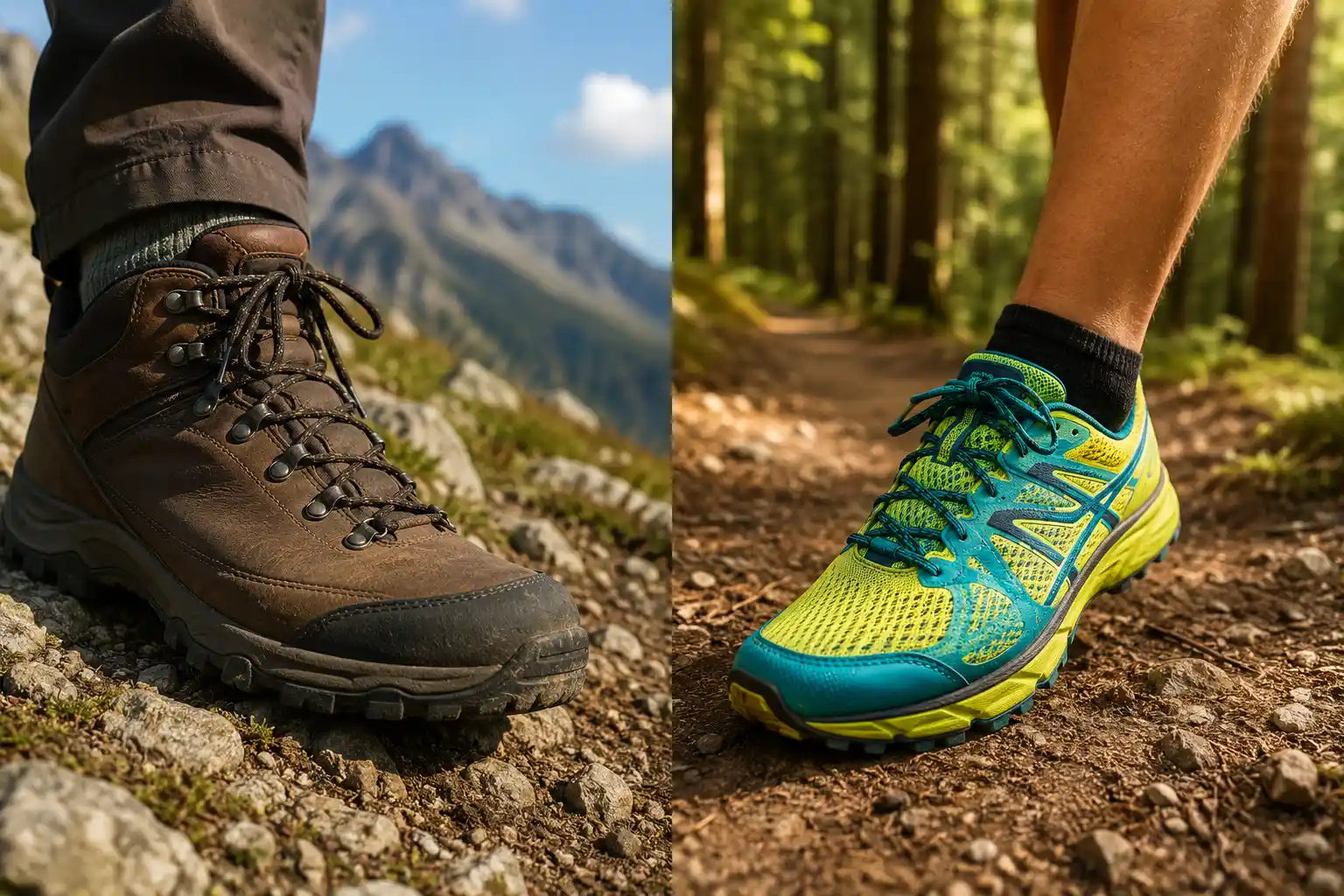
Picture this. You are standing in the gear shop trying to decide between hiking shoes vs trail running shoes. You just want your feet to feel comfortable on your weekend trips. But looking at the two options leaves you totally stuck. Which one is actually better for your hike?
Here’s the thing. I have asked myself this exact question more times than I can count. Over the years at OscarHikes.com, I have talked to hundreds of hikers facing this exact choice. The debate between traditional hiking footwear and modern trail runners is huge right now.
Let me explain the real differences between them. In this guide, we will break down traction, weight, durability, and comfort. By the end, you will know exactly what to put on your feet for your next adventure. Let’s get into it!
Quick Answer
The main difference between hiking shoes vs trail running shoes comes down to weight, foot protection, and overall durability. Trail running shoes are lightweight, highly breathable, and require zero break-in time, making them great for fast day hikes on smooth dirt trails. Hiking shoes are heavier, offer stiffer sole protection against sharp rocks, and last much longer under heavy backpacks. Choose trail runners for speed and agility, but pick hiking shoes for rough terrain, heavy loads, and long-term durability.
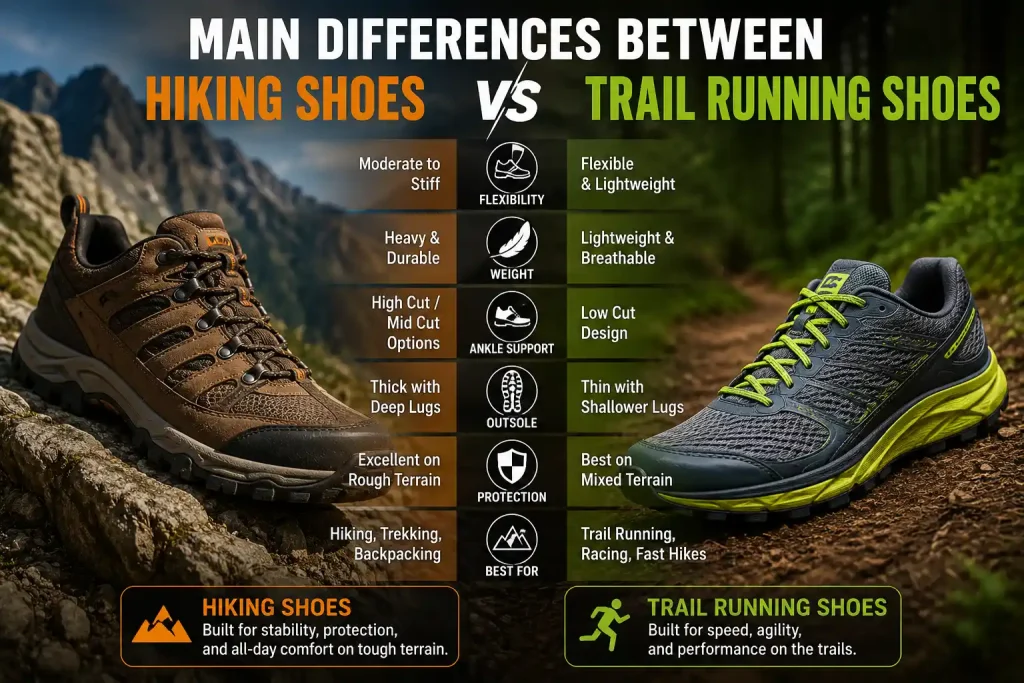
What Are the Main Differences Between Hiking Shoes vs Trail Running Shoes?
To make the right choice, we need to look at how these shoes are built. Both styles are designed to grip dirt, rocks, and mud. However, they are built with very different goals in mind.
Let’s look at trail running shoes first. Think of these as heavy-duty running sneakers. Designers take the soft, bouncy cushion of a street running shoe and glue deep rubber lugs to the bottom for outdoor traction.
Here is what makes trail running shoes stand out:
- Super lightweight build: They save your leg muscles from lifting extra weight with every single step you take.
- High breathability: Most are made of flexible nylon mesh, meaning sweaty feet cool off and dry out fast.
- Instant comfort: You can take them straight out of the box and hit the trail immediately without getting blisters.
- Flexible soles: Your foot bends naturally over tree roots and rounded stones.
Now, let’s talk about traditional hiking shoes. These are low-cut versions of classic hiking boots. They drop the tall, stiff ankle collar of a boot but keep the rigid, protective lower frame.
Here is what traditional hiking shoes bring to the table:
- Tough toe caps: Thick rubber bumpers protect your toes when you accidentally kick a hidden boulder.
- Stiff midsoles: They stop the bottoms of your feet from feeling the sharp edges of jagged rocks.
- Longer lifespan: The dense rubber and thick leather or synthetic uppers survive hundreds of miles of trail abuse.
- Better weather resistance: Many feature built-in waterproof membranes to keep morning dew and shallow mud out.
How to Tell Which Shoe You Need for Your Hike
So what should you do when planning your next trip? You do not need to pick one shoe style forever. Instead, you should match your footwear to the specific trail conditions you expect to face.
The good news is that answering three simple questions will make your decision easy.
First, how heavy is your backpack? If you are carrying a simple day pack with water and snacks, trail runners feel amazing. But if you are strapping on a heavy multi-day pack, your feet need extra help. A stiffer hiking shoe gives your arches the firm support they need to carry extra weight without cramping.
Second, what does the ground look like? Smooth dirt forest paths are practically made for trail runners. However, if your route is covered in loose gravel, sharp shale, or thick thorny brush, a hiking shoe acts like armor for your feet. According to outdoor safety guidelines from the National Park Service, wearing sturdy, appropriate footwear is one of the easiest ways to prevent common trail injuries.
Third, how fast do you want to move? Trail runners encourage a quick, nimble stride. Hiking shoes favor a steady, deliberate walking pace.
Let’s compare the key specs side by side:
| Feature | Trail Running Shoes | Hiking Shoes |
|---|---|---|
| Average Weight (Per Pair) | 1.2 to 1.6 lbs | 1.8 to 2.5 lbs |
| Break-In Period | None (Ready instantly) | 1 to 2 weeks |
| Expected Lifespan | 300 to 500 miles | 500 to 800+ miles |
| Water Protection | Usually quick-drying mesh | Often waterproof treated |
| Best Backpack Weight | Under 20 pounds | 20 to 40+ pounds |
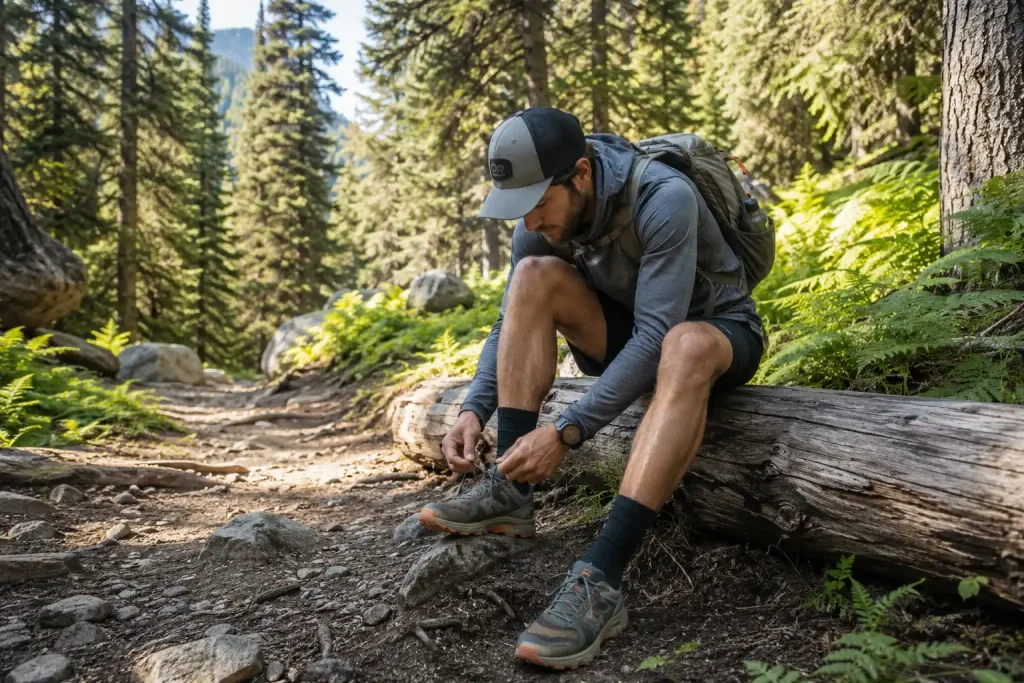
How to Test and Fit Your Outdoor Shoes Step by Step
Buying trail footwear is not like buying casual street sneakers. Your feet naturally swell and expand when you walk for hours. If you buy the wrong size, you will end up with painful blisters before lunchtime.
Follow these simple numbered steps to test any hiking shoe or trail runner before you buy:
- Shop in the late afternoon: Your feet expand throughout the day. Trying shoes on at 4 PM gives you a much truer fit than trying them on at 9 AM.
- Bring your actual hiking socks: Never test trail shoes with thin cotton gym socks. Put on the exact merino wool socks you plan to wear on the mountain.
- Check the thumb space: Slide your foot in and stand up straight. You want about a thumb’s width of empty space between your longest toe and the front of the shoe.
- Test the incline ramp: Find the wooden test ramp at the gear shop. Walk downhill and tap your toes firmly. If your toes slam into the front of the shoe, go up a half size.
- Walk on hard edges: Step on the edge of a bench or a fake rock display. Feel the bottom of your foot. If the sole folds completely over the edge, it might be too soft for jagged mountain rocks.
To get the absolute best performance out of your new footwear, you will want to pair them with a few basic trail accessories. You can also pair them with our favorite trekking poles to save your knees on steep descents.
| Gear Item | Why You Need It |
|---|---|
| Merino Wool Socks | Prevents friction blisters and manages sweaty feet much better than cotton. |
| Aftermarket Insoles | Factory shoe inserts are usually cheap foam. Supportive insoles cradle your arches. |
| Low-Cut Gaiters | Stops tiny pebbles, sand, and twigs from falling into low-cut trail runners. |
| Blister Tape | Stops hot spots from turning into open wounds during long mileage days. |
Common Mistakes Hikers Make When Choosing Shoes
I have made plenty of gear mistakes in my life. You do not have to repeat them. When shopping for outdoor footwear, watch out for these common traps:
- Assuming waterproof is always better: Waterproof membranes trap body heat and sweat. If water floods in over the ankle collar during a creek crossing, waterproof shoes take days to dry out. For hot, dry summer hiking, non-waterproof mesh is almost always better.
- Wearing brand new shoes on a long trip: Even flexible trail runners need a short test drive. Never take unworn footwear on a ten-mile wilderness loop.
- Buying based on color or looks: A stylish shoe that pinches your pinky toe will turn your weekend into a nightmare. Proper fit always beats fashion.
- Ignoring shoe drop: Trail runners often have a flat heel-to-toe drop (zero to 6mm) compared to traditional hiking shoes (8 to 12mm). Switching to a zero-drop shoe too fast can make your calf muscles ache.
- Holding onto worn-out pairs: The inner foam inside trail runners compresses over time. Even if the outside fabric looks fine, dead foam leads to sore knees and arch pain.
If you want to research how footwear materials impact walking comfort, Consumer Reports provides excellent independent testing breakdowns on shoe support and outsole durability.
Expert Tips from Oscar
Over the miles, I have picked up a few practical tricks that keep my feet happy. Here is my personal advice for getting the most out of your trail footwear.
Oscar’s Tip: Always size up by half a size compared to your everyday office shoes. When you hike downhill for three miles straight, your gravity pulls your feet forward. That extra half-size of room is the only thing standing between you and black, bruised toenails.
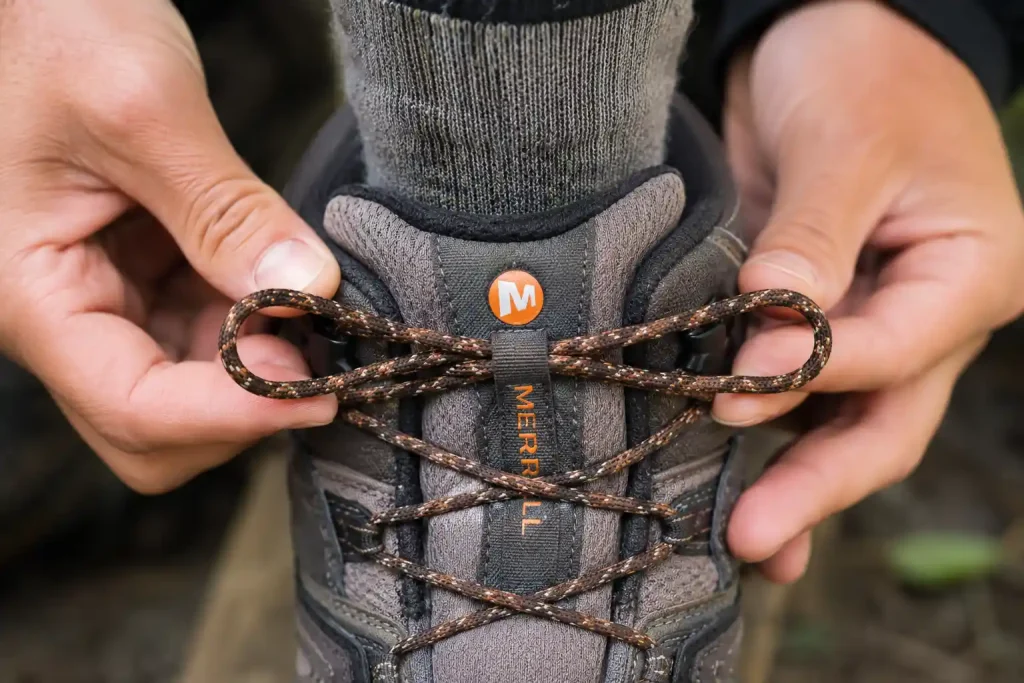
Oscar’s Tip: Learn the “heel lock” lacing trick. If your heel slips up and down while walking, do not tie your whole shoe super tight. Instead, use the extra top eyelets to create a small loop on each side, run your laces through them, and pull down. It locks your heel in place instantly.
Oscar’s Tip: Wash your shoes with plain garden hose water and a soft brush after a muddy hike. Leaving caked-on mud dries out the fabric and causes the seams to split prematurely. This simple five-minute wash will easily add 100 miles to the life of your shoes.
Oscar’s Tip: Listen to your joints. If your lower back or knees start aching after a normal, familiar hike, flip your shoes over and inspect the bottom. Once the rubber tread lugs wear flat, your shoes lose their shock absorption. That is your body telling you it is time to retire them.
Key Takeaways
- Trail running shoes are light, highly breathable, and require zero break-in miles.
- Hiking shoes offer superior toe protection, stiffer rock protection, and longer durability.
- Your total backpack weight and rugged trail terrain should dictate which shoe you wear.
- Always try on trail footwear in the late afternoon wearing your actual wool hiking socks.
- Breathable mesh shoes dry out much faster than waterproof shoes after creek crossings.
Frequently Asked Questions
Can you use trail running shoes for everyday hiking?
Yes, absolutely. Many day hikers and thru-hikers now wear trail running shoes for all their trips. They are comfortable, lightweight, and provide excellent traction on dirt trails.
Do hiking shoes prevent ankle sprains better than trail runners?
Low-cut hiking shoes do not offer significantly more ankle support than low-cut trail runners. True ankle support comes from tall hiking boots that lace up tightly over the ankle bones. However, the wider, stiffer platform of a hiking shoe can help keep your foot more stable on uneven rocks.
How long do trail running shoes last compared to hiking shoes?
Trail running shoes generally last between 300 and 500 miles before the foam cushioning wears out. Sturdy hiking shoes usually last between 500 and 800 miles or more because they use denser materials and tougher rubber outsoles.
Are trail running shoes good for hiking in the rain?
Non-waterproof trail runners will get wet instantly in the rain, but they also drain and dry out very quickly. If you are hiking in cold, continuous rain or slush, a waterproof hiking shoe will keep your feet warmer and drier.
Can I wear trail running shoes on pavement?
You can walk or run on pavement in trail running shoes, but it is not ideal. The soft rubber lugs designed to grip dirt will wear down very quickly on hard asphalt and concrete.
Should beginners buy hiking shoes or trail runners?
Beginners doing well-maintained day hikes often love trail running shoes because they feel just like normal sneakers. If you plan to carry heavy packs or explore rocky, rugged mountain trails right away, traditional hiking shoes are a safer bet.
Conclusion
At the end of the day, there is no single overall winner in the battle of hiking shoes vs trail running shoes. The best shoe is simply the one that matches your unique foot shape, your backpack weight, and your local trail conditions.
If you love moving fast, feeling light on your feet, and exploring well-cleared dirt paths, grab a pair of trail running shoes. But if you haul heavy loads, scramble over sharp rock piles, or want a tough shoe that lasts for seasons, traditional hiking shoes are worth every penny.
So what is your next step? Head to your local outdoor shop this afternoon, put on your favorite wool socks, and test both styles side by side. For more advice on building your complete trail kit, check out our guide to choosing the best hiking gear for beginners. See you out on the trail!

1 thought on “Hiking Shoes vs Trail Running Shoes: Which Should You Choose?”