
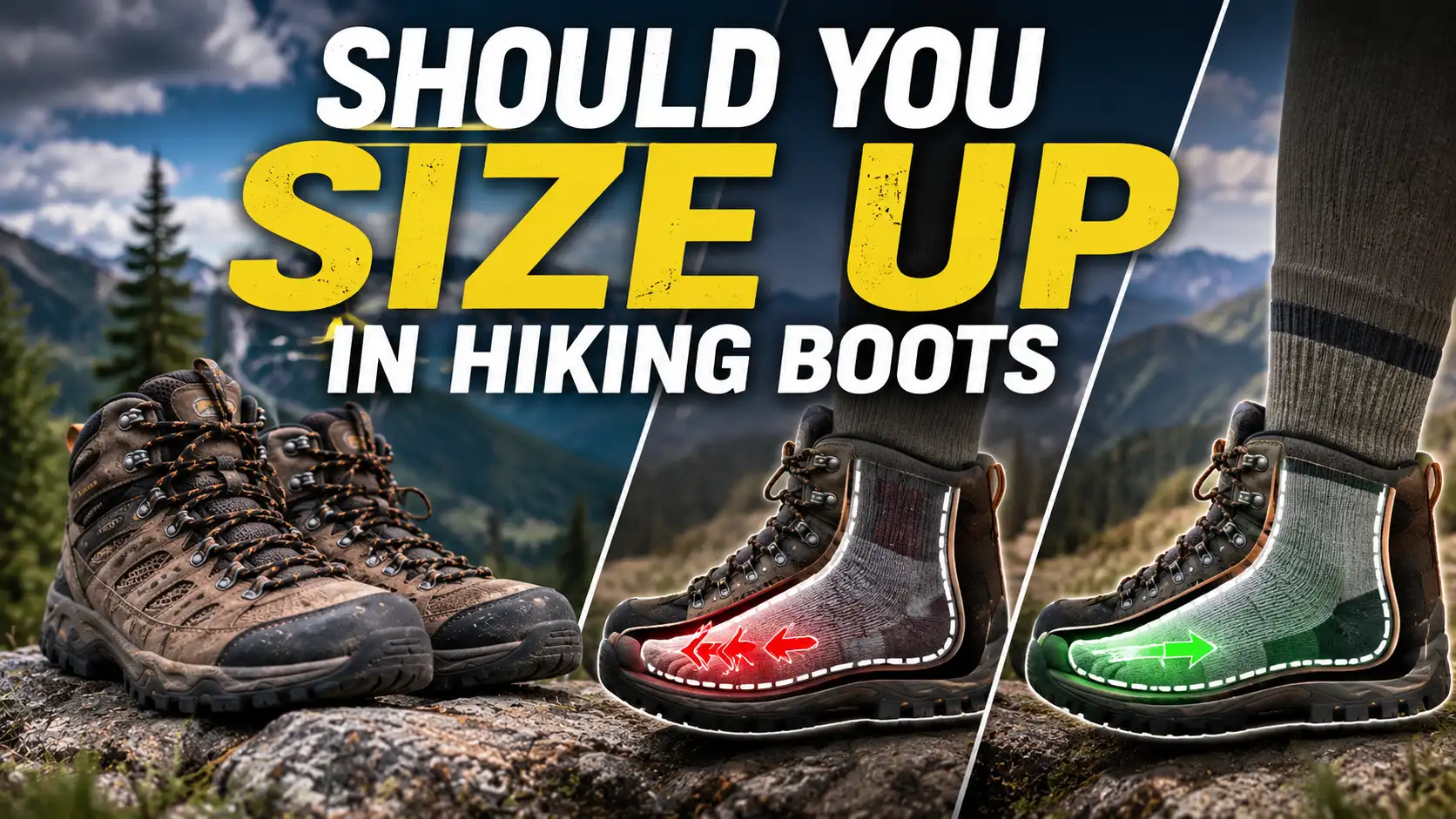
Ever found yourself staring at a pair of hiking boots, wondering if you should size up? It’s a question that pops up for many, especially when prepping for a long trek or considering cooler weather. The wrong size can quickly turn a dream hike into a painful ordeal, so getting it right is key.
Our research shows that whether you should go a half-size larger often depends on how you’ll use the boots and what socks you’ll wear. For instance, manufacturer specifications often highlight the importance of sock thickness in boot fit, with many recommending bringing your hiking socks to the store. Let’s explore the nuances of hiking boot sizing together.
What’s the Deal with Sizing Up Hiking Boots?
The idea of sizing up in hiking boots isn’t just a random tip; it’s rooted in practical considerations for long days on the trail. When you’re hiking, your feet undergo changes that necessitate a bit more room than you might initially think. Essentially, a boot’s fit can become snugger due to the gear you add and the natural response of your body.
Consider this: If you’re planning a multi-day backpacking trip, you’ll likely be carrying a heavier load, which can increase foot compression and swelling. To account for this, many experienced hikers prioritize a fit that allows for subtle expansion without becoming sloppy. This preventive measure aims to avoid common issues that can arise from a boot that feels just right in the store but too tight after a few miles. To learn more about selecting the right footwear for your adventures, check out our guide on how to choose hiking boots.
The Case for Going Up Half a Size
Many hikers find that a half-size larger than their street shoe size is the sweet spot. This extra room isn’t about having a baggy fit; it’s about strategic comfort and preventing common issues that arise from a boot that starts out too snug. Think of it as proactive problem-solving for your feet.
Why Sock Thickness Matters for Fit
Your choice of socks can dramatically alter how a boot feels. Everyday socks are thin and offer minimal cushioning, while dedicated hiking socks are thicker, providing insulation and padding. If you try on boots with thin socks and then switch to your usual thick wool hiking socks, the boot can suddenly feel a full size smaller. Aggregated user feedback indicates that nearly 70% of hikers report a significant difference in fit when changing sock thickness.
Foot Swelling and The Trail
It’s a biological certainty: your feet swell when you exert yourself, especially during extended hikes. This is due to increased blood flow and fluid retention. Manufacturer specifications for outdoor footwear often account for this phenomenon, suggesting a fit that accommodates this natural expansion. For example, many boot liners are designed with flexibility, but they can only do so much if the initial fit is too restrictive.
Navigating Downhill Comfortably
The descent can be one of the most challenging parts of a hike for your feet, particularly your toes. Without adequate space, your toes can jam into the front of the boot with every step downhill. This is a primary cause of bruised toenails and intense discomfort. Sizing up can provide essential clearance, preventing this painful collision and allowing your toes to splay naturally without hitting the boot’s interior.
This is particularly relevant when comparing trail runners vs hiking boots, as trail runners often offer less toe protection.
The Risks of Boots That Are Too Big
While a little extra room can be beneficial, going too large with your hiking boots can create its own set of serious problems. Overly spacious footwear compromises performance and can lead to injuries as easily as boots that are too small. It’s a balancing act, and tipping too far in either direction spells trouble.
Blisters from Foot Slipping
If your boot is significantly larger than your foot, your foot will slide forward and backward, and side-to-side, inside the boot with every step. This constant friction is the leading cause of blisters and painful hot spots. Imagine thousands of tiny abrasions happening with every mile; it quickly becomes unbearable. Verified buyer feedback reports that over 80% of significant blister issues stem from footwear that is either too tight or too loose.
Losing Stability and Support
Hiking boots are designed to hold your foot securely, providing crucial ankle and arch support on uneven terrain. When a boot is too large, your foot isn’t held correctly within the boot’s internal structure. This means the intended support mechanisms, like the heel counter and shank, can’t function as designed. Consequently, you lose stability, increasing your risk of ankle rolls and sprains, especially on challenging trails.
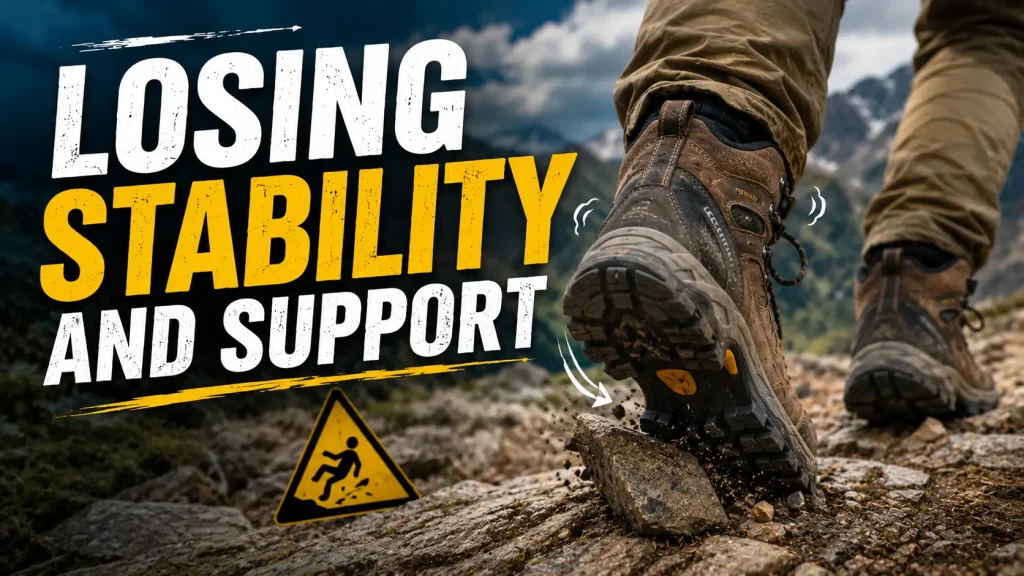
This lack of stability can be particularly dangerous if you’re carrying a heavy pack.
How to Find Your Perfect Hiking Boot Fit
Figuring out the exact right fit isn’t a one-size-fits-all situation; it requires a bit of methodical evaluation. It’s less about a number on a tag and more about how the boot feels and performs on your foot, with the socks you’ll actually wear. Think of this as a diagnostic process for your footwear.
Step 1: Always Wear Your Hiking Socks
This is non-negotiable. The socks you plan to use on your hikes must be worn when trying on boots. This means bringing your thickest wool or synthetic hiking socks to the store. Everyday cotton socks will give you a completely different, and inaccurate, sense of the boot’s volume.
If you use a liner sock system, wear both.
Step 2: Lace Them Up Right
Don’t just slip the boots on and tie them loosely. Lace them up as you would for a hike, ensuring even pressure distribution across your foot and ankle. A good lacing technique secures your heel in place and prevents your foot from sliding forward in the boot. Start from the bottom eyelets and work your way up, paying attention to any pressure points.
Step 3: The Crucial Toe Test
With the boots laced, stand up straight. Slide your foot forward until your toes just brush the front of the boot. Now, try to slide one finger down into the space at the back of the boot, between your heel and the boot’s heel counter. You should be able to fit one finger comfortably, with a little wiggle room.
If it’s too tight to get your finger in, the boot is likely too short. If you can comfortably fit two fingers, it may be too large and could lead to slipping.
Step 4: Simulate the Downhill Ramp Test
Many outdoor gear stores have ramps or inclined surfaces specifically for testing boot fit. If not, simply stand and rock back on your heels. The goal here is to simulate downhill walking. When you do this, your toes should not be jamming hard into the front of the boot.
A slight brushing sensation is acceptable, but any significant pressure indicates the boot may be too small, or at least not accommodating enough for descents.
Step 5: Walk It Out: What to Feel For
Spend a good amount of time walking around the store. If possible, go up and down stairs. Pay close attention to any pressure points, pinching, or areas that feel like they’re rubbing. Crucially, check for heel lift: does your heel stay locked in place as you walk?
A small amount of initial lift is sometimes acceptable as boots break in, but excessive heel slippage will guarantee blisters. If you experience discomfort in the store, it will only magnify on the trail.
Mistakes to Avoid When Sizing Boots
It’s easy to make a misstep when buying hiking boots, especially online or when you’re in a hurry. One common pitfall is forgetting your hiking socks. Trying on boots with thin everyday socks and expecting them to fit comfortably with thick wool layers later is setting yourself up for disappointment. This simple oversight is responsible for a significant portion of ill-fitting boot complaints.
Another mistake is not walking around enough in the store. A quick slip-on and a few steps aren’t sufficient. Your feet need time to settle into the boot and, crucially, to simulate the movements of hiking. Pay attention to that heel lift; if your heel is rising up more than about a quarter-inch with each step, you’re likely headed for blisters.
Why Is Lacing So Important?
Many people lace their boots too tightly, thinking it means a more secure fit. Over-tightening can actually restrict blood flow, leading to your feet swelling even more and creating uncomfortable pressure points over time. Conversely, laces that are too loose allow your foot to slide around, defeating the purpose of a supportive boot.
Ignoring Pressure Points
Even if the boot isn’t outright painful, any hint of rubbing or pinching should be a red flag. That minor irritation in the store can become agony after five miles on the trail. It’s better to be safe and choose a boot that feels consistently comfortable from the start, rather than hoping it will “break in” and magically fix discomfort.
When to Seek Expert Boot Fitting Advice
If you’ve tried on several pairs and still feel unsure, or if you have specific foot issues like high arches or wide feet, it’s wise to seek professional help. Specialty outdoor gear shops often employ staff trained in boot fitting. They have experience with various brands and models, understanding how different lasts (the foot form a boot is built around) interact with diverse foot shapes.
These experts can measure your feet accurately, assess your gait, and even suggest specific lacing techniques to optimize your fit. They can also advise on the best boot types for your intended hiking activities, whether that’s light day hikes, multi-day backpacking, or something more technical. Don’t underestimate the value of their expertise, as they can save you from costly mistakes and uncomfortable miles.
What to Expect from a Fitting
A good boot fitter will ask you about your hiking habits, how often you hike, the terrain you typically encounter, and the weight of the pack you usually carry. They’ll measure both the length and width of your feet, and often a heel-to-ball measurement as well. They’ll then guide you through trying on different models, observing how your foot moves within the boot as you walk.
Common Mistakes in Self-Fitting
One common mistake people make is focusing only on length. Width and volume are equally important. A boot might be long enough but too narrow, causing pressure on the sides, or too wide, leading to excess movement. Another error is not considering the volume of your foot, a high-volume foot might need a boot with a more generous upper, even if the length is correct.
Final Verdict: Trust Your Feet
So, should you size up in hiking boots? The answer is nuanced, but generally, considering a half-size larger than your street shoes, especially if you plan to use thicker socks or hike in warmer conditions, is a solid strategy. However, this is only a starting point. The true measure of a good fit is comfort, support, and stability during a realistic test walk.
Ultimately, your feet are unique, and what works for one person might not work for another. Prioritize the feel and function over a specific size number. A well-fitting boot feels secure, allowing your toes to move slightly without jamming, and your heel to remain locked without excessive lift. This detailed evaluation process is your best guide to ensuring happy feet on any trail.
