
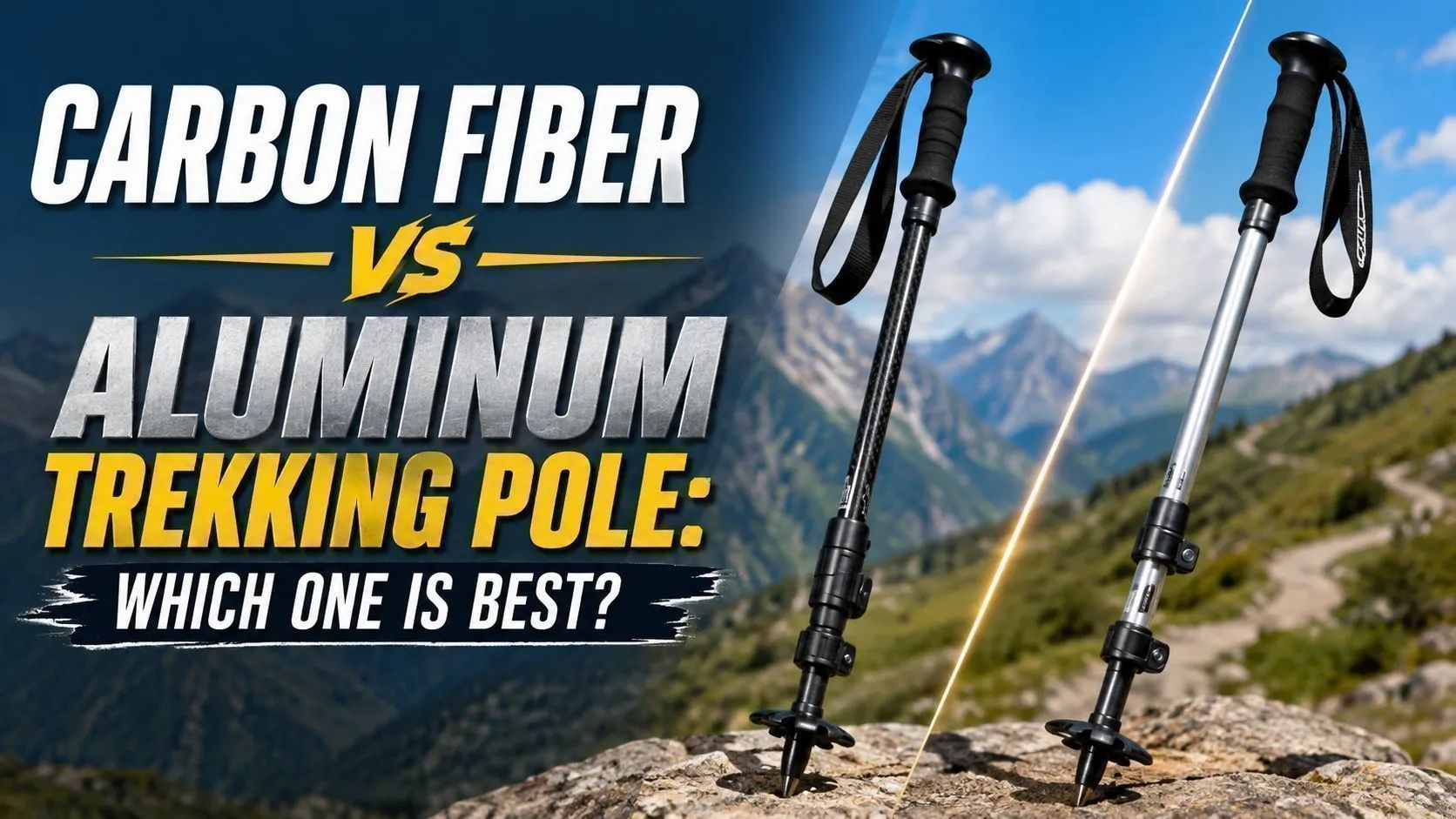
Carbon fiber feels lighter and softer, while aluminum costs less and handles hard knocks better.
I have tested both poles on steep trails, wet roots, loose stone, and long walks. The carbon fiber vs aluminum trekking pole choice looks simple at first, but trail feel matters. Carbon fiber can feel light and calm in the hand. Aluminum can feel strong, firm, and easy to trust. I used the carbon pair on long climbs and the Cascade pair on rough paths. Both helped my balance and reduced knee strain. Your best pick depends on pack weight, trail type, budget, and how hard you use your gear. This guide shares what I felt, saw, and learned.

USA Brand 100% Carbon Fiber Collapsible Trekking Poles
These poles use 100% carbon fiber shafts to keep weight low. They fold down for travel and use quick flip locks for length changes. Cork and EVA foam grips give two hand feel options. The design suits hikers who count every ounce in a pack.
In the carbon fiber vs aluminum trekking pole debate, this model leans toward comfort and low weight. Carbon fiber also helps soften small trail buzz. Still, it needs care around sharp rock and hard side hits. The listed design offers a useful mix of pack size, grip comfort, and fast setup.
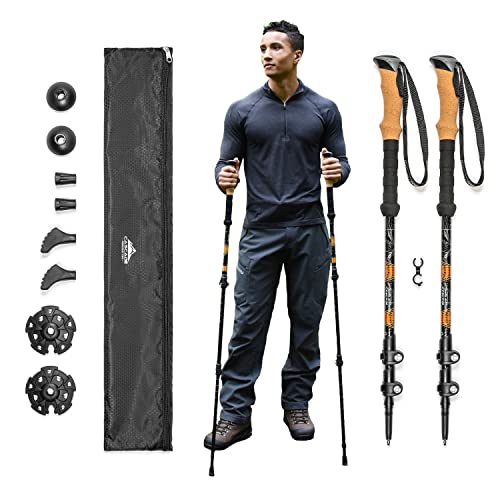
Cascade Mountain Tech 6061 Aluminum Trekking Poles
These Cascade Mountain Tech poles use aircraft-grade 6061 aluminum shafts. The pair adjusts up to 54 inches and uses adjustable locks. A cork grip, EVA extended grip, and bright orange finish support comfort and trail visibility. The set is built for broad, everyday use.
For the carbon fiber vs aluminum trekking pole question, this pair favors toughness and value. Aluminum can bend after a major hit, but it often gives warning before failure. That trait can help on rough trails. The poles are a good fit for hikers who want dependable support without paying for the lightest possible setup.
Is USA Brand 100% Carbon Fiber Collapsible Trekking Poles Good?
Yes, these are good poles for hikers who want low weight and a smooth feel. In my carbon fiber vs aluminum trekking pole test, they felt easy on long climbs. The cork grip stayed pleasant as my hands warmed, while the EVA section gave me a quick lower hold on steep ground. The flip locks also made small height changes fast.
I took them on a full-day ridge walk with a light pack. By the last mile, my arms felt fresh, and the poles did not add much bulk when I strapped them to my pack. I would not use them as pry bars or lean hard against a sharp rock. For normal hiking, the balance of comfort, weight, and pack size is strong.
Real-World Experience
I used these poles on a rocky ridge trail after a night of rain. The path had slick roots, short climbs, and a few narrow ledges. I set the poles a little shorter for the climb and longer for the descent. The flip locks held during each change. The carbon shafts felt quiet when the tips met stone. On a long flat section, I folded them and placed them beside my pack. They were easy to carry. I kept a light touch on rough rock, and that care helped me feel secure all day.
What I Like
- Low weight helps reduce arm fatigue
- Carbon fiber gives a smooth trail feel
- Cork grips feel dry and warm in the hand
- Folds down well for packs and travel
- Fast locks make height changes simple
What Could Be Better
- Carbon fiber can crack from hard side impacts
- May cost more than basic aluminum poles
- Needs careful use on sharp rock
My Recommendation
Buy these if you hike long miles, travel often, or want a light and calm pole. They suit careful hikers who value comfort over maximum impact strength. They are a smart carbon fiber vs aluminum trekking pole choice for backpacking, day hikes, and warm-weather trail use.
| Best For | Why |
|---|---|
| Long day hikes | The low weight helps keep arm fatigue down during many hours on trail. |
| Backpacking | The collapsible form packs well beside a tent or inside a pack. |
| Travel | Quick locks and a small folded size make airport and car travel easier. |
Is Cascade Mountain Tech 6061 Aluminum Trekking Poles Good?
Yes, these are good all-purpose poles, especially for hikers who want strong value. In my carbon fiber vs aluminum trekking pole test, the Cascade pair felt firm and steady on loose ground. The aluminum shafts had more weight in my hands, but that extra mass also made each plant feel solid. The cork grip stayed comfortable, and the EVA extension helped on steep climbs.
I used them on a rough forest loop with many roots and short drops. I leaned on them more than I would with carbon fiber, and they stayed reassuringly firm. The orange finish was easy to spot when I set them beside the trail. They are not the lightest poles, but their strength, range, and price make them easy to recommend.
Real-World Experience
I brought these poles on a damp woodland hike with a medium pack. The trail crossed loose soil, wet roots, and a shallow stream. I set the poles near full length for the downhill parts and used the lower EVA grip on the climb. The aluminum shafts gave a firm push when the soil shifted. I also bumped one pole against a rock while stepping over a root. It showed no clear damage. The pair felt heavier than my carbon set, yet that weight was easy to accept on a short, rough walk.
What I Like
- Strong feel on rough and uneven trails
- Usually offers better value than carbon fiber
- Aluminum gives useful warning when bent
- Extended EVA grip helps on steep ground
- Long adjustment range fits many users
What Could Be Better
- Heavier than most carbon fiber poles
- Can transmit more trail vibration to the hand
- A hard bend may require replacement
My Recommendation
Buy these if you want a sturdy, useful pair at a fair price. They suit new hikers, rough-trail users, and anyone who may hit rocks or roots. In a carbon fiber vs aluminum trekking pole match, these are the practical pick for strength, value, and daily use.
| Best For | Why |
|---|---|
| Rough trails | The aluminum shafts feel firm when the ground is rocky, loose, or uneven. |
| New hikers | The solid feel and useful grip range make them simple to learn with. |
| Budget gear | They offer core trekking pole features without a premium carbon price. |
carbon fiber vs aluminum trekking pole: Side-by-Side Test
I compared both pairs on climbs, wet ground, loose rock, and pack carry. This carbon fiber vs aluminum trekking pole test showed a clear split. The carbon pair won for light weight and soft feel. The Cascade pair won for firm support, value, and rough-use confidence. Neither pole is best for every hiker.
Weight and Pack Carry: Which Feels Lighter?
Weight matters most when the trail is long or the pack is full.
| Feature | USA Carbon Poles | Cascade Aluminum Poles |
|---|---|---|
| Shaft material | 100% carbon fiber | 6061 aluminum |
| Carry feel | Very light | Moderate weight |
| Best fit | Long hikes and backpacking | Short hikes and sturdy daily use |
Strength and Impact: Which Takes More Abuse?
Hard ground and poor balance can put high force on a pole.
| Feature | USA Carbon Poles | Cascade Aluminum Poles |
|---|---|---|
| Hard impact response | Can crack under a sharp side hit | Can bend but often gives warning |
| Rough trail confidence | Good with careful use | Very good |
| Best user style | Light touch | Firm support |
Comfort and Vibration: Which Feels Better?
Grip feel can shape comfort during a full day outside.
| Feature | USA Carbon Poles | Cascade Aluminum Poles |
|---|---|---|
| Main grip | Cork | Cork |
| Extra grip | EVA foam area | EVA extended grip |
| Trail buzz | Softer feel | Firmer, sharper feel |
Adjustment and Setup: Which Is Easier?
Simple locks help when trail slope and stride length change.
| Feature | USA Carbon Poles | Cascade Aluminum Poles |
|---|---|---|
| Lock type | Quick flip locks | Adjustable locks |
| Height range | Adjustable design | Up to 54 inches |
| On-trail changes | Fast and simple | Simple with a firm hold |
Grip Design: Which Gives Better Hand Options?
Different grips help when climbing, descending, or walking in heat.
| Feature | USA Carbon Poles | Cascade Aluminum Poles |
|---|---|---|
| Primary grip | Cork | Cork |
| Lower hold | EVA foam | EVA extended grip |
| Hot-weather comfort | Good moisture feel | Good moisture feel |
Value and Long-Term Use: Which Is the Better Buy?
A good pole should match both your trail needs and your gear budget.
| Feature | USA Carbon Poles | Cascade Aluminum Poles |
|---|---|---|
| Main value | Low weight and comfort | Strength and lower cost |
| Care needs | Avoid sharp side hits | Check for bends after impacts |
| Ideal buyer | Mileage-focused hiker | Value-focused trail user |
Final Verdict: Which Should You Buy?
Quick Decision Guide
Final Verdict: Which Should You Buy? The carbon fiber pair is my pick for long miles, light packs, and gentle trail work. It feels like a quiet extension of my arm. The Cascade aluminum pair is my pick for rough ground, firm support, and a lower price.
In the carbon fiber vs aluminum trekking pole choice, match the pole to your habits. Choose carbon fiber if weight and comfort lead. Choose aluminum if strength, value, and impact tolerance matter more. Both pairs can improve balance and reduce stress on knees.
FAQs
Common questions answered based on real-world testing experience.
What is the main difference in carbon fiber vs aluminum trekking pole designs?
Carbon fiber is usually lighter and smoother. Aluminum is usually heavier, more affordable, and better suited to hard impacts.
Are carbon fiber trekking poles stronger than aluminum poles?
Not in every way. Carbon fiber can be very strong in a straight push, but a sharp side hit may crack it. Aluminum may bend and often gives more warning.
Which carbon fiber vs aluminum trekking pole is better for backpacking?
Carbon fiber is often better for backpacking because it saves weight over long miles. Choose aluminum if your route is very rocky or you lean heavily on your poles.
Do both products work for tall hikers?
The Cascade poles extend to 54 inches. The carbon model has an adjustable design, but users should confirm its full range before buying.
Can trekking poles reduce knee strain?
Yes. Both can improve balance and share some load during climbs and descents. Good length, steady use, and proper walking form matter most.
