
Introduction
For runners in the United States, the best running shoes for mixed terrain are usually versatile road-to-trail shoes. They should feel smooth on pavement, grip well on dirt and gravel, and protect your feet on uneven ground. No shoe is perfect on every surface, so the right choice depends on your route, weather, pace, and comfort needs.
A good mixed-terrain shoe has:
- Moderate outsole lugs for grip
- A flexible, stable platform
- Enough cushioning for roads
- A secure upper that holds the foot in place
- Protection from small rocks and rough trail sections
- A fit that matches your foot, not just the shoe label
This guide explains how to choose, test, and care for running shoes for roads, sidewalks, gravel paths, hard-packed trails, and light singletrack.
Source: runandride.co.uk
What Are Mixed-Terrain Running Shoes?
Mixed-terrain running shoes are made for routes that combine paved roads with unpaved paths. You may also see them called road-to-trail shoes, hybrid trail shoes, or all-surface running shoes.
They sit between two common shoe types:
- Road running shoes are built for smooth, firm surfaces.
- Trail running shoes focus on grip, foot protection, and stability.
- Mixed-terrain shoes balance both needs.
A road shoe may feel fast on pavement but slip on loose dirt. A deep-lug trail shoe may grip well in mud but feel stiff and noisy on sidewalks. A mixed-terrain shoe aims to reduce that trade-off.
The best use case is a route such as:
- Neighborhood streets that lead to a gravel rail trail
- Paved park paths with dirt sections
- Firm desert trails near cities in Arizona or Nevada
- Packed dirt roads in rural areas
- Greenway paths with roots, stones, and short paved links
- Daily runs that change with the season
These shoes are not always the best choice for deep mud, steep mountain trails, snow, or technical rock. Those conditions need more specialized grip and protection.
How to Choose Running Shoes for Mixed Terrain
Start with the surface that covers most of your route. Then account for the worst section you run often.
A shoe for 80% pavement and 20% firm dirt should feel more like a road shoe. A shoe for 50% road and 50% rocky trail needs stronger grip and protection.
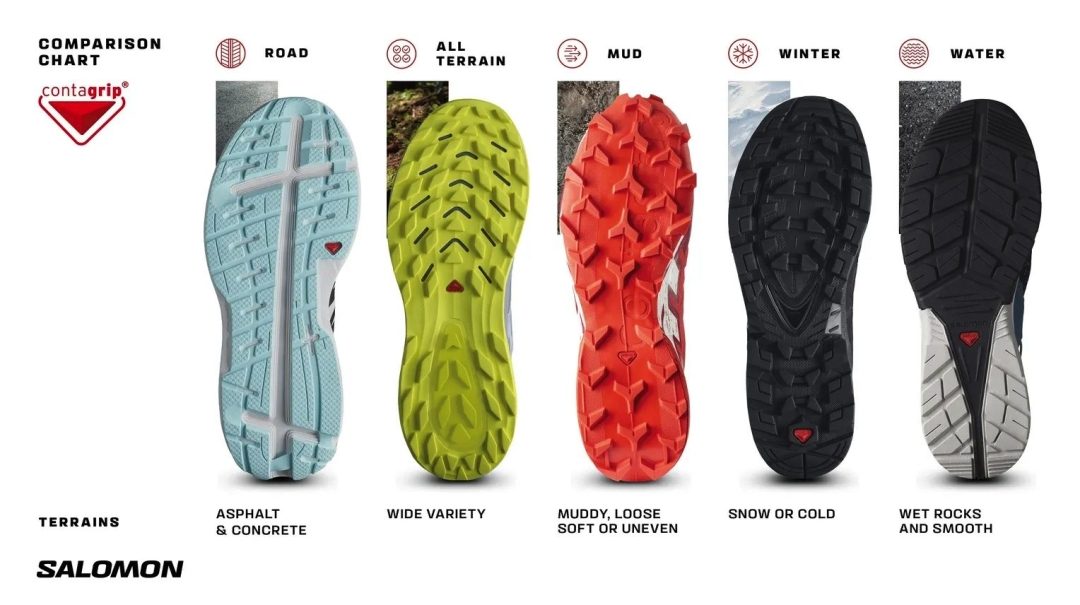
1. Check the outsole lugs
The outsole is the rubber layer that touches the ground. Its tread pattern has a major effect on grip and ride feel.
For mixed terrain, look for:
- Lugs around 2 to 4 millimeters deep
- Rubber across the full heel and forefoot
- A pattern that sheds small stones
- Flexible grooves between lug sections
- A smooth enough center area for pavement
Shallow tread can work well on asphalt, concrete, gravel, and dry hard-packed dirt. Deeper lugs help on loose soil, wet grass, and soft trail surfaces. However, deep lugs can feel rough on roads and may wear faster on hard surfaces.
A simple rule works well:
| Main surface | Useful outsole design |
|---|---|
| Pavement and sidewalks | Low lugs and broad rubber contact |
| Gravel and hard-packed dirt | Moderate lugs with flexible grooves |
| Loose dirt and light mud | Deeper lugs with open spacing |
| Wet rock or roots | Sticky rubber and a strong tread pattern |
| Snow or deep mud | dedicated trail or winter footwear |
Tread alone does not guarantee grip. Rubber compound, ground contact, surface moisture, and running form also affect traction.
2. Look for a stable platform
Uneven ground asks the foot and ankle to make small adjustments. A stable shoe can make those changes feel more controlled.
Useful stability features include:
- A broad base
- A secure heel counter
- A firm midsole edge
- Moderate torsional flexibility
- A well-shaped midfoot
- A heel collar that does not let the foot slide
Stability does not mean the shoe must be hard or heavy. It means the shoe does not easily twist, collapse, or slide when the surface changes.
A very soft, tall shoe may feel pleasant on roads. It may also feel less steady on cambered paths or loose gravel. If your route includes frequent side slopes, choose a platform that feels planted when you walk and jog in it.
3. Balance cushioning and ground feel
Cushioning reduces the harsh feel of firm ground. It may also make long road sections more comfortable. Yet more foam is not always better for trails.
For mixed terrain, moderate cushioning often gives the best balance:
- Enough foam for pavement
- Enough ground feel to notice uneven surfaces
- A midsole that does not wobble
- Protection from small stones and hard edges
Runners who spend many miles on roads may prefer more cushioning. Runners who spend more time on technical dirt may prefer a lower, firmer feel.
Cushioning is a personal choice. Foot shape, body size, pace, training load, and past injuries all affect comfort. A shoe cannot prevent every running injury, and a softer shoe is not automatically safer.
4. Check the upper and foot hold
The upper should hold your foot without squeezing it. A loose foot can slide on descents, while an overly tight upper can cause numbness, blisters, or pressure.
Look for:
- A snug heel
- A secure midfoot
- Enough room for the toes to spread
- Breathable material for hot weather
- A stronger toe area for trail debris
- Laces that stay tied
Try shoes later in the day if your feet swell during activity. Wear the socks you plan to run in. Stand up and walk around. Your toes should not touch the front when you move downhill.
The American Podiatric Medical Association advises choosing shoes that fit well and match the activity. That basic rule matters even more when one route includes both hard and uneven surfaces. See the APMA guidance on shoe fit.
5. Consider the heel-to-toe drop
Heel-to-toe drop is the height difference between the heel and forefoot. A higher drop places more material under the heel. A lower drop creates a more level platform.
Drop does not tell you whether a shoe is good or bad. It tells you how the shoe may feel and how it may change your transition into the run.
When switching to a different drop:
- Change slowly
- Use short, easy runs first
- Watch for new calf, Achilles, or foot soreness
- Stop if pain grows or changes your stride
Do not change drop, cushioning, and weekly mileage at the same time. Too many changes make it hard to identify the cause of discomfort.

Source: runnea.co.uk
Road-to-Trail Shoe Features That Matter Most
The most useful features depend on the surface, not on marketing terms. A shoe labeled “hybrid” may still perform like a road shoe or a light trail shoe.
Outsole: traction and wear
An outsole needs enough rubber to resist wear on pavement. Full-coverage rubber can improve durability, but it may add weight. Exposed foam may reduce weight, but it can wear faster on asphalt.
Inspect the outsole for a practical balance:
- More rubber in high-wear heel and forefoot zones
- Tread that reaches the outer edges
- No large gaps that collect stones
- Flex points that match the forefoot
If a route has mostly asphalt, a heavily lugged outsole may be unnecessary. If the route has loose gravel or wet dirt, a nearly smooth outsole may leave you searching for grip.
Midsole: comfort and control
Most modern running shoes use foam in the midsole. Foam can soften impact and change how the shoe bends.
For mixed terrain, test the shoe on both a hard floor and an uneven surface. Ask:
- Does it feel stable when you turn?
- Does the forefoot bend naturally?
- Does the heel stay centered?
- Can you feel the surface without sharp pressure?
- Does the shoe feel too firm after several minutes?
A shoe that feels good for two minutes may feel very different after an hour. If possible, use a retailer’s return policy and test the shoes indoors first.
Toe protection
A toe cap can protect against roots, stones, and accidental contact with trail edges. It is useful on dirt paths but may make the shoe less flexible.
You need more protection when:
- You often kick rocks
- You run on rough paths
- You carry a pack
- You run in low light
- Your route has roots or loose stones
You may need less protection when your route is mostly paved and smooth.
Water resistance
Water-resistant uppers can help in light rain or wet grass. They do not make a shoe waterproof unless the whole design supports that goal.
Waterproof shoes can also trap heat and take longer to dry after water enters over the collar. For warm U.S. climates, a breathable shoe may be more useful than a water-resistant one.

Source: trailquestadventures.wixsite.com
Best Shoe Type for Each Mixed-Terrain Route
There is no single best mixed-terrain running shoe for every runner. Use the route below to narrow the category.
Mostly pavement with occasional gravel
Choose a road shoe with:
- Light tread
- Flexible forefoot
- Comfortable cushioning
- A secure upper
- Some toe protection
This option usually feels the smoothest during daily training. It may struggle on loose dirt, wet grass, and rocky paths.
Equal road and hard-packed trail
Choose a true road-to-trail shoe with:
- Moderate lugs
- A stable platform
- Medium cushioning
- Durable rubber
- A protective but flexible upper
This is the most common use case for mixed-terrain running shoes.
Mostly dirt with short road links
Choose a light trail shoe with:
- More aggressive tread
- A firm, stable midsole
- Strong sidewall support
- A protective toe cap
- Enough flexibility for paved sections
This setup gives better control off-road. It may feel less smooth during long pavement stretches.
Wet, muddy, or steep terrain
A standard hybrid shoe may not be enough. Look for a dedicated trail shoe with deeper lugs and a rubber compound suited to wet ground.
Even specialized trail shoes can slip on wet roots, polished rock, ice, or painted road surfaces. Slow down when traction is uncertain.

Source: runnea.co.uk
How Should Mixed-Terrain Running Shoes Fit?
A mixed-terrain shoe should feel secure at the heel and midfoot while allowing natural toe movement.
Use this quick fit check:
- Put on your running socks.
- Lace the shoe as you would for a run.
- Stand and walk for several minutes.
- Check for heel lift.
- Move downhill or step off a low curb.
- Confirm that your toes do not hit the front.
- Check for pressure on the little toe and the top of the foot.
- Compare both feet, since they may differ in size.
A thumb’s width of space in front of the longest toe is a common starting point, but foot shape matters more than a fixed measurement. Your toes should not feel jammed, and your heel should not slide enough to cause rubbing.
Try a wide version if your toes feel crowded. Do not simply size up to gain width. A longer shoe may cause your foot to slide forward.
If you use custom orthotics, bring them when trying shoes. Some shoes have removable insoles, while others have limited room for inserts.
How to Break In New Shoes Safely
Most modern running shoes do not need a long break-in period. They should feel comfortable from the start. Still, your body may need time to adjust to a new fit, drop, tread, or foam.
Use this plan:
- Walk indoors for 15 to 30 minutes.
- Run an easy mile on a familiar surface.
- Check your feet after the run.
- Add distance only if the shoe feels normal.
- Use the shoes on a mixed route after two or three short runs.
Stop and reassess if you notice:
- A hot spot that grows during the run
- Numb toes
- Heel rubbing
- New sharp pain
- A change in stride
- Pain that remains after rest
A small amount of normal muscle fatigue can occur after a shoe change. Sharp, worsening, or persistent pain needs more caution. A medical professional can help assess pain that does not improve, affects walking, or returns each time you run.

Source: backpackingguys.com
How Long Do Mixed-Terrain Running Shoes Last?
Do not replace shoes by mileage alone. A common mileage estimate for running shoes is roughly 300 to 500 miles, but terrain, body weight, gait, shoe design, and care can change that range.
Inspect the shoes for signs of function loss:
- The outsole is smooth in key areas
- Lugs no longer grip loose ground
- The midsole feels flat or uneven
- The upper stretches and fails to hold the foot
- The heel counter bends easily
- New aches appear after normal runs
- The shoe leans to one side
Record the date and mileage when you start using a pair. This makes wear easier to track.
Clean dirt with a soft brush and mild soap. Let shoes dry at room temperature. Avoid high heat, such as a dryer or a hot car dashboard, because heat may damage adhesives and materials.
Rotate two pairs if your budget allows. Rotation gives each pair time to dry and helps you notice changes in comfort.

Source: reddit.com
Common Mistakes to Avoid
Choosing by the label alone
“Trail,” “hybrid,” and “road-to-trail” are broad terms. Read the outsole and fit details. The label cannot tell you how the shoe will feel on your route.
Using deep-lug trail shoes for every road run
Deep lugs may feel awkward on pavement. They can also wear more quickly on hard surfaces. Match the tread to the ground you run on most.
Ignoring the downhill fit
A shoe may feel fine on flat ground but allow your foot to slide on a descent. Test the fit with the foot angled forward before taking the shoe onto steep trails.
Changing too much at once
Do not change shoes, weekly mileage, speed work, and terrain in the same week. Make one major change at a time when possible.
Keeping shoes because they still look clean
A shoe can look new while the foam or upper has lost function. Comfort, grip, and control matter more than appearance.
Assuming more cushioning solves every problem
Cushioning can improve comfort, but it does not correct poor fit, weak grip, or unstable footing. Choose the complete shoe, not one feature.

Source: runnea.co.uk
Key Takeaways
- Choose road-to-trail shoes for routes that combine pavement, gravel, and firm dirt.
- Match outsole depth to your most common and most difficult surface.
- Look for a stable base, secure heel, flexible forefoot, and enough toe room.
- Use more protective trail shoes for steep, rocky, muddy, or wet routes.
- Break in new shoes with short runs before using them for long mixed-terrain efforts.
- Replace shoes when grip, fit, cushioning, or control clearly decline.
FAQs
Can I use road running shoes on dirt trails?
Yes, road shoes can work on dry, firm dirt and smooth gravel. They may slip on loose, wet, steep, or rocky ground because their tread is usually shallow.
Are trail shoes good for road running?
Some light trail shoes work well on short paved sections. A shoe with deep lugs may feel less smooth and may wear faster on pavement.
What is the best heel-to-toe drop for mixed terrain?
There is no universal best drop. Choose a drop that feels comfortable and close to what you already use. Transition gradually if the difference is large.
Should mixed-terrain shoes be waterproof?
Not always. Waterproof shoes may help in cold, wet conditions, but breathable shoes often dry faster and feel cooler in warm weather.
Can mixed-terrain shoes prevent running injuries?
No shoe can guarantee injury prevention. A suitable shoe may improve comfort and traction, but training load, recovery, strength, terrain, and fit also matter.
When should I see a professional about foot pain?
Seek medical advice if pain is sharp, worsening, changes your stride, causes swelling, or continues during normal walking. Do not run through pain that keeps returning.
Conclusion
The best running shoes for mixed terrain are not the most rugged or the most cushioned. They are the shoes that match your route and keep your foot comfortable and controlled as the surface changes.
For most U.S. runners, start with a road-to-trail shoe that has moderate lugs, balanced cushioning, a stable platform, and a secure fit. Test it on pavement and dirt before committing to long runs. If your route becomes steep, muddy, icy, or highly technical, move to a dedicated trail shoe rather than asking a hybrid pair to do every job.
