
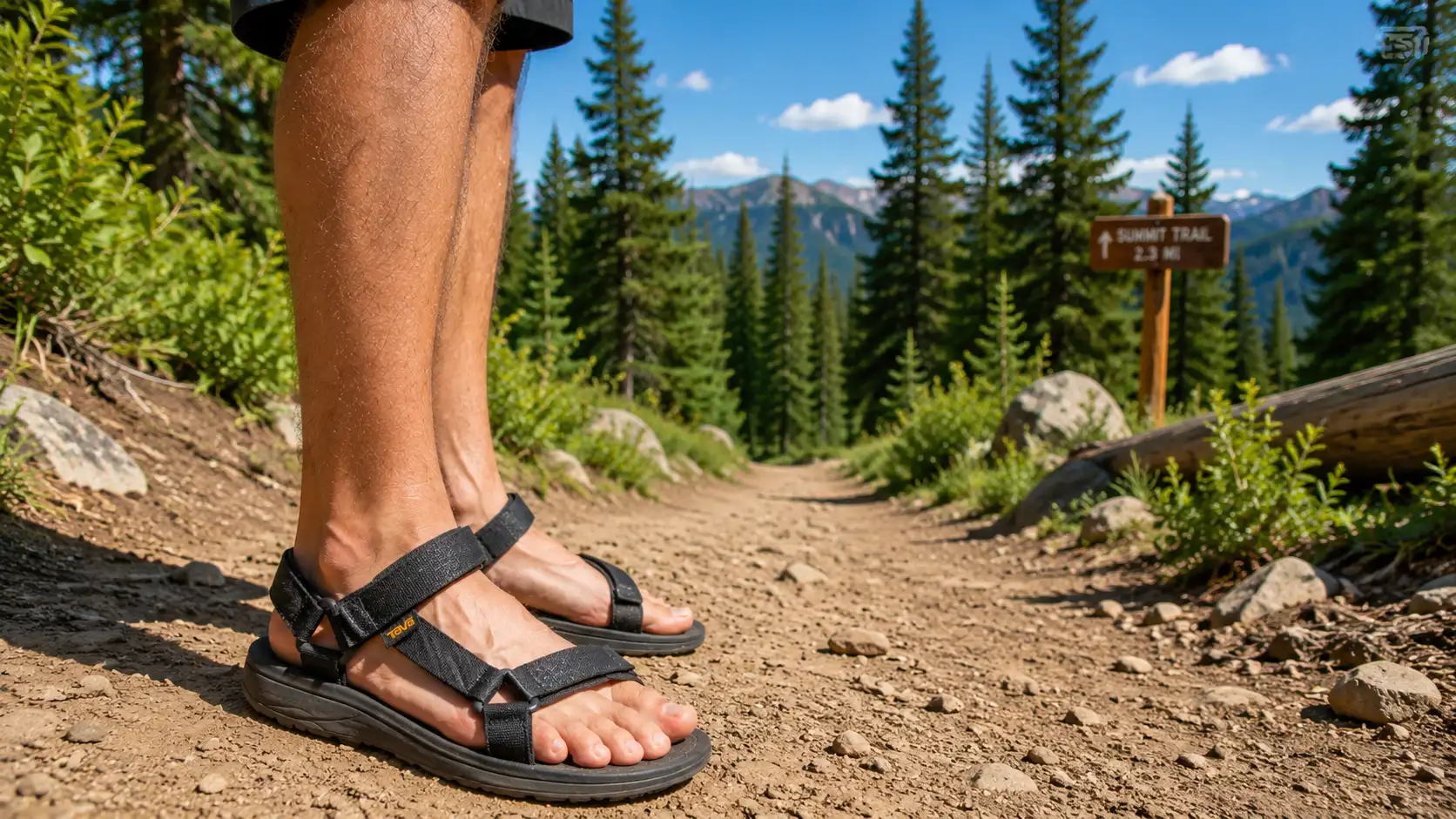
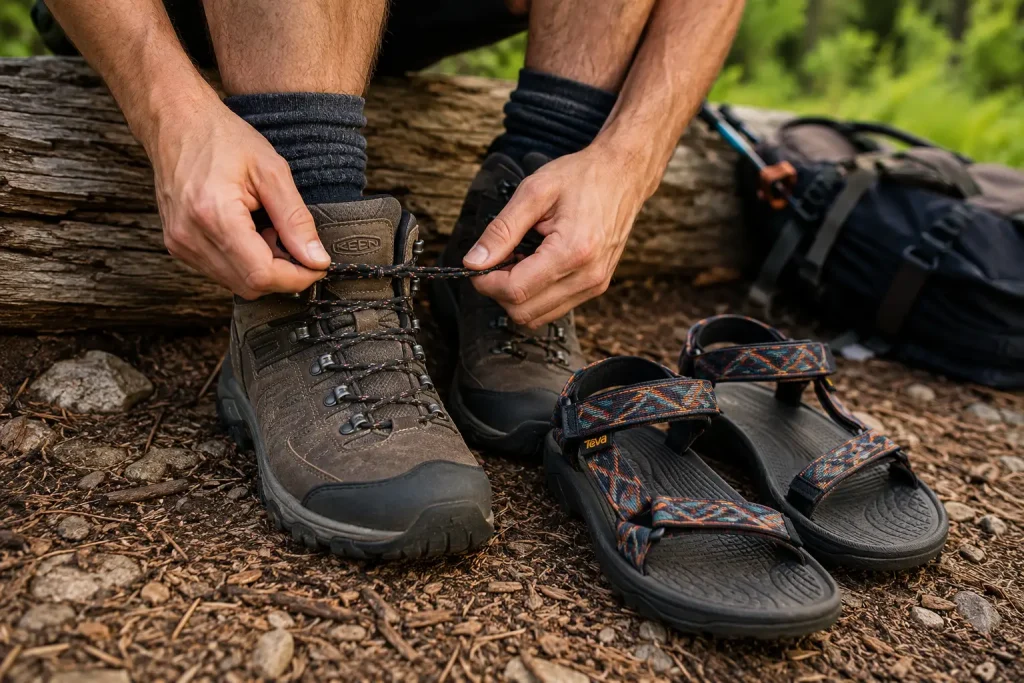
I get this question all the time when summer rolls around. You are staring at your heavy, sweaty hiking boots, and then you look over at your breezy, comfortable Teva sandals. Can you just wear those instead? It is a fair question! No one wants hot, blistered feet on a casual summer day hike. But at the same time, you do not want a rolled ankle or a stubbed toe ruining your weekend in the woods.
Here is the thing. Hiking footwear is a highly personal choice. While traditional advice says you must wear thick boots for every trail, modern hikers often prefer lighter options. Tevas have become incredibly popular for outdoor travel, river trips, and casual trail days. But are they actually good for real hiking?
Let me explain when leaving the boots behind makes perfect sense, and when choosing sandals is a terrible idea. We will look at trail conditions, weather planning, foot safety, and how to set your feet up for success if you do decide to hike in sandals.
Quick Answer
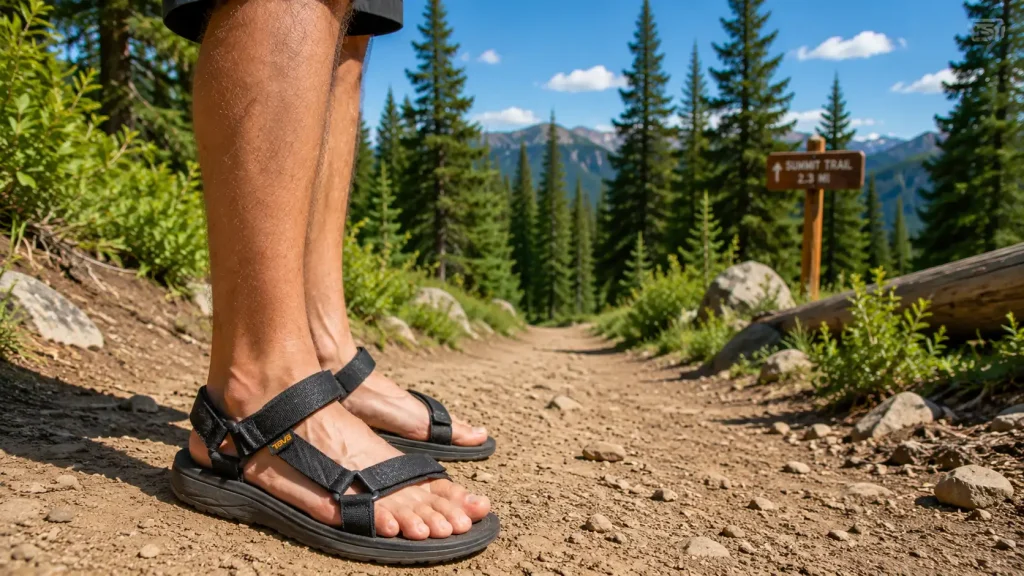
Tevas can be good for light, flat, and well-maintained day hikes, especially in hot weather or when crossing streams. However, they are not good for rugged, rocky, off-trail, or steep hiking where you need ankle support and toe protection. For casual summer trails or beach walks, a sturdy pair of Tevas works very well. For long backpacking trips or challenging terrain, you will want traditional hiking shoes or boots instead.
What Hikers Should Know About Hiking in Tevas
Before you hit the dirt in your favorite sandals, you need to understand how they work on the trail. Tevas were originally designed by a river guide in the Grand Canyon. They were made for moving between water and land safely. Because of this, they have some great features for outdoor lovers, but they also lack the heavy protection of a standard hiking shoe.
Most classic Tevas feature adjustable nylon straps, a cushioned foam footbed, and a rubber outsole for grip. This minimalist design feels great on a hot day, but it exposes your feet to the elements. You have to be much more aware of where you step. Roots, rocks, and thorny bushes are suddenly a real hazard for your bare toes.
If you are thinking about hiking in sandals, you should weigh the good against the bad. Here is what you can expect:
- Amazing ventilation: Your feet will not overheat or sweat heavily, which actually helps reduce moisture-based blisters.
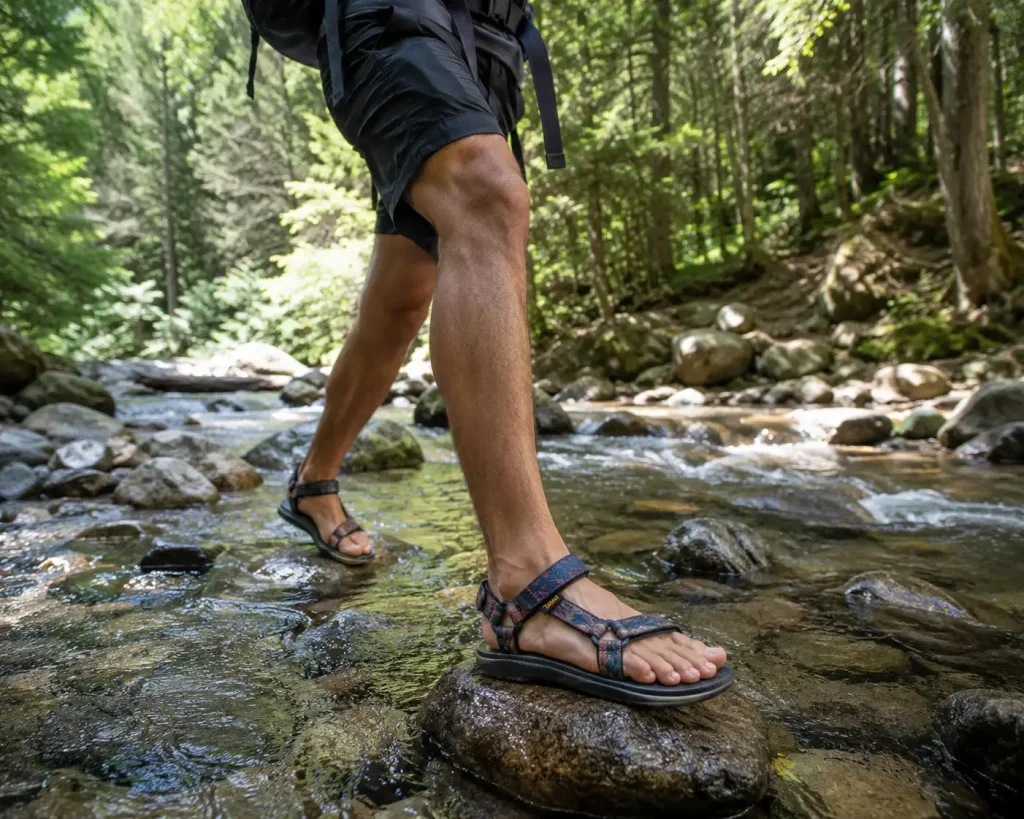
- Easy water crossings: You can walk right through streams without taking your shoes off or hiking in wet socks.
- Lightweight feel: You carry less weight on your feet, which can make your legs feel less tired on simple trails.
- Zero toe protection: If you kick a rock or a tree root, your toes will take the full impact.
- Debris issues: Small pebbles, dirt, and twigs will constantly get trapped under your feet.
- No ankle support: If you step on a loose rock, you have no stiff material to help catch your ankle from rolling.
Signs You Should Adjust Your Hiking Plan, Gear, or Trail Choice
The most important skill you can learn as a hiker is knowing when to adjust your plan. Tevas are not a magic shoe for every situation. You need to read the trail conditions and make a smart choice before you leave the trailhead.
If the weather forecast calls for heavy rain and dropping temperatures, sandals will leave your feet freezing. Check trusted weather sources like NOAA Weather before your trip. Cold, wet feet can quickly lead to hypothermia in bad conditions. If the trail is known for loose gravel, steep climbs, or overgrown bushes, leave the Tevas in the car.
You also need to listen to your body on the trail. If you start getting hot spots where the straps rub against your skin, stop immediately. If you are constantly stubbing your toes, or if your ankles feel tired and wobbly, it is a sign that the trail is too rugged for sandals. Never feel bad about turning back or switching to your backup shoes if your current setup is not working.
| Footwear Choice | Best For These Trail Conditions | Signs You Made the Wrong Choice |
|---|---|---|
| Teva Sandals | Flat trails, beach walks, stream crossings, hot weather, paved paths. | Stubbed toes, small rocks underfoot, cold toes, straps causing blisters. |
| Trail Running Shoes | Moderate day hikes, dirt paths, long distances, dry weather. | Rolled ankles on very rocky ground, wet feet that will not dry out. |
| Hiking Boots | Backpacking, steep terrain, mud, snow, heavy packs, rocky trails. | Sweaty and overheated feet, heavy feeling in legs on flat ground. |
How to Handle Hiking in Tevas Step by Step
If you have checked the trail conditions and decided that today is a perfect day for sandals, you still need to prepare. You cannot just slide them on and run up a mountain. Proper setup is the key to a safe and comfortable hike.
Follow these simple steps to get your feet ready for a sandal hike:
- Dial in the straps properly: Your foot should not slide around. Adjust the toe strap first, then the ankle strap, and finally the heel strap if your model has one. The straps should be snug but not tight enough to pinch or restrict your blood flow.
- Apply sunscreen to your feet: Your feet rarely see the sun, which means they will burn very fast. Apply a thick layer of sunscreen to the tops of your feet and your toes before you start.
- Pack a blister care kit: Even well-worn sandals can rub your skin on a hot, dusty day. Pack athletic tape, moleskin, or small bandages in your day pack. Treat hot spots the second you feel them.
- Bring a pair of socks: It sounds silly, but a thin pair of hiking socks can save your hike. If the straps start causing blisters, put the socks on. It creates a smooth barrier between your skin and the nylon straps.
- Adjust your walking style: Pick your feet up! When wearing boots, hikers tend to drag their toes lazily. In sandals, you must lift your feet to avoid catching your toes on hidden roots and rocks.
- Watch for debris: When a small pebble gets under your foot, stop and shake it out immediately. Walking on trail debris will quickly cause deep, painful blisters on the bottom of your foot.
Common Mistakes to Avoid
Hiking in sandals can be a lot of fun, but beginners often make a few painful errors. Avoid these common mistakes so you can actually enjoy your time outdoors.
- Wearing brand new sandals on a long hike: Never take fresh footwear straight to the trail. Wear them around your neighborhood for a few days to let the straps soften and mold to your feet.
- Ignoring hot spots: If you feel a pinching or burning sensation under a strap, do not push through the pain. Stop walking, sit down, and apply tape or a bandage immediately.
- Hiking in loose sandals: Loose straps allow your foot to slide forward on downhills, which jams your toes. It also causes heavy friction that leads to awful blisters. Keep them snug.
- Forgetting foot sunscreen: Sunburned feet swell up, making the straps tighter and the hike miserable. Reapply sunscreen whenever you cross a stream.
- Taking them on steep downhills: Without a closed toe box to stop your foot, steep downhill sections will force your toes to hang over the front edge of the sandal. This is uncomfortable and unsafe.
Practical Tips from Oscar
I have spent a lot of time on the trail in different types of footwear. While I love my heavy boots for mountain peaks, I use my Tevas all the time for the right situations. Here are a few practical habits I have picked up over the years.
Key Takeaways
- Tevas are excellent for flat trails, hot weather, and water crossings.
- They do not provide the ankle support or toe protection needed for rocky or steep hikes.
- Always break in your sandals before taking them on a long hike to avoid strap blisters.
- Pack sunscreen for your feet and a basic first-aid kit with blister tape.
- Tevas make fantastic, lightweight camp shoes for backpackers who want to rest their feet at the end of the day.
- Always check local trail rules, weather, and terrain types before choosing to hike in open-toe shoes.
Frequently Asked Questions
Can you wear Tevas for long distance hiking?
It is generally not recommended for beginners to wear Tevas for long-distance hikes. Over many miles, the lack of support can cause foot fatigue, and the exposed toes increase the risk of injury. Stick to shorter day hikes until you know how your feet handle the terrain.
Do Tevas get slippery when wet?
The rubber outsoles on Tevas are designed to grip wet rocks and surfaces quite well. However, the foam footbed where your foot rests can get slightly slick when thoroughly soaked. Keeping the straps securely tightened helps prevent your foot from sliding around inside the sandal.
Will my feet get blisters in Tevas?
Yes, you can absolutely get blisters in sandals. Blisters are caused by friction, and nylon straps rubbing against dusty, sweaty skin is a common cause. Always break them in slowly and carry athletic tape or moleskin to treat hot spots early.
Are Tevas or Chacos better for hiking?
Both are great, but they serve slightly different needs. Chacos are typically heavier, have a thicker sole, and offer more arch support, which some hikers prefer for longer miles. Tevas are lighter, softer, and usually feel better right out of the box for casual day hikes.
Can I wear socks with Tevas on the trail?
Yes! While it might look a little funny, wearing socks with sandals is a great hiking trick. A thin pair of hiking socks adds a layer of protection against dirt, helps prevent strap blisters, and keeps your feet warm if the morning air is chilly.
Do I need a first aid kit if hiking in sandals?
You should always carry a basic first-aid kit on any hike, regardless of your shoes. Because sandals expose your feet to rocks, sticks, and bugs, carrying bandages, antiseptic wipes, and blister care items is especially important.
Conclusion
So, are Tevas good for hiking? The answer is a solid yes, as long as you use common sense. If you are walking a flat, well-groomed trail on a sunny July afternoon, or if you need to wade across a lazy creek, your feet will be thrilled to be out of heavy boots. The ventilation is unbeatable, and they are incredibly comfortable when used correctly.
Just remember that the great outdoors is unpredictable. Respect the trail, keep an eye out for rocks and roots, and never be afraid to switch back to proper hiking shoes if the terrain gets rough. Safety and comfort should always guide your gear choices.
If you are still building out your trail wardrobe and trying to decide what goes on your feet next, be sure to check out our complete beginner hiking footwear guide to learn more about boots, trail runners, and everything in between. Happy hiking, and watch where you step!
