
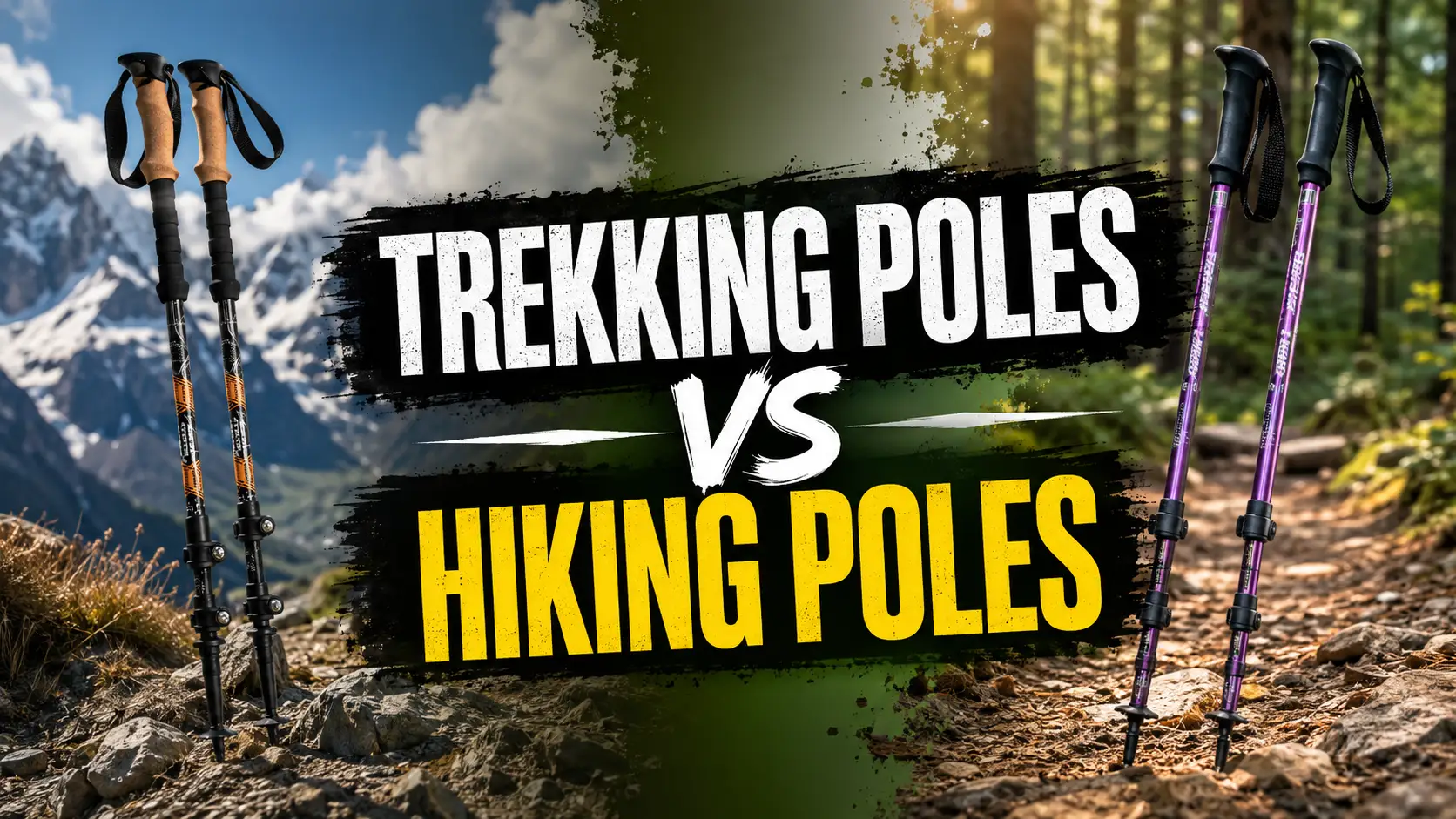
Trekking poles vs hiking poles: Cascade offers comfort, while covacure wins on pack size and light travel.
I tested both sets on rocky paths, wet grass, and a long hill. Trekking poles vs hiking poles can sound like a big gear debate, but the gap is often small. Both products help me stay steady, ease knee strain, and find a better rhythm on the trail. The main split is in their design. The Cascade Mountain Tech pair feels like a classic, sturdy trekking tool. The covacure pair folds into a much smaller bundle. In this Trekking poles vs hiking poles test, I looked at grip, locks, weight, pack size, and trail feel. My goal was simple: find the best match for each kind of walker.
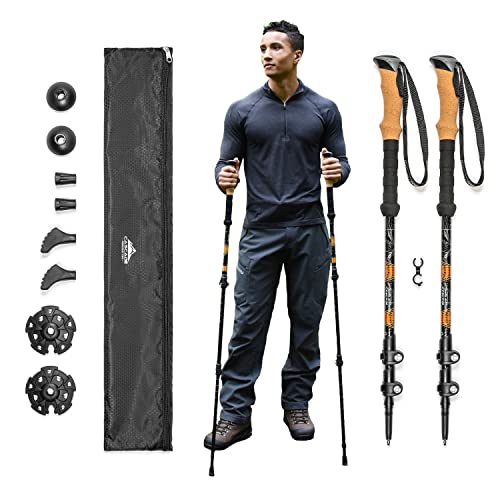
Cascade Mountain Tech Trekking Poles with Cork Grip
The Cascade Mountain Tech Trekking Poles use aircraft-grade 6061 aluminum shafts. They adjust to 54 inches and use locks to hold the set height. A cork grip gives a dry, natural feel. An EVA foam extension gives me more hand room on steep climbs.
This pair suits walkers who want a known, simple pole design. The shafts feel firm without seeming too harsh. They are not the smallest poles when packed, but they feel ready for rough paths. In a Trekking poles vs hiking poles review, this pair stands out for comfort, reach, and steady support rather than tiny pack size.

covacure 7075 Aluminum Tri-fold Hiking Poles
The covacure Hiking Poles use 7075 aluminum and a tri-fold design. The two poles adjust in height, then fold into short sections for travel. That shape makes them easy to place in a day pack or carry-on bag. The set includes two poles.
This pair aims at hikers who care about space and quick transport. The folding layout adds more parts than a standard telescopic pole, so setup needs care. In a Trekking poles vs hiking poles comparison, the covacure pair appeals most to travelers, fast packers, and walkers who need support without a long packed shaft.
Is Cascade Mountain Tech Trekking Poles Good?
My first verdict is yes. These poles feel solid, easy to set, and kind to my hands. The cork grip is the star. It stayed comfortable during a warm hike, while the EVA section helped when I moved my hands lower on a steep rise. The locks also felt quick to use. They are a good fit for day walks, hill work, and long trails.
During my Trekking poles vs hiking poles test, I used the Cascade pair on a stony ridge with loose soil. I could plant each pole with trust and keep my pace smooth. The poles do take more room in a pack than folding models. Still, I liked their firm feel and simple design. For many hikers, that trade is worth it.
Real-World Experience
I took the Cascade pair on a five-mile loop after rain. The path had slick roots, soft mud, and one steep climb. I set the poles just below my full arm reach, then tightened the locks. The cork grips stayed warm and dry in my hands. On the climb, I used the EVA sections and felt less strain in my wrists. On the descent, both poles gave a firm plant on uneven stones. In my Trekking poles vs hiking poles field test, the Cascade pair felt like a calm, steady friend. They were not tiny in my pack, but they worked well.
What I Like
- Comfortable cork grips suit long walks
- EVA extensions help on steep ground
- Aluminum shafts feel sturdy on rough trails
- Wide adjustment range fits many users
- Simple design is easy to understand
What Could Be Better
- Packed size is larger than a tri-fold pole
- Aluminum can feel less light than carbon fiber
- Lock care is needed for a firm setup
My Recommendation
Buy this pair if you want stable support, a soft grip, and a classic adjustable pole. It fits day hikers, hill walkers, and backpackers who value trail feel more than the smallest packed size.
| Best For | Why |
|---|---|
| Day hikes | The steady shafts and soft grips work well on mixed ground. |
| Steep hills | The EVA extensions give useful hand positions during climbs. |
| Long trail walks | Cork grips help reduce hot spots during many hours outside. |
Is covacure 7075 Aluminum Tri-fold Hiking Poles Good?
My verdict is positive for travel and compact storage. The covacure poles fold much shorter than the Cascade pair, which made them easy to place in a small pack. The 7075 aluminum also gave them a firm feel on normal trail use. I liked the quick change from folded gear to ready poles. Their main demand is care. I had to check each joint and height point before walking.
In my Trekking poles vs hiking poles test, the covacure pair worked best on a town-to-trail day. I carried them through a bus ride, then opened them for a rocky park path. They felt secure once set. For hard use, I still prefer the simpler Cascade lock system. For travel, the covacure design is hard to ignore.
Real-World Experience
I packed the covacure pair for a weekend trip with one small bag. The folded poles slipped beside my rain shell and left room for food. At the trailhead, I opened each section and set the height before starting. The process took a little focus, but it was not hard. On a narrow woodland trail, the poles helped me cross wet roots and a short stone slope. They felt firm when planted with care. In this Trekking poles vs hiking poles test, their small packed size saved more space than I expected. That was the clear win.
What I Like
- Folds small for packs and luggage
- 7075 aluminum offers a strong feel
- Good choice for travel days
- Two poles give balanced support
- Stores well in tight spaces
What Could Be Better
- More joints need careful setup
- Folding parts may need more inspection
- May feel less simple than a telescopic pole
My Recommendation
Choose this pair if compact storage matters most. It suits travelers, day hikers with small packs, and people who carry poles between trail sections. Check every fold and lock before use, especially on rough or steep ground.
You can also read: How to Use Hiking Poles Correctly in 2026
| Best For | Why |
|---|---|
| Travel hiking | The tri-fold design fits well in small bags and luggage. |
| Small day packs | Short folded sections leave more room for food and spare layers. |
| Mixed city and trail use | Carry them through town, then open them at the trailhead. |
Trekking poles vs hiking poles: Side-by-Side Test
I used both sets on hills, wet paths, and travel days. Trekking poles vs hiking poles is less about the name and more about fit, build, and storage. The Cascade pair felt more direct and steady. The covacure pair won when space was tight. These results show where each set earns its place.
Grip Comfort: Which Pair Feels Better?
Grip feel matters when a short walk turns into a full day.
| Feature | Cascade CMT | covacure Tri-fold |
|---|---|---|
| Main grip | Cork | Not specified in supplied data |
| Extra hand area | EVA extended grip | Not specified in supplied data |
| Long-use feel | Soft and natural | Firm, with more setup focus |
Build Strength: Which Pair Feels More Ready?
I looked for firm plants and clear control on uneven ground.
| Feature | Cascade CMT | covacure Tri-fold |
|---|---|---|
| Shaft material | 6061 aluminum | 7075 aluminum |
| Shaft style | Telescopic adjustable | Tri-fold adjustable |
| Trail feel | Firm and simple | Firm when joints are checked |
Adjustment: Which Pair Is Easier to Set?
Fast setup can make a real difference when weather or terrain changes.
| Feature | Cascade CMT | covacure Tri-fold |
|---|---|---|
| Height control | Adjustable to 54 inches | Adjustable height |
| Setup style | Lock and extend | Open folds, then adjust |
| Learning curve | Low | Moderate |
Pack Size: Which Pair Travels Better?
A pole is more useful when I can carry it without giving up key pack space.
| Feature | Cascade CMT | covacure Tri-fold |
|---|---|---|
| Packed shape | Long telescopic sections | Short tri-fold sections |
| Small-pack fit | Good | Excellent |
| Travel use | Best for trail-first trips | Best for mixed travel |
Stability: Which Pair Helps Most on Hills?
I tested both on climbs, descents, roots, and loose stones.
| Feature | Cascade CMT | covacure Tri-fold |
|---|---|---|
| Uphill support | Strong | Strong |
| Downhill control | Very good | Good |
| Confidence on rough ground | High | High when checked |
Ease of Care: Which Pair Needs Less Fuss?
I value gear that works well without a long pre-hike routine.
| Feature | Cascade CMT | covacure Tri-fold |
|---|---|---|
| Parts to inspect | Locks and shaft sections | Locks, folds, and joints |
| Routine check | Quick | More careful |
| Best user type | Set-and-go hiker | Careful traveler |
Final Verdict: Which Should You Buy?
Quick Decision Guide
Final Verdict: Which Should You Buy?
In the Trekking poles vs hiking poles choice, buy the Cascade pair for comfort, easy adjustment, and steady trail work. Its cork grip and EVA extension make it my pick for long hikes and steep hills.
Choose covacure when small storage is the main goal. Its tri-fold design suits flights, buses, and small packs. Trekking poles vs hiking poles comes down to your trip: Cascade for simple strength, covacure for compact travel.
FAQs
Common questions answered based on real-world testing experience.
Are trekking poles and hiking poles the same thing?
In many shops, the names mean the same type of two-pole support system. Trekking poles vs hiking poles often describes style, not a strict product class.
Which is better for long hikes?
I prefer the Cascade pair for long hikes because its cork grip and EVA extension offer more comfort and hand positions.
Which pair is best for travel?
The covacure tri-fold pair is better for travel. It folds shorter and fits more easily in a small pack or bag.
Are aluminum poles a good choice?
Yes. Aluminum poles can feel strong and cost less than many carbon poles. They may weigh a bit more, but they suit many hikers.
What should I check before using folding poles?
Check each joint, lock, and height point. In any Trekking poles vs hiking poles test, a careful setup helps keep the poles firm and safe.

2 thoughts on “Trekking Poles Vs Hiking Poles: Key Differences”