
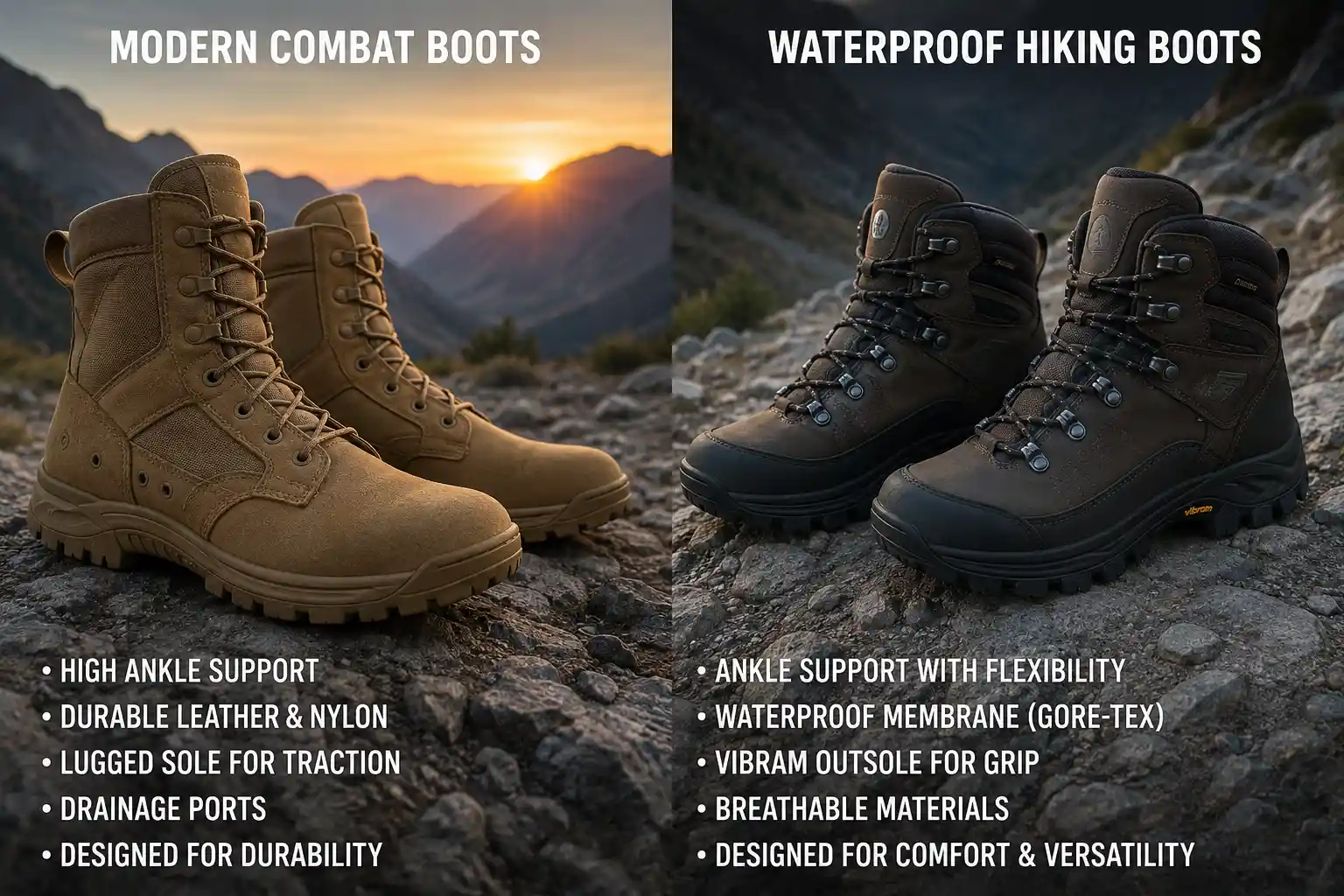
If you’re trying to decide between combat boots vs hiking boots, you’re asking a common question. Both types of boots are tough, supportive, and built for demanding conditions. At first glance, they even look similar.
Here’s the thing. They are designed for very different jobs. Combat boots are made for military operations and demanding work environments, while hiking boots are built specifically for trail hiking, backpacking, and mountain terrain. Choosing the right pair can make a big difference in your comfort, safety, and endurance.
In this guide, I’ll explain the key differences between combat boots and hiking boots, their strengths and weaknesses, and when each one makes the most sense for outdoor adventures.
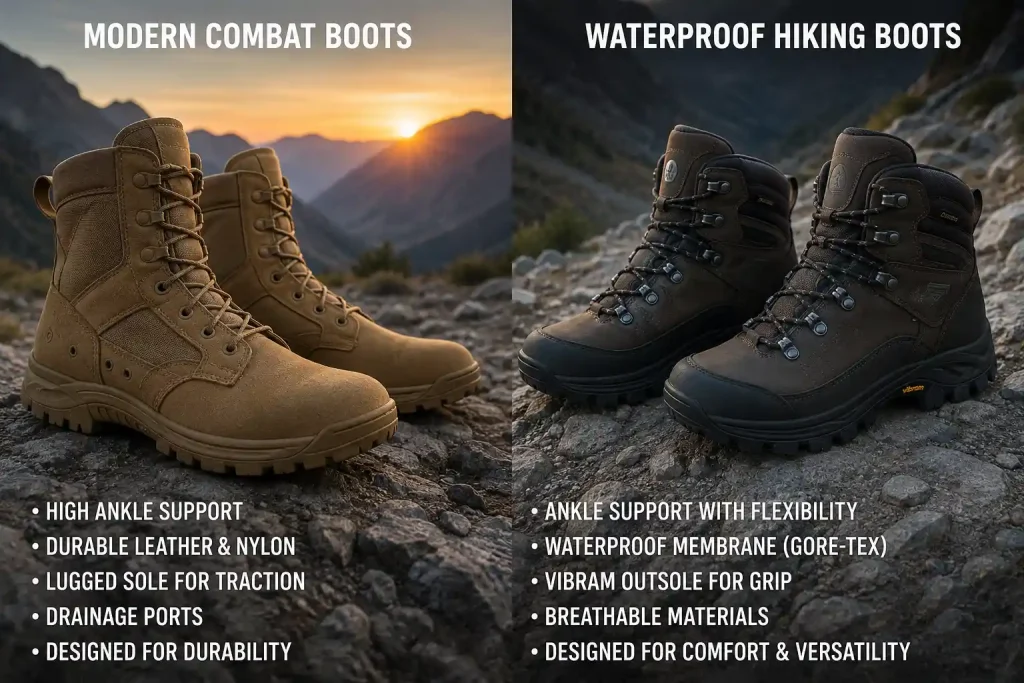
Quick Answer
Hiking boots are designed specifically for hiking, backpacking, and uneven terrain. They prioritize traction, long-distance comfort, weather protection, and foot support.
Combat boots are designed for military personnel who need durable footwear that performs during long hours of walking, standing, climbing, and operating in many environments. While they can handle outdoor conditions, they are not optimized for long-distance hiking.
If hiking is your primary activity, hiking boots are usually the better choice. Combat boots may work for short hikes, but hiking boots generally provide better trail performance and comfort.
What Are Combat Boots?
Combat boots are military footwear built for demanding environments. Soldiers may walk across pavement, dirt roads, forests, sand, mud, and urban areas during the same mission. Their boots must handle all of these conditions while remaining durable.
Modern combat boots commonly include:
- High ankle support
- Heavy-duty leather or synthetic uppers
- Abrasion-resistant construction
- Slip-resistant outsoles
- Fast lace systems
- Durable toe protection
Many military boots also emphasize quick drying, durability, and mobility rather than maximum hiking comfort.
Oscar’s Tip: Don’t assume every military-style boot performs well on hiking trails. Many fashion or work boots look similar but lack the support and traction needed for outdoor hiking.
What Are Hiking Boots?
Hiking boots are built with one goal in mind: helping hikers travel safely and comfortably over natural terrain.
Quality hiking boots usually feature:
- Aggressive trail-specific rubber outsoles
- Shock-absorbing midsoles
- Waterproof or water-resistant materials
- Protective toe caps
- Supportive heel construction
- Comfort for long-distance walking
Whether you’re hiking for a few hours or spending several days backpacking, hiking boots are designed to reduce fatigue while improving stability.
Combat Boots vs Hiking Boots: Side-by-Side Comparison
| Feature | Combat Boots | Hiking Boots |
|---|---|---|
| Main Purpose | Military operations | Trail hiking and backpacking |
| Long-Distance Comfort | Good | Excellent |
| Trail Traction | Good | Excellent |
| Weight | Medium to Heavy | Light to Medium |
| Waterproof Options | Available | Very Common |
| Heavy Backpack Support | Moderate | Excellent |
| Rock Protection | Good | Excellent |
The biggest difference comes down to design priorities. Combat boots are made for demanding military tasks, while hiking boots are engineered specifically for trail performance.
Comfort on Long Hikes
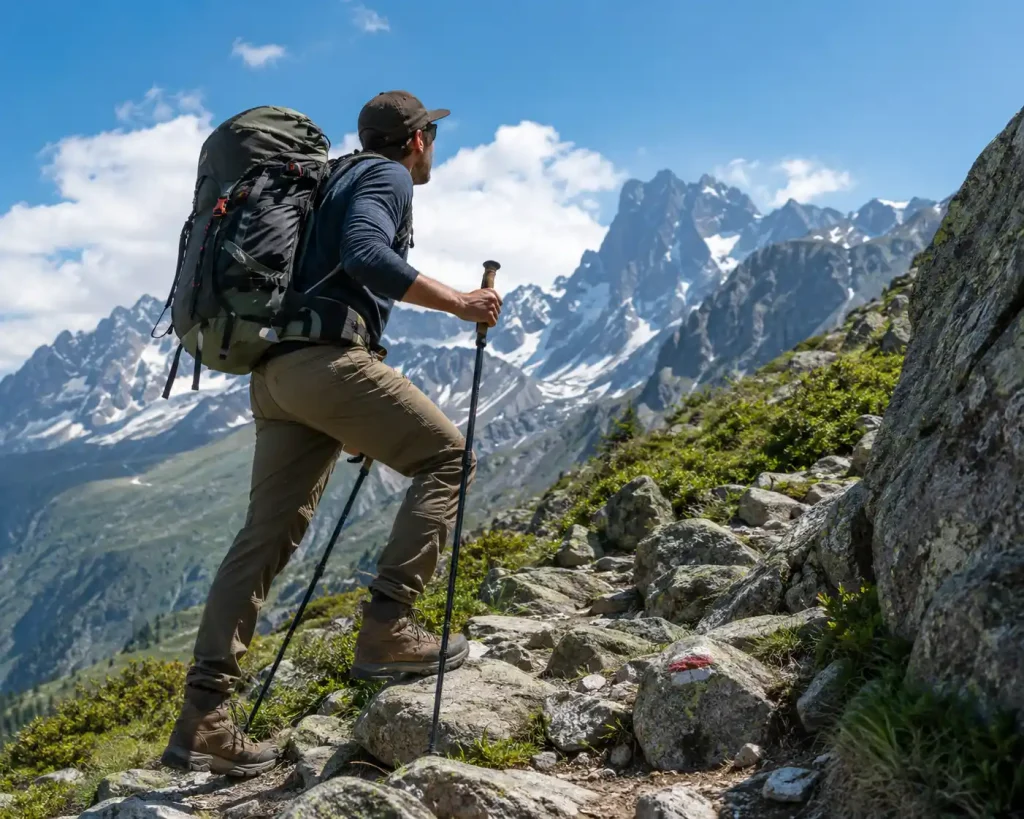
Comfort becomes more important with every mile.
Hiking boots are designed to reduce pressure on your feet, absorb repeated impacts, and provide support during long days on the trail.
Combat boots often feel firm because they must remain durable under heavy use. They may not offer the same level of cushioning found in hiking footwear.
Hiking boots typically provide:
- Better cushioning
- Improved arch support
- Lower foot fatigue
- Greater stability on uneven trails
Traction on Natural Terrain
Trail conditions change constantly. You may cross loose gravel, wet roots, muddy sections, rocky slopes, or shallow streams in a single hike.
Most hiking boots use aggressive lug patterns that grip loose surfaces exceptionally well.
Combat boots usually perform well on:
- Pavement
- Dirt roads
- Dry ground
- Mixed work environments
Hiking boots generally perform better on:
- Mountain trails
- Loose rocks
- Mud
- Wet forest paths
- Steep climbs
- Snow-covered trails
For more hiking safety advice, visit the National Park Service. You can also find useful hiking gear guidance from REI Expert Advice.
Weight and Flexibility
Every extra ounce matters on a long hike.
Many modern hiking boots are surprisingly lightweight while still providing excellent protection.
Combat boots are often heavier because they’re built for durability and military equipment requirements.
If you’re planning all-day hikes or multi-day backpacking trips, lighter hiking boots can help reduce leg fatigue and improve overall comfort.
Water Resistance and Weather Protection
Weather can change quickly on the trail. A sunny morning can turn into rain, mud, or even snow before you finish your hike. That’s why weather protection is an important part of choosing the right boots.
Many hiking boots include waterproof membranes that help keep your feet dry while allowing heat and moisture to escape. This balance helps improve comfort during long hikes.
Combat boots are available in both waterproof and non-waterproof versions. Many military models focus on quick drying and breathability because soldiers may move through wet environments repeatedly.
| Hiking Situation | Recommended Boot | Reason |
|---|---|---|
| Rainy mountain trails | Hiking Boots | Superior waterproof protection |
| Summer day hikes | Either | Breathability matters most |
| Multi-day backpacking | Hiking Boots | Better long-distance comfort |
| Outdoor work and casual hiking | Combat Boots | Versatile everyday durability |
Durability and Longevity
Both boot types are built to last, but they face different kinds of wear.
Combat boots are designed to handle daily use under demanding conditions. Thick leather, reinforced stitching, and abrasion-resistant materials help them survive harsh environments.
Hiking boots focus on repeated trail use. Their outsoles are designed to grip rocks and dirt while protecting your feet from sharp terrain.
Whichever type you choose, regular cleaning and proper drying will help extend the life of your boots.
Warning: Never place wet boots next to a fire or heater. High heat can damage waterproof membranes, leather, and adhesives.
Ankle Support and Stability
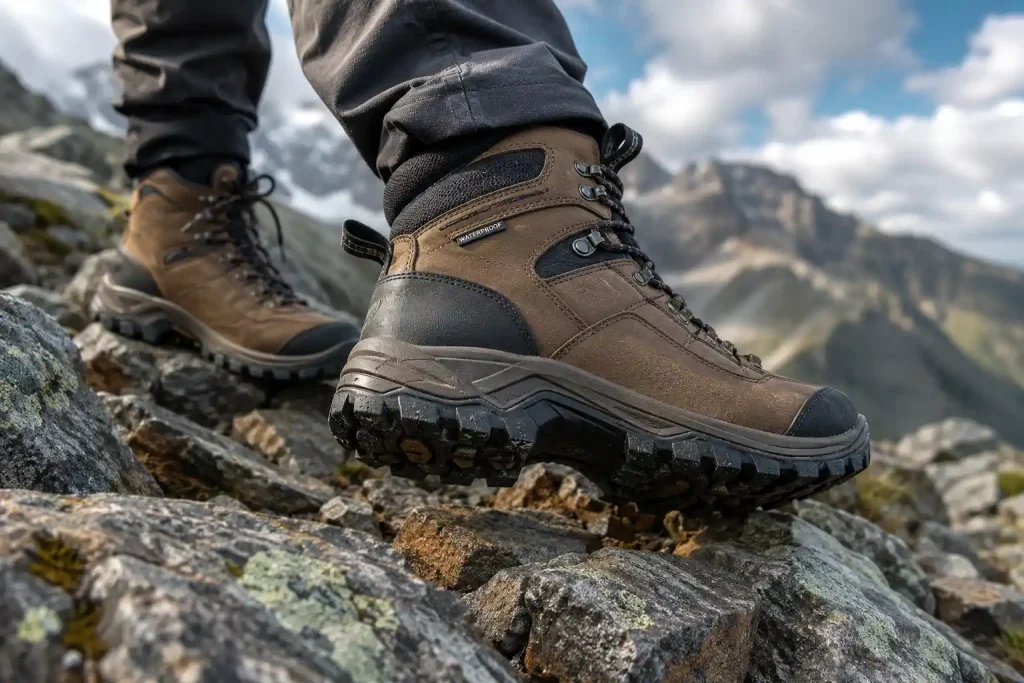
Both combat boots and hiking boots offer ankle support, but they achieve it differently.
Combat boots provide support while allowing quick movement, running, and climbing.
Hiking boots focus on stability over uneven terrain. Their midsoles and heel support help reduce ankle rolls when carrying a loaded hiking backpack.
If you hike on rocky trails or carry camping gear, hiking boots usually provide better overall stability.
When Combat Boots Make Sense
Combat boots can be a practical choice in certain situations.
- Short day hikes on maintained trails.
- Outdoor work that occasionally includes hiking.
- People who want one durable boot for multiple uses.
- Walking on mixed surfaces like dirt roads and pavement.
- Users who value rugged construction over trail-specific features.
They are durable and dependable, but they are not purpose-built for long-distance hiking.
When Hiking Boots Are the Better Choice
If hiking is your primary outdoor activity, hiking boots remain the best option.
I recommend hiking boots if you regularly:
- Go backpacking.
- Hike mountain trails.
- Cross rocky or uneven terrain.
- Carry heavy camping gear.
- Spend several hours hiking.
- Frequently hike in wet weather.
The extra comfort and support become more noticeable as your miles add up.
If you’re still shopping, you may also enjoy our guides on how to choose hiking boots and best hiking socks for long hikes.
Common Mistakes to Avoid
- Choosing boots based only on appearance.
- Ignoring proper sizing.
- Skipping the break-in period.
- Using worn-out boots on difficult trails.
- Not wearing quality hiking socks.
- Assuming all military-style boots perform equally well on hiking trails.
Expert Tips from Oscar
Oscar’s Tip: Try on hiking boots late in the day when your feet are naturally a little larger. You’ll get a more realistic fit for long hikes.
Oscar’s Tip: Always test new boots while wearing the same hiking socks you plan to use on the trail.
Oscar’s Tip: Walk several miles in new boots before taking them on a major backpacking trip. Breaking them in helps reduce hot spots and blisters.
Oscar’s Tip: Clean dirt and mud off your boots after every trip. Regular maintenance helps them last much longer.
Key Takeaways
- Combat boots are built for military use and demanding work environments.
- Hiking boots are designed specifically for trail hiking and backpacking.
- Hiking boots usually provide better traction, cushioning, and stability.
- Combat boots work well for light hiking but are less comfortable over long distances.
- Choose footwear based on how and where you’ll use it most often.
Frequently Asked Questions
Can you hike in combat boots?
Yes. Combat boots can handle many hiking trails, especially shorter hikes. However, hiking boots generally provide better comfort and traction for longer adventures.
Are hiking boots lighter than combat boots?
Many modern hiking boots are lighter because they are designed to reduce fatigue during long hikes. Combat boots often use heavier materials for maximum durability. Do combat boots have good ankle support?
Yes. Combat boots offer strong ankle support for demanding movement, but hiking boots often provide better stability on uneven natural terrain.
Are waterproof hiking boots worth buying?
If you regularly hike in wet conditions, waterproof hiking boots can help keep your feet dry and comfortable throughout your trip.
Which boots are better for backpacking?
Hiking boots are usually the better choice because they are built for carrying heavy packs over long distances.
How long do quality hiking boots last?
With proper care, quality hiking boots can last for hundreds of trail miles. Their lifespan depends on terrain, maintenance, and how often you hike.
Conclusion
When comparing combat boots vs hiking boots, the right choice depends on your primary activity. Combat boots are durable, dependable, and versatile, but hiking boots are purpose-built for comfort, traction, and stability on natural trails.
If hiking and backpacking are your main outdoor hobbies, investing in a quality pair of hiking boots is usually the smartest decision. Your feet—and your legs—will appreciate the extra support after a full day on the trail.
Before your next adventure, compare several models, make sure they fit properly, and choose boots that match the terrain you plan to explore. You can also check out our guide to the best hiking boots for beginners for more buying advice.
