If you’ve been comparing hiking boots vs tactical boots, you’re not alone. I see this question come up often because both types of boots look tough, supportive, and ready for rough terrain. At first glance, they even seem like they could do the same job.
Here’s the thing. While hiking boots and tactical boots share a few features, they are built for different purposes. Choosing the right pair can improve your comfort, reduce fatigue, and help keep your feet safe on the trail.
In this guide, I’ll explain the key differences between hiking boots and tactical boots, when each one makes sense, and how to decide which option fits your hiking style.
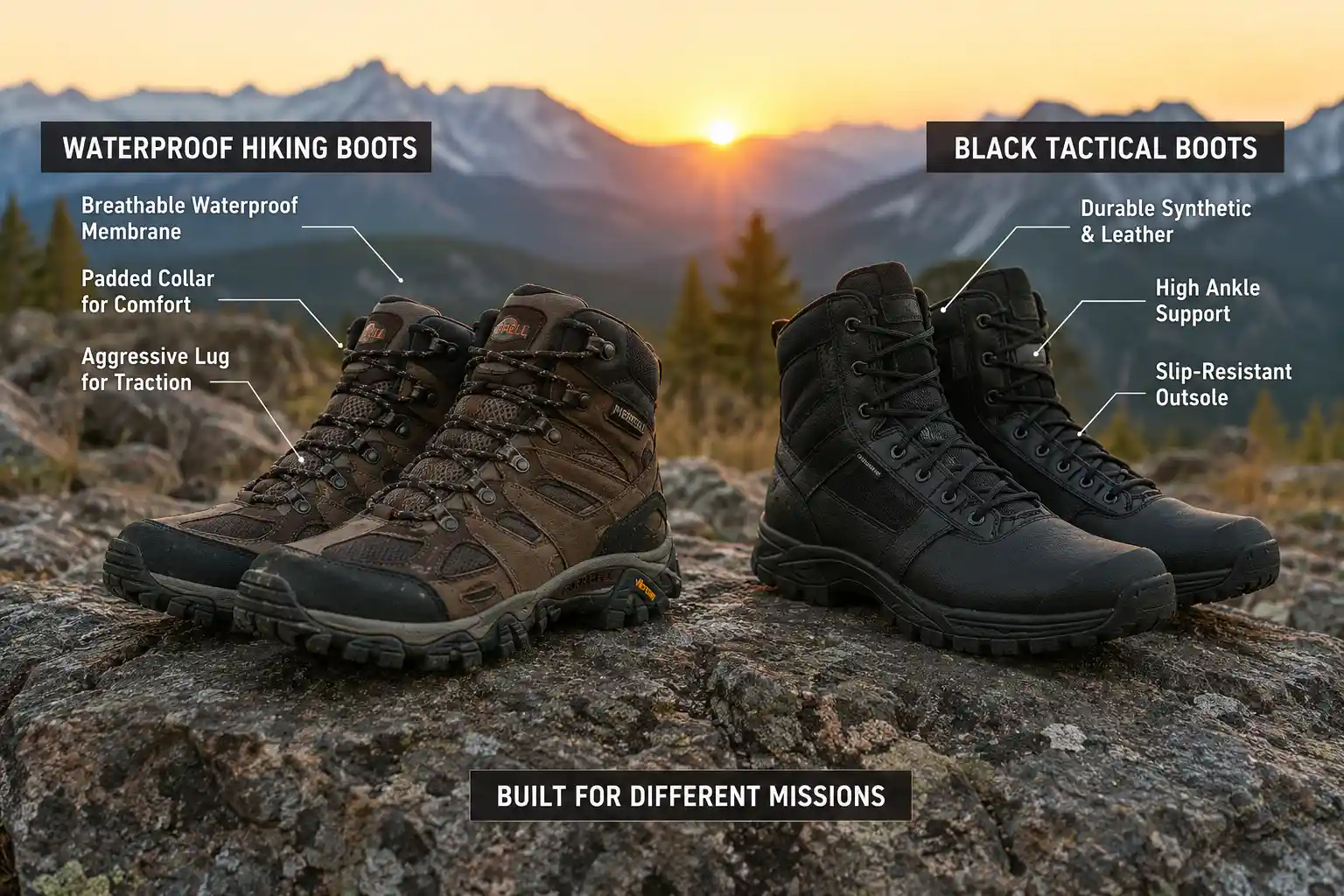
comparison of modern waterproof hiking boots and black tactical boots
Hiking boots are designed for long days on trails, carrying backpacks, and walking across rocks, mud, dirt, and uneven terrain. They focus on comfort, traction, and long-distance support.
Tactical boots are made for military personnel, law enforcement, and emergency responders who spend long hours standing, running, or working in demanding environments. They often prioritize agility, durability, and quick movement over trail-specific comfort.
If your main goal is hiking, backpacking, or mountain adventures, hiking boots are usually the better choice. Tactical boots can work for light hikes, but they are not always the best option for long-distance trails.
What Are Hiking Boots?
Hiking boots are outdoor footwear built specifically for trails. Their design helps protect your feet while giving you better grip and stability on uneven ground.
Most quality hiking boots include features such as:
Aggressive rubber outsoles for trail traction
Supportive midsoles that reduce foot fatigue
Water-resistant or waterproof materials
Toe caps for rock protection
Ankle support for uneven terrain
Whether you’re planning a short day hike or a week-long backpacking trip, hiking boots are made to stay comfortable over many miles.Oscar’s Tip: If you regularly carry a heavy hiking backpack, choose boots with excellent ankle support and a stiff midsole. They help reduce strain during long climbs.
What Are Tactical Boots?
Tactical boots were originally developed for military and law enforcement professionals. Today, they are also popular with security workers, hunters, and outdoor enthusiasts.
Unlike hiking boots, tactical boots focus on fast movement and all-day wear during demanding work environments.
Common features include:
Lightweight construction
Fast lace systems
High ankle support
Slip-resistant soles
Abrasion-resistant materials
Quick-drying fabrics
Many tactical boots feel comfortable immediately after putting them on, which is one reason they have become popular outside military use.
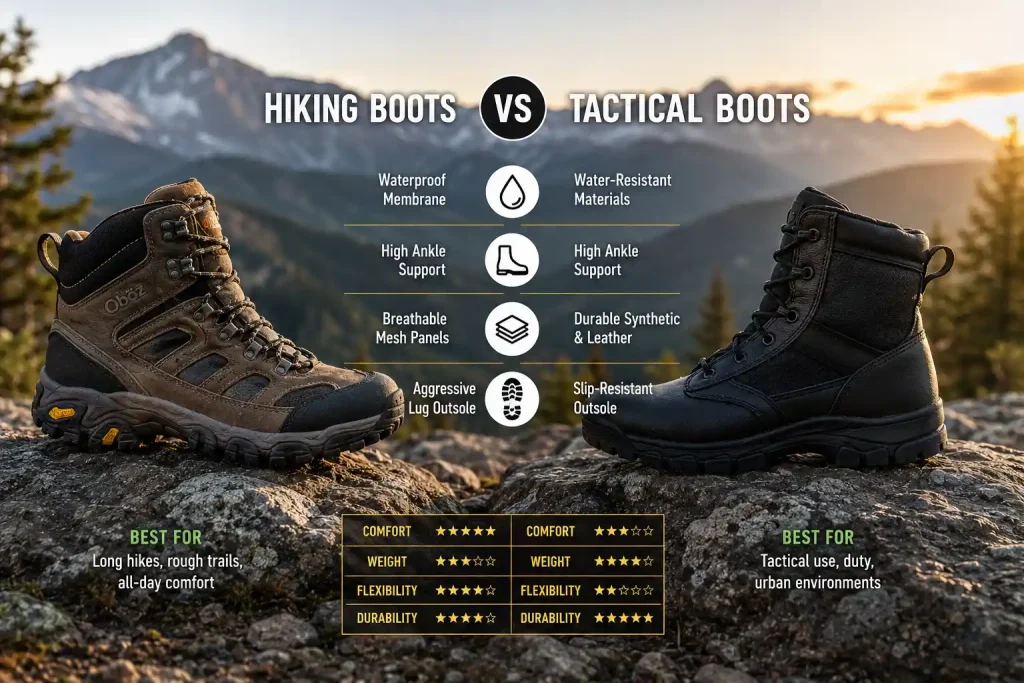
Hiking Boots vs Tactical Boots: The Biggest Differences
Although both boots protect your feet, they perform differently once you spend hours outdoors.
Feature
Hiking Boots
Tactical Boots
Main Purpose
Trail hiking and backpacking
Military, security, law enforcement
Comfort on Long Walks
Excellent
Good
Trail Traction
Outstanding
Moderate to Good
Weight
Medium
Usually lighter
Waterproof Options
Very common
Available but less common
Heavy Backpack Support
Excellent
Fair
Rock Protection
Strong
Moderate
The biggest difference is purpose. Hiking boots are built for difficult outdoor terrain, while tactical boots are designed for demanding work conditions.
Comfort During Long Hikes
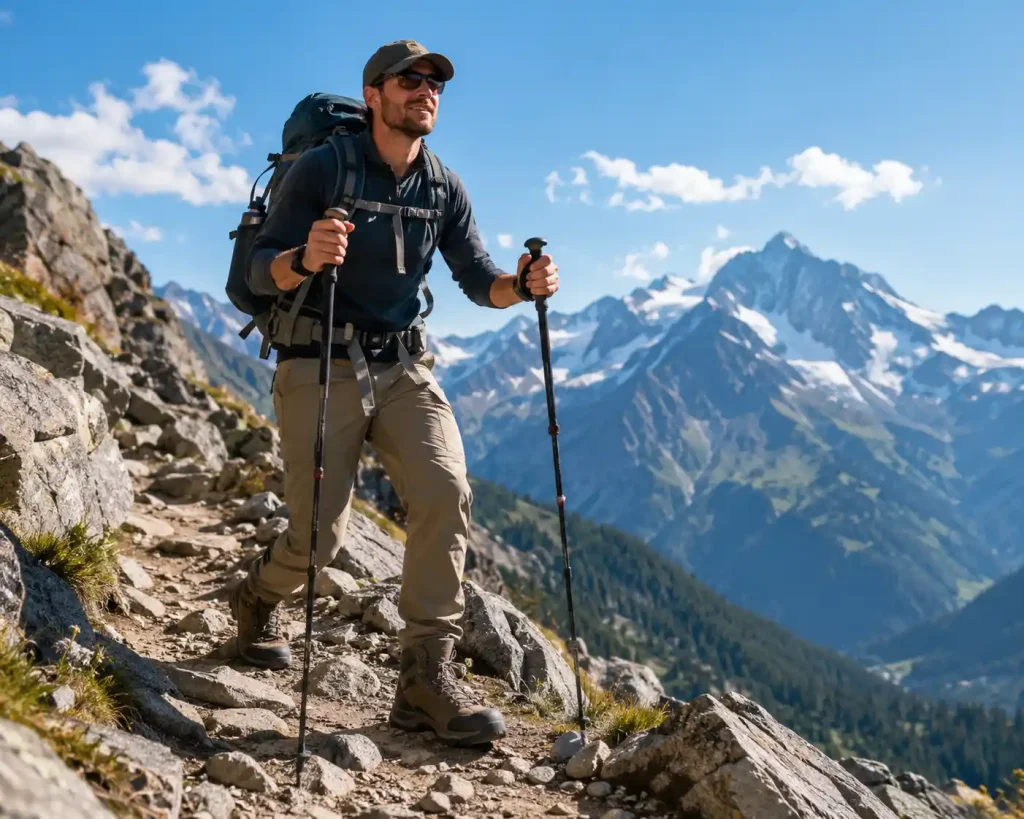
backpacker wearing modern waterproof hiking boots while climbing a rocky mountain trail with trekking poles on a sunny mountain trail.
Comfort becomes more important with every mile you walk.
Hiking boots are built to reduce pressure on your feet during long-distance hikes. Their midsoles absorb shock, while the outsole grips loose dirt, gravel, roots, and wet rocks.
Tactical boots often use firmer cushioning because they’re designed for standing, short sprints, and repeated movement rather than continuous hiking.
For hikes lasting several hours or multiple days, hiking boots usually provide:
Better arch support
Less foot fatigue
Improved shock absorption
Greater stability on uneven trails
Traction on Different Terrain
Trail conditions change quickly. One minute you’re walking on packed dirt, and the next you’re crossing wet rocks or muddy sections.
This is where hiking boots have a clear advantage.
Most hiking boots use deep, aggressive lug patterns that grip loose surfaces much better than tactical boots.
Tactical boots usually perform well on:
Pavement
Concrete
Indoor flooring
Light dirt trails
Hiking boots perform better on:
Rocky trails
Mud
Loose gravel
Forest paths
Mountain terrain
Snow-covered trails
You can also learn more about choosing proper outdoor footwear from the REI Expert Advice library and hiking safety guidance from the National Park Service.
Weight and Flexibility
Boot weight affects how tired your legs feel after several hours.
Many modern hiking boots have become lighter than older models, but tactical boots are still often slightly lighter overall.
That lighter weight can feel great during short walks or everyday use.
However, lighter isn’t always better for mountain hiking.
Hiking boots usually offer:
Better foot protection
More stable soles
Greater support under heavy loads
Improved durability on rough trails
For serious backpacking trips, many hikers gladly accept a little extra weight in exchange for improved protection.
Water Resistance and Weather Protection
Weather can change fast on the trail. A dry morning can quickly turn into steady rain or muddy conditions. That’s why weather protection matters when choosing between hiking boots and tactical boots.
Many hiking boots include waterproof membranes like Gore-Tex or similar technologies. These materials help keep water out while allowing sweat to escape, making them a great choice for wet trails and cool weather.
Tactical boots come in both waterproof and non-waterproof versions. Many prioritize breathability and quick drying over complete waterproofing because military and emergency workers may need to move through water repeatedly.
Condition
Best Choice
Why
Rainy hiking trails
Hiking Boots
Better waterproof protection
Dry summer hikes
Either
Breathability becomes more important
Backpacking trips
Hiking Boots
Better long-term comfort
Everyday outdoor work
Tactical Boots
Lightweight and flexible
Durability and Lifespan
Both boot types are built to last, but they wear differently because they’re designed for different jobs.
Hiking boots often use thick leather, reinforced toe caps, protective heel counters, and rugged outsoles that resist sharp rocks and rough trails.
Tactical boots focus more on resisting abrasion, repeated movement, and long work shifts.
With proper care, either type of boot can last for years. Cleaning mud after every hike, allowing boots to dry naturally, and replacing worn insoles can significantly extend their life.Warning: Never dry wet boots next to a campfire, heater, or direct heat source. Excessive heat can damage adhesives, shrink leather, and shorten the life of your boots.
Ankle Support and Stability
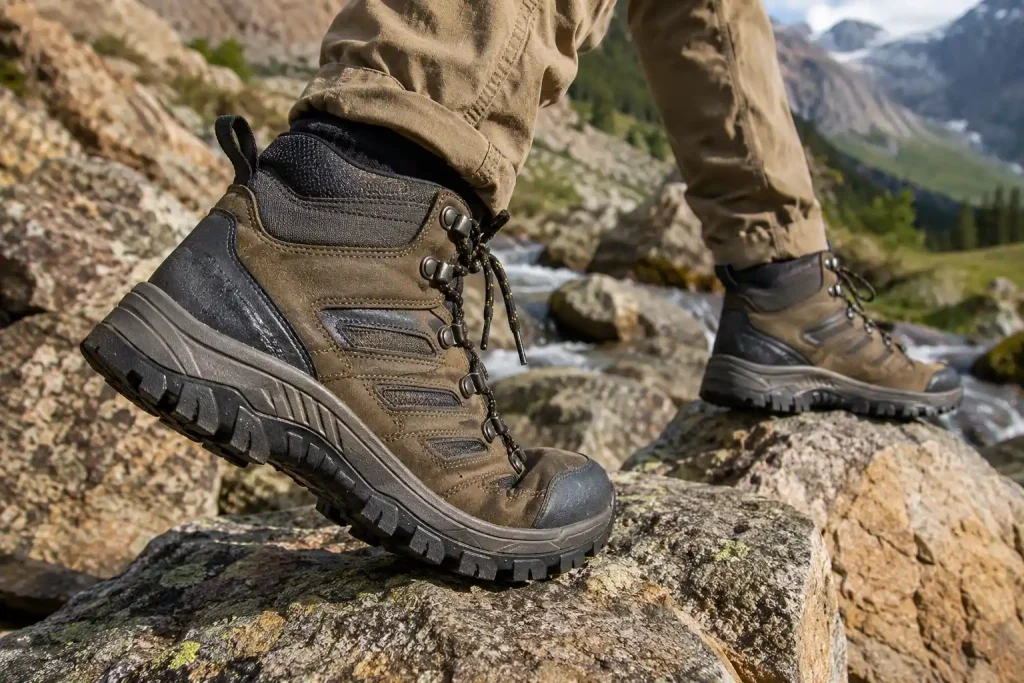
hiker crossing uneven rocky terrain while wearing supportive hiking boots
One of the biggest reasons hikers choose hiking boots is ankle stability.
Mountain trails often include loose rocks, roots, stream crossings, and steep descents. Hiking boots are designed to reduce ankle movement and improve balance on these surfaces.
Tactical boots also provide ankle support, but their design usually allows more flexibility for running, kneeling, climbing, and quick directional changes.
If you regularly carry a heavy backpack or hike on rocky terrain, hiking boots usually provide the extra stability you’ll appreciate after several hours.
When Tactical Boots Make Sense
Despite the advantages of hiking boots, tactical boots aren’t a bad choice in every situation.
They can work well if you:
Mostly hike on flat or well-maintained trails.
Prefer lightweight footwear.
Need one pair of boots for work and occasional hiking.
Take short day hikes without carrying a heavy pack.
Value fast break-in times.
Many people enjoy wearing tactical boots for casual outdoor activities because they are comfortable right out of the box.
When Hiking Boots Are the Better Choice
If hiking is your primary outdoor activity, hiking boots remain the safer investment.
I recommend hiking boots if you regularly:
Go backpacking.
Hike mountain trails.
Walk on rocky terrain.
Cross streams or muddy trails.
Carry camping gear.
Spend several hours on the trail.
You’ll notice the difference in comfort long before you reach the end of your hike.
If you’re still building your hiking gear collection, you may also enjoy our guide on how to choose hiking boots and our checklist for essential hiking gear for beginners.
Common Mistakes to Avoid
Buying boots based only on appearance.
Ignoring proper sizing and sock thickness.
Using work boots for difficult mountain trails.
Skipping the break-in period before a long hike.
Choosing the lightest boot instead of the most supportive one.
Forgetting to replace worn-out insoles and damaged laces.
Expert Tips from Oscar
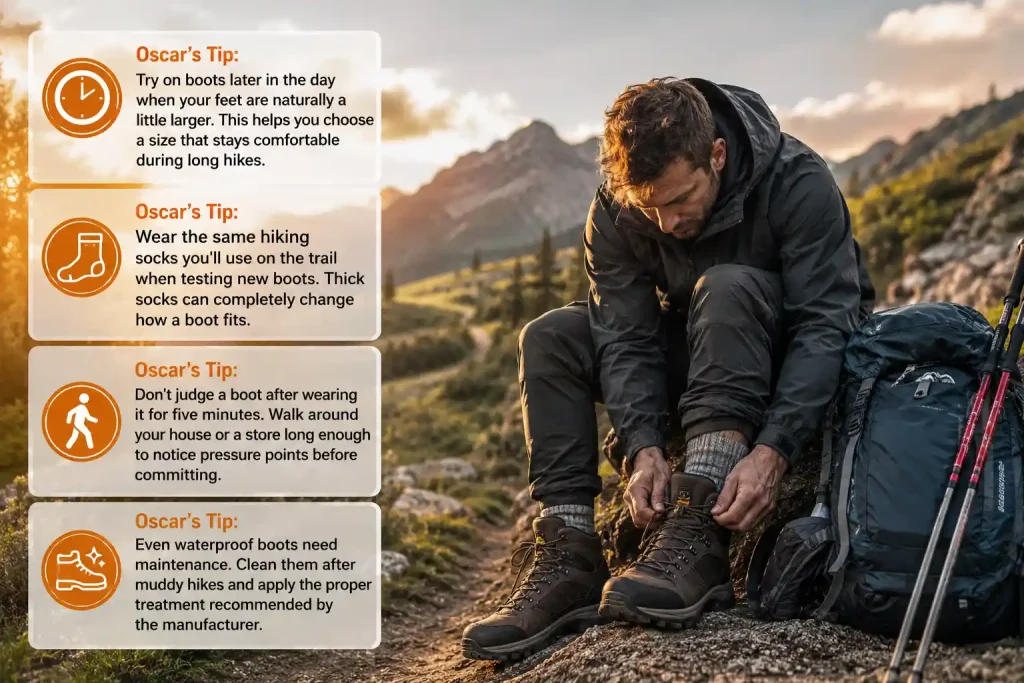
backpack and trekking poles during golden-hour lighting.Oscar’s TipOscar’s Tip: Try on boots later in the day when your feet are naturally a little larger. This helps you choose a size that stays comfortable during long hikes.
Oscar’s Tip: Wear the same hiking socks you’ll use on the trail when testing new boots. Thick socks can completely change how a boot fits.
Oscar’s Tip: Don’t judge a boot after wearing it for five minutes. Walk around your house or a store long enough to notice pressure points before committing.
Oscar’s Tip: Even waterproof boots need maintenance. Clean them after muddy hikes and apply the proper treatment recommended by the manufacturer.
Key Takeaways
Hiking boots are designed specifically for trails, backpacking, and uneven terrain.
Tactical boots prioritize agility and all-day work performance.
Hiking boots usually provide better traction, support, and long-distance comfort.
Tactical boots can work for light hikes but aren’t ideal for demanding backpacking trips.
Choose the boot that matches where you’ll spend most of your time.
Frequently Asked Questions
Can tactical boots replace hiking boots?
For easy day hikes, they often can. For mountain trails, backpacking, and rough terrain, hiking boots generally provide better support, traction, and comfort.
Are hiking boots more comfortable than tactical boots?
For long hikes, yes. Hiking boots are designed to reduce fatigue over many miles, while tactical boots focus more on mobility during demanding work.
Do tactical boots have good traction?
Most tactical boots offer solid grip on pavement and light trails. Hiking boots usually perform better on loose rocks, mud, and steep terrain.
Can I wear tactical boots for backpacking?
You can for shorter trips, but hiking boots are usually the better choice when carrying heavy loads because they offer stronger support and better stability.
Are waterproof hiking boots worth it?
If you regularly hike in wet weather, muddy trails, or mountain conditions, waterproof hiking boots are often worth the investment.
How long should hiking boots last?
With proper care, quality hiking boots often last several hundred miles or multiple years of regular hiking. Lifespan depends on terrain, maintenance, and frequency of use.
Conclusion
Choosing between hiking boots vs tactical boots comes down to how you plan to use them. While tactical boots are durable and comfortable for work or casual outdoor activities, hiking boots are built specifically for trail performance, long-distance comfort, and uneven terrain.
If hiking is your main adventure, investing in a quality pair of hiking boots will usually pay off with better support, improved traction, and less fatigue on every trip.
Before your next adventure, take a little time to compare features, try on different models, and choose the boots that match your hiking goals. You can also explore our guide to the best hiking boots for beginners to help narrow your optio
To provide the best experiences, we use technologies like cookies to store and/or access device information. Consenting to these technologies will allow us to process data such as browsing behavior or unique IDs on this site. Not consenting or withdrawing consent, may adversely affect certain features and functions.
Functional
Always active
The technical storage or access is strictly necessary for the legitimate purpose of enabling the use of a specific service explicitly requested by the subscriber or user, or for the sole purpose of carrying out the transmission of a communication over an electronic communications network.
Preferences
The technical storage or access is necessary for the legitimate purpose of storing preferences that are not requested by the subscriber or user.
Statistics
The technical storage or access that is used exclusively for statistical purposes.The technical storage or access that is used exclusively for anonymous statistical purposes. Without a subpoena, voluntary compliance on the part of your Internet Service Provider, or additional records from a third party, information stored or retrieved for this purpose alone cannot usually be used to identify you.
Marketing
The technical storage or access is required to create user profiles to send advertising, or to track the user on a website or across several websites for similar marketing purposes.