
Choosing between hiking shoes and hiking boots can feel confusing, especially when both options promise traction, comfort, and trail protection. The wrong footwear may lead to sore feet, blisters, poor stability, or unnecessary fatigue.
The hiking shoes vs hiking boots decision depends on more than personal style. Trail surface, weather, distance, pack weight, foot shape, and hiking experience all matter.
This guide explains the practical differences, advantages, limitations, fit considerations, and trail conditions that should influence your choice.
Quick Answer
Hiking shoes are generally better for maintained trails, warm weather, lighter packs, and hikers who prefer flexible, lightweight footwear. Hiking boots are usually more suitable for rough terrain, cold or wet conditions, heavier packs, and hikers wanting additional protection. The best choice is the option that fits securely and matches your actual trail conditions.
What Is the Difference Between Hiking Shoes and Hiking Boots?
The main difference is the height and structure of the footwear.
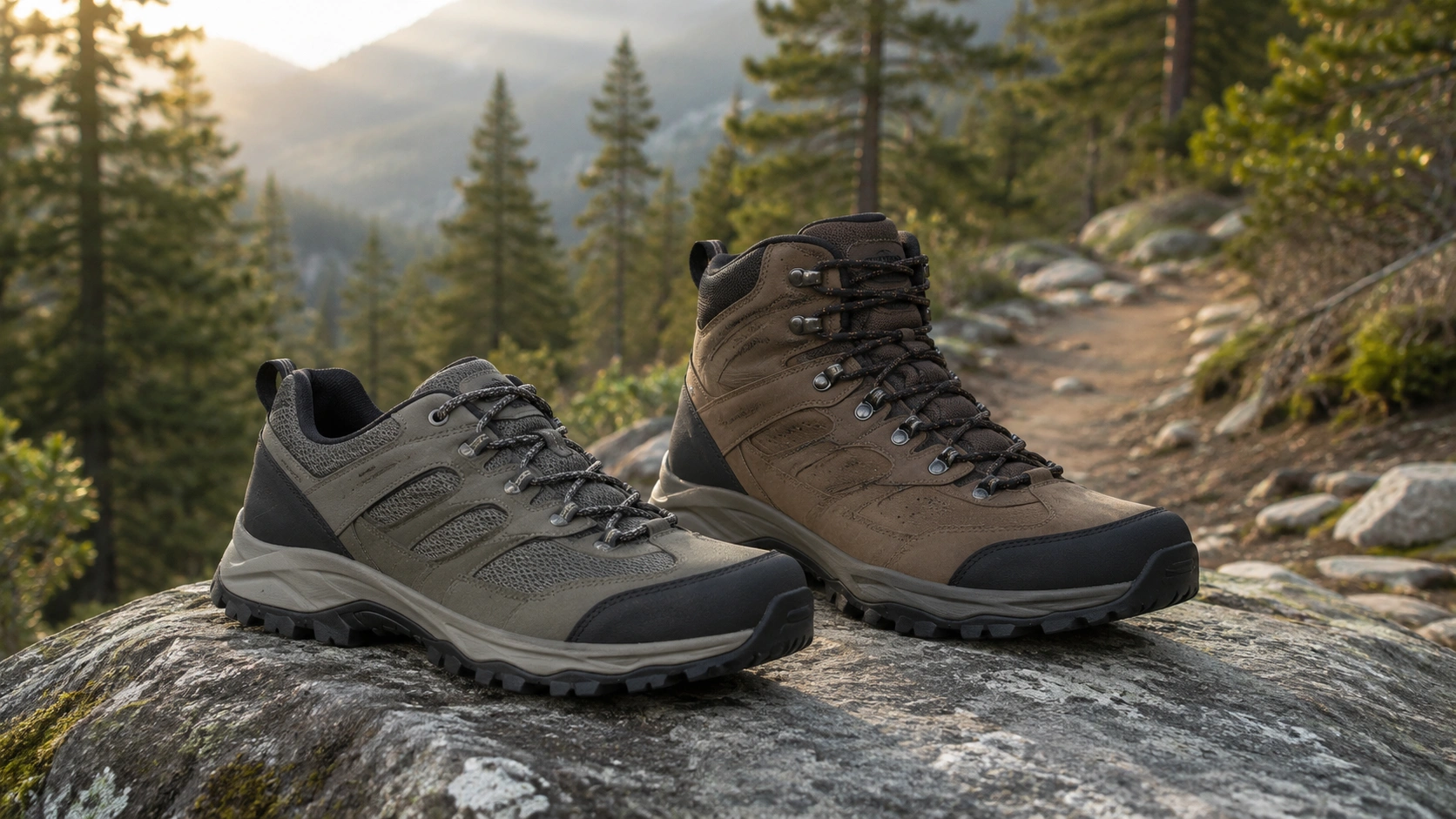
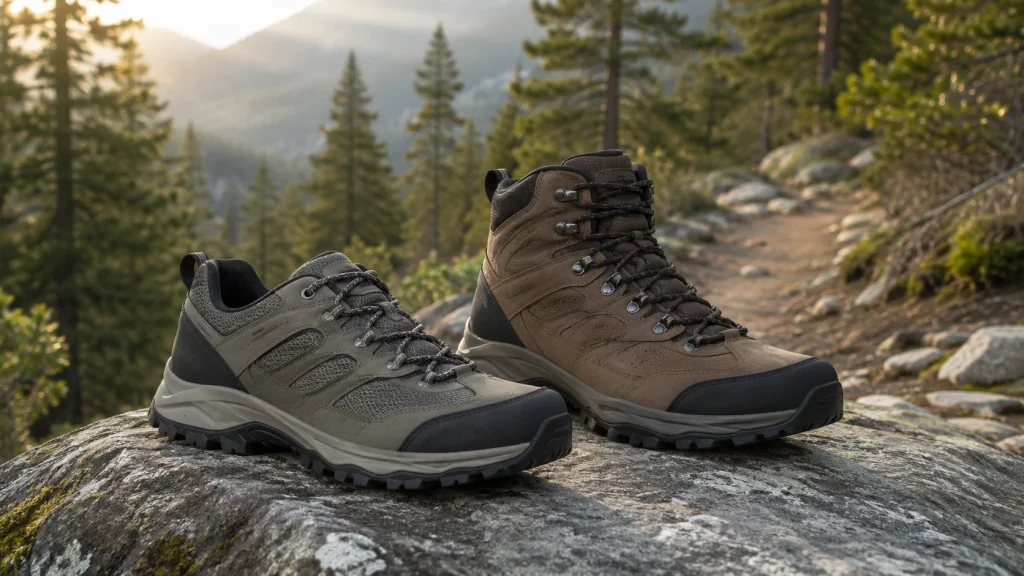
Hiking shoes usually end below the ankle. They often feel lighter, more flexible, and more similar to athletic shoes. However, their soles, toe protection, and tread patterns are designed for trail use.
Hiking boots normally extend above the ankle. They may have stiffer midsoles, stronger uppers, deeper tread, and additional protection around the foot and ankle.
Neither category is automatically better. A lightweight hiking shoe can outperform a poorly fitted boot, while a supportive boot may be much more appropriate than a flexible shoe on a rough, wet, or rocky route.
Hiking Shoes vs Hiking Boots Comparison
| Factor | Hiking Shoes | Hiking Boots |
|---|---|---|
| Weight | Usually lighter | Usually heavier |
| Ankle coverage | Low-cut | Mid- or high-cut |
| Flexibility | More flexible | Often more structured |
| Break-in period | Often shorter | May require more break-in time |
| Best terrain | Maintained and moderate trails | Rocky, muddy, uneven, or rough trails |
| Pack weight | Light to moderate loads | Moderate to heavy loads |
| Warm-weather comfort | Usually more breathable | May feel warmer |
| Water protection | Varies by model | Often offers more coverage |
| Drying speed | Often faster | Usually slower |
| Debris protection | Less coverage | Better protection from mud and trail debris |
| Everyday use | Easier to use casually | Less convenient for daily wear |
| Long-term durability | Depends on construction | Often built with more protective materials |
These are general differences, not guarantees. Materials and construction vary widely between individual products.
When Hiking Shoes Are the Better Choice
Maintained Trails and Day Hikes
Hiking shoes work well on maintained paths where the surface is relatively predictable. Examples include packed dirt trails, rolling woodland routes, gravel paths, and many established national park trails.
Their lower weight can make walking feel more natural, particularly when you are not carrying a large backpack.
The National Park Service hiking safety guidance emphasizes choosing proper footwear for the route, including sturdy, rubber-soled footwear for dirt and gravel trails. It also recommends planning ahead and carrying appropriate hiking essentials.
Warm and Dry Conditions
Low-cut hiking shoes usually allow more airflow around the ankle. This can make them comfortable during warm-weather hikes, especially when waterproof footwear is unnecessary.
A breathable, non-waterproof shoe may also release heat and moisture more efficiently than a lined boot. However, breathability depends on the upper material, sock choice, and individual foot temperature.
Fast-Paced Hiking
Hikers who move quickly may prefer footwear that bends easily and feels less restrictive. Lightweight shoes can make it easier to maintain a natural stride on moderate terrain.
However, faster movement does not remove trail hazards. Loose rocks, exposed roots, wet leaves, and sudden changes in elevation still require controlled foot placement.
Travelers Who Want Versatility
Hiking shoes are often easier to pack and can be suitable for sightseeing, travel days, and casual outdoor activities. This can be helpful when luggage space is limited.
They should still be selected for trail performance rather than appearance alone. Casual sneakers may not provide the tread, protection, or stability needed for unpaved routes.
When Hiking Boots Are the Better Choice
Rocky or Uneven Terrain
Boots can provide additional coverage against rocks, roots, mud, and trail debris. Their structured soles may also feel more stable when walking over sharp or uneven surfaces.
This does not mean that boots prevent every ankle injury. Boot height, stiffness, fit, fatigue, physical conditioning, and terrain all influence stability.
Do not assume that a high collar guarantees protection from ankle sprains. Careful movement, appropriate pacing, fitness, and secure fit remain important.
Heavy Backpacking Loads
A boot with a firm midsole may feel more supportive when carrying camping equipment, food, water, and other overnight gear.
The ideal level of structure depends on:
- Your total pack weight
- Trail steepness
- Foot strength
- Previous hiking experience
- Distance and elevation gain
- Personal balance and stability
Backpackers should test loaded walking before committing to a long route. A boot that feels comfortable in a store may feel very different after several miles with a full pack.
Cold, Muddy, or Wet Trails
Boots provide more coverage around the ankle, which may help limit mud, snow, and debris entering the footwear. Waterproof models can be useful in certain conditions, but waterproofing has limitations.
Water may still enter over the collar, through damaged materials, or during deeper crossings. Waterproof footwear may also trap heat and perspiration.
For snow and winter conditions, the National Park Service winter hiking recommendations advise hikers to consider appropriate footwear, gaiters, and additional traction when conditions require them. Official park alerts should always be checked before beginning a winter hike.
Off-Trail or Overgrown Areas
Where off-trail travel is legally permitted, boots can provide better coverage against vegetation, loose material, and minor impacts.
However, hikers should remain on designated trails whenever required. Following the Leave No Trace principles helps reduce damage to vegetation, wildlife habitat, and fragile outdoor environments.
Which Option Is Better for Beginners?
Many beginners do not need the heaviest boot available. A comfortable hiking shoe may be enough for short, maintained trails in favorable weather.
Beginners should focus on:
- A secure heel that does not lift excessively
- Enough toe space for downhill walking
- A sole designed for the expected surface
- Comfortable cushioning without instability
- No immediate rubbing, pinching, or numbness
- Compatibility with hiking socks
A beginner planning rocky mountain routes, muddy trails, or hikes with a heavier pack may benefit from a supportive mid-cut boot.
The safest strategy is to choose footwear for the route you are actually hiking—not the most extreme adventure you might attempt someday.
Expert Tip: Try hiking footwear late in the day while wearing your normal hiking socks. Feet often expand during activity, so a pair that feels perfect early in the morning may become tight after several hours.
How to Choose Between Hiking Shoes and Hiking Boots
1. Evaluate the Trail Surface
Consider whether the route contains:
- Smooth packed dirt
- Gravel
- Loose rocks
- Wet roots
- Deep mud
- Snow or ice
- Steep climbs and descents
- River crossings
- Scrambling sections
Maintained paths usually require less footwear structure than rough backcountry routes.
Trail classifications are not completely standardized. Read the official trail description and recent alerts rather than relying only on labels such as “easy” or “moderate.”
2. Consider Distance and Elevation Gain
A short route can still be physically demanding when it climbs steeply or crosses technical terrain.
Longer hikes create more opportunities for rubbing, swelling, and foot fatigue. Test new footwear on shorter walks before using it for a full-day or overnight trip.
3. Check the Weather and Season
Weather can change both trail conditions and footwear requirements. Dry dirt can become slippery mud, while mild temperatures can shift toward cold rain or thunderstorms.
Review the official forecast before leaving. The National Weather Service outdoor lightning guidance advises hikers to understand local weather patterns, monitor forecasts, and move toward safe shelter when thunderstorms threaten. Footwear cannot make exposed terrain safe during severe weather.
4. Think About Your Pack Weight
A small daypack places less demand on your feet than a backpacking load.
As pack weight increases, some hikers prefer a firmer sole and more structured footwear. Others remain comfortable in lighter shoes because of their experience, conditioning, or packing style.
Test your footwear with a realistic load rather than an empty backpack.
5. Prioritize Fit Over Category
A boot is not useful if your heel slips, your toes hit the front, or the upper presses painfully against your foot. The same applies to hiking shoes.
Good fit should include:
- A secure heel
- Comfortable midfoot hold
- Space for natural toe movement
- No pressure against bunions or sensitive areas
- No numbness or tingling
- Minimal movement inside the footwear
Walk uphill and downhill during the fitting process when possible.
6. Examine the Outsole
The outsole is the bottom rubber surface that contacts the trail. Its tread pattern affects how the footwear interacts with dirt, rock, and mud.
Look for tread appropriate to your main terrain. Deep, widely spaced lugs may release mud more effectively, while broad contact areas can feel stable on firm surfaces.
No outsole guarantees grip on wet rock, ice, loose gravel, algae, or steep mud. Slow down and turn back when conditions exceed your skills or equipment.
Waterproof or Non-Waterproof?
Waterproof footwear can help in shallow mud, wet grass, light rain, and certain cold conditions. It may be a practical choice for hikers who regularly encounter damp environments.
However, waterproof shoes and boots may:
- Feel warmer
- Release internal moisture more slowly
- Take longer to dry after becoming fully soaked
- Cost more than similar non-waterproof models
- Be unnecessary in hot, dry climates
Non-waterproof footwear may be preferable when ventilation and drying speed matter more than water resistance.
Do not confuse “water-resistant” with fully waterproof. Always review the manufacturer’s description, care instructions, and limitations.
Fit and Sizing Checklist
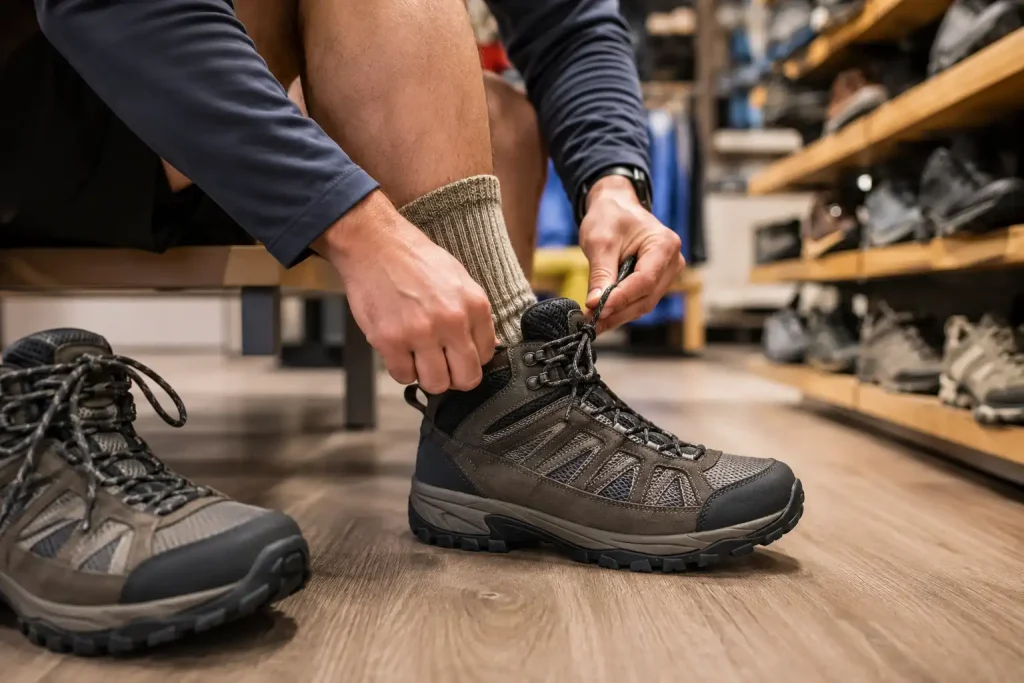
Try both shoes or boots with the socks you intend to wear while hiking.
During fitting:
- Stand and walk for several minutes.
- Check that your heel does not lift excessively.
- Confirm that your toes do not strike the front on a downhill surface.
- Lace the footwear securely without cutting off circulation.
- Test both feet because they may differ slightly in size.
- Wear any required orthotics or insoles.
- Avoid buying a painful pair based on the hope that it will completely change during break-in.
Minor stiffness may improve with use, but significant pressure, numbness, or poor shape compatibility usually will not.
Comfort, Break-In, and Blister Prevention
Hiking shoes often require less break-in time because they are lighter and more flexible. Structured boots, especially those made with firm materials, may need gradual use before a demanding trip.
Break in new footwear by wearing it during:
- Short indoor fitting sessions
- Neighborhood walks
- Easy local trails
- Moderate hikes with a light pack
- Longer hikes under realistic conditions
Stop and address hot spots before they become blisters. Changing socks, adjusting laces, drying damp feet, or applying appropriate blister protection may help.
Persistent pain, numbness, swelling, weakness, or altered walking should not be treated as a normal break-in issue.
Durability and Long-Term Value
Boots often use more material and protective construction, but that does not automatically make every boot more durable than every hiking shoe.
Durability depends on:
- Upper material
- Stitching and adhesive quality
- Sole construction
- Frequency of use
- Trail surface
- Storage conditions
- Cleaning and drying practices
- The hiker’s walking pattern
Inspect footwear regularly. Replacement may be necessary when tread becomes smooth, cushioning remains compressed, the sole separates, waterproof materials fail, or the upper no longer holds the foot securely.
A lower purchase price is not good value when the footwear fits poorly or is unsuitable for your regular trails.
Care and Maintenance
After hiking:
- Remove loose dirt with a soft brush.
- Follow the manufacturer’s cleaning instructions.
- Remove insoles when extra drying is needed.
- Air-dry footwear away from excessive direct heat.
- Check seams, laces, eyelets, and sole attachment.
- Treat leather or waterproof materials only with compatible products.
- Store footwear in a dry, ventilated area.
Avoid placing wet footwear directly beside a heater or open flame. Excessive heat may damage adhesives, leather, synthetic materials, and waterproof membranes.
Common Mistakes Hikers Should Avoid
- Choosing footwear only by appearance: Trail compatibility and fit are more important than color or style.
- Assuming boots prevent all ankle injuries: Structure may help some hikers, but it cannot replace careful foot placement and conditioning.
- Buying footwear that is already painful: Severe pressure rarely becomes comfortable through normal break-in.
- Ignoring downhill toe space: Toes repeatedly striking the front can cause pain and nail damage.
- Testing new footwear on a major hike: Use shorter walks to identify fit problems first.
- Using worn tread on slippery trails: Reduced traction can increase difficulty on mud, loose surfaces, and wet terrain.
- Forgetting weather conditions: A comfortable dry-weather shoe may be unsuitable for snow, cold mud, or prolonged rain.
- Choosing waterproof footwear automatically: Waterproof construction may be unnecessary or uncomfortable in hot, dry conditions.
- Wearing cotton socks on long, wet hikes: Moisture management should be considered when selecting hiking socks.
- Ignoring official trail alerts: Footwear cannot compensate for closures, fire restrictions, flooding, ice, or dangerous weather.
When to Call a Hiking Guide, Outdoor Professional, or Medical Professional
Speak with an experienced equipment specialist when you cannot determine the correct size, width, insole, lacing method, or footwear type. Bring your hiking socks, orthotics, and realistic trip information to the fitting.
Consider hiring a qualified hiking guide or outdoor professional when a route involves unfamiliar navigation, remote terrain, scrambling, snow travel, river crossings, high altitude, avalanche exposure, or conditions beyond your training.
Consult a qualified medical professional or foot-care specialist if you have:
- Persistent foot or ankle pain
- A recent injury
- Repeated ankle instability
- Significant swelling
- Numbness or loss of sensation
- Diabetes or circulation concerns
- A medical condition affecting balance or walking
- Pain that changes your normal gait
Seek emergency assistance for serious injuries, inability to walk, severe weather exposure, confusion, breathing difficulty, signs of heat illness, suspected hypothermia, or other potentially life-threatening symptoms. Do not rely on footwear advice as a substitute for medical care or emergency planning.
FAQs
Are hiking boots safer than hiking shoes?
Not automatically. Boots may provide more coverage and structure, but safety also depends on fit, traction, terrain, weather, fitness, pack weight, and hiking technique. Neither option guarantees protection from falls or ankle injuries.
Can I wear hiking shoes for backpacking?
Yes, some hikers use hiking shoes for backpacking, particularly with lighter packs and moderate terrain. A structured boot may be more comfortable for hikers carrying heavier loads or traveling over rough, wet, or unstable ground.
Do hiking boots prevent ankle sprains?
Boots may limit some ankle movement and provide a feeling of support, but they do not guarantee that a sprain will not occur. Proper fit, strength, balance, pacing, and careful foot placement remain essential.
Should hiking footwear be a size larger?
Do not automatically buy a full size larger. The footwear should provide enough room for normal swelling and downhill movement without allowing excessive sliding. Sizing varies between manufacturers, so try each model carefully.
Are waterproof hiking boots worth buying?
They can be useful in wet grass, shallow mud, light rain, snow, or cold conditions. They may be less comfortable in hot weather and can dry slowly if water enters from above.
Can I use regular sneakers instead of hiking shoes?
Regular sneakers may be acceptable for paved paths and some short, easy routes. They may lack the tread, protection, and durability needed for loose, muddy, rocky, or uneven trails.
How long should hiking shoes or boots last?
There is no universal lifespan. Replacement depends on construction, use, terrain, body weight, maintenance, and walking pattern. Replace footwear when worn tread, damaged uppers, compressed cushioning, or sole separation affects fit or trail performance.
Conclusion
The hiking shoes vs hiking boots decision should be based on your trail—not on the assumption that one category is always superior.
Choose hiking shoes for maintained trails, warm conditions, lighter packs, and flexible movement. Consider hiking boots for rough terrain, heavier loads, cold or wet conditions, and additional foot coverage.
Most importantly, select footwear that fits securely, matches the weather, and has appropriate traction for the route. Test it before a demanding trip, inspect it regularly, and check official trail and weather information before leaving.
Choose the pair that supports your real hiking plans, then build confidence gradually on trails that match your experience and preparation.
