
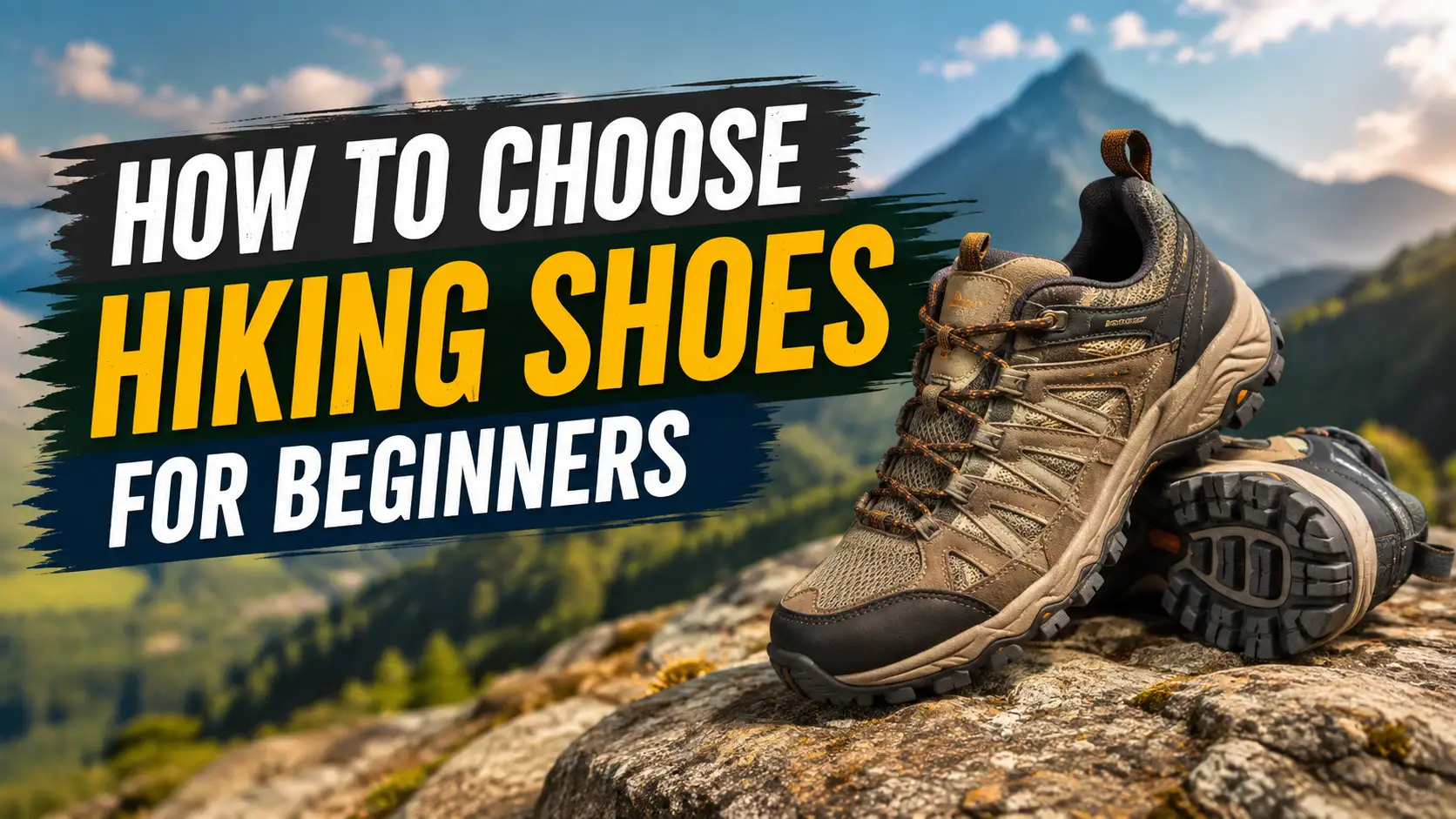
Hey there, I’m Oscar! If you are planning to hit the trails soon, you are probably looking at a mountain of outdoor gear. One of the most common questions I get from everyday hikers is about footwear. You might be staring at a wall of boots and trail runners wondering what you actually need. Is it okay to just wear your everyday gym sneakers? Do you really need those heavy leather boots for a simple day hike?
Here’s the thing. Picking the wrong shoes is the fastest way to ruin a good hike. Blisters, crushed toes, and rolled ankles are no fun. I remember my first long hike wearing regular running shoes. By mile four, I was sliding on muddy rocks and my feet were aching. I learned the hard way that trail-specific footwear makes a massive difference in your comfort and outdoor safety.
The good news is that finding the right pair is easier than it looks once you know a few basic rules. In this guide, I will show you exactly how to choose hiking shoes for beginners. We will cover the different styles, how to get the perfect fit, and how to avoid the biggest mistakes new hikers make. Let’s get your feet ready for the trail!
Quick Answer
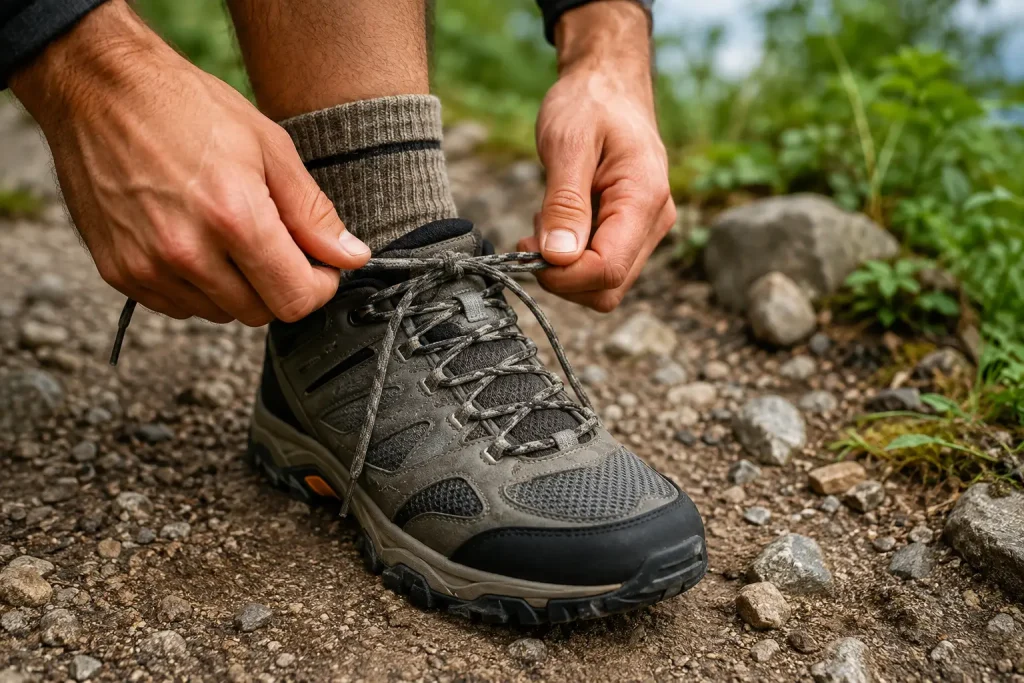
To know how to choose hiking shoes for beginners, start by matching the shoe to your trail type. For most basic day hikes, lightweight trail runners or low-cut hiking shoes are the best choice. Always buy your hiking shoes a half-size or full-size larger than your everyday shoes to give your toes room to swell. Try them on at the end of the day while wearing the exact wool hiking socks you plan to use on the trail.
What Hikers Should Know About Hiking Footwear
Before you go shopping, it helps to understand why hiking shoes are different from standard street sneakers. Regular gym shoes are made for flat, predictable surfaces like pavement or gym floors. Hiking trails are a totally different world. Trails have loose gravel, slippery tree roots, slick mud, and sharp rocks.
Hiking shoes are built to handle these wild conditions. Here are a few reasons why trail footwear is an essential part of your hiking gear:
- Better Traction: Hiking shoes have deep rubber lugs on the bottom. These act like tire treads to keep you from slipping on dirt and wet rock.
- Foot Protection: Trail shoes usually feature a hard rubber toe cap. This saves your toes if you accidentally kick a hidden rock.
- Stiffer Soles: A stiffer sole prevents your foot from feeling every single sharp stone you step on, which prevents foot fatigue on long days.
- Weather Defense: Many hiking shoes offer water-resistant materials to keep your feet dry during shallow stream crossings or morning dew.
Signs You Should Adjust Your Hiking Plan or Gear
Sometimes, your body or the trail will tell you that your footwear is not working. Paying attention to these signs is a huge part of trail safety. If your shoes do not fit right, or if the trail conditions change, you need to adjust.
If you start feeling a “hot spot” on your heel, stop walking immediately. A hot spot is a warm, red area of skin caused by friction. If you ignore it, it will turn into a painful blister in minutes. Take off your shoe, apply a blister bandage, and adjust your laces.
Trail Safety Note: Always check the weather and trail conditions before you leave. I highly recommend checking official alerts from the National Park Service or your local state park office. If a trail is flooded or washed out, no hiking shoe will make it safe. It is always smarter to turn back or pick a different trail.
Here is a quick breakdown to help you spot footwear problems early on the trail.
| Sign on the Trail | What It Means | What You Should Do |
|---|---|---|
| Warm rubbing on your heel | A blister is forming (Hot Spot) | Stop immediately. Apply a bandage or blister pad. Tie shoes tighter. |
| Toes hitting the front of the shoe | Shoes are too small or laced loosely | Stop and re-lace tightly. If they still hit, the shoes are too small. |
| Constant slipping on dry rocks | Soles are worn out or wrong shoe type | Slow down, use trekking poles for balance, and upgrade your shoes. |
| Aching arches after two miles | Poor foot support | Add aftermarket insoles designed for hiking and arch support. |
How to Choose Hiking Shoes for Beginners Step by Step
Let me explain exactly how to find your perfect pair. Follow these steps when you are at the outdoor store to ensure you walk out with the best shoes for your feet.
1. Pick the Right Category
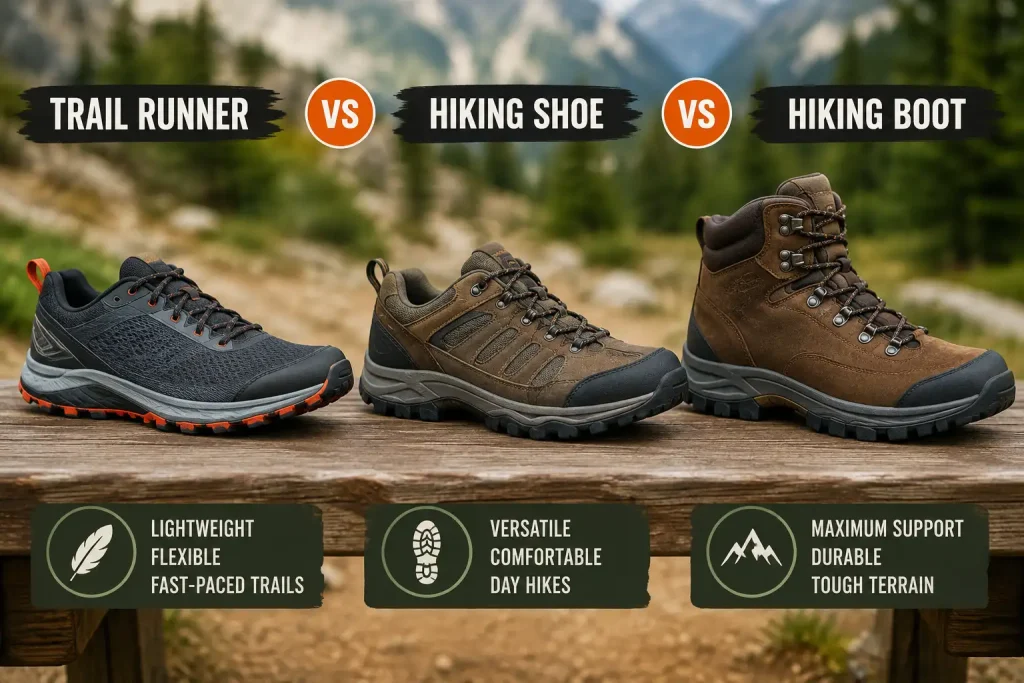
First, match the shoe to the hiking you will actually do. You generally have three choices: trail runners, hiking shoes, and hiking boots. Trail runners are super light and breathable, perfect for well-maintained dirt paths. Hiking shoes offer a bit more stiffness and durability for rocky trails. Hiking boots are heavy and tall, designed for carrying heavy backpacking gear over rough terrain. For most beginner day hikers, a low-cut hiking shoe or trail runner is perfect.
2. Shop Late in the Day
Your feet naturally swell as you walk around during the day. This happens on the trail, too. If you buy shoes first thing in the morning, they will feel too tight by the afternoon. Always go shoe shopping late in the afternoon or evening so your feet are at their largest.
3. Bring Your Hiking Socks
Never try on hiking boots with thin dress socks or everyday cotton socks. Bring the exact socks you plan to hike in. The thickness of your sock completely changes how the shoe fits. I suggest wearing medium-weight wool socks when testing new shoes.
4. Check the Toe Space
This is the most important step. Push your foot forward inside the unlaced shoe so your toes touch the front. You should be able to slide one index finger down the back of the shoe, behind your heel. When laced up, you need a thumb’s width of space in front of your longest toe. This keeps your toes safe when hiking downhill.
5. Do the Incline Test
Most good outdoor stores have a small sloped ramp. Walk up and down this ramp in the store. When walking down, your foot should stay locked in place. If your toes smash into the front, or if your heel lifts up inside the shoe, try a different size or a different brand.
Understanding Waterproof vs. Non-Waterproof
Many beginners assume they need waterproof hiking shoes. But that is not always true. Waterproof shoes have a special membrane inside (like Gore-Tex). This keeps water out, but it also traps heat and sweat inside.
If you hike in hot, dry climates like the desert, waterproof shoes will make your feet sweat heavily, which leads to blisters. For hot weather, highly breathable, non-waterproof mesh shoes are much better. However, if you hike in the rainy Pacific Northwest or cross muddy fields, a waterproof shoe is a great choice. Think about your local weather before you buy.
| Shoe Feature | Waterproof (Gore-Tex) | Non-Waterproof (Mesh) |
|---|---|---|
| Best Climate | Cold, rainy, snowy, muddy trails | Hot, dry, summer days, desert trails |
| Breathability | Low (traps body heat) | High (lets heat escape easily) |
| Drying Time | Very slow once wet inside | Fast drying in the sun |
Common Mistakes to Avoid
Over the years, I have seen plenty of hikers miserable on the trail because of a few simple footwear mistakes. Here is what you should avoid:
- Wearing cotton socks: Cotton holds sweat against your skin. Wet skin causes severe blisters. Always wear merino wool or synthetic hiking socks.
- Buying your exact street shoe size: Hiking shoes almost always need to be larger than your everyday sneakers to account for thick socks and foot swelling.
- Skipping the break-in period: Never take a brand-new pair of stiff boots on a 10-mile hike. Wear them around your house and neighborhood first.
- Thinking heavier is better: Heavy boots will tire out your legs quickly. Only buy heavy boots if you are carrying a massive backpack or hiking in deep snow.
- Ignoring heel slip: If your heel slides up and down when you walk, you will get a blister. The shoe must grip your heel securely.
Practical Tips from Oscar
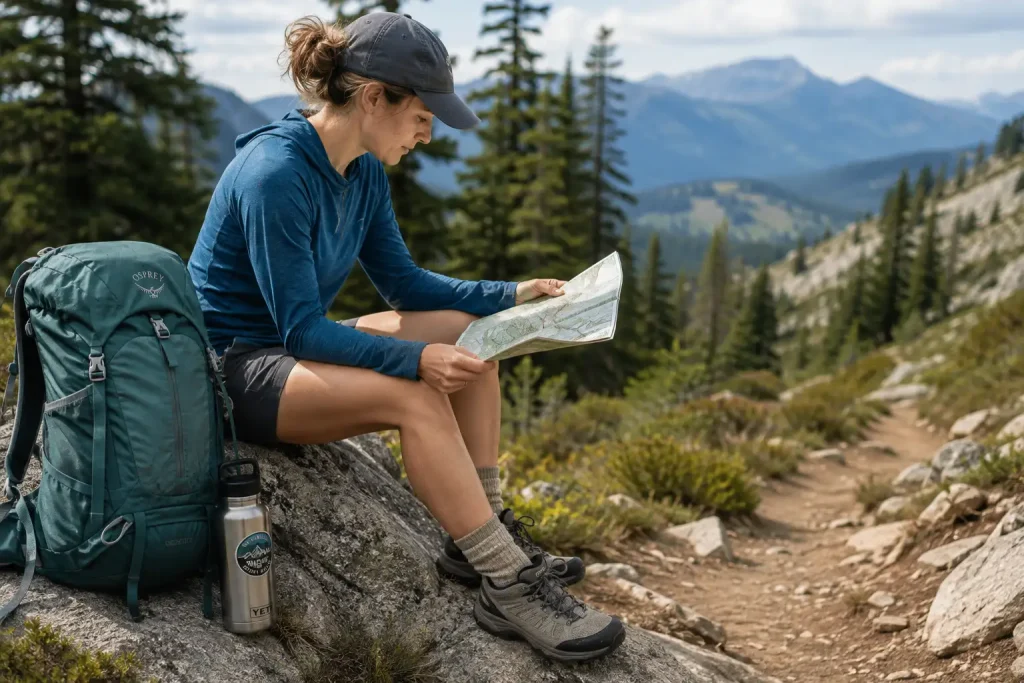
I want you to have the best time possible outdoors. Proper foot care goes beyond just the shoe. Here are a few extra practical tips I always use when hitting the trail.
Oscar’s Trail Tip: Pack a Basic First-Aid Kit
Even the best hiking shoes can cause a hot spot on a long day. Always pack a small first-aid kit with blister bandages or moleskin. Treating a red spot early is the key to finishing your hike comfortably. According to the American Hiking Society, prevention and prompt treatment are crucial for foot health on the trail.
Oscar’s Trail Tip: Cut Your Toenails
This sounds funny, but it is true! Cut your toenails short before a hike. Long toenails will repeatedly bang against the front of your hiking shoe on downhill sections. This causes bruising and extreme pain. Keep them trimmed.
Oscar’s Trail Tip: Upgrade Your Insoles
Most shoes come with cheap, flimsy foam insoles from the factory. If you need better arch support, pull those factory insoles out and replace them with a quality aftermarket insole. It makes a budget shoe feel like a premium one.
Key Takeaways
- Trail runners or low-cut hiking shoes are the best starting point for beginner day hikers.
- Always choose a half-size or full-size larger to accommodate foot swelling and thick socks.
- Check for a thumb’s width of space in the toe box to protect your toes on downhill sections.
- Match your shoe’s material (waterproof vs. non-waterproof) to your local climate and trail conditions.
- Never wear cotton socks; opt for merino wool or synthetic materials to prevent blisters.
Frequently Asked Questions
Do I really need hiking shoes?
Yes, for unpaved dirt trails, you really should wear hiking shoes. Regular sneakers lack the deep traction needed to prevent slips on mud and rocks, and they don’t protect your toes from roots and stones.
Should I buy waterproof hiking shoes?
It depends on where you hike. If you hike in the rain, mud, or early morning dew, waterproof shoes are excellent. But if you hike in hot, dry, or desert climates, highly breathable mesh shoes will keep your feet from getting sweaty and blistered.
Are trail runners good for beginners?
Absolutely. Trail runners are lightweight, highly breathable, and require almost no break-in time. They are an excellent choice for beginners who plan to hike well-maintained, clear dirt trails.
How much room should be at the toe of a hiking shoe?
You should have about a thumb’s width of extra space between your longest toe and the front of the shoe. This space stops your toes from painfully smashing into the front of the shoe when you walk downhill.
How long does it take to break in hiking boots?
Lightweight trail runners and synthetic hiking shoes rarely need breaking in. However, heavy leather hiking boots can take anywhere from 10 to 30 miles of walking before the stiff leather softens up and molds to your feet.
Why do my feet hurt after a short hike?
Foot pain can happen if your shoes lack arch support, if they are tied too tightly, or if the sole is too soft for jagged rocks. Consider upgrading to firmer aftermarket insoles to give your feet better structural support.
Wrapping Up Your Gear Planning
Choosing your first pair of hiking shoes is one of the most exciting parts of preparing for the outdoors. Take your time at the store, ask questions, and focus entirely on how the shoe fits your specific foot shape. Do not worry about the brand name or the color. If it fits well and gives you solid traction, it is the right shoe for you.
Remember that good footwear is just one part of outdoor safety and trail planning. Pair your new shoes with quality wool socks and start breaking them in around the neighborhood. If you are looking for more tips on what to carry in your backpack, be sure to read our beginner hiking gear checklist next.
So what should you do now? Grab those hiking socks, head over to your local outdoor gear shop later this afternoon, and try on a few pairs. I will see you out on the trails. Happy hiking!
