
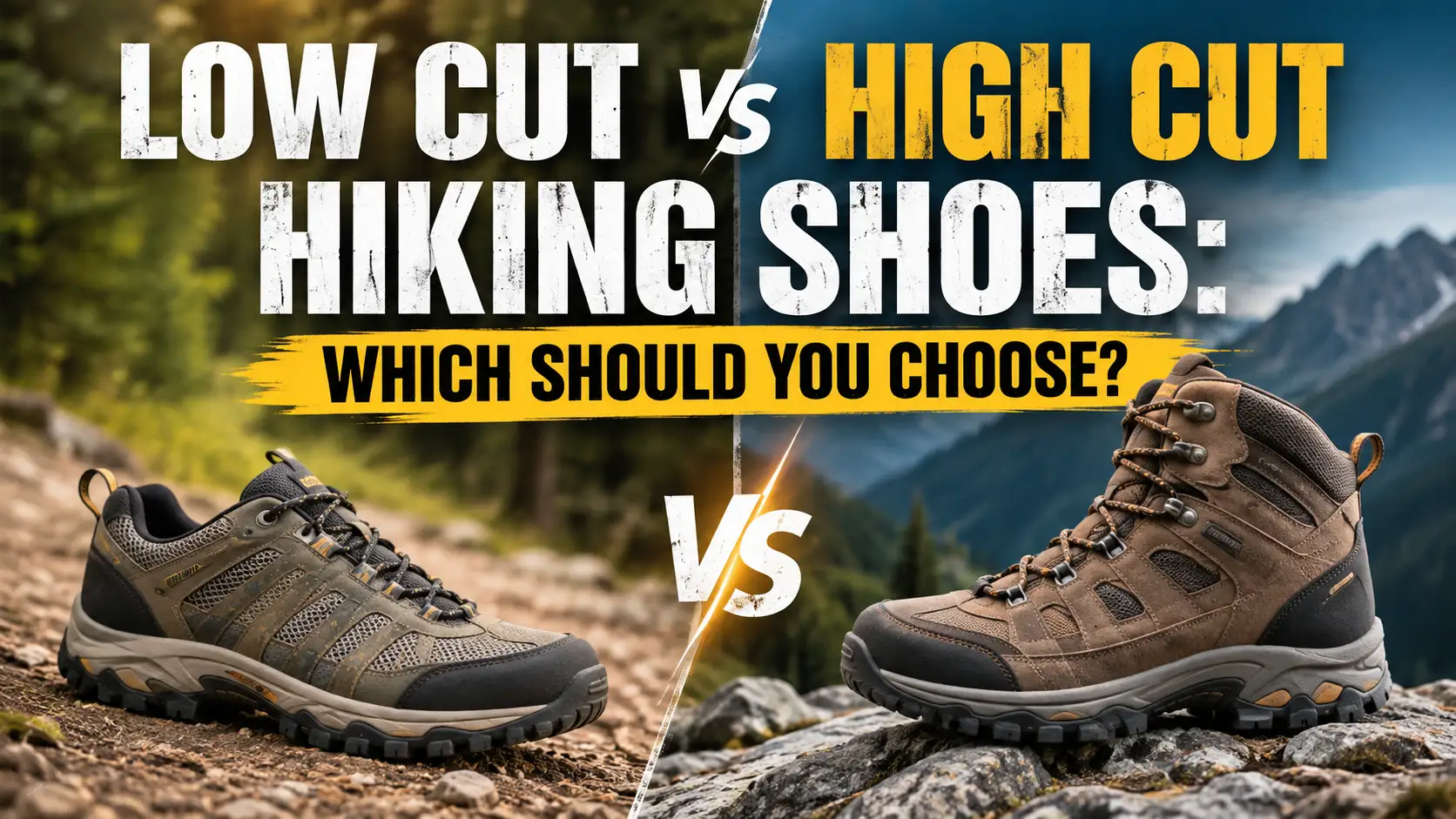
Hey there, Oscar here! If you are planning a hike, you have probably stared at a wall of outdoor footwear and felt completely overwhelmed. I have been there too. One of the most common questions I get from beginner and intermediate hikers is about the classic footwear debate: low cut vs high cut hiking shoes. Which one is actually better for the trail?
Here is the thing. There is no single “best” shoe for everyone. The right choice depends on where you are hiking, how much weight you are carrying, and what feels comfortable on your feet. Choosing the wrong footwear can lead to heavy legs, painful blisters, or a ruined weekend. The good news is that picking the right shoe is actually pretty simple once you know what to look for.
In this guide, I will break down the differences between low cut and high cut hiking shoes. We will look at the pros and cons of each, how to choose based on your hiking style, and a few common mistakes to avoid. Let’s get your feet ready for the trail!
Quick Answer
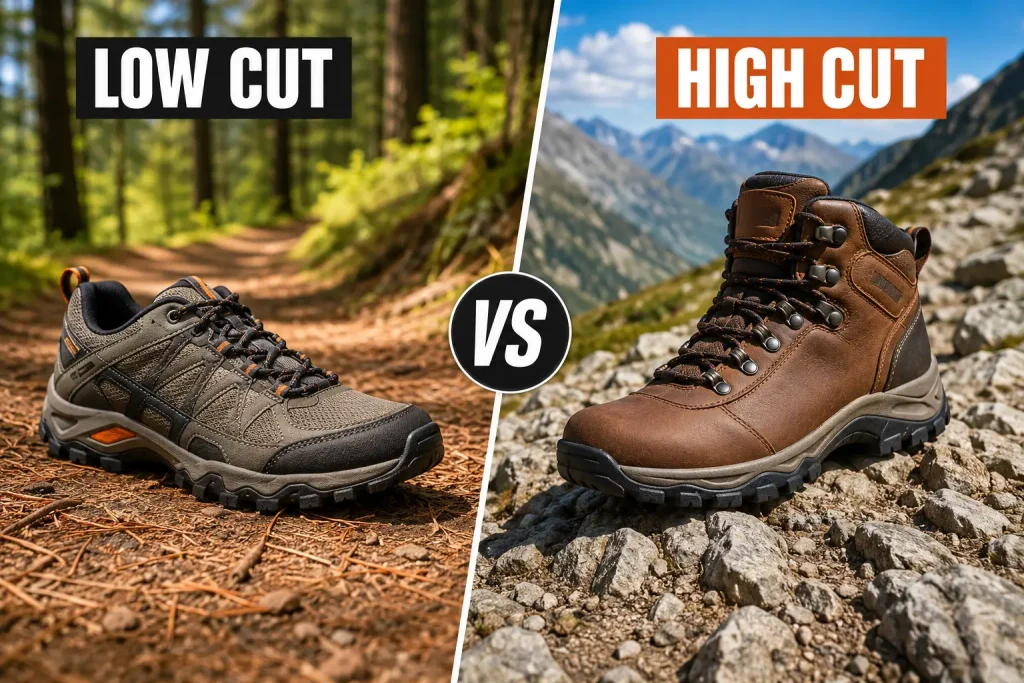
Low cut hiking shoes are lightweight, breathable, and best for fast day hikes on smooth, well-maintained trails with a light backpack. High cut hiking shoes (often called hiking boots) provide extra ankle protection, keep out trail dirt, and offer better support for carrying heavy backpacks on rough, rocky, or muddy terrain. If you are doing a simple day hike, low cuts are usually fine. If you are going on a multi-day backpacking trip on wild trails, high cuts are the safer bet.
What Hikers Should Know About Low Cut vs High Cut Hiking Shoes
Before you spend money on hiking footwear, it helps to understand what makes these two styles different. They are built for completely different types of outdoor adventures.
Low Cut Hiking Shoes
Low cut shoes sit below your ankle bone. This category includes standard hiking shoes and trail running shoes. They look a lot like regular gym sneakers but have thick, grippy rubber soles designed for dirt and mud.
- Weight: They are very light. This saves you a lot of energy over a long day.
- Flexibility: They bend easily with your foot, making them comfortable right out of the box.
- Breathability: Most low cuts are made of mesh, so your feet stay cooler in hot weather.
- Protection: They do not protect your ankles from scraping against rocks, roots, or thorny brush.
High Cut Hiking Shoes (Boots)
High cut shoes sit above your ankle. We usually just call these hiking boots. They are built with tougher materials like thick leather or heavy-duty synthetic fabrics.
- Ankle Protection: The tall collar protects your skin from sharp rocks, snake bites, and nasty trail brush.
- Debris Blocking: The high top stops pebbles, pine needles, and mud from falling inside your shoe.
- Support: The stiff soles and tall collars help your foot stay stable when you are carrying a heavy backpack.
- Weight and Heat: They are much heavier and warmer. Your feet will sweat more in the summer.
Signs You Should Adjust Your Hiking Plan, Gear, or Trail Choice
Sometimes, the trail you planned to hike does not match the gear you brought. It is always better to change your plan than to risk getting hurt or having a miserable time. Pay attention to what the trail is telling you.
If you are wearing low cut shoes and the trail turns into a deep mud pit, or you have to cross large fields of loose, sharp rocks, you might want to turn back or pick a different route. Low shoes leave your ankles completely exposed to cuts and scrapes. Also, if you notice your ankles feeling tired and wobbly early in the day, that is a sign you might need stiffer, high cut boots—or a lighter backpack.
On the flip side, if you are wearing heavy, high cut boots on a flat, paved walking path on a 90-degree summer day, your feet will probably get hot, sweaty, and blistered. If your feet feel like they are baking, slow down, take extra breaks, and change your socks.
When to Wear Which Shoe
| Trail Factor | Low Cut Shoes Are Best If… | High Cut Boots Are Best If… |
|---|---|---|
| Terrain | Smooth, flat, packed dirt paths | Rocky, uneven, muddy, or off-trail areas |
| Backpack Weight | Under 15 pounds (Daypacks) | Over 25 pounds (Heavy backpacking gear) |
| Weather | Hot, dry summer days | Cold weather, snow, or deep mud |
| Experience Level | You hike often and have strong ankles | You are a beginner or prone to ankle fatigue |
| Pace | You want to hike fast or even jog | You are hiking slowly and steadily |
How to Choose Your Hiking Shoes Step by Step
So, how do you actually decide which pair to buy for your next trip? Let me walk you through the simplest way to choose.
- Look at your usual trails. Think about where you hike most often. If you spend 90% of your time on local, well-groomed nature trails, buy low cut shoes. If you live near rugged mountains and hike over jagged rocks every weekend, buy high cuts.
- Weigh your normal backpack. Are you just carrying water, some snacks, and a rain jacket? Low cut shoes are perfect. If you are packing a tent, sleeping bag, stove, and three days of food, the stiff sole of a high cut boot will stop your feet from aching under the heavy load.
- Check the weather forecast. If you mostly hike in the hot summer, breathability is your biggest priority. Low cut mesh shoes will save you from heat blisters. If you hike in the fall and spring when trails are wet and chilly, a waterproof high cut boot is much better.
- Consider your own body. Be honest with yourself. If you have weak ankles or a history of ankle injuries, a mid-cut or high-cut boot can give you extra confidence and stability.
- Try them on late in the day. Your feet swell up as the day goes on, just like they do during a long hike. Always try on hiking shoes in the late afternoon or evening. Bring the thick wool socks you actually plan to wear on the trail.
Common Mistakes to Avoid
I have seen a lot of hikers struggle on the trail simply because of their footwear choices. Here are a few common mistakes you should try to avoid.
- Buying heavy boots “just in case.” Many beginners buy the biggest, heaviest mountain boots for a simple two-mile walk in the woods. This just makes your legs tired. Buy the lightest shoe that safely handles your terrain.
- Skipping the break-in period. High cut leather boots need time to soften up. Never take a brand-new pair of stiff boots on a 10-mile hike. Wear them around your house and neighborhood for a few weeks first.
- Wearing cotton socks. It does not matter how good your shoes are if you wear cheap cotton socks. Cotton traps sweat and causes blisters. Always wear wool or synthetic hiking socks.
- Forgetting to trim your toenails. If your toenails are long, they will smash into the front of your shoe when you walk downhill. This hurts a lot and can cause you to lose a nail. Clip them before you hike!
- Assuming waterproof means dry. Waterproof shoes keep water out, but they also trap sweat inside. On a hot day, your feet might end up soaking wet from your own sweat.
Practical Tips from Oscar
Over the years, I have learned a few tricks to make my feet happier on the trail. Here is what works for me.
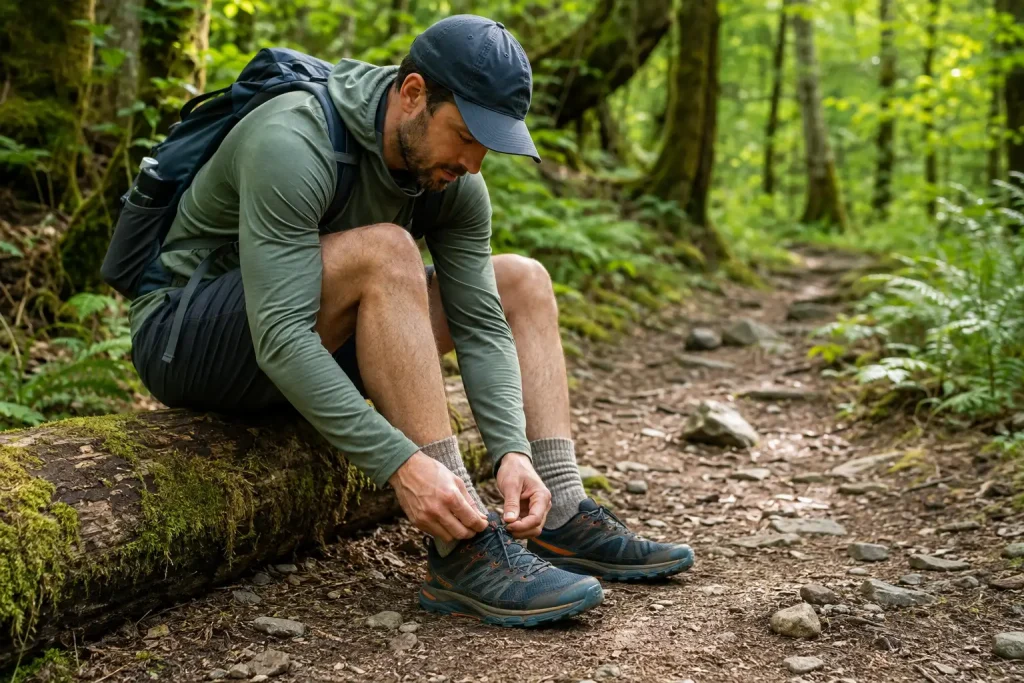
First, let’s talk about low cut shoes. Since they do not have a tall collar, it is very easy for dirt, sand, and tiny rocks to kick up and fall inside the shoe. This is annoying and can cause blisters. If I am wearing low cut shoes on a dry, dusty trail, I always wear a pair of lightweight trail gaiters. Gaiters are little fabric covers that wrap around your ankle and hook to your shoelaces. They keep the dirt out perfectly.
Next, let’s talk about lacing. If you feel your heel slipping up and down inside your shoe when you walk uphill, you are going to get a heel blister. You can stop this by using a “heel lock” lacing technique. You use the extra top eyelets on your shoes to create a loop, which locks your heel tightly into the back of the shoe without crushing your toes.
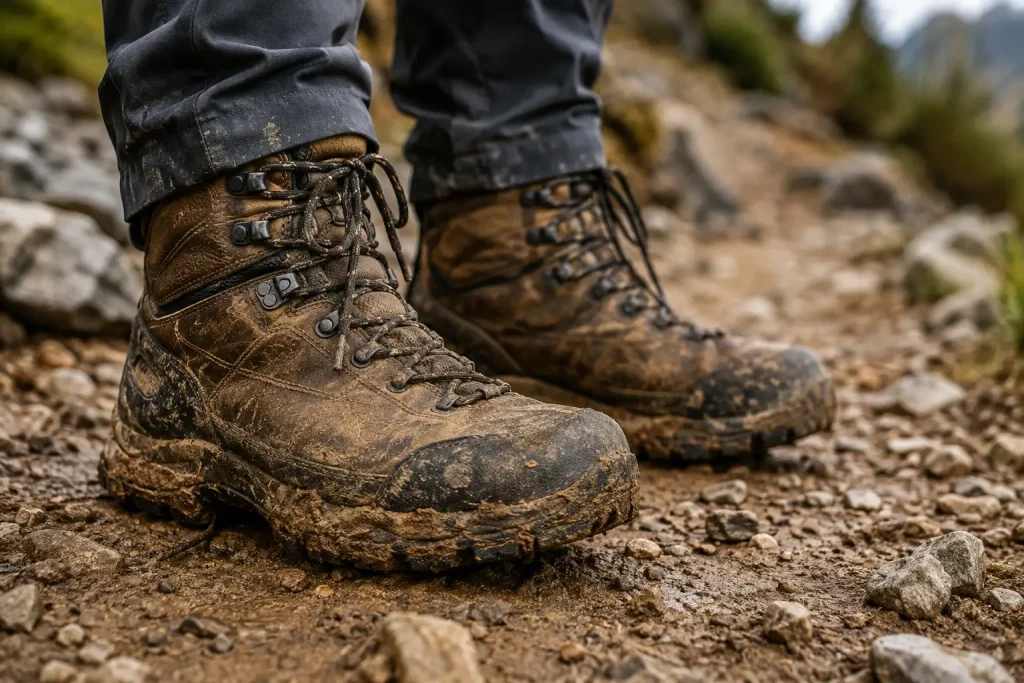
Finally, always practice good outdoor ethics. No matter what shoes you wear, try to walk right down the middle of the trail, even if it is muddy. Walking on the edges of the trail crushes plants and widens the path, which causes erosion. This is a core part of the Leave No Trace principles. Good boots are made to get dirty, so step right through that mud puddle!
Key Takeaways
- Low cut shoes are best for light backpacks, hot weather, and smooth trails.
- High cut boots are best for heavy backpacks, rough terrain, and cold or muddy conditions.
- A tall boot protects your skin from rocks and brush, but it does not completely guarantee you won’t roll an ankle.
- Always try on hiking shoes at the end of the day while wearing proper wool hiking socks.
- Match your footwear to the trail. Don’t carry extra boot weight on your feet if you don’t need to.
Frequently Asked Questions
Are low cut hiking shoes bad for your ankles?
No, low cut hiking shoes are not bad for your ankles. They actually allow your ankle to move naturally, which can help build ankle strength over time. However, they do not offer physical protection against sharp rocks or thick brush.
Can you backpack in low cut shoes?
Yes, you can backpack in low cut shoes, and many lightweight backpackers prefer them. The key is to keep your backpack weight low (usually under 20 pounds). If your backpack is very heavy, high cut boots will offer much better support.
Do high cut boots prevent all ankle sprains?
No. While high cut boots offer a stiffer structure that helps support the ankle under a heavy load, you can still roll or sprain your ankle if you step wrong. Paying attention to foot placement is your best defense against injury.
Are hiking shoes better than running shoes?
For hiking, yes. Hiking shoes have thicker soles, stronger materials, and special rubber treads designed to grip dirt and wet rocks. Regular street running shoes have smooth bottoms that can easily slip on muddy or rocky trails.
How much room should be at the toe of a hiking shoe?
You should have about a thumb’s width of space between your longest toe and the front of the shoe. This extra space stops your toes from hitting the front of the shoe when you are walking downhill.
Conclusion
Deciding between low cut vs high cut hiking shoes does not have to be stressful. It all comes down to the kind of hiking you want to do. If you love fast, light, and sweaty day hikes on local trails, grab a breathable pair of low cuts. If you dream of carrying a big backpack into wild, rocky mountains for days at a time, invest in a sturdy pair of high cut boots.
Remember, your feet are your transportation out there. Treat them well, buy good wool socks, and never rush the break-in process. The best shoe is the one that fits your foot so perfectly that you forget you are wearing it.
If you are putting together your gear for your next trip, be sure to check out my hiking gear checklist to make sure you have all the essentials packed. Stay safe, trust your feet, and I will see you out on the trail!
