
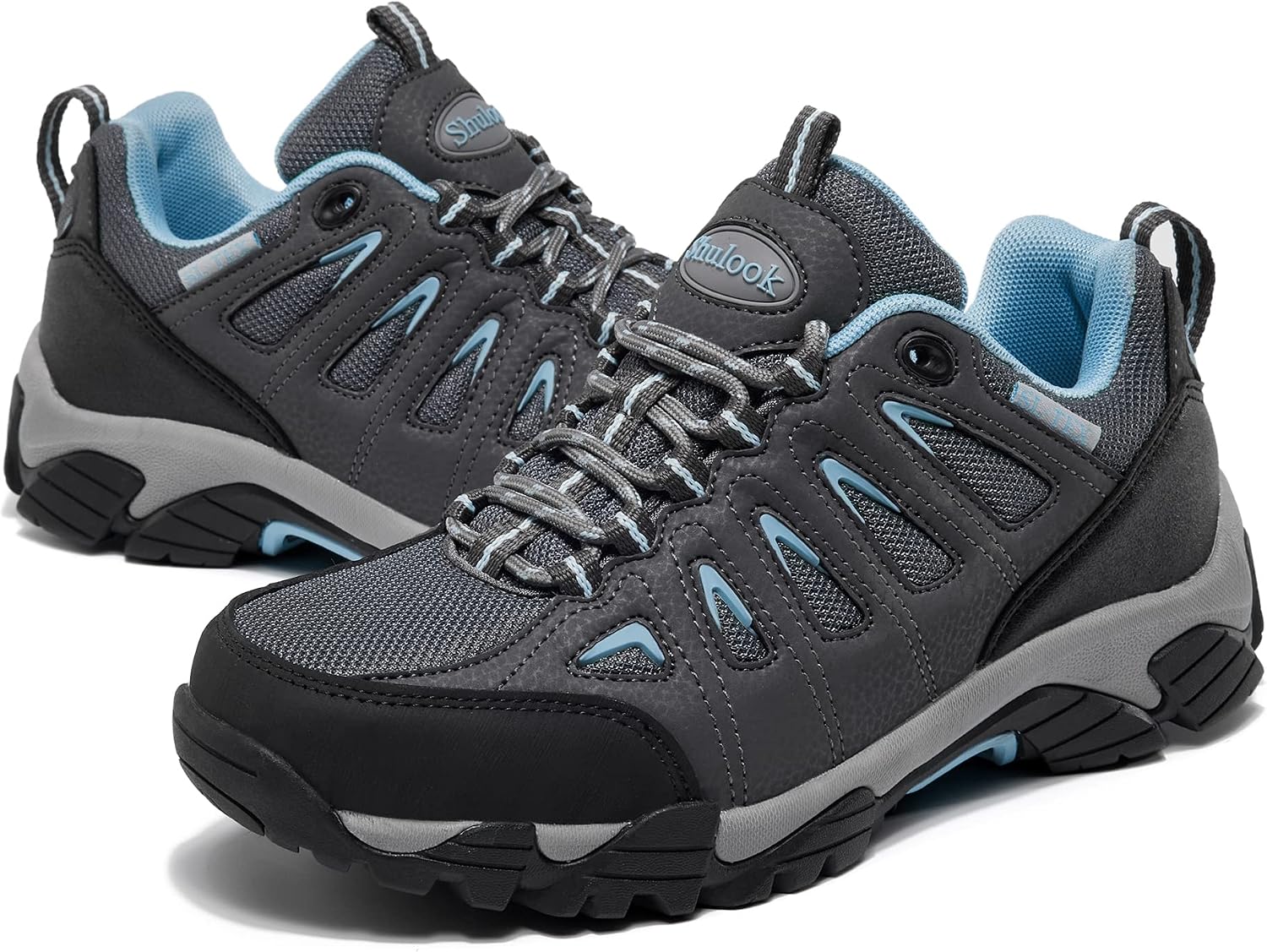
For hikers in the United States, the best deal on women’s hiking shoes is not always the lowest price. A good deal should match your trail, weather, foot shape, and return needs. Start by choosing the right shoe type, then compare the final cost, fit, grip, waterproofing, and return policy.
Prices and stock change often. Check the seller’s page before you buy. A sale pair is only a bargain if it fits well and can handle your planned hikes.

Source: walmart.com
Quick Takeaways
- Choose trail runners for light hikes and fast walks.
- Choose hiking shoes for day hikes with more support and protection.
- Choose hiking boots for rough trails, heavy packs, or ankle coverage.
- Shop brand outlets, seasonal sales, and authorized retailers.
- Check the return window before wearing shoes outdoors.
- Try shoes with hiking socks and leave room for toe spread.
- Do not buy waterproof shoes unless wet-weather protection matters to you.
- Compare the final price after shipping, taxes, and return costs.
Where to Shop Deals on Women’s Hiking Shoes
The best places to find women’s hiking shoe deals are brand outlets, major outdoor retailers, seasonal sale pages, and trusted local stores. Each option has a different trade-off.
Brand outlet stores
Brand outlet sites often sell:
- Last-season colors
- Older model versions
- Factory-overstock items
- Lightly marked-down shoes
- Discontinued styles
The shoe may still perform well. But check the model name and product details. A newer version may have a different sole, fit, or waterproof membrane.
Outdoor retailer sale pages
Large outdoor retailers often place hiking shoes on sale during:
- Spring gear changes
- Late summer clearance
- Fall hiking sales
- Black Friday and holiday events
- End-of-season stock reductions
Retailers such as REI, Backcountry, and local outdoor shops may offer sale sections. Policies differ by seller, so read the terms before ordering.
Local outdoor stores
A local store can be a strong choice when fit is hard to judge online. Staff may let you compare sizes and foot shapes. You also avoid return shipping in some cases.
Ask whether the store will match an authorized competitor’s price. Ask what happens if the shoe feels wrong after a short indoor test.
Resale and marketplace listings
Used shoes can cost less, but they carry more risk. Avoid pairs with:
- Worn-down tread
- Cracked midsoles
- Deep creases in the foam
- Broken eyelets
- Damp odor
- Unknown storage conditions
For hiking footwear, a very low price may not offset poor grip or hidden wear. Buy only when the seller, condition, and return terms are clear.

Source: walmart.com
How to Choose the Right Shoe Type
The right shoe type depends on trail surface, distance, pack weight, weather, and personal comfort. More shoe is not always better. Heavy boots can feel tiring on easy trails, while light trail shoes may lack protection on rocky ground.
| Shoe type | Best for | Main benefit | Main limit |
|---|---|---|---|
| Trail runners | Easy trails, fast hikes, dry paths | Low weight and quick movement | Less protection and support |
| Hiking shoes | Day hikes and mixed trails | Balance of grip, support, and weight | Less ankle coverage than boots |
| Mid-height hiking boots | Rough trails and heavier packs | More structure and protection | Heavier and slower to dry |
| Waterproof hiking shoes | Rain, mud, and wet grass | Keeps outside water out | Can feel warm and dry slowly |
Trail runners
Trail runners often work well for hikers who value low weight and a flexible feel. They can suit maintained paths and dry conditions.
They may not be ideal for sharp rock, deep mud, or heavy loads. Their uppers may also wear sooner under hard use.
Hiking shoes
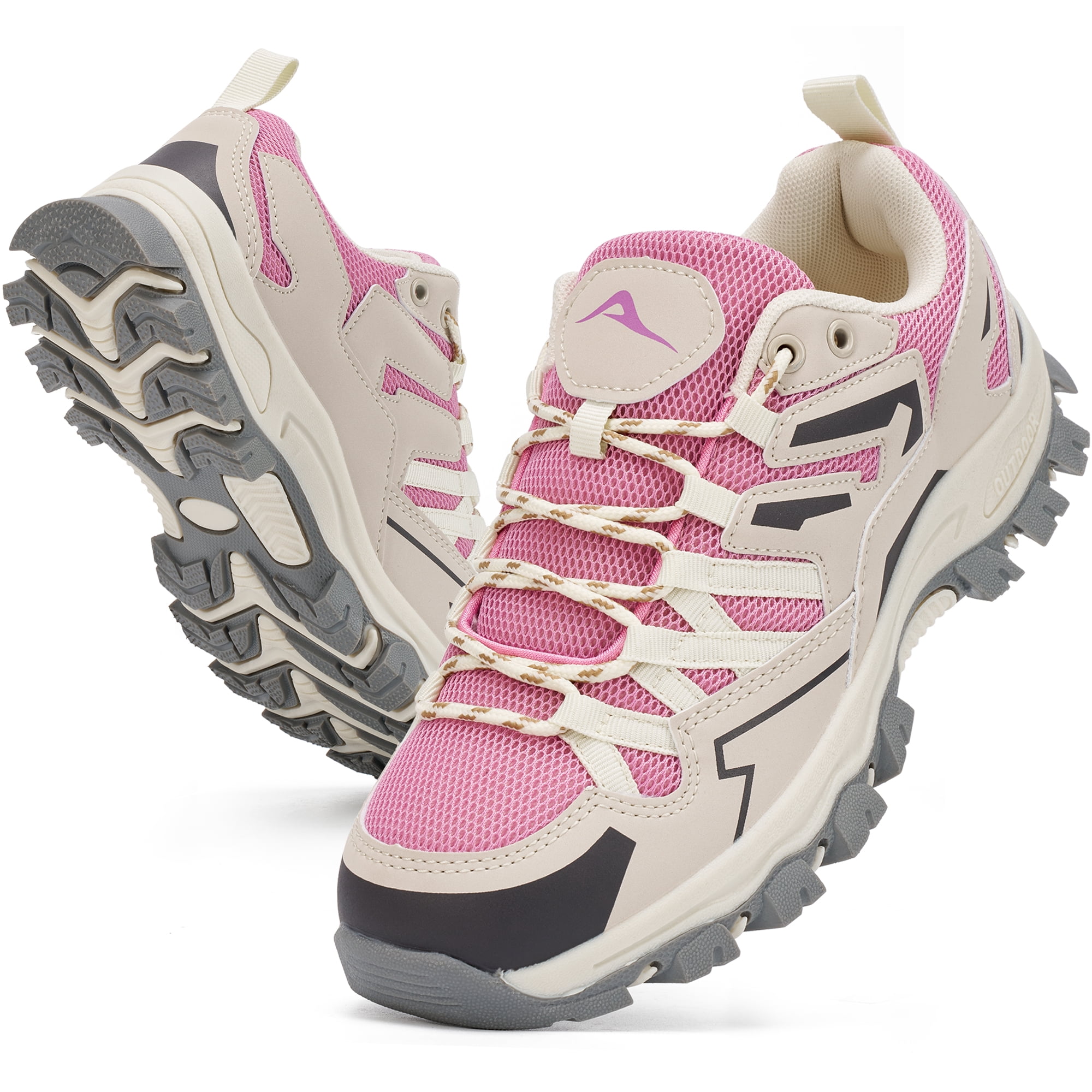
Hiking shoes are the safest starting point for many day hikers. They often offer more structure than trail runners without the weight of boots.
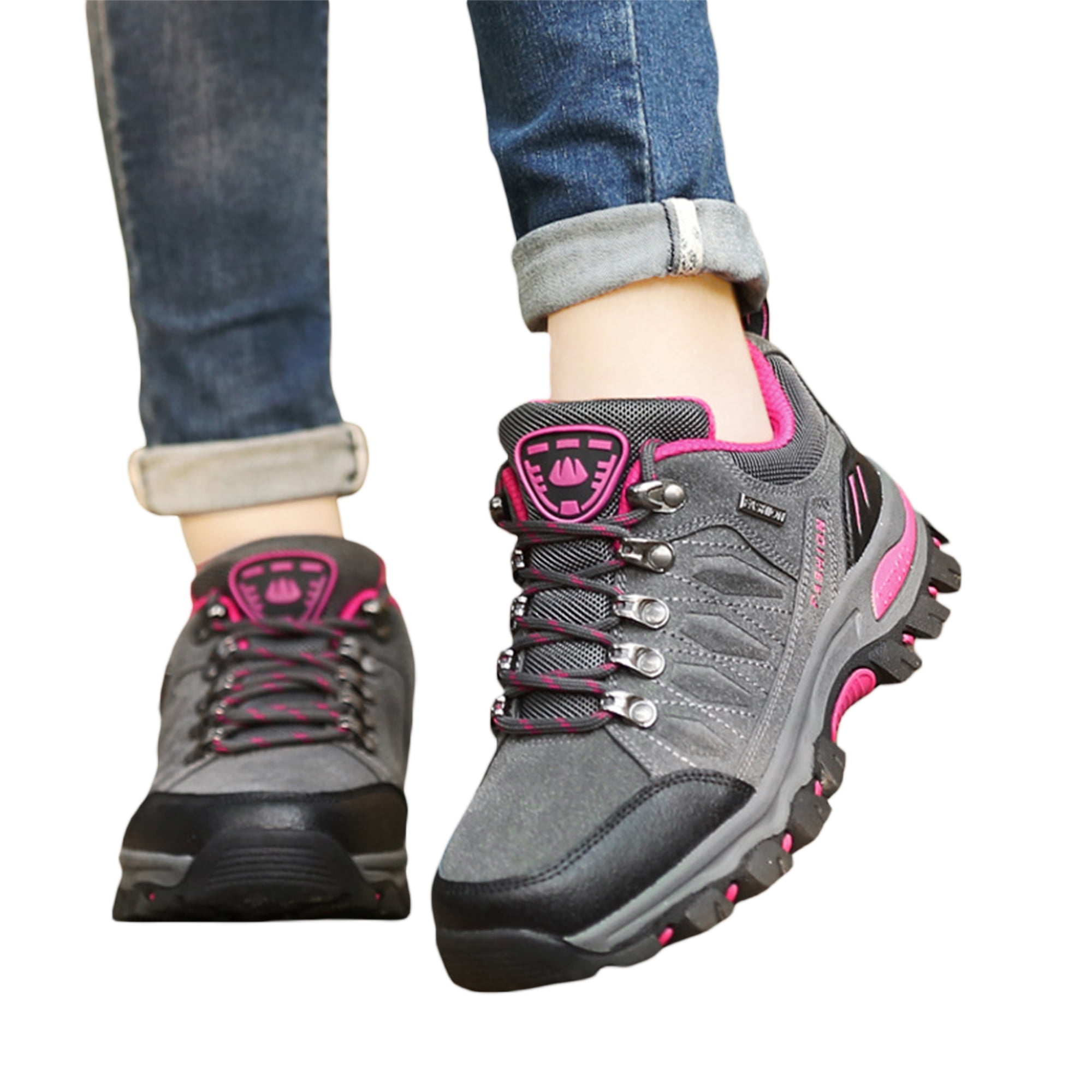
Look for a firm heel, a secure midfoot, a protective toe area, and an outsole with lugs. Lugs are the raised parts of the sole that bite into dirt and rock.
Hiking boots
Boots make more sense when the trail is rough, the pack is heavy, or you prefer a firm platform. Some hikers also like the added protection from brush, stones, and uneven ground.
Ankle height alone does not prevent every ankle injury. Fit, balance, trail skill, and footing still matter.
Waterproof versus non-waterproof
Waterproof shoes can help in rain, wet grass, and shallow puddles. They do not make shoes fully waterproof in every condition. Water can enter over the collar or through soaked socks.
Non-waterproof shoes often breathe better and dry faster. For hot climates or stream crossings, that may matter more than rain protection.
Source: walmart.com
How to Compare a Hiking Shoe Deal
A good sale check takes only a few minutes. Compare the shoe’s use, fit, condition, and final cost before you focus on the discount.
1. Check the original price
A “40% off” label does not tell you whether the final price is good. Compare the sale price with the same model at other authorized sellers.
The Federal Trade Commission explains that advertised price comparisons must not mislead shoppers. You can read its guidance on price claims.
Do not assume a high former price proves high value. The current model, its age, and its condition matter more.
2. Compare the final cost
Use this simple calculation:
Final cost = sale price + shipping + tax + return cost − real discount
Hypothetical example:
- Sale price: $84
- Shipping: $8
- Estimated tax: $7
- Return shipping risk: $0 to $10
- Final cost: about $99 to $109
A pair listed at $84 may cost more than a local pair priced at $95 with free returns.
3. Check the model year and version
Shoe names can stay similar while the design changes. Check:
- Sole pattern
- Waterproof lining
- Upper material
- Midsole foam
- Weight
- Width options
- Lacing system
- Warranty terms
Reviews can also mix different versions. Match the review to the exact model and year when possible.
4. Read the return policy
Before ordering, confirm:
- How many days you have to return the shoe
- Whether sale items are final sale
- Whether outdoor wear cancels the return
- Who pays return shipping
- Whether the seller accepts exchanges
- Whether the shoe must include the original box
Test a new pair indoors on a clean floor. Do not hike in them until you know the return terms.

Source: walmart.com
Fit Tips for Women’s Hiking Shoes
Fit is the most important part of a hiking shoe deal. A cheap shoe that causes blisters is not a useful bargain.
Try shoes late in the day if possible. Feet can swell during normal daily activity. Wear the socks you plan to use on the trail.
Check the length
Your toes should not press the front when you walk downhill. You should be able to move your toes without the foot sliding forward.
A common starting point is about a thumb’s width between the longest toe and the shoe end. This is only a guide. Foot shape and shoe design vary.
Check the heel
Your heel should stay mostly in place when you walk and climb stairs. Small movement can be normal. Repeated lifting or rubbing is a warning sign.
Try a heel-lock lace pattern if the shoe fits well but the heel moves slightly. If the heel still slips, try another size, width, or model.
Check the midfoot
The laces should hold your foot without pressure or numbness. Tight laces cannot fix a shoe that is too narrow.
People have different foot shapes. A women’s hiking shoe label does not guarantee a fit for every woman. Compare the actual width, toe shape, and volume of the shoe.
Test common trouble spots
Walk indoors for at least several minutes. Pay attention to:
- Toe pressure
- Heel rubbing
- Arch pressure
- Numbness
- Fold points over the toes
- Pressure from the tongue
- Foot sliding during stairs
Pain is not a break-in requirement. A shoe may soften, but it should not cause sharp pain or loss of feeling.

Source: walmart.com
What Features Matter Most on Sale Shoes?
Focus on the features that match your trail. Extra features add cost and weight, but they do not help every hiker.
Outsole grip
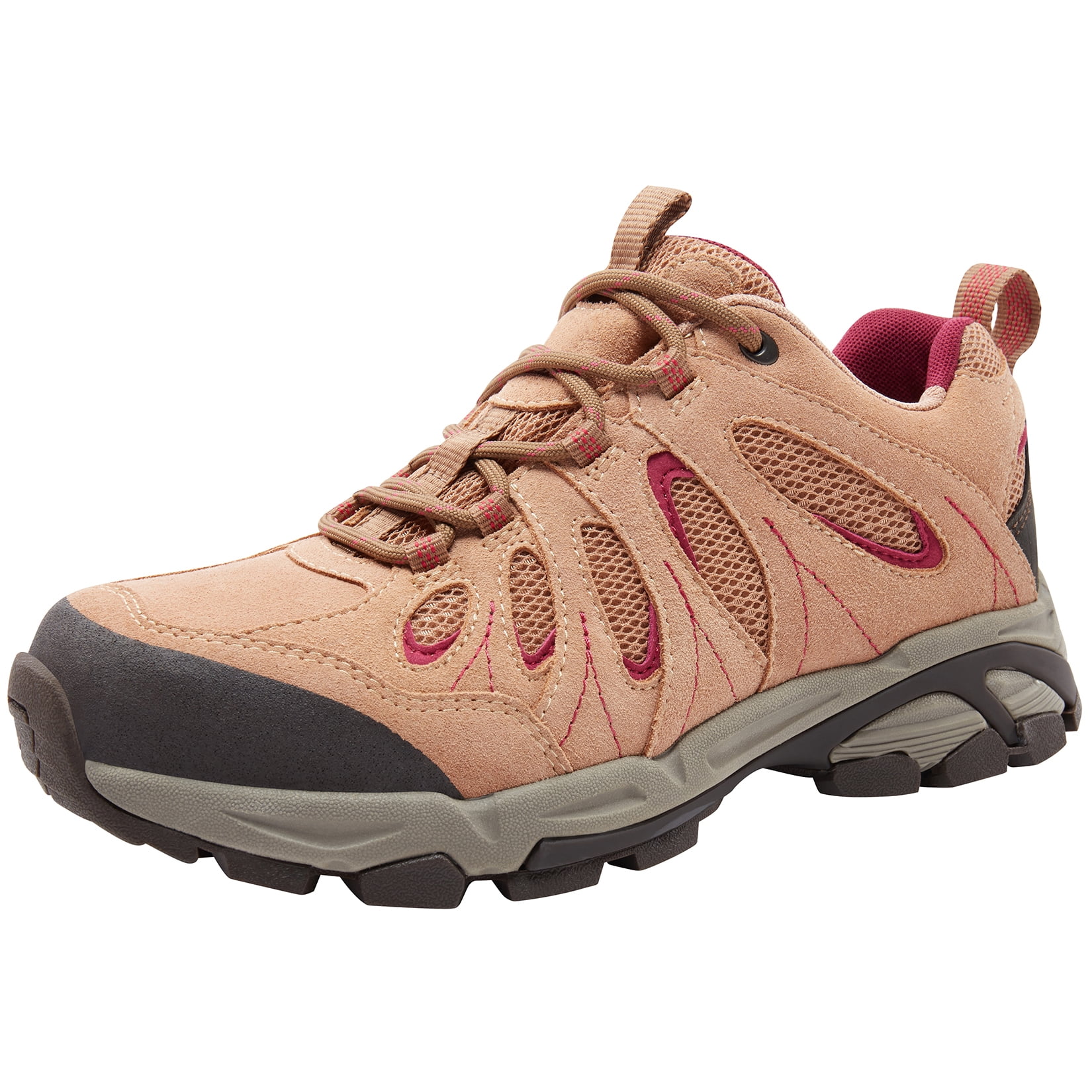
Look for a sole with lugs suited to your route. Shallow lugs may feel smooth on pavement but can struggle in loose dirt. Deep lugs may grip mud better but feel less comfortable on hard surfaces.
No tread works equally well on dry rock, wet roots, loose gravel, and mud. Grip also depends on rubber compound, pressure, slope, and walking technique.
Midsole firmness
A softer midsole can feel comfortable at first. A firmer midsole may feel more stable on uneven ground.
Your pack weight and trail surface can change the best choice. Try walking over a firm edge or uneven indoor surface if the store allows it.
Toe protection
A reinforced toe cap can help shield the front of the foot from small rocks. It does not make the shoe impact-proof.
If your route has many rocks or roots, compare toe coverage with the shoe’s weight and flexibility.
Upper material
Mesh can offer airflow and a light feel. Leather and coated textiles may resist abrasion. Waterproof membranes can block outside moisture but may slow drying.
Choose based on the conditions you expect, not on the feature list alone.
Weight
Small weight differences can matter over long walks. Yet a lighter shoe is not automatically better. Protection, fit, and grip should come first.
When comparing listings, check whether the stated weight is for one shoe or a pair. Manufacturers may use different sizes for their measurements.
Source: walmart.com
When Is a Hiking Shoe Deal Worth Buying?
A hiking shoe deal is worth considering when the model fits, suits the trail, and has a fair return path. The discount is only one part of the decision.
Use this quick scorecard:
| Question | Good sign | Warning sign |
|---|---|---|
| Does it fit indoors? | No pressure, rubbing, or heel lift | Pain, numbness, or sliding |
| Does it suit your trail? | Grip and protection match the route | Sole looks too smooth or soft |
| Is the condition clear? | New pair with full details | Damaged box or unclear wear |
| Is the seller trusted? | Clear contact and return policy | Vague seller or final sale |
| Is the price fair? | Similar prices checked | Large discount with no comparison |
| Is the timing right? | You can test it before your trip | You need it for tomorrow |
A “best deal” can be last season’s model if the shoe still meets your needs. It can also be a full-price pair with free returns if fit uncertainty is high.
Buy now or wait?
Buy when your size is available, the return policy is strong, and you have time to test the shoes. Wait when the listing lacks key details or the discount depends on a questionable former price.
Do not wait for a sale if you have a near-term trip and no proven pair. A rushed purchase often leads to poor fit.
How many pairs should you order?
Ordering two sizes can help when returns are free and the seller allows it. Check the retailer’s terms first. Return the unwanted pair quickly and keep the packaging clean.
Do not order several pairs if return shipping is expensive or the sale is final. In that case, an in-store fitting may save money.

Source: amazon.com
Common Mistakes When Buying Discount Hiking Shoes
Many shopping errors come from treating a sale tag as proof of value. Avoid these mistakes.
Choosing by discount percentage
A large discount may apply to an old color or a discontinued version. Compare the actual model and final cost.
Buying the same size as a casual sneaker
Sizing can vary by brand and shoe shape. Use the maker’s chart, then check the fit with your hiking socks.
Ignoring width
A longer shoe is not always the answer to a narrow toe box. Try a wide version if it exists. A different last, or shoe shape, may work better.
Wearing waterproof shoes in hot conditions
Waterproof shoes can feel warmer and may dry slowly after water enters from the top. Choose them for a real wet-weather need.
Trusting every online review
Reviews can combine sizes, versions, and use cases. Give more weight to reviews that name the exact model, terrain, weather, distance, and fit issue.
Hiking in the shoes before checking returns
Outdoor dirt, scuffs, and tread wear may end your return option. Test indoors until the fit is clear.
Ignoring old rubber and foam
A shoe can look new but still be old stock. Ask the seller about age if the listing is unclear. Inspect the sole and midsole for cracks, hardening, or separation.

Source: wild-eye-vision.com
A Simple Shopping Process
Use this process before you buy women’s hiking shoes on sale:
- Name the main use. Choose easy trails, rocky hikes, wet routes, or backpacking.
- Choose the shoe type. Start with trail runners, hiking shoes, or boots.
- Set a total budget. Include tax, shipping, socks, and possible return costs.
- Check fit details. Review width, toe shape, heel hold, and size guidance.
- Compare three listings. Match the exact model and version.
- Read the return terms. Confirm whether sale items can come back.
- Test indoors. Use hiking socks and walk on clean floors.
- Inspect before use. Check seams, sole bonding, laces, and tread.
- Break them in slowly. Start with short walks before a long hike.
- Stop if pain continues. Change the shoe rather than forcing your foot to adapt.
A successful purchase feels secure without painful pressure. Your toes can move, your heel stays mostly in place, and the sole matches the trail.

Source: walmart.com
Safety and Care After You Buy
New hiking shoes still need care. Keep the first hikes short and carry blister care on longer trips.
Clean mud from the outsole with water and a soft brush. Follow the manufacturer’s drying instructions. Avoid strong heat, such as a heater or hot dryer, because it can damage adhesives and materials.
Let wet shoes dry fully before storing them. Remove the insoles when appropriate to improve airflow. Do not use household oils or harsh cleaners unless the manufacturer permits them.
Replace shoes when the tread is badly worn, the midsole feels flat, the upper separates, or the shoe no longer holds your foot securely. A warranty may cover manufacturing defects, but normal wear is often excluded. Check the brand’s written policy for the exact terms.
If you have ongoing foot pain, numbness, swelling, or repeated blisters, stop using the pair and seek advice from a qualified health professional. General fit tips cannot diagnose a foot problem.
Source: walmart.com
Key Takeaways
The best way to shop deals on women’s hiking shoes is to match the shoe to the trail first and the discount second. Compare the exact model, final cost, fit, grip, weather protection, and return policy.
For many day hikers, a well-fitting hiking shoe offers a useful balance of support and weight. Trail runners may suit easy, dry routes, while boots may help on rough trails or with heavier loads. Test every sale pair indoors before taking it outside.
FAQs About Women’s Hiking Shoe Deals
What is a good price for women’s hiking shoes?
There is no single fair price for every model. Prices vary by materials, waterproofing, brand, age, and construction. Compare the same model at several authorized sellers and include shipping and return costs.
Are women’s hiking shoes different from men’s hiking shoes?
They may use different size ranges, widths, shapes, and fit designs. But labels do not predict the fit of every person. Choose the shoe that fits your foot and suits your hike, regardless of the marketing label.
Should I buy waterproof hiking shoes?
Buy waterproof shoes when rain, wet grass, or damp trails are common on your hikes. Choose non-waterproof shoes when airflow and fast drying matter more. Neither type prevents all water from entering.
Can I use trail running shoes for hiking?
Yes, trail running shoes can work for many maintained trails and light day hikes. Check the tread, foot protection, and fit. They may be less suitable for sharp rock, heavy packs, or rough terrain.
How much room should hiking shoes have?
Your toes should have room to move and should not hit the front when walking downhill. The heel should remain secure without painful pressure. Try the shoes with your hiking socks and assess both length and width.
Conclusion
A smart hiking shoe deal in the United States combines a fair total price with a secure fit and the right trail features. Start with your route, compare exact models, check the return policy, and test the shoes indoors.
Before checkout, ask one final question: Would I still want this shoe if it were not on sale? If the answer is yes, the discount may be worth taking.
