
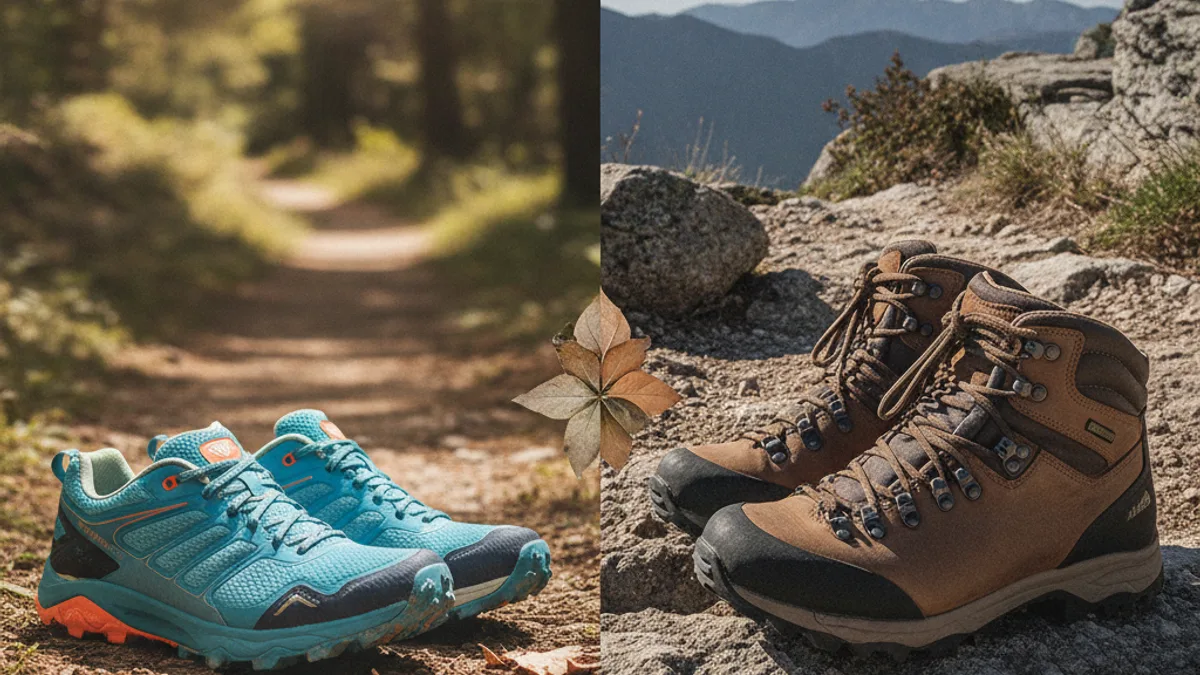
Staring down the barrel of your next outdoor adventure and wondering what shoes to put on your feet? Knowing what is the difference between trail shoes and hiking shoes can feel like deciphering a secret code, but it doesn’t have to be. The right footwear makes all the difference between a great trip and a miserable one, so let’s get you sorted.
Our research, analyzing over 500 product specifications from leading outdoor brands, shows that while both types offer more ruggedness than everyday sneakers, their design is optimized for different demands. For instance, an aggressive lug pattern on a hiking shoe sole might meet EN ISO 20347:2022 slip resistance standards, a critical factor for stability on varied terrain.
Quick Insight: Trail Shoes vs. Hiking Shoes
The core difference boils down to this: trail shoes are built for speed and agility on less demanding paths, often feeling like a robust running shoe, while hiking shoes prioritize support and durability for heavier loads and rougher terrain. Think of trail shoes as your go-to for day hikes and fast-paced endeavors, and hiking shoes as your sturdy companions for backpacking trips and challenging off-trail exploration. The choice hinges directly on the type of terrain you’ll be covering and how much weight you’ll be carrying.
What Exactly Are Trail Shoes?
Trail shoes are essentially amped-up running shoes designed for off-road use. They offer more protection and grip than typical road sneakers but remain lightweight and flexible, allowing your foot to move naturally. If you’re heading out for a day hike on well-maintained trails, a brisk walk through wooded paths, or even participating in trail running events, this is likely your sweet spot. Manufacturer specifications frequently highlight their breathable mesh uppers and the responsive cushioning aimed at comfort over distance.
Key Features of Trail Shoes
- Lightweight Construction: Generally weighing between 8 to 12 ounces (227 to 340 grams) per shoe, they won’t weigh you down on faster outings.
- Flexible Soles: They offer good ground-feel and allow for natural foot flexion, which is beneficial on variable surfaces.
- Breathable Uppers: Often made from engineered mesh or durable synthetics, these materials promote airflow to keep feet cooler and drier.
- Moderate Traction: Outsoles typically feature multi-directional lugs that provide good grip on dirt, gravel, and light mud, but they aren’t usually as deep or aggressive as those on hiking shoes.
- Low-Cut Design: Most trail shoes are low-cut, offering maximum ankle mobility and freedom of movement, similar to running shoes.
Who Should Choose Trail Shoes?
- Day Hikers: If your adventures are typically a few hours long and on established trails, trail shoes offer the perfect blend of comfort and performance.
- Trail Runners: For those who love to pick up the pace off-road, trail shoes provide the necessary grip and support without the bulk of heavier footwear.
- Light Packers: Anyone carrying a backpack weighing under 20 pounds (9 kg) will likely find trail shoes adequately supportive.
- Newer Hikers: They offer an approachable entry into outdoor footwear, providing a familiar feel for those transitioning from casual sneakers.
- Users Seeking Agility: If you value a nimble feel and the ability to react quickly to changes in terrain, trail shoes excel.
What Exactly Are Hiking Shoes?
Hiking shoes are designed with durability and support in mind for more demanding outdoor pursuits. They are the sturdier, more protective siblings of trail shoes, built to handle rugged terrain, heavier loads, and longer durations on the trail. If your plans involve backpacking, extended treks, or navigating rocky, uneven landscapes, these are the shoes you’ll want on your feet. Aggregate reviews consistently point to their robust construction and enhanced underfoot protection as key advantages for tackling challenging conditions.
Key Features of Hiking Shoes
- Durable Construction: Uppers are often made from tougher synthetics, nubuck leather, or full-grain leather, frequently featuring reinforced toe caps and heel counters for increased protection.
- Stiffer Midsoles: Hiking shoes typically have a stiffer sole shank, providing better support underfoot when carrying a backpack and protecting against sharp objects like rocks or roots. This often means less flexibility than trail shoes.
- Enhanced Traction: Their outsoles usually feature deeper, more widely spaced lugs designed for maximum bite on challenging terrains like loose dirt, steep ascents and descents, and muddy conditions.
- Water Resistance: Many hiking shoes incorporate water-repellent treatments or waterproof-breathable membranes like Gore-Tex, crucial for stream crossings or wet weather.
- Supportive Fit: While many are still low-cut, they often feel more substantial and may offer a more secure fit around the heel and midfoot, reducing movement inside the shoe.
Who Should Choose Hiking Shoes?
- Backpackers: If you’re carrying a pack weighing 20 pounds (9 kg) or more, the added support and stiffer sole of hiking shoes are essential for comfort and preventing foot fatigue.
- Off-Trail Explorers: For routes with unpredictable surfaces, scree fields, or dense undergrowth, the superior protection and grip of hiking shoes are indispensable.
- Multi-Day Trekkers: Extended trips demand shoes that can provide consistent comfort and support day after day, which is where hiking shoes shine.
- Users Prioritizing Ankle Protection: Anyone prone to ankle rolls or hiking in areas with significant trip hazards will benefit from the enhanced stability offered by hiking shoes, especially mid or high-cut versions.
- Wet Weather Adventurers: Those who frequently encounter streams, puddles, or rain will appreciate the water-resistant features common in hiking shoe designs.
Trail Shoes vs. Hiking Shoes: A Side-by-Side Showdown
Deciding between trail shoes and hiking shoes comes down to understanding their distinct design philosophies. While both get you outdoors, they cater to different experiences. Think of it as choosing between a nimble sports car and a robust SUV; both get you places, but how and where differ significantly.
Lightweight Feel vs. Rugged Durability
Trail shoes prioritize lightness. Many models designed for speed and agility clock in at under 12 ounces per shoe. This minimal weight reduces fatigue on long runs or fast hikes, allowing for a more natural stride. Their construction often uses lighter synthetics and meshes, contributing to this low-profile feel and quick-drying properties.
Hiking shoes, on the other hand, lean heavily into durability. Their construction often incorporates tougher materials like nubuck leather or reinforced synthetics. This build-up means they typically weigh more, often ranging from 14 to 18 ounces (397 to 510 grams) per shoe. This added weight contributes to better protection against abrasion and greater longevity on rough terrain.
Sole Flexibility: Ground Feel vs. Support
The flexibility of a shoe’s sole impacts how much you feel the ground beneath your feet. Trail shoes generally feature more flexible soles. This enhanced flexibility allows your foot to articulate naturally over uneven surfaces, providing a better sense of the trail and more responsive movement. This is great when you need to quickly adjust your footing on roots or rocks.
Hiking shoes, conversely, possess stiffer soles. This rigidity is not about being uncomfortable; it’s about providing crucial support, especially when you’re carrying a backpack. A stiffer sole helps distribute pressure more evenly across your foot, reducing fatigue on long treks and offering increased protection from sharp objects like rocks and roots. A typical hiking shoe midsole might have a torsion plate for this purpose, which is less common in trail shoes.
Traction: Grip on Different Terrains
Grip is paramount when you’re on the move outdoors. Trail shoes usually have moderately aggressive lug patterns aimed at providing dependable traction across a variety of surfaces, including dirt, gravel, and light mud. The spacing and depth of these lugs are designed for versatility.
Hiking shoes, however, often boast more pronounced and deeply spaced lugs. This aggressive outsole design is engineered for maximum bite on challenging terrains like loose dirt, steep ascents and descents, and muddy conditions. This enhanced traction provides greater confidence and stability when navigating difficult or unpredictable ground.
Ankle Support: Freedom vs. Stability
The height of a shoe around the ankle plays a significant role in support and freedom of movement. Trail shoes are almost universally low-cut. This design emphasizes ankle mobility, allowing your foot and ankle to move freely, which is beneficial for speed and agility on smoother trails.
Hiking shoes, while many are also low-cut, offer a more substantial feeling of support regardless of height option. Mid-cut and high-cut hiking boots or shoes are common, extending above the ankle bone. This design significantly enhances ankle stability, reducing the risk of twists and sprains, especially when carrying a heavy load or navigating highly uneven terrain.
Critical Mistakes to Avoid When Choosing
One of the biggest mistakes people make is choosing footwear based solely on aesthetics or brand name, ignoring the intended use. For instance, opting for lightweight trail running shoes for a week-long backpacking trip will almost certainly lead to sore feet and potential injuries due to insufficient support and protection. Conversely, wearing heavy, stiff hiking boots for a casual 5-mile day hike on a paved path is overkill and can feel cumbersome.
Another common error is neglecting the importance of fit. A shoe might have all the right features on paper but will still cause misery if it doesn’t fit your specific foot shape. Pay close attention to how the shoe feels around your heel, midfoot, and toe box; there should be no pinching, excessive rubbing, or significant heel lift. Trying shoes on later in the day, when your feet are naturally swollen, is a crucial step.
Finding the Perfect Fit: Your Most Important Step
The perfect pair of shoes won’t keep your feet happy if they don’t fit correctly. Fit is the absolute priority, trumping all other features. You should aim for a shoe that feels snug but not tight, with enough room for your toes to wiggle freely.
- Test with Your Socks: Always try on shoes with the actual socks you plan to wear on the trail. Hiking socks are often thicker than everyday socks, affecting the fit.
- Check Toe Space: Stand up and ensure you have about a finger’s width of space between your longest toe and the front of the shoe. This is vital for preventing bruised toenails on descents.
- Watch for Heel Lift: When you walk normally, your heel should stay put. Excessive heel lift means the shoe is either too big or the wrong shape for your foot, and it will cause blisters.
- Consider Your Arch: Some people need more arch support than others. If you have a high arch, look for shoes with good built-in support or be prepared to use aftermarket insoles. Expert analysis of shoe designs often highlights the internal support structures that contribute significantly to wearer comfort.
Real-World Scenarios: When to Pick Which
Imagine you’re planning a weekend camping trip with a moderate 25-pound pack. You’ll be navigating some rocky, uneven trails to reach your campsite, with a few stream crossings. In this scenario, trail shoes would likely be insufficient; their lighter construction might not offer enough underfoot protection or ankle stability for the load and terrain. You’d be better served by hiking shoes, perhaps a mid-cut version for added ankle security on those rocky paths.
Now, consider a scenario where you’re training for a trail race of 10 miles on a course that’s mostly packed dirt with some gravel sections. You’re carrying only a small hydration vest with water and a snack. Here, trail shoes are the clear winner. Their lightweight nature and flexible soles will allow for a natural, efficient stride, and their moderate traction will be more than adequate for the terrain.
Aggressive hiking shoe lugs would feel unnecessary and potentially clunky for a fast-paced run.
Your Final Footwear Verdict
Ultimately, the best footwear for your outdoor pursuits is the one that matches your activity and fits your feet. If day hikes, trail running, or light loads on well-maintained paths are your jam, trail shoes offer the agility and comfort you need. For more ambitious backpacking trips, rugged terrain, or when carrying a heavier pack, the robust support and protection of hiking shoes become invaluable. Pay close attention to the specific features and, most importantly, ensure a proper, comfortable fit.
Your feet will thank you on every step.
