
Asking what is the longest hiking trail in the world opens up a fascinating discussion, and the answer isn’t as simple as picking one single path. It often depends on how you define “trail”, are we talking about one continuous, unbroken footpath, or a connected system of paths that can be linked together? This distinction matters significantly for world-record holders and ambitious hikers alike.
Research into these epic routes reveals varying scales, with some stretching across continents and others forming lengthy, dedicated thru-hikes. For instance, the Great Trail in Canada, as of 2026, boasts a staggering 28,000 kilometers of interconnected multi-use paths. Let’s break down the contenders and understand what makes each one a claimant to the title.
What Makes A Hiking Trail “The Longest”? Understanding the Definitions

The quest for the “longest hiking trail” is really about understanding definitions. When you ask this question, you’re likely picturing an epic journey, but our research indicates the term can apply to different types of routes. The key difference often boils down to whether the trail is a single, designated footpath from end to end, or a network of paths that are linked and can be navigated sequentially to cover immense distances.
Getting these definitions clear is the first step before we even look at specific trails. This clarity helps avoid confusion and ensures we’re comparing apples to apples, or at least, “epic footpath” to “epic footpath,” and “vast trail network” to “vast trail network.”
Continuous Footpath: The Pure Thru-Hike Challenge
A true continuous footpath is what many imagine when they think of a “long” trail. This is a single, designated route designed for people to walk from its designated start to its designated end on the same marked path, often taking months to complete. The appeal here is the singular accomplishment of completing one epic journey end-to-end.
These trails are carefully planned and marked to guide hikers along their entire length. They often pass through a variety of terrains and ecosystems, offering a complete immersion in the landscapes they traverse. Completing such a trail is a major undertaking, requiring extensive preparation, physical endurance, and mental fortitude.
Trail Network: The Connected Super-Highway of Trails
When we talk about immense mileage, trail networks are where you find the truly mind-boggling numbers. These aren’t just single trails but vast systems of interconnected paths, often spanning entire countries or even continents. Think of them as a web where different hiking routes are linked, allowing for endless combinations and incredibly long, albeit not always single-path, journeys.
The advantage of a network is its sheer scale and the variety of experiences it offers. You can tailor your journey by choosing specific segments or creating a custom route that hits various points of interest. This approach allows for epic adventures that might not be possible on a single, continuous trail.
Te Araroa: A Contender for the Single Path Champion
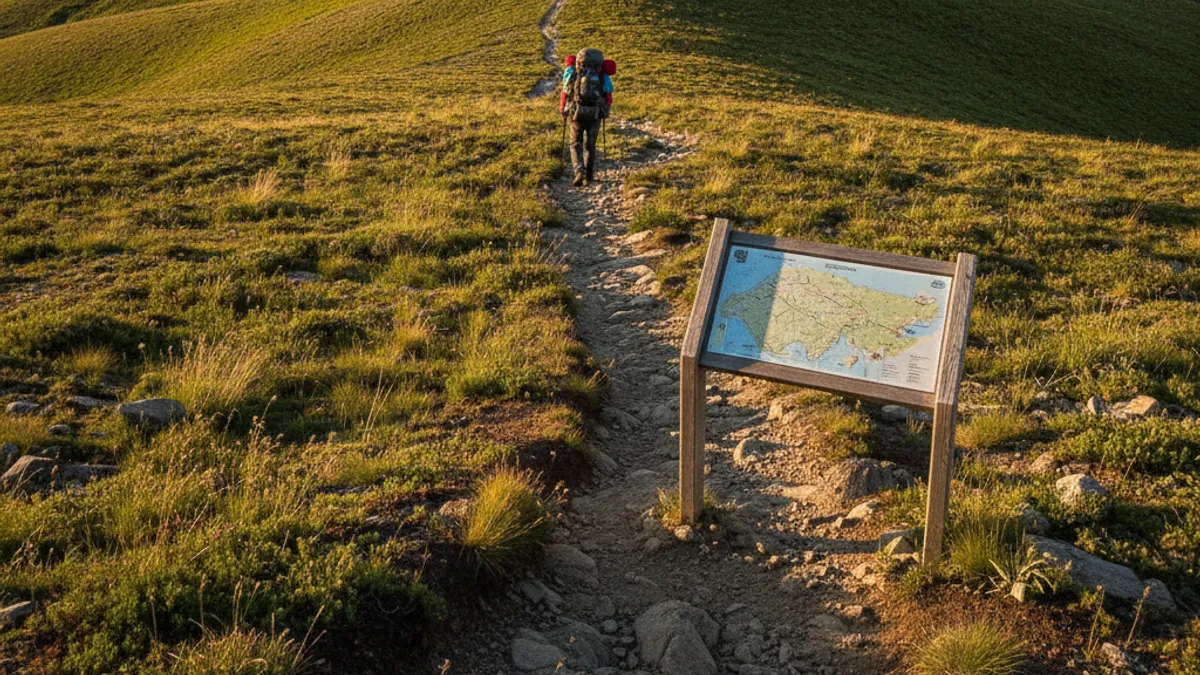
Te Araroa, meaning “The Long Pathway” in Māori, is a significant contender for the longest continuous hiking trail. Stretching across New Zealand, it measures approximately 3,000 kilometers (about 1,864 miles) from Cape Reinga at the northern tip of the North Island to Bluff at the southern extremity of the South Island. This trail is designed as a single, thru-hike experience, guiding adventurers through diverse landscapes that include beaches, forests, mountains, and farmlands.
The route carefully integrates existing tracks, walkways, and some road sections, all managed to provide a cohesive experience. The journey typically takes between four to six months to complete, depending on the hiker’s pace and conditions. It’s a testament to dedicated trail building and a prime example of a continuous footpath designed for long-distance trekkers.
What Te Araroa Offers a Hiker
- Geographic Diversity: You’ll travel from the subtropical north to the alpine south, experiencing a wide range of climates and environments.
- Cultural Immersion: The trail passes through significant cultural sites, offering insights into Māori heritage and New Zealand’s history.
- Dedicated Thru-Hike: It’s built with the goal of being completed in one go, with supporting infrastructure and community along the way.
The Great Trail: A Network of Epic Proportions

When sheer distance is the primary metric, The Great Trail (formerly the Trans Canada Trail) stands out as the world’s longest recreational trail network. As of 2026, this incredible system spans over 28,000 kilometers (approximately 17,000 miles) and connects the Atlantic, Pacific, and Arctic oceans. It’s not a single footpath but rather a network of multi-use trails, including walking and cycling paths, that crisscross the vast Canadian landscape.
This network is a mosaic of existing and purpose-built trails, linking over 15,000 communities across the country. While it’s possible to undertake very long sections, its design as a network means it’s not a single thru-hike in the same vein as Te Araroa. Instead, it offers unparalleled opportunities to explore Canada’s diverse regions, from coastal paths to boreal forests.
Key Aspects of The Great Trail
- Unrivaled Mileage: The sheer length makes it a record-holder for connected recreational pathways.
- Multi-Use Functionality: It accommodates not just walkers but also cyclists, horseback riders, and in some sections, even winter activities.
- National Connectivity: It serves as a vital ribbon connecting communities and showcasing the natural beauty of Canada.
American Discovery Trail: Coast-to-Coast Throughhiking
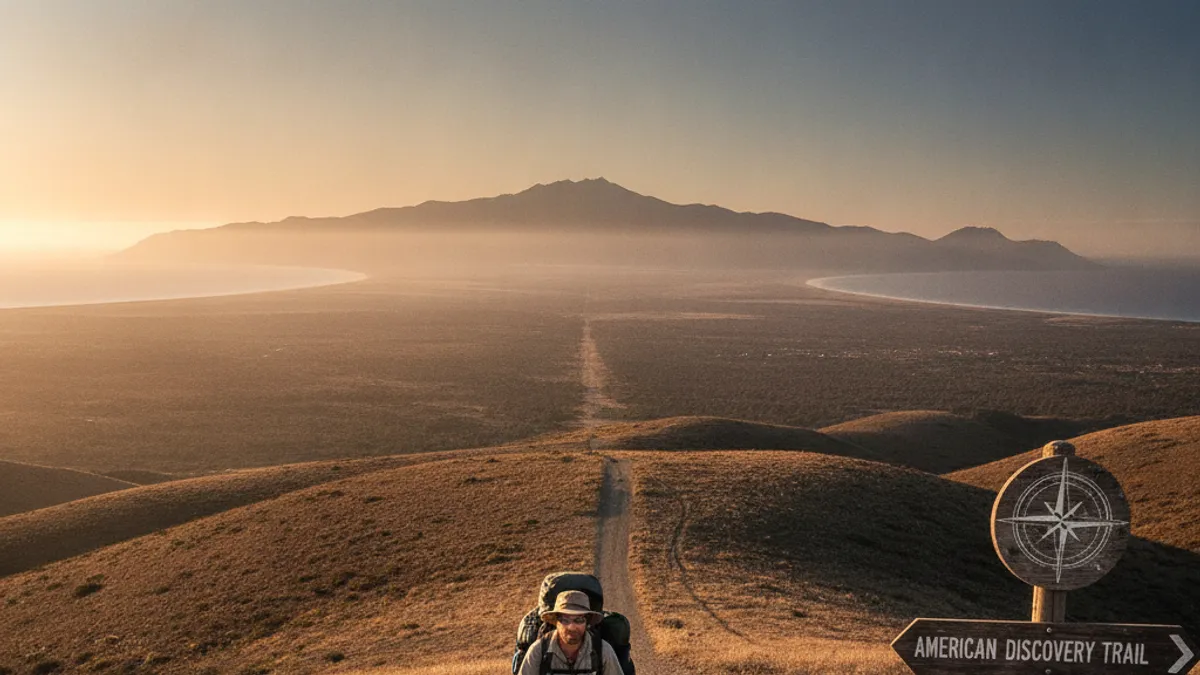
The American Discovery Trail is another significant long-distance route that spans the width of the United States, aiming for a coast-to-coast journey. This trail is a cross-country route, covering approximately 15,000 kilometers (over 9,000 miles) and linking the Atlantic Ocean to the Pacific Ocean. It’s designed as a long-distance, point-to-point hike that showcases a wide array of American landscapes and historical sites.
Rather than being a single, contiguous footpath everywhere, the American Discovery Trail is a hybrid, utilizing existing national trails, state paths, park trails, and even some road sections where necessary. This approach allows it to connect iconic landmarks and natural wonders across multiple states. It represents a monumental undertaking for those seeking to traverse the entire continent on foot.
