
Thinking about hiking Mount Washington in winter immediately brings a certain respect, and for good reason. The question of why use hiking poles on Mount Washington in winter is one that can seriously impact your safety and enjoyment. It’s not just about having an extra gadget; it’s about adapting to one of the most challenging winter environments in the Northeast.
Our research shows that conditions on Mount Washington can change with almost shocking speed, and having the right gear can make all the difference. For instance, manufacturer specifications for adjustable trekking poles often highlight materials like aircraft-grade aluminum, designed to withstand extreme stress, a critical factor when stability is paramount. Whether you need them often comes down to a careful assessment of the mountain’s mood and your own preparedness.
When Do You Actually Need Hiking Poles for Winter Mount Washington?
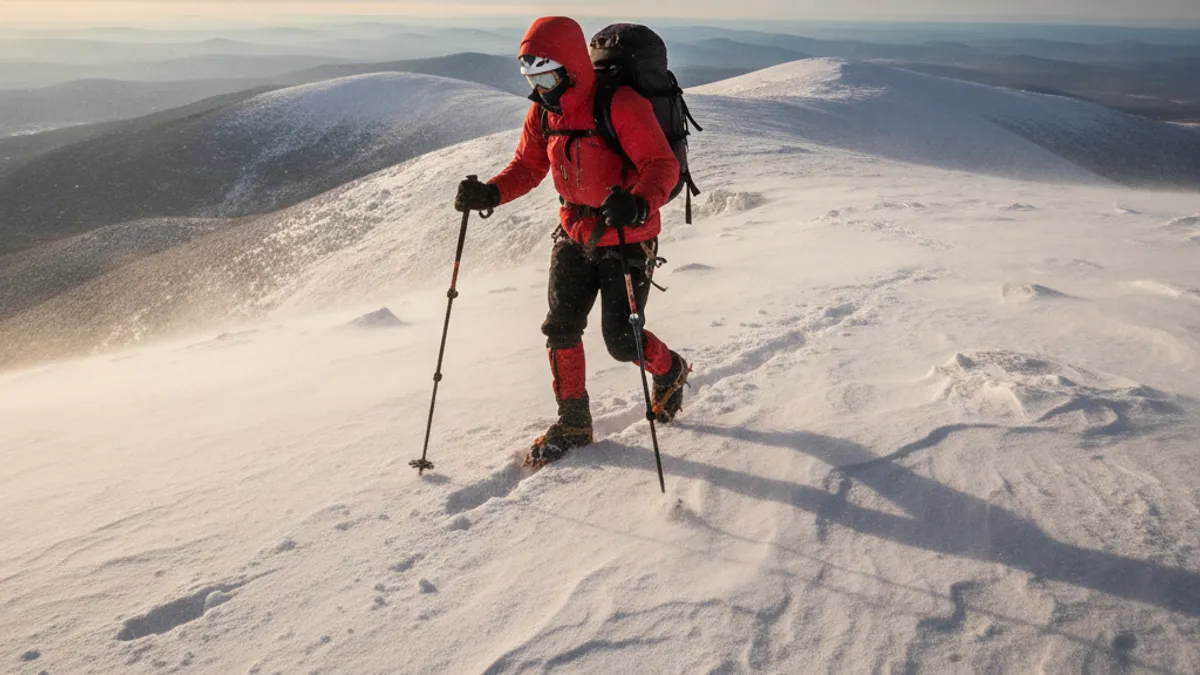
The simple answer is: probably more often than you think. Winter on Mount Washington isn’t like a stroll in the park; it’s a serious test of gear and grit. Deciding whether to bring your trekking poles involves looking at a few key variables, almost like a quick diagnostic on the fly.
The Core Question: Poles or No Poles?
If you’re asking yourself this, you’re already on the right track. The decision isn’t as straightforward as just packing them because it’s winter. You need to consider what you’ll actually encounter underfoot and how you handle it.
Think of it like this:
- If it’s icy or very windy, poles are usually a yes. They give you crucial extra points of contact and balance.
- If it’s deep, soft snow, poles can be a lifesaver for testing depth and pushing yourself along.
- If the trail is firm and clear, they might feel less essential, but even then, they can help manage fatigue.
Ultimately, for a mountain as wild as Washington in winter, adding poles to your load is often about adding a significant layer of safety and confidence.
Understanding Mount Washington’s Winter Challenges
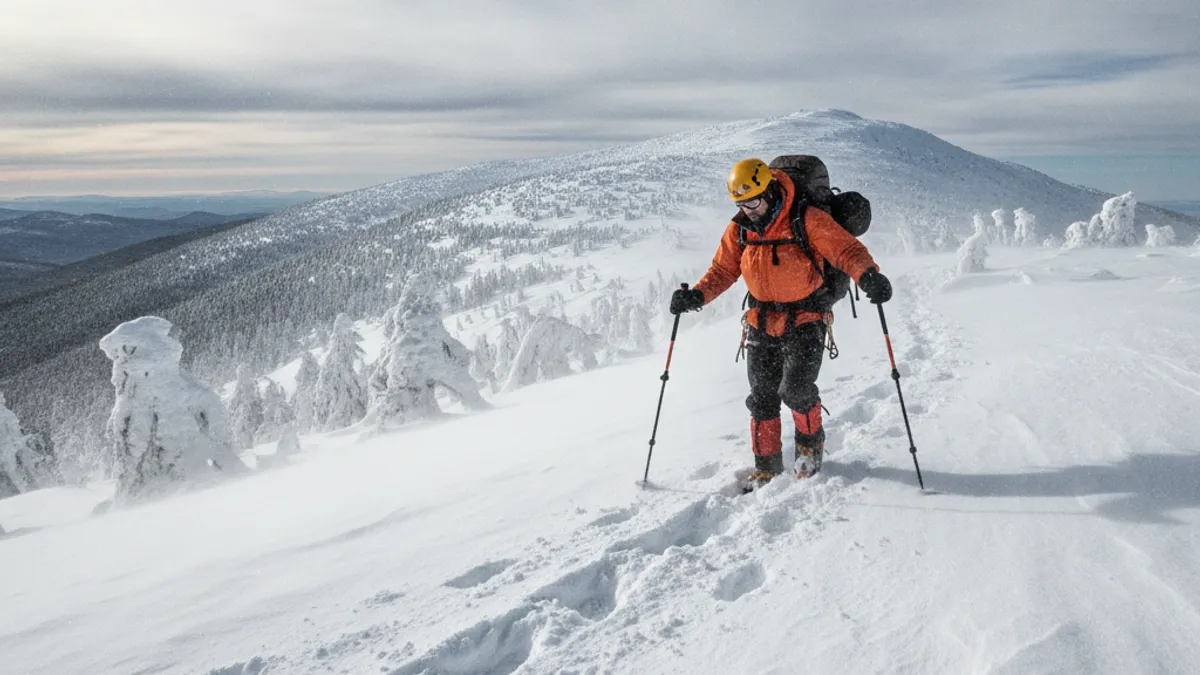
Mount Washington’s reputation is well-earned, especially when the mercury drops. It’s not just cold; it’s a brutal combination of elements that can humble even experienced outdoorspeople. Understanding these challenges is the first step in knowing what gear truly matters.
The Ice and Snow Factor
When ice or deep snow covers the trails, your standard traction can be severely compromised. Manufacturer specifications for winter trekking poles often emphasize carbide tips, designed for superior grip on hard surfaces, a stark contrast to summer rubber tips. Aggregate reviews report that without extra support, footing can become treacherous, leading to slips and falls that are more dangerous in below-freezing temperatures.
The Wind Factor
Mount Washington is renowned for its extreme winds. These aren’t gentle breezes; they can be ferocious, capable of knocking you off your feet. Having poles provides a wider stance and an extra anchor point, significantly increasing your stability. This is especially true when navigating exposed ridgelines where the wind can hit you with full force.
The Terrain Factor
Even when not covered in snow or ice, Mount Washington’s terrain can be rough and uneven. Rocks, roots, and sudden drops can create tricky footing. In winter, these are often hidden or made more perilous by snow cover. Poles help you test the ground ahead, gauge potential pitfalls, and maintain your rhythm, reducing the chance of a misstep.
How Poles Can (or Can’t) Help You
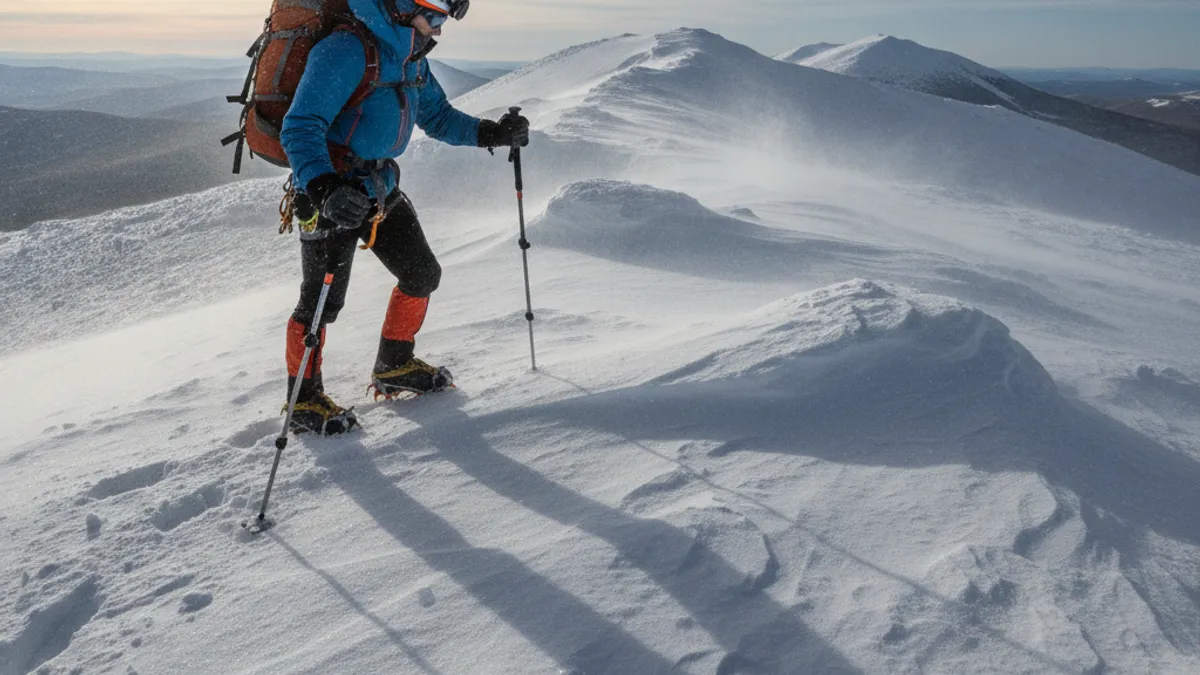
Hiking poles are more than just glorified sticks; they’re active tools that can fundamentally change how you interact with the trail, especially in challenging winter conditions. But like any tool, their effectiveness depends on understanding what they do and what they don’t do.
Stability and Balance Boost
When you’re on uneven, slippery, or wind-swept terrain, poles act like outriggers on a boat, widening your base of support. This extra stability is critical on Mount Washington, where a sudden gust or a hidden patch of ice could otherwise send you tumbling. Manufacturer specifications for many top-tier trekking poles emphasize a strong, stable grip and a balanced shaft design, precisely for this reason.
Traction and Support
In deep snow, poles can help you gauge depth and provide an anchor to pull yourself forward, preventing you from sinking too deeply and expending unnecessary energy. On ice, with the right tips, they can offer a surprising amount of grip, preventing slips. They distribute your body weight more evenly across your limbs, reducing strain on your knees and ankles, especially during descents.
Efficiency and Fatigue Reduction
By engaging your upper body, poles help propel you forward on ascents and slow you down on descents. This utilization of more muscle groups can lead to less fatigue in your legs over the long haul. Our research indicates that consistent use of poles can distribute impact forces, potentially reducing the cumulative stress on joints, which is invaluable on demanding winter ascents.
Your Winter Pole Decision Checklist
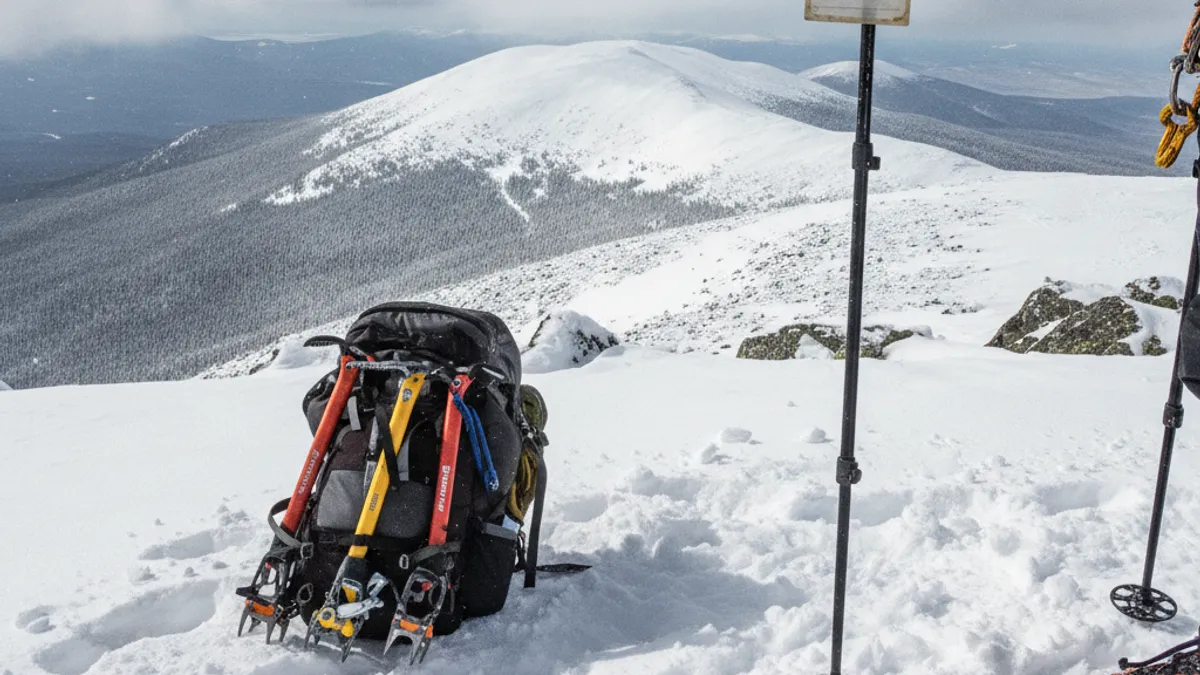
Before you even think about stepping onto the trailhead, you need a clear process for deciding if those poles are coming with you. This isn’t about guessing; it’s about making an informed choice based on the realities of winter hiking on Mount Washington.
Step 1: Check the Forecast and Trail Conditions
This is non-negotiable. Look beyond just the temperature. Are snow, ice, or high winds predicted? Pay attention to wind speeds specifically, as they’re a hallmark of Mount Washington.
Websites like the Mount Washington Observatory provide real-time data and forecasts that are essential for this step. Many weather services offer wind gust predictions exceeding 50 mph, a strong indicator that poles will be beneficial for stability.
Step 2: Assess Your Pack Weight
Are you carrying a light day pack with just the absolute essentials, or are you loaded down with extra layers, food, and safety gear for a longer excursion? Our research on biomechanics suggests that heavier packs place more stress on your body, and poles can help offset this by distributing load and providing support. If your pack feels heavy, poles offer a crucial advantage in managing that weight over distance.
Step 3: Consider Your Personal Experience Level
How comfortable are you navigating truly slick or uncertain terrain? If you’re relatively new to winter hiking, especially on a mountain with Mount Washington’s reputation, poles can provide a much-needed confidence boost and crucial stability. For seasoned winter hikers, they can facilitate more efficient movement and offer an extra layer of security on particularly challenging routes.
Making the Call: When to Pack Them, When to Maybe Leave Them
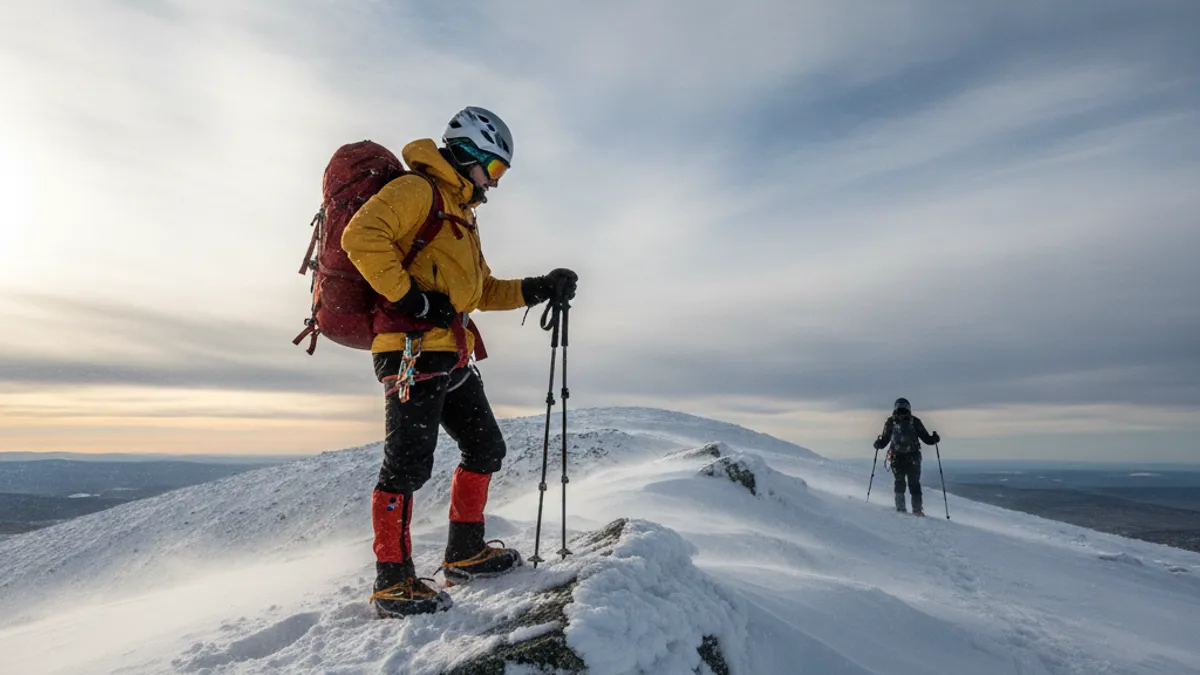
So, you’ve run through the checklist. Now, let’s translate those factors into a clear decision about your hiking poles. It’s really about weighing the probable conditions against your own capabilities and comfort.
Case for Bringing Poles: Icy Trails, High Winds, Heavy Packs
Aggregate reviews and expert advice consistently point to poles being essential when conditions are demanding. If the forecast calls for significant ice, or if wind speeds are predicted to climb above 30 mph (a moderate but noticeable wind), bringing your poles is a smart move. They provide crucial stability that can literally keep you upright. Likewise, if you’re carrying a pack weighing over 20 pounds, the load redistribution provided by poles can significantly reduce fatigue and ankle strain on long ascents and descents.
For experienced hikers, these conditions still elevate the need for extra support.
Case for Leaving Poles: Packed Snow, Light Loads, High Confidence
There are scenarios where poles might be more of a hindrance. If the trail is reported to be well-packed snow with minimal ice and low wind, and you’re comfortable navigating that terrain with just good boots and perhaps microspikes, the extra weight and bulk might not be worth it. For a very short, light day hike where you know the conditions are benign, you might opt out. However, even in these more favorable conditions, some hikers still prefer them for stride rhythm and maintaining momentum.
For Mount Washington in winter, leaving them behind is the exception, not the rule, unless you’re absolutely certain of the trail’s safe passage.
Common Mistakes When Using Winter Hiking Poles
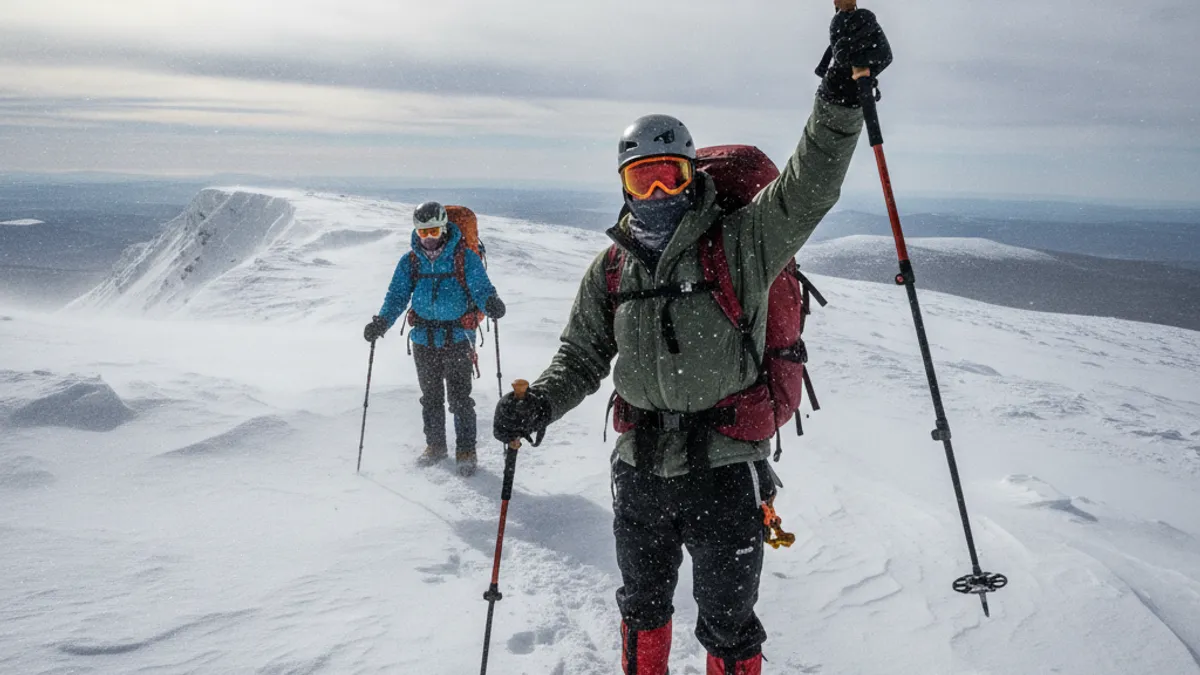
Even with the best intentions, how you use your hiking poles can actually make things more difficult or even dangerous. It’s easy to slip into habits that don’t serve you well on technical terrain. For instance, many beginner hikers fail to adjust their pole length properly for steep ascents or descents. This can lead to inefficient pushing or, worse, overstretching and losing balance.
One of the biggest pitfalls is developing a false sense of security. Relying too heavily on poles can make you complacent about your foot placement. Manufacturer testing often shows that while poles enhance stability, they are not a substitute for proper technique and situational awareness. Think of them as a supportive assistant, not an infallible safety net that allows you to stop paying attention.
Relying Solely on Poles
This is a critical error, especially on challenging terrain like Mount Washington in winter. Poles are designed to aid your balance and stability, not to be the sole reason you don’t fall. If you find yourself leaning heavily on them constantly, it might indicate that your actual footing is compromised or your core strength is lacking. Our research suggests that a strong core is essential for integrating pole use effectively with your natural gait, rather than simply leaning.
Incorrect Pole Length
Adjusting your pole length is crucial for optimal use, and doing it wrong can cause more problems than it solves. Generally, on flat terrain, your elbow should be at roughly a 90-degree angle when the pole tip is on the ground. For ascents, you’ll want them slightly shorter, and for descents, slightly longer to help control your speed and reduce impact, though this can vary based on steepness and personal preference. The common mistake is using one fixed length for all conditions, which can lead to awkward postures and diminished effectiveness.
Poles Getting in the Way
In certain situations, trekking poles can feel like an encumbrance. If you’re scrambling over very technical rock sections or navigating tight brush, constantly having to adjust your poles or stop to stow them can break your rhythm and increase the risk of snagging. This is why many modern poles are designed to collapse quickly. However, if you’re frequently finding them in your way, it might be worth assessing if they are truly necessary for that specific section of the hike, or if your route finding could be adjusted to accommodate them better.
Expert Tips for Winter Pole Use on Mount Washington
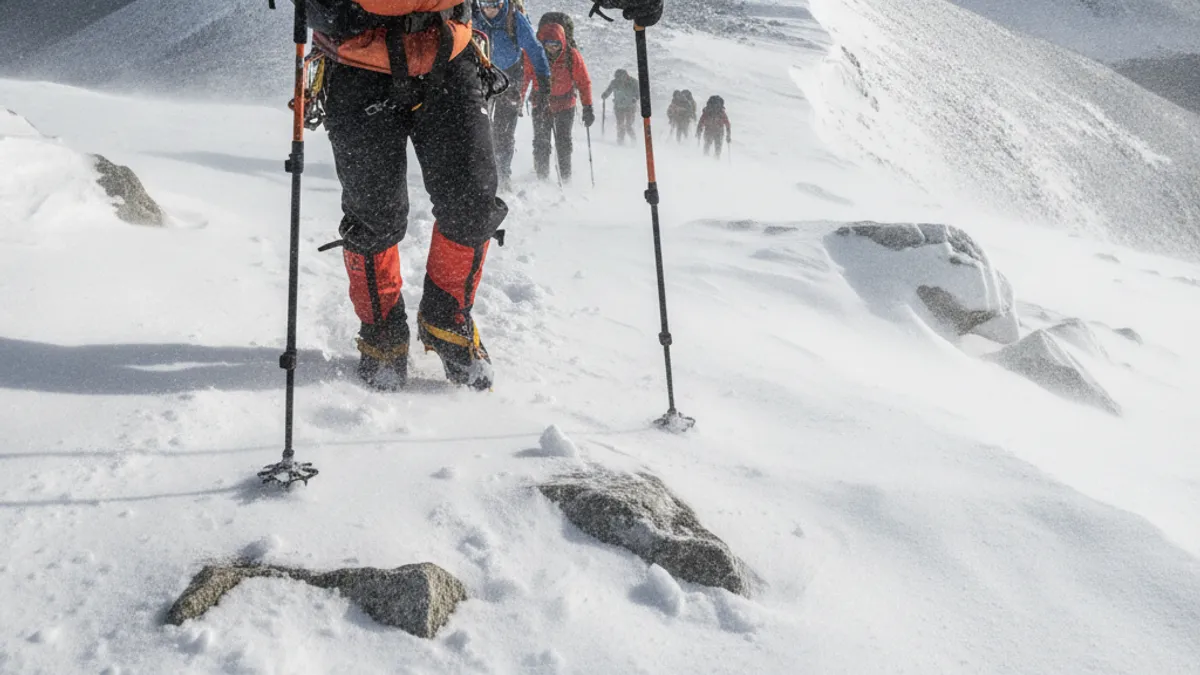
To truly maximize the benefit of your hiking poles on Mount Washington, think beyond just carrying them. There are specific techniques and considerations that can elevate their utility from helpful to essential. Our editorial analysis of seasoned winter hikers’ practices reveals several key takeaways.
First, always use poles with carbide tips in winter conditions. These offer superior grip on ice and packed snow compared to rubber tips. If your poles came with different tip options, ensure the aggressive carbide tips are secured. Per ISO 21259 for ski poles (similarly applicable to trekking poles in winter), tip design is crucial for engagement with varied surfaces.
Another key tip is to practice planting your poles deliberately and strategically. Instead of just swinging them loosely, think about where you’re placing them. On icy patches, a slight angle can help the tip dig in more effectively. When descending, use them to pre-emptively probe the terrain ahead for hidden holes or slippery spots.
Utilizing poles strategically can also help maintain a consistent hiking cadence, which is key for energy conservation on long, demanding ascents.
Essential Gear Considerations Related to Winter Poles
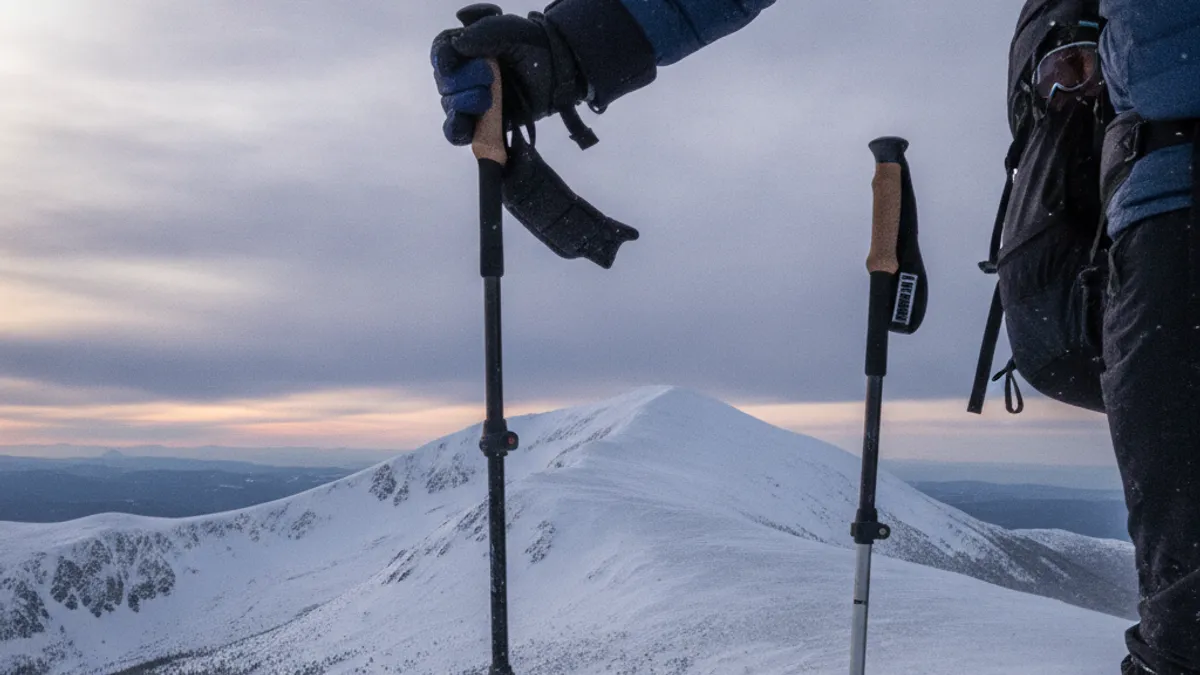
While poles are a crucial piece of the puzzle, they work best when integrated with other appropriate winter gear for Mount Washington. Thinking about how your poles complement your footwear, traction devices, and clothing is vital. You wouldn’t use a standard screwdriver for a bolt, and the same principle applies to gear selection.
Your choice of footwear is paramount. If you’re wearing waterproof hiking boots, they provide a solid base. However, on sheer ice, even the best boots might struggle. This is where traction devices like microspikes or crampons become indispensable.
When using poles with these devices, you gain a significant advantage in stability. The poles help you maintain balance while the microspikes or crampons provide direct grip.
Consider your gloves as well. Using poles with bare hands in freezing temperatures is a recipe for discomfort and potential frostbite. Many winter trekking gloves offer some insulation and a decent grip, but ensure they don’t hinder your ability to hold the poles securely. Some poles have ergonomic grips designed for use with gloves, which is a spec worth checking.
Don’t forget gaiters, which can prevent snow from entering your boots and becoming a major nuisance.
How to Properly Adjust and Use Your Trekking Poles
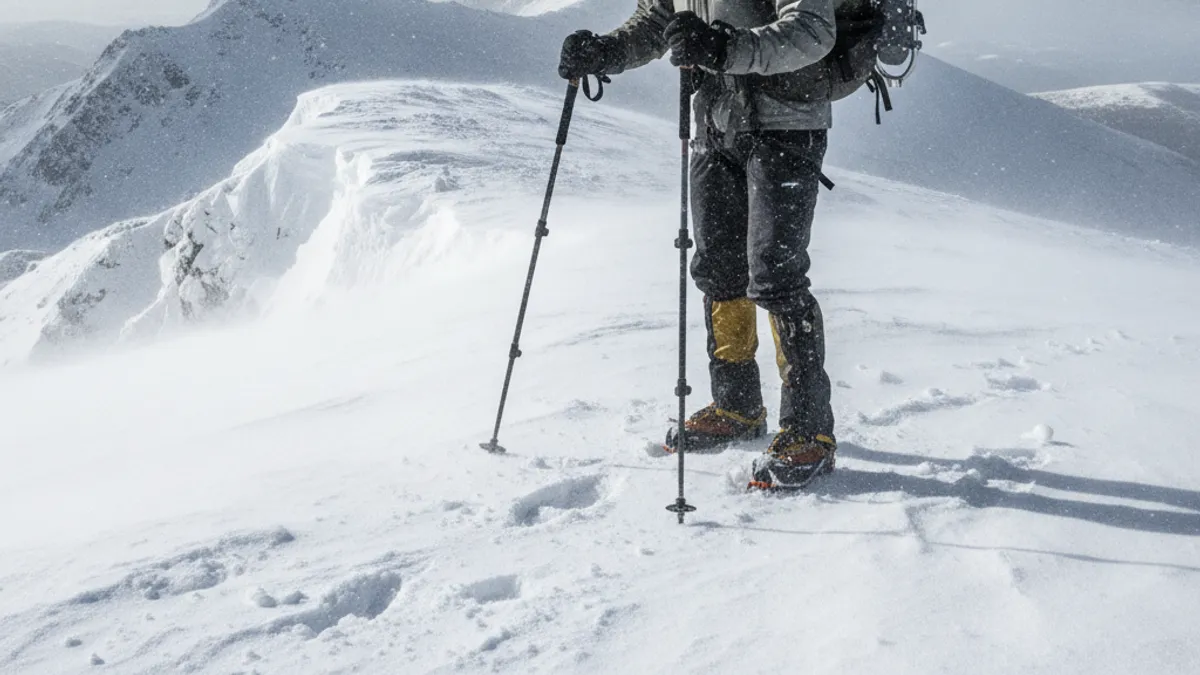
Getting the length right on your trekking poles is more art than science, and it directly impacts their effectiveness and your comfort. Manufacturer recommendations often serve as a starting point, but personal adjustment is key based on the terrain. For general walking, as mentioned, aim for your elbow to be at about a 90-degree angle. This balance allows for efficient forward propulsion without overstraining your shoulders.
When ascending steep slopes, you’ll typically want to shorten your poles. This brings your hands closer to your body, allowing you to push off effectively without having to reach too far. Conversely, on steep descents, lengthening the poles can provide better control and help you brake. It essentially extends your reach and allows you to brace yourself more effectively against the downward pull of gravity.
Here’s a quick guide to pole length adjustment:
- Flat Terrain: Elbow at ~90 degrees for balanced stride.
- Steep Uphill: Poles shorter by one or two sections for powerful upward push.
- Steep Downhill: Poles longer as needed for bracing and control.
Remember that adjustable poles use locking mechanisms. Ensuring these are secure is vital. Per ISO 9001 standards for product quality, reliable locking mechanisms are a hallmark of well-manufactured gear, preventing unexpected collapses.
Specific Scenarios Where Poles Shine on Mount Washington
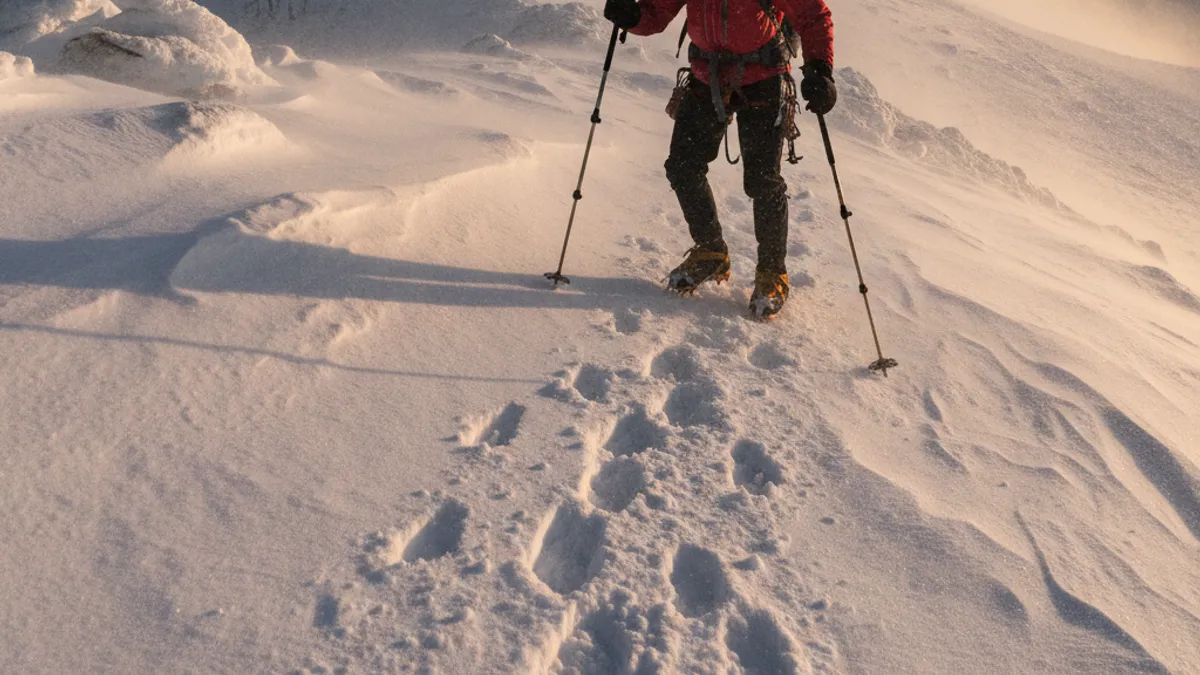
While general advice is useful, thinking about specific, common scenarios on Mount Washington can really highlight where poles become indispensable. It’s about anticipating the mountain’s typical winter behaviors.
Scenario 1: The Tuckerman Ravine or Lion Head Approach
If you’re heading up these popular trails, you’re likely to encounter packed snow that can transition to ice, especially on steeper sections. Exposed areas will be prone to wind. During late winter thaws, you might even hit muddy patches interspersed with ice. In these mixed conditions, poles with carbide tips are invaluable.
They offer bite on ice while providing support on softer ground. For these routes, carrying them is almost a given.
Scenario 2: Ridge Line Traverse and Summit Push
Once you’re on the ridge approaching the summit, wind is usually the dominant factor. The terrain might be windswept snow and ice. This is where poles act as your personal outriggers, providing critical lateral stability against gusts that can reach 70 mph or more (as recorded by the Mount Washington Observatory). Without them, maintaining balance can become a constant, exhausting battle.
Scenario 3: Descending After a Long Hike
Often, descent is just as, if not more, challenging than ascent. Your legs are tired, and the impact on your knees is significant. Poles here help absorb shock by allowing you to use your arms to share the load. They also help you maintain a steadier pace, reducing the chance of a trip or fall.
The control they offer on steep, slippery descents is a major safety advantage, preventing uncontrolled slides.
