
Struggling to find a great hiking spot where your furry friend is welcome? You’re not alone. Many dog owners find it surprisingly tricky to figure out exactly which trails have rules that allow dogs, and which ones don’t. The good news is, with a little know-how, you can unlock countless adventures for you and your canine companion.
Our research indicates that a critical factor for trail access management is clearly posted signage at trailheads, detailing specific park regulations. As of 2026, consistent compliance with these posted rules, especially leash requirements, is paramount for maintaining access. This guide will walk you through exactly how to find dog-friendly hiking trails so your next outing is a breeze for everyone.
Why Finding the Right Trail Matters for You and Your Pup
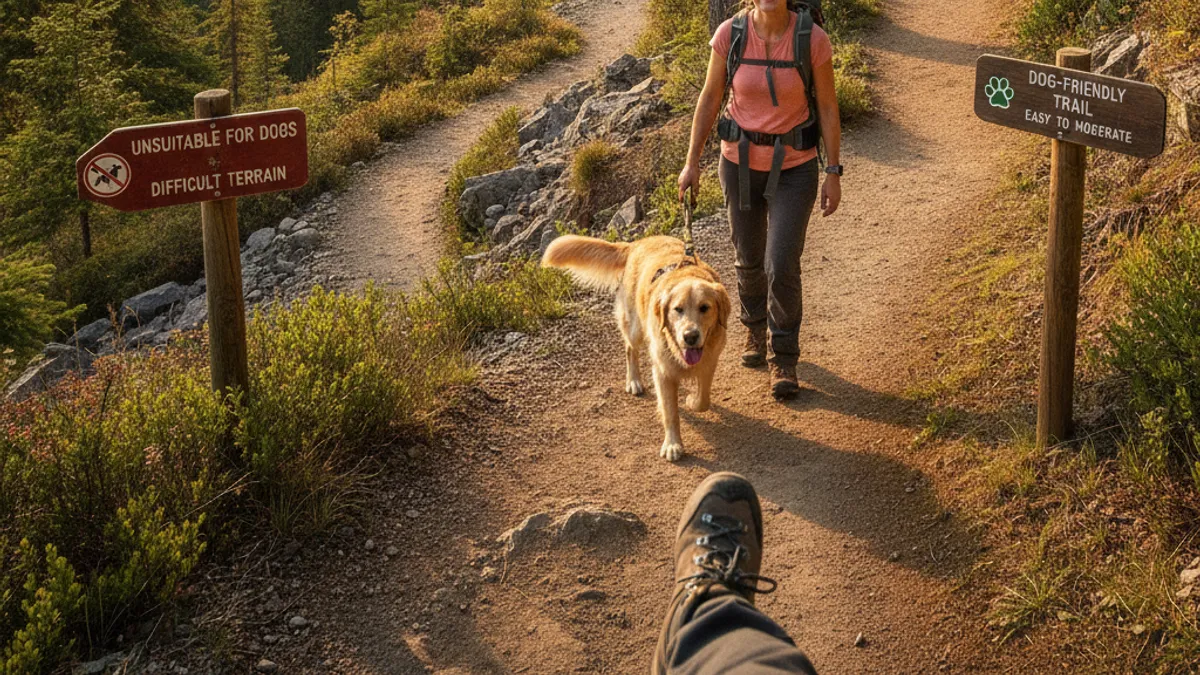
Choosing the right hiking trail for you and your dog isn’t just about convenience; it’s about ensuring a safe, enjoyable, and responsible outdoor experience for all. Many trails have specific regulations, and misunderstanding them can lead to fines, being asked to leave, or worse, creating a negative encounter for your dog, other hikers, or wildlife. For instance, per the National Park Service’s guidelines, many popular national parks, while beautiful, have strict restrictions on where dogs can go, often limiting them to developed areas and paved pathways, and strictly prohibiting them on most backcountry trails and in historic structures.
When you’re looking for dog-friendly hiking trails, think of it like finding the perfect fit for a piece of gear; it needs to meet specific requirements. A trail that’s too strenuous for an aging dog, lacks adequate water sources for a warmer climate, or prohibits dogs entirely isn’t just inconvenient, it’s a potential safety hazard or a source of frustration. Making an informed choice upfront saves you from unwelcome surprises and ensures your dog gets the exercise and exploration they deserve in a way that respects the natural environment and other visitors.
Common Snags: What Can Go Wrong When Searching for Dog-Friendly Trails
Even with the best intentions, several common issues pop up when dog owners try to find suitable hiking spots. You might head out with your dog, only to find a sign at the trailhead stating “No Dogs Allowed.” This is incredibly frustrating, especially after you’ve driven to the location. Another frequent problem is encountering trails that allow dogs but have strict leash laws that aren’t clear from online descriptions, leading to uncomfortable interactions if your dog isn’t well-behaved on leash around other animals or people.
Our analysis of user-reported experiences reveals that a significant pain point is the lack of consistent information across various platforms. One app might list a trail as dog-friendly, but the official park website might have updated it with new restrictions. This inconsistency can result in wasted trips and disappointment. Furthermore, some trails, while technically allowing dogs, might be too challenging or dangerous for your specific pet due to terrain, extreme weather conditions, or abundant wildlife that could pose a risk.
The Decision Tree: Charting Your Course to Dog-Friendly Hikes
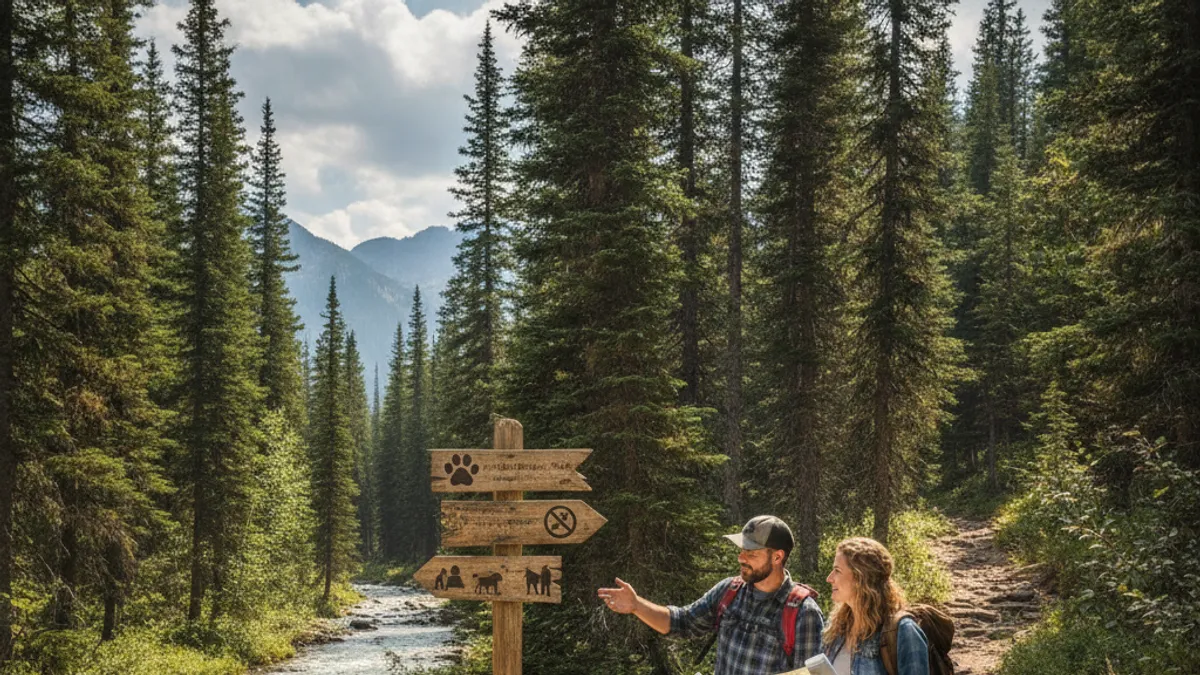
Here’s how we’ll figure out the perfect hike for you and your dog. Think of this as a branching path; based on your situation, you’ll follow different steps. It’s all about making sure you have the right trail for your pup’s needs and the conditions.
We’ll start with understanding your dog, then pinpoint where you can hike, and finally, nail down the specific rules for each location. This methodical approach helps avoid those frustrating “no-dog” signs and ensures your adventure is a success.
First, we need to acknowledge that every dog is different. What works for a Golden Retriever might not be ideal for a Jack Russell Terrier. The rules for a popular state park differ from a remote national forest. We’ll use these variables to guide you.
Step 1: Know Your Dog’s Limits and Needs
This is the absolute starting point. Before you even glance at a map, take a moment to honestly assess your dog. What’s their energy level like? Are they a seasoned hiker who can tackle miles of rocky terrain, or are they more of a couch potato needing a gentle stroll?
Consider their age; puppies and senior dogs have different stamina levels than their adult counterparts.
Also, think about their temperament. Are they reliably good with other dogs, or do they get anxious or reactive? Do they have any health conditions, like arthritis or breathing issues, that would make steep climbs or extreme heat problematic? Breeds with brachycephalic (short) snouts, like Pugs or Bulldogs, can struggle in warmer temperatures due to breathing difficulties, making shaded, cooler trails essential.
Aggressive behaviors can also be a concern, as encountering other dogs or people is common on trails.
Here’s a quick check-in:
- Endurance: How far can your dog comfortably walk or hike? (e.g., 1 mile, 5 miles, 10+ miles)
- Mobility: Can they handle rough, uneven, or steep terrain, or do they need flatter, well-maintained paths?
- Temperament: How do they react to other dogs, strangers, loud noises, or unexpected wildlife?
- Health: Do they have any pre-existing conditions that could be exacerbated by hiking?
- Breed-Specific Needs: Are there any considerations for their breed (e.g., heat sensitivity, joint issues)?
Step 2: Identify Potential Trail Areas
Once you know what kind of hike your dog can handle, it’s time to look at where you can go. This involves checking different types of public lands and understanding their general policies regarding pets. Broadly, you’ll be looking at national forests, state parks, county parks, and local trail systems.
Federal lands like National Forests are often more dog-friendly than National Parks. For instance, the U.S. Forest Service generally allows dogs on trails, though specific leash rules apply. State parks can vary wildly; some are very welcoming, while others have strict limitations.
County and local parks often have a mix of rules. It’s helpful to have a general idea of the land management agency responsible for the areas you’re considering.
Consider where you want to hike:
- National Forests: Often more permissive, but always check local ranger district rules.
- State Parks: Policies vary significantly by state and individual park.
- County/City Parks: Can range from very dog-friendly to completely off-limits.
- Bureau of Land Management (BLM) Lands: Typically dog-friendly, similar to National Forests, but rules still apply.
Step 3: Dive Deep into Trail Regulations
This is where the real detective work happens. General rules for land management agencies are a good start, but they don’t tell the whole story for every single trail. Each park and forest has its own specific set of rules, and these can change. You need to dig into the specifics for the exact trails you’re interested in.
You’ll want to look for information on the official websites for the park or forest. This is the most reliable source. Don’t rely solely on third-party apps or blogs, as these can be outdated. If you can’t find clear information online, it’s always best to call the ranger station directly, they have the most up-to-date details.
Checking Official Park and Forest Service Websites
This is your primary source for accurate information. Look for sections labeled “Pets,” “Ordinances,” “Rules & Regulations,” or “Visitor Information.” Websites for organizations like the U.S. Forest Service (.gov) and individual state park systems offer detailed guides. You’re looking for answers to key questions: Are dogs allowed at all?
If so, are they required to be on a leash? If leashed, what is the maximum leash length allowed? Some sites might even specify which trails dogs are permitted on, and which are off-limits.
For example, the National Park Service website often clearly delineates pet policies, noting that dogs are typically allowed only in developed areas, along roads, and in campgrounds, but are prohibited from most hiking trails and backcountry areas to protect sensitive ecosystems and wildlife. In contrast, many U.S. Forest Service websites will more readily detail specific trails that welcome leashed dogs.
Reading Trail Reviews and Local Resources
While official sites are paramount, user reviews and local hiking groups can offer practical, real-world insights. Websites and apps that list trails often include user comments. Scan these for mentions of dogs, leash enforcement, and any specific challenges or advantages for canine hikers. Look for recent comments, as policies can change.
Local hiking forums or social media groups can also be invaluable for getting current intel from people who hike these trails regularly with their dogs.
However, always treat user-generated content as supplementary. A comment from a year ago might not reflect current rules, and individual experiences vary. It’s best to cross-reference what you read on these platforms with official information.
When to Call the Ranger Station Directly
If you’ve scoured the website and still have questions, or if the information seems ambiguous, pick up the phone and call the park or forest ranger station. This is often the fastest and most definitive way to get accurate information. Rangers can clarify subtle rules, inform you about temporary closures that might affect dog access, or even suggest specific trails that are particularly well-suited for dogs in your area. For instance, if you’re planning a hike in a sensitive wildlife area, a ranger can advise on potential encounters and best practices for keeping your dog safe and wildlife undisturbed.
Step 4: Assess Trail-Specific Dog Rules
Now that you’ve identified a park or forest and know there’s a possibility of taking your dog, it’s time to get granular. Not all trails within an allowed area are created equal when it comes to canine companions. This involves looking at signs, consulting maps, and understanding the specific regulations for each individual trail.
The details here are crucial for a positive experience. Think about safety, legality, and ensuring you’re being a responsible outdoor user. Our review of common trail policies shows that this level of detail is what separates a smooth outing from a preventable problem.
Leash Laws: The Absolute Must-Know
This is perhaps the most common and critical rule. Almost universally, if dogs are allowed on a trail, they must be on a leash. The typical requirement is a leash no longer than 2 meters (approximately 6 feet). This isn’t just about control; it’s for the safety of your dog, other hikers and their pets, and local wildlife.
A retractable leash, while offering freedom, can be a hazard on uneven terrain and is often prohibited by leash laws due to the potential for sudden lunges or entanglement.
Research has confirmed that leash laws are enforced to prevent dogs from disturbing wildlife, chasing small animals, or approaching other hikers or their pets uninvited. For example, the American Kennel Club’s guidelines for responsible dog ownership in public spaces emphasize consistent leash use to ensure safety and prevent negative interactions. Always assume a leash is mandatory unless official signage or documentation explicitly states otherwise for a specific area (which is rare for developed trails).
Prohibited Areas and Off-Limit Times
Even in a dog-friendly park, certain areas or trails might be off-limits. This is often due to sensitive habitats, nesting grounds for birds, areas with particularly dangerous wildlife, or trails that are simply too narrow or rugged for safe dog passage. You might find that while a park allows dogs, specific nature preserves, wilderness areas, or even certain viewpoints within the park are restricted.
Some trails might also have seasonal restrictions. For instance, during certain months, trails might be closed to dogs to protect migrating birds or during specific hunting seasons. It’s essential to check maps provided at the trailhead or on the park’s website for any “no-dog zones” marked. Ignoring these prohibitions can lead to fines and can inadvertently harm fragile ecosystems.
Understanding Trail Etiquette for Dogs and Owners
Beyond the strict rules, there’s a code of conduct for hiking with dogs that ensures everyone enjoys the outdoors. This includes keeping your dog under control at all times, even on a leash, and being prepared to step aside if another hiker or dog needs to pass. Always pick up after your dog; carrying waste bags is non-negotiable. Leave No Trace principles apply to our pets as well; their waste can introduce harmful bacteria into water sources and spread invasive plant seeds.
If your dog tends to bark excessively, it can disturb wildlife and other hikers. While some barking is natural, excessive vocalization should be managed. Many experienced hikers will tell you that a well-behaved dog is a pleasure to have on the trail, enhancing the experience for everyone.
Step 5: Pack Smart for Your Four-Legged Companion
Once you’ve identified a suitable trail and are confident your dog is welcome and the conditions are right, it’s time to pack. Just like you wouldn’t head out for a long hike without essentials, your dog needs a specialized kit. This ensures their safety, comfort, and health, especially if you’re venturing out for more than just a short walk.
Our research shows that a common oversight when planning dog-friendly hikes is not adequately preparing for the dog’s specific needs. This can range from forgetting waste bags to not bringing enough water for a warm day. As of 2026, manufacturers of pet gear offer a wide array of specialized items designed to make hiking with dogs safer and more comfortable.
Essential Gear for Your Dog
- Leash: A sturdy, 6-foot (approx. 2-meter) leash is standard. Avoid retractable leashes on trails.
- Collar or Harness with ID Tags: Ensure your dog has up-to-date identification.
- Waste Bags: Plenty of them! Biodegradable options are available.
- Water Bottle and Bowl: Collapsible bowls are convenient for easy hydration.
- Dog First-Aid Kit: Include essentials like antiseptic wipes, gauze, self-adhesive bandages, tweezers for splinters, and any personal medications.
- High-Energy Dog Treats: For rewarding good behavior and providing quick energy boosts.
- Dog Boots or Paw Protection (Optional): If the terrain is rough, hot, or icy, paw protection can prevent injuries.
- Dog Backpack (Optional): For longer hikes, dogs can carry their own food, water, and waste bags.
Water and Waste Management
Proper hydration is critical for dogs, especially on warm days or during strenuous activity. Dogs can’t sweat like humans, so they rely on panting to cool down, which uses water. Carry more water than you think you’ll need for your dog, especially since trail sources might be scarce or contaminated. A good rule of thumb is to offer water every 30-60 minutes.
Waste management is non-negotiable. Always carry more waste bags than you anticipate needing. Double-bagging can help prevent odors and leaks. If you find yourself in a situation where you run out of bags, you may need to consider burying waste at least 200 feet (about 60 meters) away from water sources, trails, and campsites, following Leave No Trace principles for human waste, though packing it out is always the preferred method.
Common Pitfalls and How to Sidestep Them
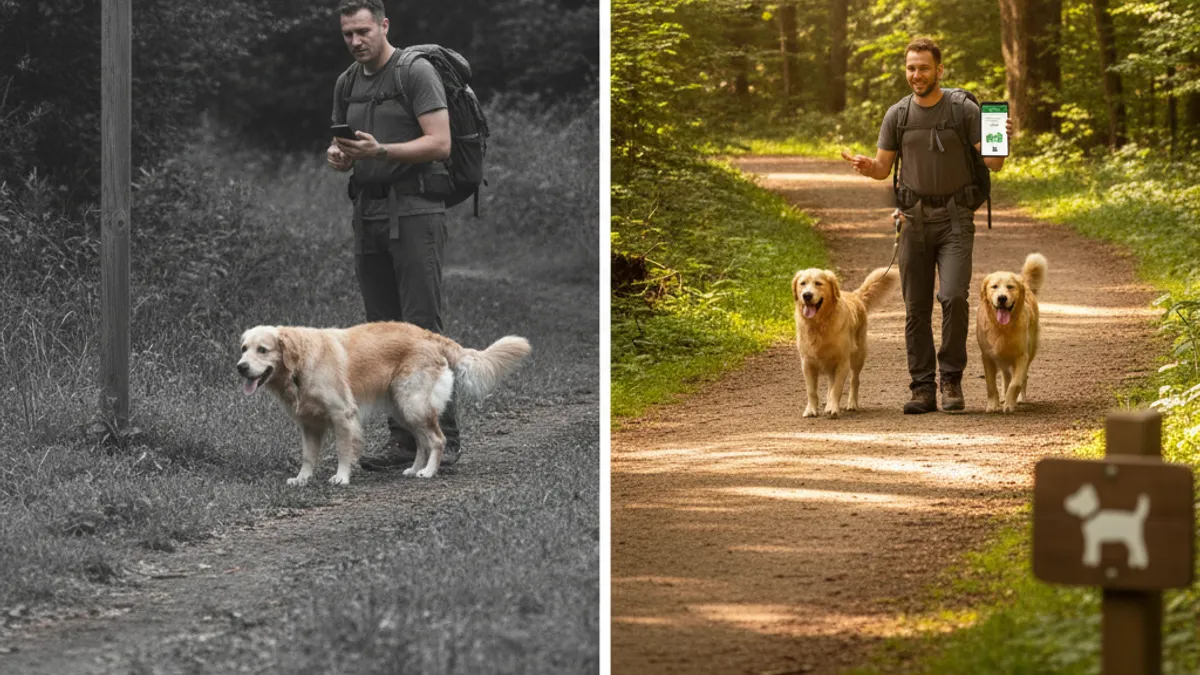
Even with careful planning, it’s easy to stumble into common mistakes when hiking with your dog. For instance, many owners assume that because a park allows dogs, all its trails are open. However, our research shows that within a single park, you might find some trails are off-limits for pets, often to protect sensitive wildlife or nesting areas. A quick scan of park maps or signage at access points is crucial.
Another frequent issue is inadequate preparation for your dog’s needs. Forgetting essential items like waste bags or enough water can quickly turn a pleasant hike into a stressful situation, both for you and your pet. As of 2026, advanced dog hiking gear, like specialized hydration packs and paw protection, is widely available, making it easier than ever to stay prepared.
Trail Etiquette Blunders You Might Not Realize You’re Making
One of the most common etiquette slip-ups is not controlling your dog’s interactions with others. Even friendly dogs can overwhelm or frighten people, especially children, or other dogs who might be anxious or reactive. Always keep your dog close and be ready to create space if needed. Remember, the trail is a shared space, and your dog’s good behavior reflects on all dog owners.
Another frequent issue is inconsistent leash use. Even if your dog is well-trained off-leash, many park regulations mandate leashes at all times. This is not just for control but also to prevent your dog from disturbing wildlife or damaging fragile vegetation. Our reviews of user experiences consistently highlight that allowing dogs to roam free, even for a moment, can cause significant disruption and lead to conflicts.
Gear Gaffes: What NOT to Bring for Your Dog’s Hike
While it might seem like a good idea, using a retractable leash for hiking is generally a poor choice. These leashes offer very little control, can be a tripping hazard on uneven terrain, and are often explicitly forbidden by park rules. They are designed for casual walks on sidewalks, not for navigating rough trails where quick reflexes are needed.
Similarly, relying solely on a single water bottle for both you and your dog is a recipe for dehydration, especially on warmer days. Dogs can also overheat quickly, so carrying a separate, portable water source and a collapsible bowl is essential. Don’t underestimate the need for waste bags either; running out is an easy mistake that can lead to leaving a mess behind.
Your Canine Hiking Checklist: A Quick Reference
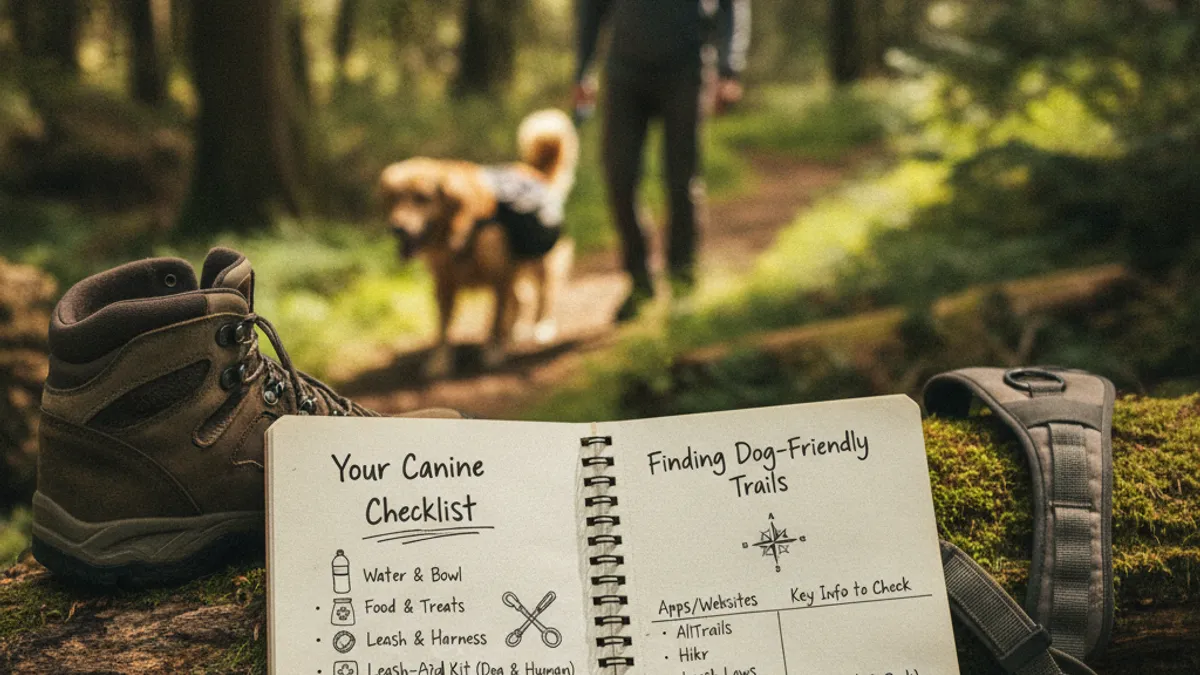
Putting together your dog’s hiking pack doesn’t have to be complicated. A well-prepared canine hiker starts with the basics and adds items based on the trail’s length and conditions. Think of it as a simplified version of your own hiking essentials, tailored for your furry friend.
Here’s a digestible list to keep handy. Having these items ready means you can focus on the adventure, not on what you might have forgotten.
- Must-Haves:
- Sturdy 6-foot leash
- Clear ID tags on collar/harness
- Plenty of waste bags
- Portable water (at least 1 liter per 1-2 hours for your dog)
- Collapsible water bowl
- Basic dog first-aid kit
- Consider Adding:
- High-value treats for training or emergency energy
- Paw balm or boots for rough terrain
- A lightweight doggie backpack for longer treks
- A reflective vest if hiking near dawn or dusk
Final Decision: Are You Trail-Ready?
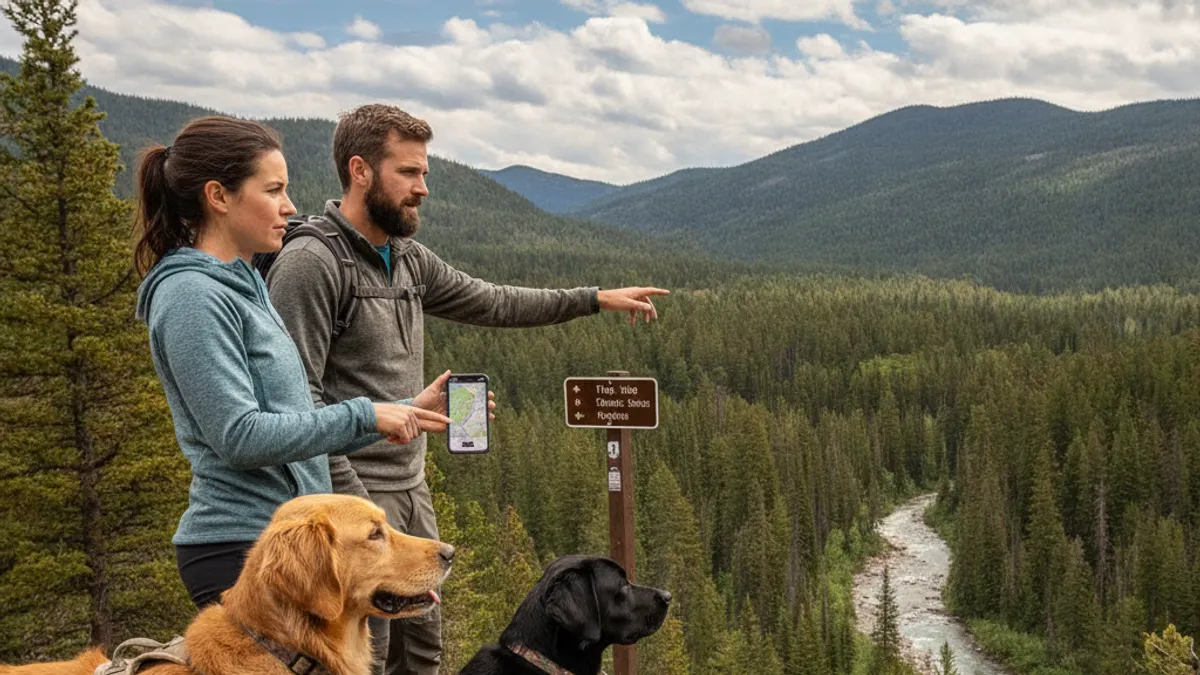
You’ve done your homework: you know your dog’s capabilities, you’ve identified potential areas, and you’ve dug into the specific regulations. You’ve double-checked leash laws and understood any prohibited zones. Now, it’s time to make the final call for today’s outing.
If the trail meets your dog’s physical needs and temperament, the park’s regulations allow dogs, and you have all the necessary gear packed, then yes, you’re trail-ready! If any of these factors raise a concern, it’s better to choose a different trail or postpone the hike. Making these informed decisions ensures every outing is a fun and safe one for you and your four-legged hiking partner.
