
Choosing the right hiking pole length is more important than many people realize, and if you’ve been asking yourself “what length hiking pole do i need?”, you’re in the right place. Getting this wrong can lead to discomfort, inefficient movement, and unnecessary strain on your body. Adjustable poles are a fantastic solution, but you still need to know your starting range.
Our research indicates that for optimal performance, particularly on varied terrain, an adjustable pole that can be precisely set is key. Understanding your personal measurements and adjusting for uphill and downhill sections are crucial steps. As of 2026, manufacturer specifications commonly recommend a range of 95 cm to 145 cm for adjustable poles to accommodate a wide spectrum of users.
Your Height is Your Starting Point
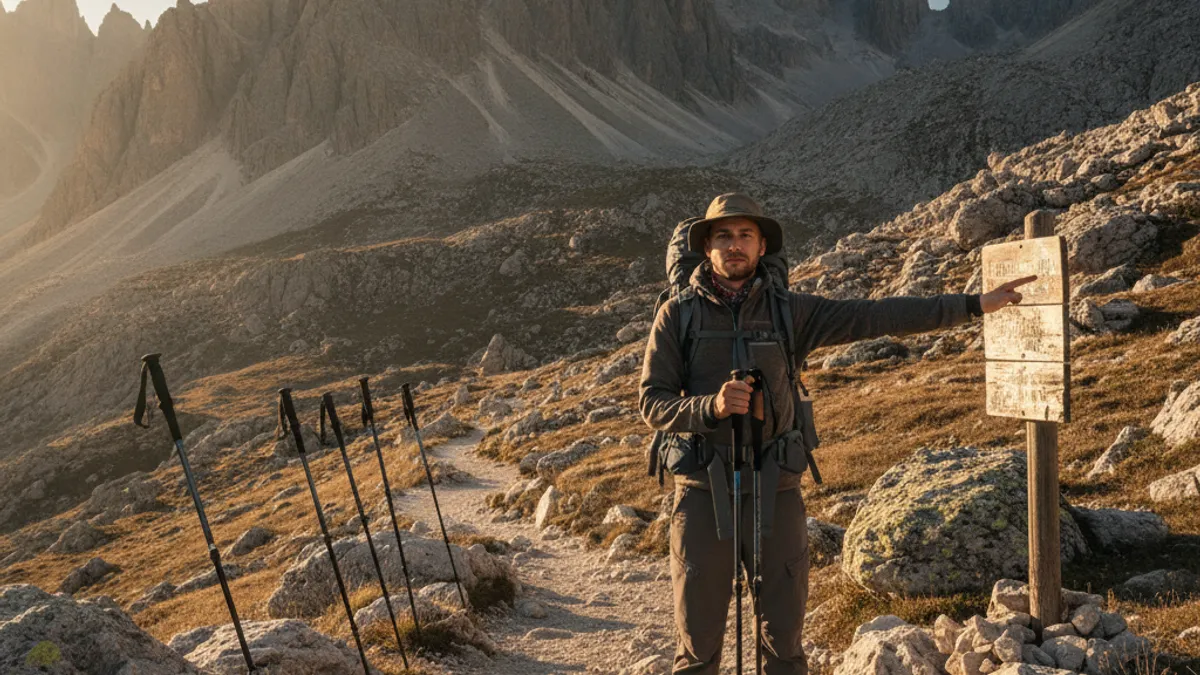
Figuring out your general hiking pole size begins with a simple measurement of your own height. This gives you a fundamental baseline that most adjustable poles can accommodate, ensuring you’re not looking at options that are inherently too short or too long. It’s the first piece of the puzzle in dialing in the perfect length for your adventure.
Measuring for Flat Ground
For those times when you’re not ascending or descending, you’ll want your poles set to a length that allows for comfortable, natural movement. This typically means setting the poles so your arm is bent at roughly a 90-degree angle when holding the grip. It should feel easy to swing the poles forward without having to reach too far or feel like you’re lifting them too high.
- Stand tall. Relax your shoulders and let your arms hang naturally at your sides.
- Observe your elbow. Note the natural bend in your elbow.
- Target range. When holding the grip, your elbow should form an angle close to 90 degrees.
This measurement provides your starting point for flat or gently rolling terrain.
Let’s Talk About Terrain: Hills Change Everything
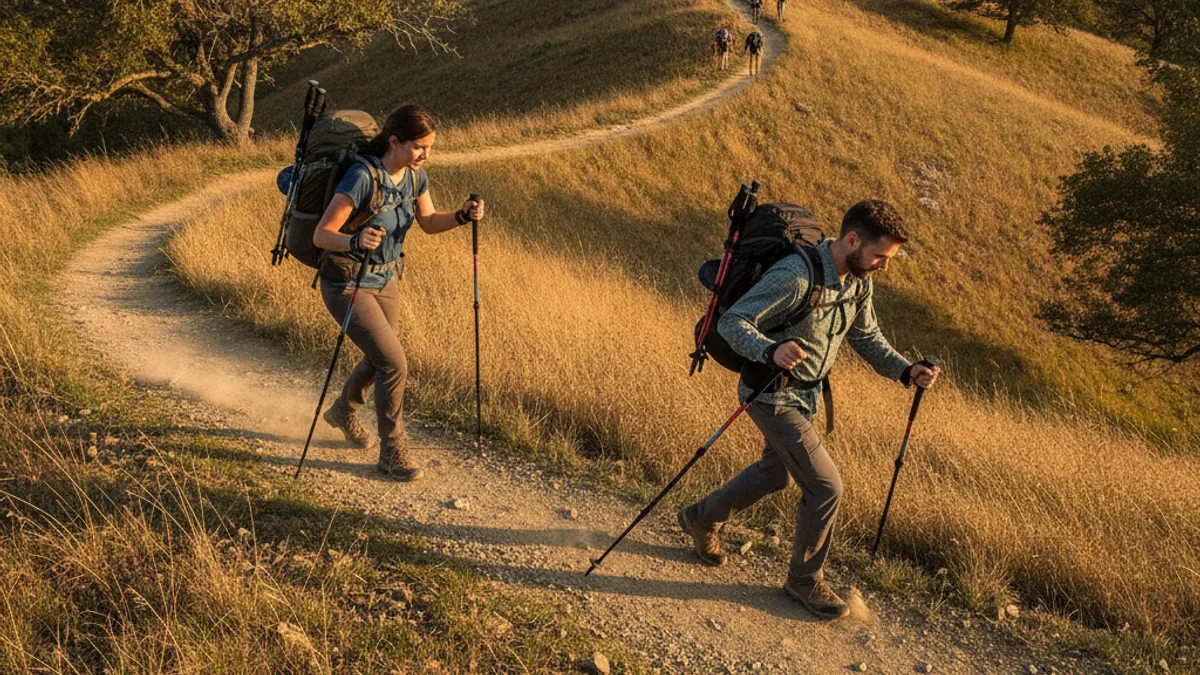
What feels perfect on a flat path can feel completely off when you’re tackling inclines or declines. This is where the magic of adjustable hiking poles truly shines, allowing you to adapt your equipment to the demands of the trail on the fly. Your poles can and should change length as the elevation changes.
Uphill Adventures: Going Shorter
When you’re pushing upwards, you’ll want to shorten your hiking poles. This adjustment helps maintain a more upright posture and ensures you aren’t overreaching, which can strain your shoulders and back. Shorter poles provide a more stable platform for propelling yourself forward efficiently.
- If you’re climbing, shorten your poles by about 5-10 cm (or roughly 2-4 inches) from your flat-ground setting.
- The goal: Achieve a slightly sharper elbow bend, allowing you to push off effectively.
This adjustment makes ascents feel less strenuous and more controlled.
Downhill Descents: Going Longer
Conversely, when you’re heading downhill, extending your poles provides crucial benefits. Longer poles offer increased reach and become vital for stability, acting like additional points of contact to help you maintain balance as you navigate steeper slopes. The extended length allows you to plant them further ahead.
- If you’re descending, lengthen your poles by about 5-10 cm (or roughly 2-4 inches) from your flat-ground setting.
- The goal: Create a more open elbow bend, enabling better reach and more secure footing.
This adaptation transforms tricky descents into much more manageable sections of your hike.
What About Your Pack?
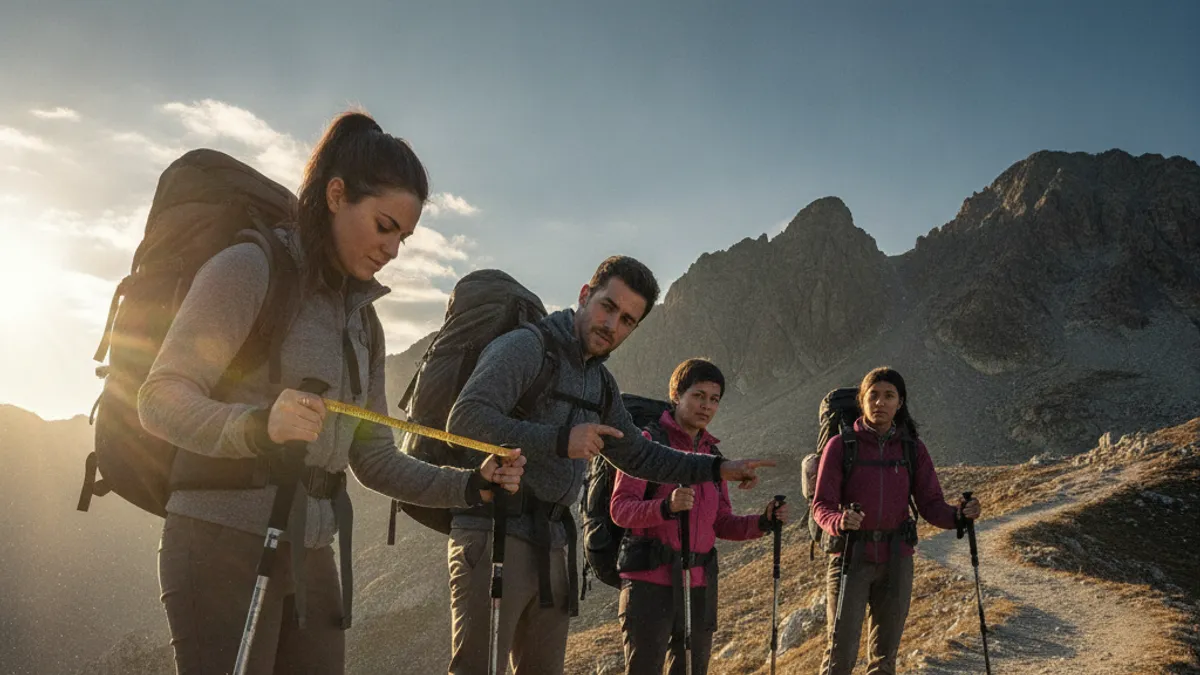
The amount of gear you’re carrying can subtly influence the ideal length for your hiking poles. While not as dramatic as the impact of terrain, pack weight does play a role in how balanced and stable you feel on the trail. A heavier load can sometimes make you feel like you need to adjust your pole dynamics.
Heavier Packs Mean Adjustments
If you’re someone who often hikes with a substantial backpack filled for multi-day trips or expeditions, you might find yourself needing to make minor adjustments to your pole length, even on relatively flat ground. This is often about compensating for the shifting center of gravity and the added effort required to move with extra weight.
- For heavier loads, you might find it beneficial to slightly shorten your poles by an inch or two (2-5 cm) compared to your typical flat-ground setting.
- What works: This minor reduction can help you maintain an easier, more natural posture and reduce any tendency to overextend or feel off-balance.
It’s about finding that sweet spot where your poles feel like a natural extension of your body, supporting you without hindering your movement, regardless of your pack’s contents.
The Real Test: Adjust and Hike!
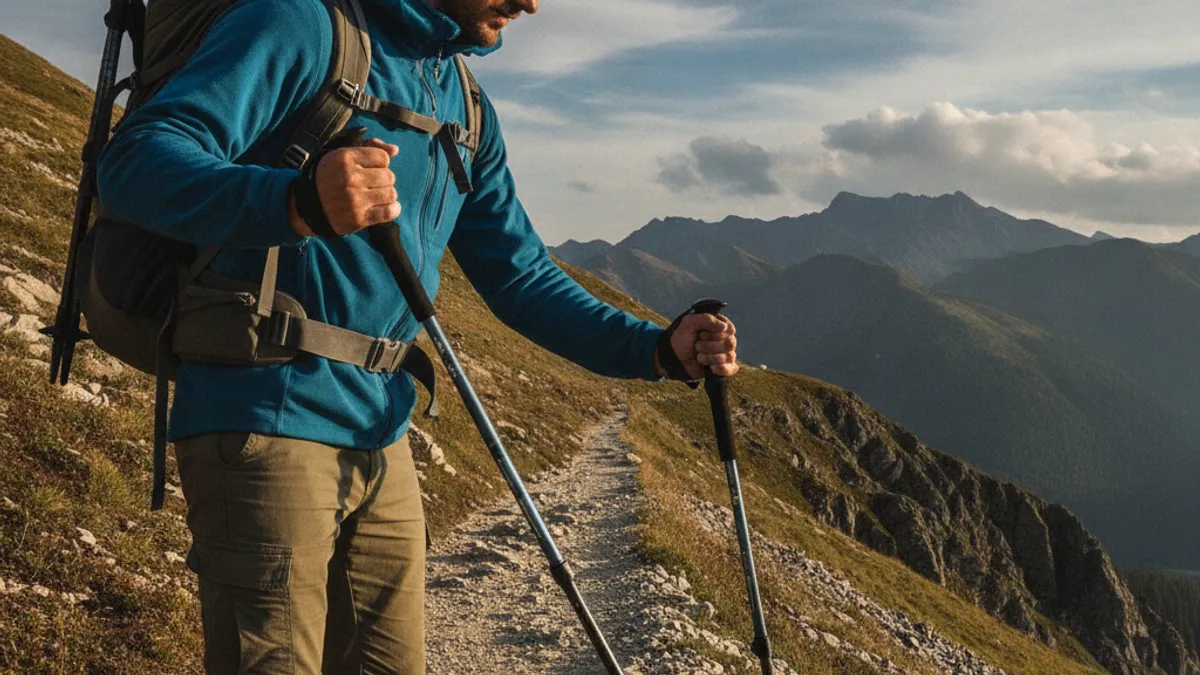
Now that you have a good idea of how to set your poles for different scenarios, it’s time for the most important part: actually using them on the trail. What feels right in your living room might feel a little off once you’re on uneven ground or pushing yourself.
This is where you’ll discover your personal preferences and fine-tune your settings. Pay attention to how your body feels, how your poles impact your rhythm, and if they genuinely help you.
Making Micro-Adjustments On the Fly
You’ll often find that even after setting your poles based on general rules, little tweaks make a big difference. As you hike, notice if you’re constantly feeling like you’re reaching too far or bending too much. This is your cue to make a small adjustment.
- If you feel strained: On an uphill, try shortening the pole by another notch or two. On a downhill, extend it a touch.
- If you feel instability: Sometimes a slightly longer pole on flats can provide more ground contact and a smoother swing.
- Listen to your body: Discomfort is your body’s way of telling you something isn’t quite right. Don’t push through pain.
Think of it like adjusting your bike seat, small changes can yield significant improvements in comfort and efficiency.
What if they don’t seem to help?
It’s possible that after trying different adjustments, you still feel like the poles aren’t providing the benefits you expected. This can happen, and it’s worth exploring a few possibilities. Sometimes it’s just a matter of getting used to the new movement pattern for your arms and body.
However, if persistent discomfort or lack of perceived benefit remains, consider if the poles themselves are the right type for you. Some pole designs might not offer the specific benefits you’re seeking, or perhaps you need to experiment with different grip styles or materials.
- Are they properly adjusted? Double-check that you’re not confusing “too long” with “too short.”
- What’s your hiking style? Very deliberate, slower hikers might use poles differently than fast-paced trekkers.
- Is the terrain challenging? For very technical, uneven terrain, poles are generally more impactful than on a smooth, wide trail.
Don’t dismiss poles altogether if your first experience isn’t perfect. Consider different adjustment points before deciding they aren’t for you.
Common Mistakes to Avoid
When you’re first getting the hang of hiking poles, it’s easy to fall into a few common traps. Being aware of these can save you frustration and help you get the most out of your gear.
- Setting them and forgetting them: This is the biggest one. Poles need adjusting for different terrains.
- Using them incorrectly: Poles are not crutches; they’re tools for propulsion and balance. Swinging them too wide or too aggressively can be counterproductive.
- Ignoring discomfort: If your wrists, shoulders, or back hurt, something is likely wrong with the length or how you’re using them.
- Overtightening straps: Ensure the wrist straps are snug enough to provide support but not so tight they restrict circulation or movement.
Catching these mistakes early can significantly improve your hiking experience.
What If You’re Between Sizes?
Sometimes, when you measure yourself and look at adjustable pole ranges, you might find yourself right on the cusp between two length settings. For example, you might measure out to need 118 cm, and the poles adjust from 110-125 cm or 120-135 cm. This is a common situation for many hikers.
When this happens, prioritize poles that offer a wider range if possible, or go slightly longer rather than shorter.
- Why go longer? It’s generally easier to shorten a pole that’s a little too long than it is to extend one that’s too short.
- Consider your typical terrain: If you spend more time going uphill, a slightly shorter base length might be beneficial. If downhill is more common, a bit more length is usually better.
- Test them: If you can, try physically holding poles at the two potential lengths to see which feels more natural for your swing and posture.
This careful consideration ensures you have the flexibility to adapt, no matter what the trail throws at you.
