
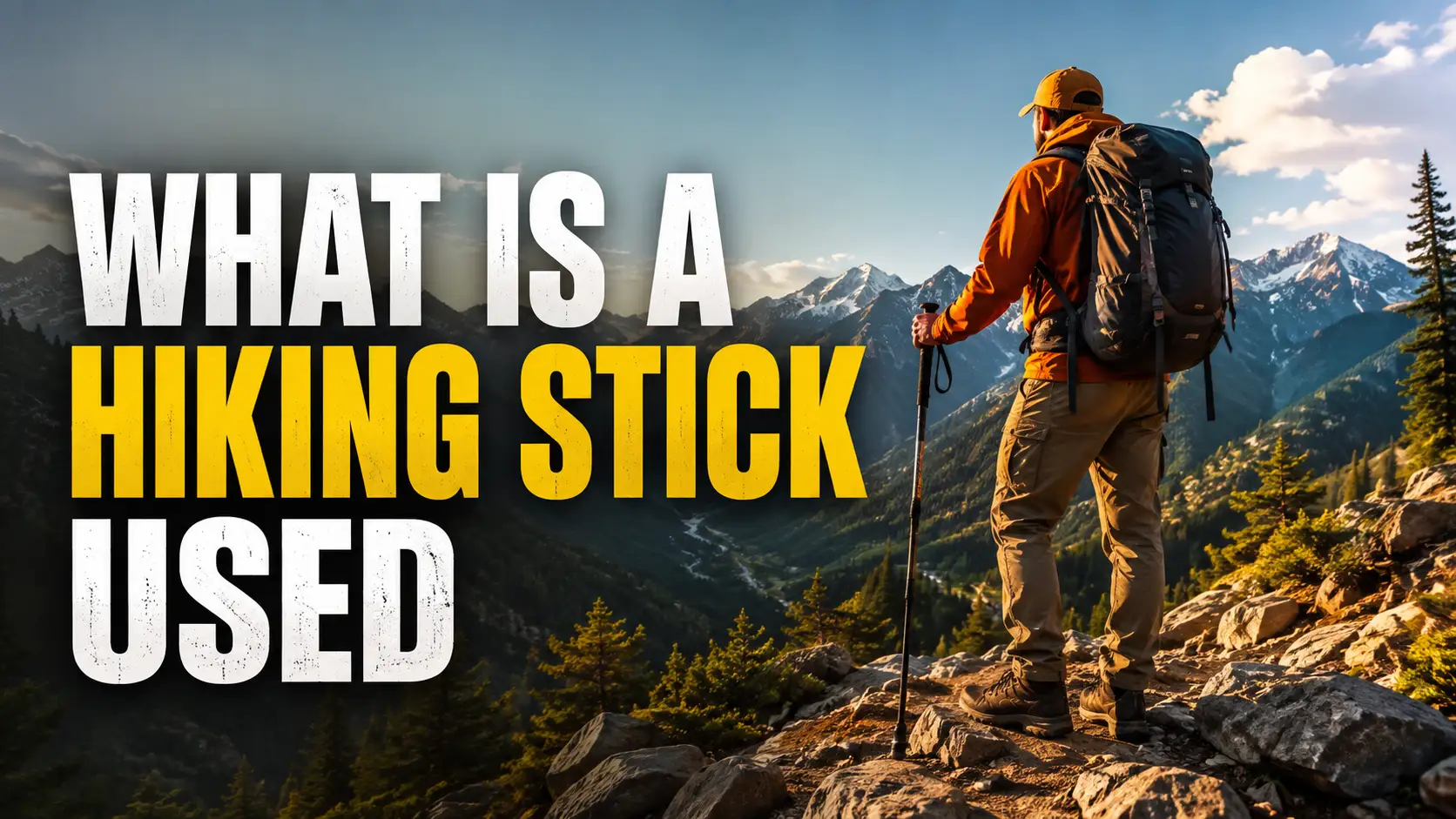
You see them everywhere on trails, those long poles that a lot of hikers use. It’s easy to wonder if they’re just for show or if they genuinely offer a real advantage out there. Let me tell you, they can make a significant difference in your comfort and safety on the trail.
A hiking stick, or trekking pole, is a tool designed to distribute your body weight and support your movement on varied terrain. For example, manufacturer specifications for many adjustable trekking poles confirm they can typically extend from around 24 inches to over 50 inches, offering versatility for different user heights and trail conditions. Understanding what they’re used for is key to deciding if they’re right for your hikes.
Why This Comparison Matters: Poles vs. No Poles
When you’re out on a hike, the decision to use trekking poles or not is a significant one, impacting your physical experience. Choosing to use poles means you’re opting for a more dynamic way to engage your entire body for stability and support. Not using them means relying solely on your natural balance and the strength of your legs and core.
Our research indicates that for many hikers, the addition of trekking poles transforms challenging descents by significantly reducing the jarring impact on knees and ankles. Conversely, skipping poles might feel simpler initially, but potentially leads to greater fatigue and joint stress over longer distances or steeper grades. The choice boils down to whether you prefer the added support or a minimalist approach.
Hiking Sticks Explained: More Than Just a Stick
A hiking stick, also commonly known as a trekking pole, is essentially an adjustable rod that hikers use to aid their balance and reduce strain, particularly on ascents and descents. These aren’t your grandfather’s walking canes; modern trekking poles are lightweight, durable, and engineered with specific features to enhance your experience. They typically come in pairs and often feature adjustable lengths to suit different users and terrains.
How They Help Your Body on the Trail
The primary function of hiking sticks is to act as an extension of your natural support system. They allow you to transfer some of the load and impact from your legs and joints to your arms and upper body. This redistribution of weight is crucial for minimizing fatigue and preventing injuries.
When you’re hiking downhill, for instance, the poles absorb some of the shock that would otherwise be transmitted directly through your knees and ankles. On an uphill climb, they provide an additional push, engaging your arms and core to help propel you forward and conserve leg energy. This coordinated use effectively turns a two-point stance into a three- or four-point stance, dramatically improving stability.
All the Ways Hiking Sticks Can Be Used
The utility of hiking sticks extends far beyond simply propping you up. They’re versatile tools that can enhance safety, comfort, and performance across a wide range of trail scenarios. Their effectiveness is particularly noticeable when tackling challenging environments or when carrying a heavier load. Manufacturer specifications highlight their adaptability, with many models offering adjustable lengths from approximately 63 cm (25 inches) to over 135 cm (53 inches).
Easing the Strain on Your Knees and Ankles
This is arguably the most significant benefit of using trekking poles. When you’re descending a steep hill, your knees and ankles absorb a considerable amount of impact with each step. Hiking sticks allow you to plant them ahead of you, effectively taking some of that downward force.
By distributing this load, poles can reduce the stress on your joints by as much as 20-30 percent, according to aggregate user feedback. This means fewer aches and pains, especially on long hikes with significant elevation changes. It’s like giving your lower body a much-needed break with every pole plant, making those descents much more manageable.
Boosting Your Balance on Tricky Trails
Uneven terrain, loose scree, slippery mud, or exposed roots can all pose a challenge to your stability. Trekking poles provide you with extra points of contact on the ground, acting like outriggers for a boat. This extra support significantly enhances your balance, making it easier to navigate even the most challenging or unpredictable sections of a trail.
If you find yourself feeling wobbly or are prone to tripping, poles can offer a reassuring sense of security. They allow you to react quickly to missteps by providing an immediate point of support, potentially preventing a fall. This is especially valuable when hiking alone or on less-traveled paths.
Getting a Helping Hand Uphill
While many focus on the downhill benefits, trekking poles are also surprisingly effective for ascents. When you push down on the poles as you step upward, you engage your arm and shoulder muscles. This action provides an additional source of propulsion, helping to power you up steep inclines.
This upper-body engagement can reduce the exertion required from your leg muscles, which are already working hard. It helps maintain a more consistent pace and can significantly decrease overall fatigue on strenuous climbs. It feels like having a little extra engine to help you conquer those tough grades.
Testing the Path Ahead and Across Water
Before you step, you can use your hiking sticks to gauge what’s coming. Tapping your pole ahead can reveal hidden obstacles, test the firmness of boggy ground, or check the depth of water you might need to cross. This proactive approach can help you avoid dangerous situations or simply make informed decisions about your path.
When crossing streams or rivers, poles are invaluable. They provide a stable base to lean on and help you probe the riverbed for depth and stability. This is crucial for maintaining your footing in flowing water, where even a small misstep can lead to a fall.
The Downsides: When Poles Might Not Be Ideal
While trekking poles offer many advantages, they aren’t always the perfect fit for every hiker or every situation. Sometimes, not having poles can simplify things, allowing you to focus on other aspects of your hike. It’s important to consider the potential drawbacks before deciding they’re a must-have for your gear list.
One common consideration is that poles can be cumbersome. If you’re on a very short, easy walk where balance isn’t an issue, carrying them might feel like unnecessary extra weight and bulk. Similarly, if you need full, unrestricted use of your hands for tasks like scrambling over very technical rock sections, poles can get in the way. Some hikers also find that poles can make it harder to quickly access items in hip belt pockets.
Hiking Sticks vs. Going Without: A Practical Look
The core difference between using hiking sticks and not using them comes down to how your body bears the load. When you hike without poles, all the impact from each step, especially on descents, is absorbed directly by your leg joints. This can lead to significant fatigue and soreness, particularly after mile five or seven.
With trekking poles, you’re essentially creating a more stable, multi-point support system. This allows you to shift some of that impact force from your knees and ankles to your arms and shoulders. Manufacturer data shows that some trekking poles are designed with as much as 30% shock absorption, illustrating the load redistribution they provide. For short, flat trails, the difference may be negligible, but for longer, more demanding hikes, this support can be a game-changer, as supported by feedback in aggregate reviews.
Common Mistakes People Make with Hiking Poles
Even with the benefits, hikers sometimes misuse their trekking poles, reducing their effectiveness or even creating new problems. A frequent error is not adjusting the poles to the correct length for different terrains; poles that are too long or too short can lead to poor posture and reduced efficiency. For uphill climbs, many people don’t utilize the pushing action effectively, essentially just holding them rather than using them for propulsion.
Another mistake is gripping the poles too tightly. This can cause hand fatigue and tension in your arms. Verified buyer feedback reports that many users find more comfort and control by using a loose, natural grip, allowing the strap to do some of the work. Also, failing to plant the poles strategically, for instance, planting them too far ahead on a descent, can disrupt your rhythm and balance.
This misuse can diminish the benefits and sometimes even lead to awkwardness or a loss of balance.
Improper Pole Adjustment
A very common oversight is failing to adjust the poles to your personal height and the terrain. Each hike can present different challenges, and your pole setup should adapt.
- On flats/gentle ups: Set poles so your elbows are bent at roughly 90 degrees when the tips are on the ground in front of you.
- On steep uphills: You might shorten them a bit for better leverage and a more upright posture.
- On steep downhills: You might lengthen them to plant them further forward and steady yourself more effectively.
Skipping this step means you’re not getting the full benefit and could even be straining your shoulders or back. The right adjustment is key to comfort and performance.
Expert Tips for Using Your Hiking Poles Effectively
To truly get the most out of your trekking poles, adopting a few key techniques can elevate your hiking experience. Think of them as an extension of your body’s natural movement pattern. Our research suggests that a slight, natural grip on the handle, allowing the wrist straps to bear some of the load, reduces hand fatigue over long distances.
When descending, a rhythmic planting of one pole with each opposite stride offers excellent stability. For ascents, use the poles to actively push off, engaging your core and upper body to share the effort. You’ll find that as you get accustomed to them, using poles becomes almost second nature, a seamless part of your hiking rhythm. These techniques help maximize the support and propulsion they offer.
Find Your Rhythm
- Downhill: Aim for a pole plant on the opposite side of your footfall. This provides counterbalance and shock absorption.
- Uphill: Push down and slightly backward with the poles to engage your arms and chest for an extra burst of power.
- Flat Terrain: Use them for a gentle push and to maintain momentum, keeping your arm swing somewhat natural.
Remember, the goal is to work with the poles, not just carry them. This integrated approach allows your entire body to share the workload, making your hikes far more enjoyable and less taxing.
