
Hi, I am Oscar. If you are getting ready for your first outdoor adventure, you are probably looking in your closet right now. You see your daily gym sneakers and wonder, “Are running shoes good for hiking, or do I really need to buy expensive boots?” It is one of the most common questions I hear from beginner hikers. You want to enjoy the outdoors, but you do not want to spend a fortune on gear you might only use once.
Here is the thing. You do not always need heavy, stiff leather boots to go for a hike. The rules of hiking gear have changed a lot over the years. Many people hit the trails in lightweight footwear and do just fine. But there is a catch. Not all running shoes are made the same, and not all trails are safe for everyday sneakers.
Let me explain how to know if your current shoes are safe for your next trip. In this guide, we will look at when your running shoes are a great choice, when they might let you down, and how to keep your feet happy and blister-free on the trail.
Quick Answer
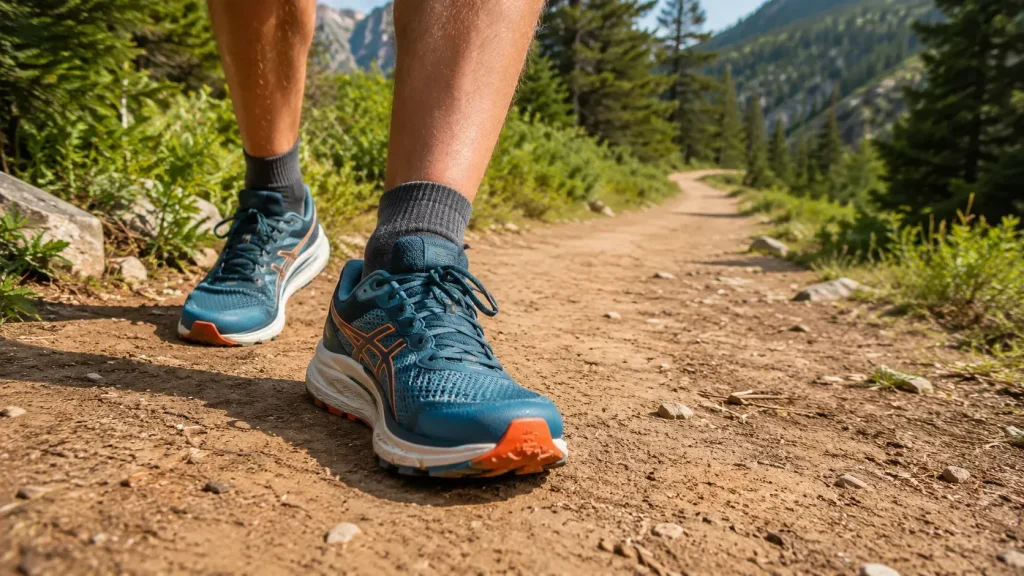
Yes, running shoes are good for hiking if you are going on a short day hike on a well-maintained, flat, and dry dirt trail. They are lightweight, breathable, and comfortable right out of the box. However, standard road running shoes lack the grip, ankle support, and toe protection needed for steep, muddy, or rocky trails. If you plan to carry a heavy backpack or hike in wet weather, you should upgrade to trail running shoes or proper hiking boots.
What Hikers Should Know About Hiking in Running Shoes
When we talk about running shoes, we need to be clear about what kind of shoes we mean. There is a big difference between the sneakers you wear on a treadmill and the shoes made for dirt paths. Let’s break down the two main types of running shoes and how they handle the outdoors.
Road Running Shoes
Road running shoes are the everyday sneakers most people own. Brands make them for pounding the pavement, running on treadmills, or walking around the neighborhood. They have flat, smooth rubber on the bottom. The top part is usually a very thin, breathable mesh.
Here is what happens when you take road running shoes on a trail:
- They lack traction: The flat soles will slip easily on wet leaves, loose gravel, or slick mud.
- They offer little protection: If you kick a rock or a tree root, you will feel it. The soft mesh does not protect your toes.
- They wear out fast: Sharp rocks and rough dirt will tear up the soft foam and mesh quickly.
Trail Running Shoes
Trail running shoes are the tough cousins of road shoes. They are designed specifically for runners who jog on dirt trails in the woods or mountains. Many experienced backpackers and long-distance hikers actually prefer trail running shoes over heavy hiking boots.
Here is why trail runners are a great hiking choice:
- Better grip: They have deep rubber bumps on the bottom, known as lugs. These grab onto dirt and rocks to keep you from slipping.
- More protection: They usually have a stiff rubber toe cap to protect your feet from hidden rocks.
- Rock plates: Many have a hard plastic shield inside the sole so you do not feel every sharp rock you step on.
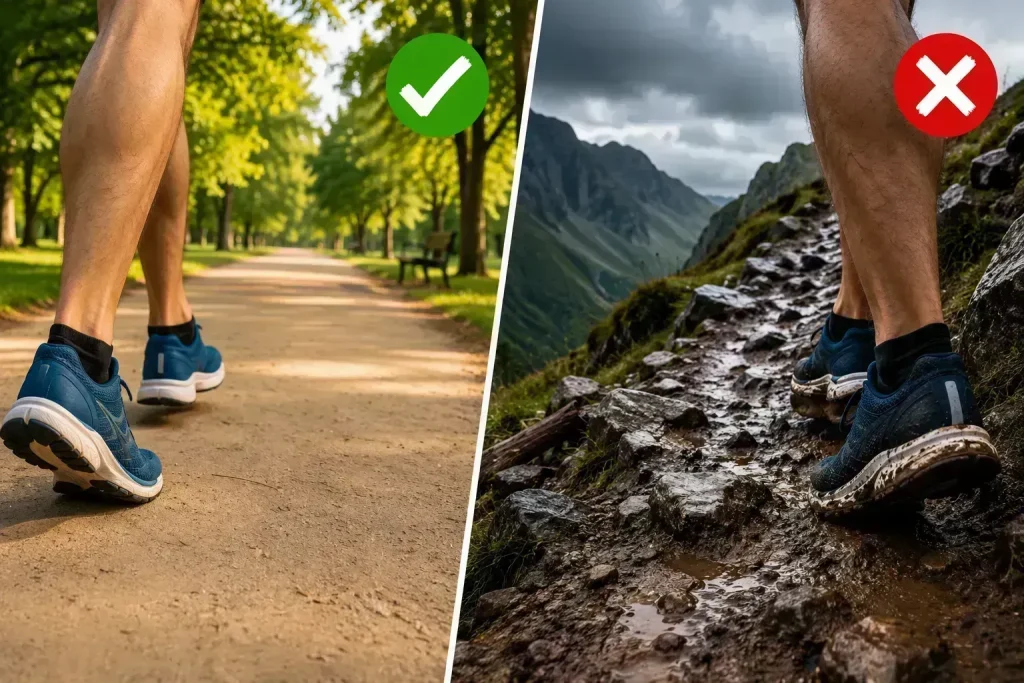
If you are deciding what to wear, think about the trail surface. A paved or smooth dirt park path is fine for road shoes. Anything with rocks, roots, and steep hills requires more grip.
Signs You Should Adjust Your Hiking Plan, Gear, or Trail Choice
Your safety and comfort on the trail should always come first. If you only have standard road running shoes, you need to match your footwear to the right environment. Below is a guide to help you decide if your shoes are up for the job.
| Trail Condition | Are Road Running Shoes Safe? | What You Should Know |
|---|---|---|
| Smooth, flat dirt paths | Yes | Perfect for basic sneakers. Just watch out for occasional loose gravel. |
| Paved greenways and boardwalks | Yes | Your running shoes will provide great cushion for hard surfaces. |
| Muddy or wet trails | No | Smooth soles will slide like ice skates. You need deep lugs or boots. |
| Steep, rocky mountain climbs | No | You risk twisting an ankle or slipping. The rocks will also tear your shoes. |
| Carrying a heavy backpacking pack | No | Running shoes lack the support needed for heavy loads. Your feet will fatigue quickly. |
How to Handle Hiking in Running Shoes Step by Step
If you have decided that your basic running shoes are perfect for your planned beginner hike, that is great! But you still need to prepare properly. Here is a step-by-step guide to setting yourself up for a safe and fun day hike using the shoes you already own.
- Research the trail surface: Use a trail app or the official park website to read recent reviews. Look for keywords like “paved,” “flat,” “family-friendly,” or “gravel.” Avoid trails described as “scrambling,” “rocky,” or “technical.”
- Check the recent weather: Running shoes turn into sponges when wet. Even if it is sunny today, rain from yesterday means mud today. If the trail is wet, pick a paved path instead.
- Wear the right socks: This is a big one. Never wear cotton socks. Cotton holds sweat, stays wet, and causes horrible blisters. Wear lightweight hiking socks made of merino wool or synthetic materials. They will keep your feet dry and reduce friction.
- Keep your backpack light: Running shoes do not have the stiff shanks found in hiking boots. If you carry a 30-pound backpack, your feet will feel crushed. Pack light. Bring a water bottle, some snacks, a basic first-aid kit, and an extra clothing layer.
- Tie a secure knot: Use a runner’s loop or a double knot. Loose shoes cause your foot to slide forward when walking down hills, which leads to bruised toes and blisters.
- Watch your step: Because you do not have ankle support, you need to be mindful of where you place your feet. Avoid stepping directly on wet roots or loose, wobbly rocks.
Running Shoes vs. Hiking Footwear: What’s the Real Difference?
At their core, running shoes and hiking footwear are built for distinct environments and activities. Running shoes prioritize lightness, flexibility, and cushioning for the repetitive impact of forward motion on relatively smooth surfaces. They’re designed for speed and comfort during your runs. Hiking shoes and boots, on the other hand, are constructed with durability, protection, and stability as their main goals.
Think about the forces involved. Running is primarily linear, with your foot striking and pushing off a consistent plane. Hiking, however, demands more from your feet. You’ll encounter uneven ground, loose scree, steep ascents and descents, and potential obstacles like rocks and roots.
This is where the design philosophies of running shoes and hiking footwear diverge significantly, impacting your comfort and safety on the trail.
Can My Running Shoes Handle the Trail? The Truth About Trail Use
The short answer here is usually “it depends,” but more often than not, a standard pair of running shoes isn’t ideal for anything beyond the most casual, short stroll on a very predictable path. Running shoes are engineered with specific performance characteristics in mind for road running, which don’t fully translate to hiking. Their construction emphasizes shock absorption for repetitive pavement strikes and breathability for intense cardio.
However, the demands of hiking often exceed what these shoes are built to provide. You’re dealing with varied terrain that requires more grip, unpredictable angles that need better stability, and numerous hazards that call for enhanced protection. Relying on shoes not designed for these conditions can quickly turn a pleasant outing into an uncomfortable, or even dangerous, experience. We’ve seen many reports where hikers using inappropriate footwear suffered from blisters, slips, and more serious injuries.
When Can You Maybe Get Away With Running Shoes on a Hike?
There are specific, limited scenarios where you might find your regular running shoes acceptable for a hike. These all hinge on keeping the “hike” extremely mild and short, essentially treating it more like a brisk walk on a path. If your primary goal is simply to get out and experience nature without a significant physical challenge, and you happen to only have running shoes available, these conditions might apply.
For Quick Park Strolls and Paved Paths
If your idea of a hike is a short, leisurely walk on a well-maintained, paved trail in a local park, your running shoes will probably be just fine. These trails are often smooth, firm, and lack any significant obstacles. The key here is the predictability of the surface and the minimal demands placed on your footwear.
When Your Pack is Light and the Trail is Smooth
When you’re not carrying much weight, perhaps just a small water bottle and your phone, and the trail is remarkably smooth and flat, running shoes can hold up. Think of a gentle nature trail with no rocks, roots, or loose gravel. In these situations, the additional support and aggressive traction of dedicated hiking footwear aren’t as critical. Manufacturer specifications for road running shoes will often highlight lightweight cushioning, which can be acceptable for very limited stress.
Why Running Shoes Fall Short on Actual Hiking Trails
When you start venturing onto surfaces that aren’t smooth and predictable, running shoes quickly begin to reveal their limitations. Actual hiking trails present a different set of adversibilities that these shoes are simply not designed to handle effectively. The differences in design purpose lead to performance gaps that can impact comfort, safety, and enjoyment.
Manufacturers of trail running shoes, for example, explicitly state their outsole materials are designed for improved durability and grip on loose or varied surfaces, often incorporating deeper lug patterns than road shoes. This is a key differentiator. The following points highlight where those gaps most commonly appear.
The Traction Trap: Why Grip Matters
One of the most significant drawbacks of using road running shoes for hiking is their lack of aggressive traction. The outsoles on typical running shoes are designed for smooth surfaces like asphalt or treadmills, featuring relatively shallow, smooth tread patterns.
- Slippery Surfaces: These smooth treads offer poor grip on loose gravel, mud, wet rocks, or leaf litter, significantly increasing your risk of slipping and falling.
- Inadequate Grip: Unlike specialized hiking footwear with deep, widely spaced lugs, running shoe treads can become packed with mud or debris, further reducing their ability to grip the trail. This often leads to feeling unstable and needing to take extra care with every step.
When Ankle Support Becomes Key
Hiking often involves navigating uneven terrain, stepping over roots, and climbing over rocks. This is where ankle support becomes increasingly important for preventing injuries like sprains. Road running shoes typically have a low-cut design with flexible ankle collars that offer minimal to no lateral support.
- Rollover Risk: When your foot lands on an uneven surface, the tendency for your ankle to roll inward or outward is high because there’s nothing substantial to check that motion.
- Injury Prevention: Hiking boots and even many trail running shoes offer more rigid construction around the ankle area, sometimes extending higher up the ankle, to provide a crucial barrier against these potentially injurious rolls.
Trail Hazards: Protection Your Feet Need
The average running shoe has a relatively thin sole and upper, designed to be lightweight and flexible. This construction provides little in the way of protection from the sharp, hard objects commonly found on hiking trails.
- Puncture Risk: Sharp rocks, roots, or embedded debris can easily poke through the thin outsole or sides of a running shoe, potentially causing foot injuries.
- Impact Absorption: While running shoes offer cushioning for impacts, it’s typically tuned for the repetitive force of running. They don’t shield your toes and the front of your foot from stubbing impacts against rocks or other obstacles as effectively as a reinforced toe cap or a stiffer sole unit found on hiking footwear.
Durability: Running Shoes vs. Rugged Terrain
Hiking exerts far more abrasive and varied stress on footwear than typical running. Trails can involve scraping against rocks, dragging through mud, and constant flexing on uneven ground. Running shoes, being generally lighter and made with less robust materials, are not built to withstand this kind of abuse.
- Abrasion and Tears: The mesh uppers and thinner soles of running shoes are prone to tearing, snagging, and abrasion when exposed to rough trail elements.
- Sole Wear: The more aggressive compounds used in hiking shoe outsoles are designed for longevity on rough surfaces. Running shoe outsoles, optimized for grip on pavement, will wear down much faster and unevenly when subjected to trail conditions.
Wet Weather Woes: Breathability vs. Water Resistance
Many running shoes are designed with highly breathable mesh uppers to keep your feet cool and dry during intense runs. While this is a great feature for their intended purpose, it becomes a significant disadvantage on the trail, especially in wet conditions or when crossing streams.
- Water Absorption: This open mesh structure acts like a sponge, quickly soaking up water from puddles, rain, or stream crossings. Once wet, running shoes offer very little insulation and can cause friction, leading to blisters and discomfort.
- Extended Drying Time: The materials used in many running shoes also take a long time to dry out once saturated, meaning you can be left with damp feet for extended periods. Dedicated waterproof hiking footwear, often utilizing materials like Gore-Tex, aims to keep water out while still allowing some moisture vapor to escape.
Better Choices for Your Feet: Trail Runners, Hiking Shoes, and Boots
If you’re looking to properly enjoy your time on the trail, it’s worth considering footwear specifically designed for hiking. While running shoes have their place, a dedicated pair of trail runners, hiking shoes, or hiking boots will significantly enhance your experience, offering improved performance and safety. These aren’t just slight variations; they represent different approaches to tackling the demands of outdoor terrain.
The best choice among these will depend on the type of hiking you plan to do, much like deciding between a road bike and a mountain bike. Each has its strengths and is suited for different environments. We’ll break down what makes each option unique and who they’re best for.
Trail Running Shoes: The Hybrid Option
Trail running shoes attempt to blend the agility and lightness of road running shoes with the ruggedness needed for off-road adventures. They’re a fantastic option for hikers who prefer a lighter, more flexible shoe and primarily stick to well-maintained trails or moderate terrain. These shoes are a step up from regular running shoes in terms of grip and protection.
- Lightweight and Agile: They feel much like your typical running shoes, allowing for a natural stride and quick movement. This agility is great for navigating trails where you need to react fast.
- Aggressive Outsoles: The most noticeable difference is the tread pattern. Trail runners feature deeper lugs, often spaced wider apart, designed to bite into loose dirt, mud, and uneven surfaces to provide better traction.
- Enhanced Protection: Many trail running shoes include reinforced toe caps and sometimes rock plates in the midsole to protect your feet from sharp objects. This offers a degree of shielding that standard running shoes lack.
- Versatile Use: They’re ideal for day hikes, fastpacking, or as a lighter alternative to hiking boots when the terrain isn’t overly technical. As of 2026, manufacturer specs often highlight improved durability in the upper materials as well.
Hiking Shoes: For Moderate Trails and Day Hikes
Hiking shoes sit in a category between trail runners and full-blown hiking boots. They offer more support and protection than trail runners but are lighter and more flexible than boots. These are an excellent all-around choice for day hikers who encounter a variety of trail conditions but don’t need the extensive ankle support of boots.
- Stiffer Soles: Hiking shoes typically have stiffer midsoles than trail runners, which translates to better stability on uneven ground and less foot fatigue over longer distances. This helps distribute pressure more evenly.
- Durable Uppers: Constructed with tougher materials like leather or synthetic blends, hiking shoes are built to withstand more abrasion and offer better protection against trail debris.
- Moderate Ankle Support: While they don’t extend up the ankle like boots, their design usually provides more heel and ankle stability than trail runners, helping to prevent some types of rolls.
- Ideal For: Day hikes, established trails with moderate challenges, and situations where you might carry a light to medium backpack. You can learn more about choosing the right hiking shoes in our guide on how to choose hiking boots.
Hiking Boots: Your Go-To for Serious Trekking
Hiking boots are the heavy hitters of the footwear world, designed for maximum support, protection, and durability on the most challenging terrain. They extend higher up the ankle, providing significant stability, and are built with robust materials to withstand rugged use. These are the best option for multi-day treks, backpacking, or when you expect to encounter difficult conditions.
- Superior Ankle Support: The defining feature of hiking boots is their high-cut design that wraps around and supports the ankle. This drastically reduces the risk of ankle sprains on unstable ground.
- Robust Protection: They feature thick, stiff soles with aggressive outsoles for ultimate traction. The uppers are usually made from durable leather or heavy-duty synthetics, offering excellent abrasion resistance and protection from rocks and roots.
- Load Bearing: Hiking boots are designed to handle the weight of a substantial backpack, providing the necessary support and stability for carrying heavier loads over long distances.
- Best For: Backpacking trips, off-trail adventures, challenging mountain terrain, and hikers who need maximum support and protection, especially if they have a history of ankle issues. These are often recommended in our guides on best hiking boots for beginners.
Making the Right Footwear Decision for Your Hike
Choosing the right footwear is more than just a comfort preference; it’s a critical decision that impacts your safety and enjoyment on the trail. The best way to approach this is to honestly assess the type of hiking you’ll be doing most often and match it to the footwear that best suits those demands. It’s about aligning the shoe’s capabilities with the trail’s challenges.
Consider the environment you’ll be in: Is it smooth, packed dirt, or is it rocky and uneven? Are you planning short excursions or multi-day treks? What kind of pack weight will you be carrying? Answering these questions will help guide you toward the most appropriate footwear choice.
Matching Your Shoes to the Terrain
The fundamental principle here is that different terrains require different levels of support, traction, and protection. What works perfectly on a gentle forest path might be a recipe for disaster on a steep, rocky mountain trail.
- Smooth, Packed Trails: For very easy trails, like those often found in local parks or nature preserves, trail running shoes or even sturdy sneakers might suffice. Traction is less of a concern here.
- Moderate Trails: For established trails with some roots, rocks, and gentle inclines or declines, trail running shoes or light hiking shoes offer a good balance of grip, protection, and flexibility. Think of a moderate day hike where you might encounter some mud or loose gravel.
- Rugged, Uneven Terrain: When you face steep ascents and descents, scree fields, or lots of obstacles, hiking shoes or hiking boots become essential. The increased stiffness and ankle support are crucial for stability and preventing injuries. If you’re unsure about the terrain’s difficulty, it’s always safer to err on the side of more robust footwear.
Considering the Length and Load of Your Hike
Beyond just the terrain, the duration of your hike and the weight you’re carrying play a significant role in footwear selection. A short, light excursion is far less demanding on your feet than a long, overnight backpacking trip.
- Day Hikes (Short to Moderate): For hikes up to a few hours, trail running shoes or hiking shoes are often sufficient. They provide enough comfort and support without being overly bulky. Proper hydration is also key for day hikes; check out our guide on how to stay hydrated on a hike.
- Long Day Hikes or Backpacking: For hikes lasting all day or multi-day trips where you’re carrying a pack with supplies, hiking shoes or, more commonly, hiking boots are recommended. The extra support is vital for preventing foot fatigue and potential injuries when carrying weight. A good hiking backpack essentials list might also prompt you to consider your footwear’s ability to handle that load.
- Weight Distribution: Remember that heavier loads put more stress on your feet and ankles. Hiking boots are specifically engineered to distribute this weight effectively, providing a stable platform that prevents your foot from feeling the full impact of the pack’s load.
Common Mistakes to Avoid
Many beginners make a few simple errors when trying to hike in their gym shoes. Avoid these common traps to keep your feet happy.
- Wearing old, worn-out shoes: If the tread on the bottom of your shoe is worn flat, do not hike in them. You will have zero traction on dirt.
- Ignoring hot spots: If you feel a rubbing sensation on your heel or toe, stop immediately. Apply a bandage or blister tape before it turns into a painful blister.
- Hiking off-trail: Running shoes have thin mesh tops. If you wander off the trail, thorns, thistles, and sharp branches will cut right through your shoes. Always stick to the main path, which also follows Leave No Trace principles to protect nature.
- Expecting them to be waterproof: Standard running shoes will get wet instantly if you step in a puddle. Accept that your feet might get damp, or step carefully to avoid water.
- Pushing past foot pain: If the bottoms of your feet start to ache badly, it means the soft soles of your running shoes are not protecting you from the rocks. It is a sign to turn back.
Practical Tips from Oscar
After years of hiking in everything from heavy leather boots to lightweight trail runners, I have learned a few tricks. If you are going to use running shoes for hiking, here is how I suggest you handle it.
Key Takeaways
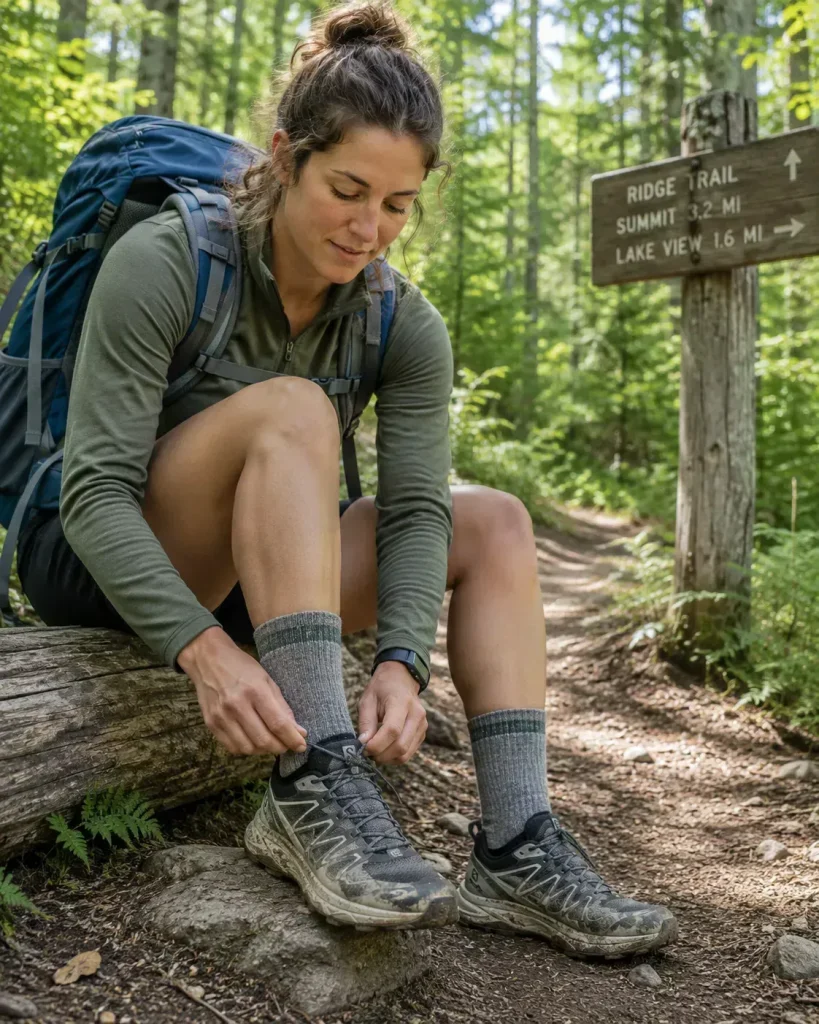
- Running shoes are perfectly fine for beginner day hikes on flat, well-maintained dirt paths.
- Road running shoes lack the grip needed for steep, muddy, or highly rocky terrain.
- Never wear cotton socks with your running shoes; choose wool or synthetic socks to prevent blisters.
- Trail running shoes are a great upgrade, offering the lightweight feel of a sneaker with the grip of a hiking boot.
- If you plan to carry a heavy backpack, you will need stiffer shoes or boots to support the extra weight.
Frequently Asked Questions
Can I wear Nike or Adidas running shoes for hiking?
Yes, you can wear standard gym shoes from brands like Nike or Adidas for easy, flat day hikes. Just make sure the trail is dry and well-groomed, as these shoes do not have the traction for muddy or steep paths.
Do I need ankle support for day hiking?
Ankle support is not strictly required for easy day hikes on flat terrain. However, if you have weak ankles, are carrying a heavy backpack, or are hiking on very rocky, uneven ground, high-top hiking boots provide much-needed stability.
Are trail running shoes better than hiking boots?
It depends on your preference and the trail. Trail running shoes are lighter, dry faster, and feel more comfortable out of the box. Hiking boots are better for cold weather, heavy backpacks, and rough, off-trail terrain.
What should I do if my running shoes get wet on a hike?
Because running shoes are usually made of breathable mesh, they will get wet quickly but also dry quickly. Keep hiking, as the movement will help pump water out of the shoe, and bring an extra pair of dry wool socks to change into later.
Are running shoes safe for mountain hiking?
Standard road running shoes are generally not safe for steep mountain hiking. They lack the grip to prevent sliding on rocks and dirt, increasing your risk of falling. You should use trail runners or hiking boots for mountain terrain.
Will hiking ruin my running shoes?
Hiking on rough dirt, sharp rocks, and roots will wear down the soft rubber and mesh on road running shoes much faster than walking on pavement. Expect them to get dirty, scuffed, and worn out quicker if used frequently on trails.
Conclusion
So, are running shoes good for hiking? The good news is that for most beginners looking to enjoy a sunny weekend afternoon on a local park trail, the answer is yes. You do not need to let a lack of expensive hiking boots keep you indoors. As long as you pick a sensible, flat route and keep an eye on the weather, your everyday sneakers will do the job just fine.
Just remember to be honest with yourself about the trail conditions. If you start seeing steep rocks, thick mud, or confusing, unmaintained paths, it is always okay to turn around. Outdoor safety is about making smart choices with the gear you have. Once you fall in love with hiking—and I am sure you will—you can always upgrade to a sturdy pair of trail runners or boots later.
If you are getting your backpack ready for your first trip, be sure to read my beginner day hiking checklist so you do not forget any of the essentials. Stay safe, respect the trail, and have a great time out there!

5 thoughts on “Are Running Shoes Good for Hiking? A Beginner’s Guide”