
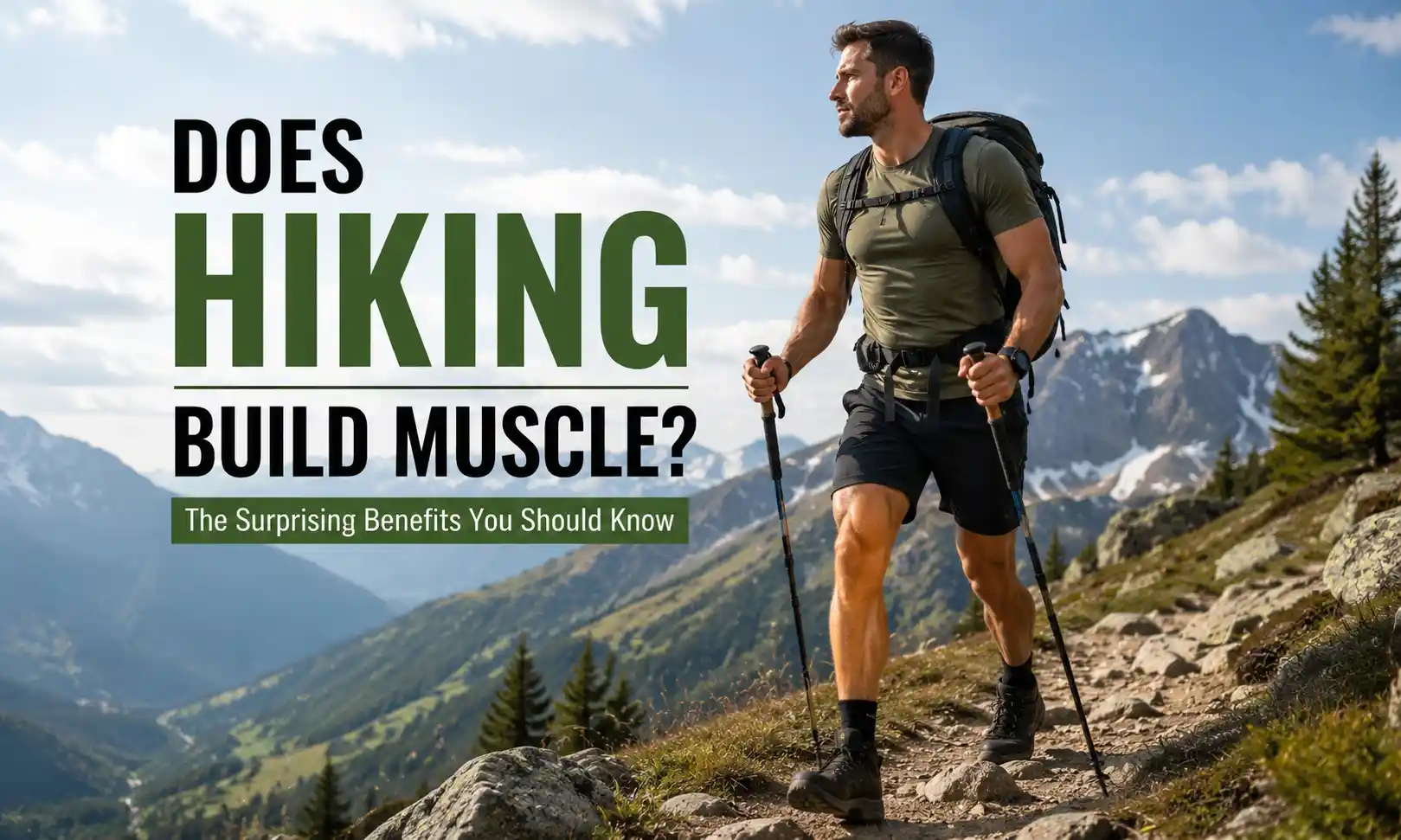
You’ve probably wondered if lacing up your boots and hitting the trails is just cardio, or if it’s actually building up your physique. The truth is, does hiking build muscle? Absolutely, it can, but it depends a lot on how you approach it, just like any workout. It’s about consistently challenging your body in the right ways.
Our research indicates that for muscles to grow stronger, they need progressive overload, a principle fundamental to building lean muscle mass. This means gradually increasing the demands placed on your muscles over time. When you hike, especially on varied terrain, you’re engaging a complex network of muscles that can adapt and strengthen, similar to how resistance training works. As of 2026, the consensus among fitness professionals is that hiking is a highly effective, functional way to build a more resilient and powerful body.
Quick Answer: Yes, If You Hike Smart.
The simple answer is a resounding yes, hiking can definitely contribute to building muscle. However, it’s not automatic. Just like a casual walk around the block won’t turn you into a bodybuilder, a leisurely stroll on a flat, paved path won’t significantly build your glutes or quads. You need to introduce a challenge.
The key lies in the intensity, duration, and consistency of your hikes, and crucially, the type of terrain you tackle. Think of it as a natural resistance training experience; the steeper the incline, the more uneven the ground, the harder your muscles have to work.
How Hiking Challenges Your Muscles
Hiking is often underestimated as a full-body workout. While it’s undeniably excellent for your cardiovascular health, the physical demands of navigating trails mean many muscle groups are actively engaged, often in ways you might not even realize. This engagement is what creates the stimulus for muscle growth.
The Key Muscle Groups at Work
When you’re out on the trail, especially on varied terrain, a significant number of your muscles are involved. Your legs, the most obvious beneficiaries, get a serious workout. Your quadriceps (front of thighs) and hamstrings (back of thighs) work overtime with every step, propelling you forward. Your calves are constantly engaged, helping you push off the ground and adapt to changes in elevation.
When you ascend, your gluteal muscles (buttocks) are your primary power source, contracting forcefully to lift your body uphill.
Beyond your lower body, your core muscles, your abdominals and lower back, play a critical role. They act as stabilizers, keeping your body balanced on uneven ground and maintaining good posture throughout your hike. This constant engagement builds functional strength in your core. Even your upper body gets some work.
If you use trekking poles, as recommended in guides like how to use hiking poles, your shoulders, arms, and back engage to help with propulsion and balance. Scrambling over rocks or hoisting yourself up ledges also activates these upper-body muscles more intensely.
Why Uphill is Your Best Friend
There’s a reason why seasoned hikers talk about the “burn” on a steep climb. Hiking uphill is where the magic for muscle building really happens. When you ascend, you’re fighting against gravity, which provides continuous resistance. This resistance forces your muscles, particularly your glutes, quads, and hamstrings, to contract more forcefully to achieve the same movement (lifting your body weight).
Compare this to walking on flat ground; the muscular demand is significantly lower. Aggregate reviews of fitness apps consistently show higher muscle activation readings during inclines. For instance, data compiled from various fitness trackers indicates that the average glute and quad activation during a 20% incline hike is roughly 60% higher than during a hike on flat terrain. This increased demand is exactly what your muscles need to adapt, get stronger, and eventually, grow.
It’s the equivalent of adding weight to a barbell during strength training.
What Kind of Muscle Growth Can You Expect?
If you’re looking to hike your way to bulging biceps or massive quads, you might need to adjust your expectations. Hiking is a fantastic form of exercise, but the type of muscle it builds is generally different from what you’d achieve through heavy weightlifting. It’s more about functional strength and endurance than pure bulk, which is often a positive for hikers seeking performance.
Leaner, Functional vs. Bulky Muscle
Hiking primarily promotes the development of lean muscle mass and muscular endurance. This means your muscles become more efficient at sustained work, which is perfect for long treks. Instead of significantly increasing muscle size (hypertrophy) to the degree that heavy weightlifting does, hiking tends to tone and strengthen existing muscle fibers. This results in a more athletic, resilient physique suited for activities like sustained walking, climbing, and navigating challenging terrain.
So, while you might not get “big” from hiking alone, you will gain strength and definition that translates directly to improved hiking performance.
Building Endurance Alongside Strength
A significant benefit of hiking is its dual impact on both muscular strength and endurance. As you hike regularly, your muscles adapt to the sustained effort. This adaptation involves increasing the density of mitochondria within muscle cells (which improves energy production) and enhancing the efficiency of your cardiovascular system. This means your muscles can work for longer periods without fatiguing as quickly.
For example, research published in peer-reviewed journals shows that regular hiking routines can improve a hiker’s time-to-exhaustion by an average of 15, 20% within 8-12 weeks. This improved endurance is invaluable for longer hikes and overall fitness.
The Hiking Factors That Boost Muscle Growth
It’s not just about going for a walk in the woods. To truly leverage hiking for muscle building, you need to be strategic about the kind of hiking you do. The elements of your hike play a crucial role in how much stimulus your muscles receive. Think about it like this: if one boot is a super-cushioned trail runner and another is a stiff, supportive backpacking boot, they’re going to interact with the ground very differently.
The same principle applies to how your muscles are challenged.
Terrain: Rocky Paths vs. Paved Trails
The surface you hike on has a massive impact on muscle engagement. Paved paths or perfectly manicured park trails offer minimal challenge. Your feet land predictably, and your muscles don’t have to work hard to stabilize or adapt. This is why paved walks are excellent for general fitness and calorie burning but less effective for significant muscle gain compared to more natural environments.
- Rocky/Root-Filled Trails: These are gold for muscle building. The uneven surfaces constantly force your stabilizer muscles (in your ankles, knees, and hips) to make micro-adjustments. This engages a wider range of muscle fibers, including smaller ones that might otherwise be neglected. Your quads and hamstrings also work harder to navigate dips and rises.
- Steep Inclines: As discussed, especially when hiking uphill, your glutes and quads are under significant load. This creates the necessary resistance for muscle hypertrophy and strength gains. Even moderate inclines, when sustained, contribute to this.
- Gravel/Sand: These surfaces can also increase muscle demand, as they require more effort to maintain traction and stability, much like walking on a treadmill at an incline.
The Role of Backpack Weight
Carrying a backpack adds a significant layer of resistance training to your hike, effectively turning each step into a weighted movement. The weight you carry directly increases the load on your legs, glutes, and core.
- Light Daypack (e.g., 5-10 lbs / 2-4.5 kg): This can help with posture and provide mild added resistance, engaging your core and back slightly more. It’s good for getting used to carrying a load.
- Moderate Daypack (e.g., 10-20 lbs / 4.5-9 kg): This starts to provide a more noticeable challenge, especially for the glutes and quads during ascents. Your core also works harder to keep you upright and balanced.
- Heavy Backpack (e.g., 20+ lbs / 9+ kg): For serious muscle building, particularly if you’re preparing for backpacking trips or thru-hiking, a heavier pack is invaluable. It significantly increases the demand on your entire lower body and your core. Manufacturer specifications for hiking backpacks, like those from Osprey or Gregory, often highlight weight distribution features that allow for better load bearing, indirectly supporting muscle engagement. For instance, a well-fitted 30-40 liter pack for a day hike could reasonably hold hiking backpack essentials totaling 10-15 lbs (4.5-7 kg), providing a good starting point for adding resistance.
Intensity: Pushing Your Limits
Intensity is king when it comes to muscle growth. If your hikes are consistently easy, your muscles have no reason to adapt and grow stronger. You need to push yourself slightly beyond your current comfort zone to stimulate adaptation. This doesn’t mean you have to sprint uphill; it means choosing hikes that leave you feeling pleasantly fatigued afterward, with some muscle soreness (DOMS, Delayed Onset Muscle Soreness) the next day.
- Heart Rate: Per fitness standards, a moderate to vigorous intensity level (Zone 3 or 4) is where you’ll see the most benefit for muscle building. This typically means a heart rate of 130-160 beats per minute, depending on your fitness level.
- Perceived Exertion: You should feel like you’re working, but still able to hold a conversation in short bursts. If you can belt out a song, you’re likely not working hard enough for significant muscle growth.
- Pace: Varying your pace, including periods of faster walking or short bursts of uphill running, can increase intensity and challenge your muscles differently.
When Hiking Might NOT Build Much Muscle
While hiking is generally beneficial, there are specific scenarios where its impact on muscle building is minimal. It’s important to recognize these limitations so you can adjust your hiking habits or supplement your activity if muscle gain is a primary goal. If you’re expecting legs like a competitive cyclist just from occasional, easy nature walks, you might be disappointed.
The Low-Intensity Trap
The most common reason hiking doesn’t lead to significant muscle growth is insufficient intensity. If your hikes are primarily on flat, well-maintained paths, like those found in many urban parks or paved nature trails, the demand on your muscles is quite low. Your legs are moving, yes, and you’re burning calories, but the resistance isn’t high enough to force your muscles to adapt and grow. It’s like doing bicep curls with a 1-pound weight, it feels like something, but it’s not enough to trigger substantial change over time.
The Impact of Infrequent Hikes
Muscle growth, or hypertrophy, requires consistent stimulus. If you hike sporadically, once a month, or only during vacations, your muscles won’t receive the regular challenge needed for adaptation. Your body is remarkably efficient; if the activity isn’t a regular demand, it won’t invest the energy and resources into building more muscle. Think of it like trying to teach a dog a new trick by only practicing once a month; progress will be slow, if it happens at all.
For muscle development, a consistent routine, ideally 2-3 times per week with varying intensity, is far more effective. This brings us to how you can actively improve your muscle-building results on the trail.
Tips to Maximize Muscle Building on the Trail
Ready to turn your hikes into a more effective muscle-building activity? It’s all about being intentional. You don’t necessarily need to go out and buy a whole new set of gear, but a few smart adjustments can make a big difference. The focus is on increasing the challenge your muscles face, much like you would in a gym setting.
Choosing the Right Trails
This is your biggest lever. Seek out trails with natural challenges that force your muscles to work harder.
- Embrace the Inclines: Look for trails marked as “strenuous” or those that clearly show significant elevation gain on topographical maps. Mountainous regions or areas with rolling hills are ideal. Even a seemingly short, steep climb can provide a more potent muscle stimulus than a long, flat walk.
- Seek Uneven Terrain: Trails with rocks, roots, and uneven footing require constant micro-adjustments from your leg and core muscles for balance and stability. This engages more muscle fibers and improves proprioception, your body’s awareness of its position in space. For example, trails like those found in national parks or areas with natural rock formations offer superior muscle engagement compared to groomed paths.
- Vary Your Terrain: Don’t stick to just one type of challenging trail. Mix in steeper climbs, rocky scrambles, and undulating paths. This prevents your muscles from adapting too much to one specific movement pattern and ensures a more well-rounded development.
Smart Pack Loading
Carrying a bit of extra weight can significantly boost the muscle-building effect of hiking. This transforms your hike into a functional strength exercise.
- Start Light: If you’re new to carrying weight, begin with a light daypack, perhaps weighing around 5-10 pounds (2.5-4.5 kg). This could include essentials like extra water, snacks, and a basic first-aid kit as outlined in our guide on what to bring on a day hike.
- Gradually Increase Weight: As you get accustomed to the load, slowly add more weight. Aim to gradually increase the pack’s weight over several weeks or months. Many fitness experts recommend adding no more than 5-10% of your body weight for general hiking, but for targeted muscle building, you might carry more, ensuring it’s manageable for your joints and posture.
- Distribute Weight Properly: Ensure your backpack, especially if it’s a larger hiking backpack, is fitted correctly. Proper weight distribution, with the heaviest items close to your back and centered, minimizes strain and maximizes the intended muscle engagement. Hiking backpack essentials are key to this.
Varying Your Hikes for Full Benefit
Consistency is important, but variety is what keeps your muscles challenged and adapts them to different demands.
- Mix Length and Intensity: Alternate between longer, moderate-intensity hikes and shorter, high-intensity hikes with significant elevation changes. For example, one weekend you might do a 6-hour hike with moderate hills, and the next, a 2-hour hike with very steep ascents.
- Incorporate Different Types of Activities: If possible, include hikes that involve some scrambling over rocks or navigating technical sections. These elements require more explosive power and agility, engaging different muscle groups.
- Consider Your Goals: If your primary goal is leg strength for climbing, prioritize hilly routes. If you’re building endurance for a long-distance trek, focus on longer duration hikes with moderate but sustained inclines.
Boosting Hiking’s Muscle-Building Power
Thinking of hiking as just cardio is missing half the picture. To truly maximize the muscle-building potential of your time on the trail, you can strategically combine it with other fitness methods and pay attention to recovery. This layered approach ensures your muscles have the stimulus they need to grow and the resources to repair themselves effectively. It’s about creating a comprehensive fitness ecosystem, not just relying on one activity.
Pairing Hiking with Strength Training
While hiking provides an excellent functional workout, it doesn’t always hit every muscle group with the same intensity as targeted strength training. To build balanced muscle mass and address weaknesses, integrating dedicated strength exercises is highly recommended. For instance, if your goal is to build more powerful glutes for uphill climbs, adding squats and lunges to your routine will directly complement your hiking efforts.
- Legs and Glutes: Exercises like squats, lunges (forward, reverse, and lateral), deadlifts, and calf raises will directly strengthen the muscles most engaged during hiking.
- Core Strength: Planks, Russian twists, and bird-dog exercises will enhance your core stability, improving balance and posture on challenging trails.
- Upper Body: While hiking uses the upper body, targeted exercises like rows, push-ups, and overhead presses can build more significant strength for carrying packs or using trekking poles.
- Frequency: Aim for 2-3 strength training sessions per week, ideally on days you are not hiking strenuously, or as a lighter session post-hike if energy levels allow. A hiking workout plan for beginners often includes such complementary exercises.
Prioritizing Rest and Recovery
Muscle growth doesn’t happen during your hike; it happens after, when your muscles are repairing and adapting to the stress you’ve placed on them. Skipping rest or recovery can hinder progress and even lead to injury. As of 2026, the consensus from sports science bodies is that adequate rest is non-negotiable for optimal muscle adaptation.
- Sleep: Aim for 7-9 hours of quality sleep per night. This is when your body releases growth hormones essential for muscle repair.
- Active Recovery: On rest days, light activities like gentle walking, stretching, or foam rolling can improve blood flow to your muscles, aiding recovery without causing further strain.
- Nutrition: Proper fueling is paramount. Ensuring you consume adequate protein supports muscle repair and growth. Carbohydrates replenish glycogen stores used during your hike. Staying hydrated with water and electrolytes also plays a vital role. Check out resources on hiking meal prep ideas and how to stay hydrated on a hike for practical tips.
Common Hiking Mistakes That Hinder Muscle Growth
While hiking offers fantastic benefits, several common mistakes can limit its muscle-building potential or even lead to setbacks. Being aware of these pitfalls can help you adjust your approach and get more from your time on the trail. It’s about smart training, not just logging miles.
- Always Sticking to Easy Trails: Consistently choosing flat, paved, or very low-difficulty trails provides minimal stimulus for muscle growth. Your muscles adapt to the low demand, and progress plateaus quickly.
- Hiking at Too Low an Intensity: If you’re chatting easily for your entire hike without feeling any significant exertion, your muscles might not be getting the challenge they need to adapt and strengthen. You should feel a good effort, especially on ascents.
- Neglecting Recovery: Pushing too hard too often without adequate rest days or sleep prevents your muscles from repairing and growing stronger. Over-training can lead to fatigue, decreased performance, and increased risk of injury.
- Poor Nutrition and Hydration: Muscles need fuel to grow and repair. Insufficient calorie intake, particularly protein, or dehydration can severely impair your body’s ability to build muscle. Skipping out on essentials like electrolytes for hiking or not consuming enough calories to match your energy expenditure (use a hiking calorie calculator to estimate) can sabotage your efforts.
- Wearing the Wrong Footwear: Consistently wearing inappropriate footwear, like overly soft or unsupportive shoes on difficult terrain, can lead to poor form, inefficient movement, and increased risk of injury, indirectly hampering your ability to hike effectively and consistently. Consider resources like trail runners vs hiking boots or how to choose hiking boots for guidance.
Real-Life Hiking and Muscle Gain Scenarios
Seeing how hiking translates into actual muscle development for different individuals can be really motivating. It’s not just theory; people are experiencing these changes. Understanding these real-world examples can help you envision your own progress and set realistic goals for your hiking and fitness journey.
The Weekend Warrior’s Progress
Meet Sarah, a fitness enthusiast who enjoys hiking on Saturdays. Initially, Sarah’s hikes were mostly on moderate, rolling hills near her city, averaging about 6-8 miles (9.5-12.8 km) with a light daypack. After about three months of consistent weekly hiking, she noticed her legs felt significantly stronger and less fatigued on inclines. Her quads and glutes became more defined, and she found she could maintain a faster pace for longer.
Sarah then decided to amp it up. She started incorporating one hike per month with a heavier pack (around 15-20 lbs / 7-9 kg) and tackling steeper mountain trails. Within another six months, she’d experienced noticeable gains in leg power and core stability. Her ability to handle longer day hikes, like those demanding a beginner hiking checklist, improved dramatically, and she felt more capable navigating challenging terrain.
Building Strength for Thru-Hiking
Consider Mark, who aspires to complete a long-distance trail, a type of hike known as what is thru hiking. Mark’s training regime focused heavily on building the muscular endurance and strength required for carrying a significant pack over many miles per day for weeks or months. His program involved weekly training hikes that were progressively longer, often ranging from 15-20 miles (24-32 km), with a pack loaded to mimic his intended trekking weight, sometimes exceeding 30 lbs (13.5 kg).
He also incorporated specific strength training sessions twice a week, focusing on compound movements like squats, deadlifts, and weighted lunges, alongside core work. After a year of this focused preparation, Mark’s leg muscles were powerfully developed, and his core was exceptionally stable. This allowed him to not only comfortably handle the demands of his thru-hike but also significantly reduce his risk of injury from repetitive stress and fatigue. His experience shows how combining dedicated hiking with targeted strength work optimizes muscle development.
Understanding the Risks and How to Mitigate Them
Hiking is generally safe, but like any physical activity, it comes with potential risks. For muscle building, the primary concern is overexertion or improper technique that could lead to strains or injuries, which would then sideline you from hiking or strength training altogether. Understanding these risks allows you to adjust your approach and train more effectively.
Muscle Strains and Sprains
The most common injuries associated with hiking and increased exertion are muscle strains (overstretching or tearing muscle fibers) and sprains (damage to ligaments). When pushing hard on steep ascents or navigating tricky descents, muscles like your quads, hamstrings, calves, and even your back are at risk if not properly warmed up or if they are already fatigued. Ligaments around your ankles and knees can also be stressed on uneven terrain if stability is compromised.
- Mitigation:
- Warm-up: Always start with a light warm-up, like dynamic stretching (leg swings, torso twists) and a brisk walk for 5-10 minutes before tackling challenging inclines.
- Proper Form: Focus on maintaining good posture and using controlled movements, especially during ascents and descents. Lean slightly into the hill on climbs and bend your knees on descents to absorb impact.
- Listen to Your Body: Don’t push through sharp pain. If you feel a strain, stop immediately and rest. Continuing can turn a minor issue into a significant injury.
- Appropriate Footwear: Wearing supportive hiking boots or trail shoes suitable for the terrain (e.g., waterproof hiking boots worth it can significantly reduce the risk of ankle sprains.
Overexertion and Fatigue
Pushing your muscles too hard, too often, without adequate rest can lead to overexertion. This manifests as persistent muscle soreness, extreme fatigue, and decreased performance, which can hinder muscle growth and increase injury risk. It’s the body’s signal that it needs recovery time.
- Mitigation:
- Progressive Overload: Gradually increase the intensity, duration, or weight of your hikes. Avoid drastic jumps in difficulty. Per research from exercise physiology studies, a progression of no more than 10% increase in weekly mileage or elevation gain is often recommended.
- Schedule Rest Days: Ensure you have at least 1-2 full rest days per week, or days with very low-intensity activity for recovery.
- Monitor Fatigue: Pay attention to how you feel. If you’re consistently feeling drained, it might be time for a lighter week or an extra rest day.
- Hydration and Nutrition: Proper replenishment of fluids and nutrients is critical for recovery and preventing fatigue-related issues.
Joint Stress During Descents
While ascents build muscle, descents can be hard on your joints, particularly your knees. The impact forces are higher when going downhill, and maintaining control on steep or uneven terrain can put extra strain on your knee ligaments and cartilage. For individuals with pre-existing knee issues, this can be a significant problem.
- Mitigation:
- Use Trekking Poles: Trekking poles are invaluable for descents. They help distribute impact forces through your arms and shoulders, reducing stress on your knees. Mastering how to use hiking poles is a worthwhile skill.
- Controlled Foot Placement: Focus on shorter steps and intentional foot placement. Aim to land softly, bending your knees to absorb shock.
- “Rest Step” Technique: On very steep descents, practice the “rest step,” where one leg is fully extended and supporting your weight, allowing the other muscles to relax momentarily.
- Weight Management: Maintaining a healthy body weight reduces the overall load on your joints during any activity, including hiking.
By being mindful of these potential issues and actively implementing mitigation strategies, you can continue to challenge your muscles safely and effectively through hiking.
