
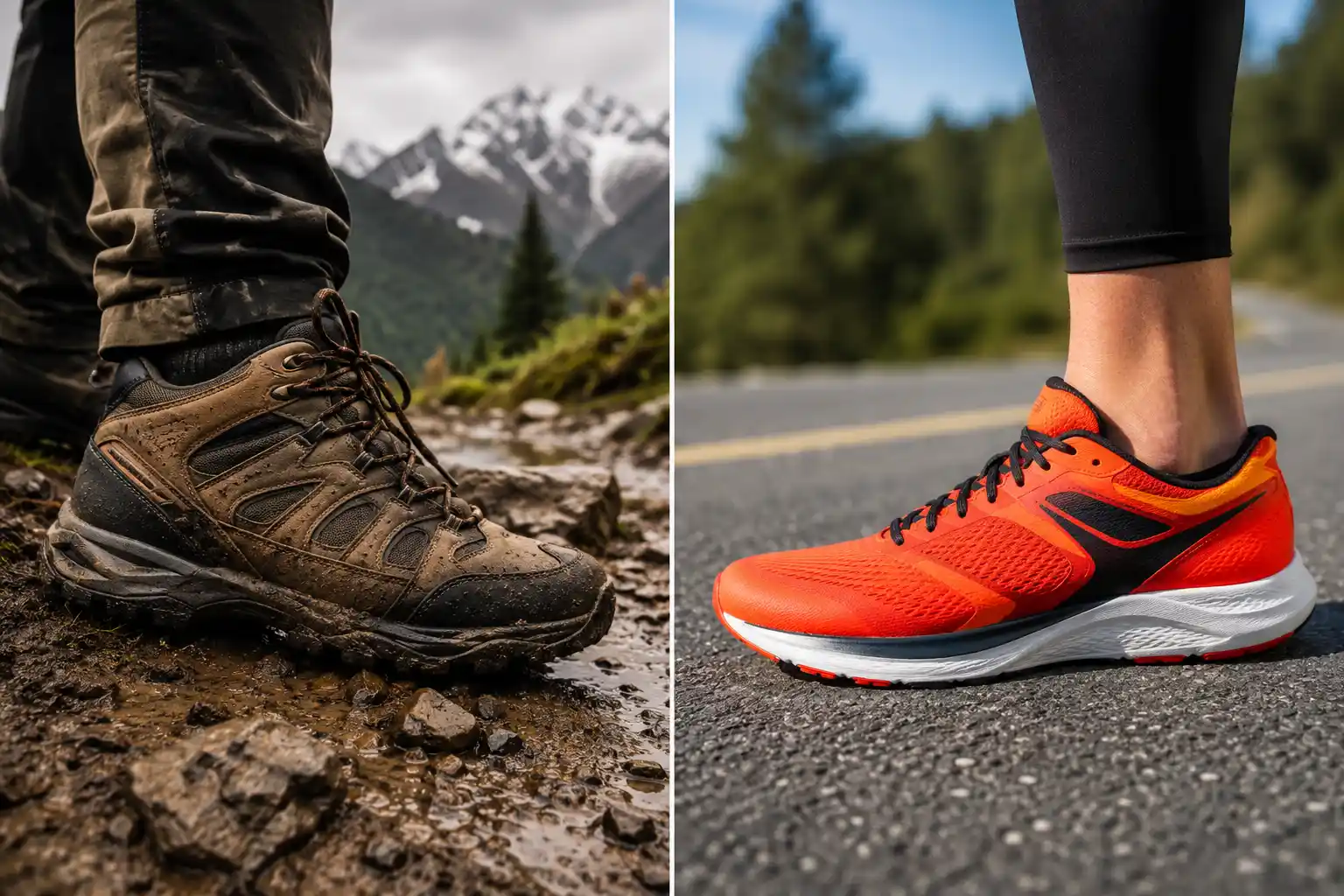
Hey there, I’m Oscar. If you are reading this, you are probably planning a trip into the great outdoors. You might be staring at your closet right now. You are holding a pair of everyday running shoes in one hand and heavy hiking shoes in the other. You are wondering which one is actually better for your feet.
Here’s the thing. Picking the right footwear can make or break your hiking trip. I have seen too many hikers turn back early because their feet were covered in blisters. I have also seen people slip on wet rocks because their road shoes had zero grip. The hiking shoes vs running shoes debate is a big one. But the good news is, finding the perfect match is easier than you think.
In this guide, I will walk you through the exact differences between these two popular types of shoes. Let me explain what makes each shoe special, how to match your footwear to your trail, and how to avoid the most common beginner mistakes. Let’s get into it!
Quick Answer
Should you wear hiking shoes or running shoes? It depends entirely on the trail and your backpack weight. Running shoes are perfect for flat, paved, or smooth dirt paths where you want to move fast and light. Hiking shoes are the better choice for rocky, uneven, or muddy trails because they offer stiff support, deeper traction, and extra toe protection. If you are carrying a heavy backpack, always choose the extra stability of a hiking shoe.
What Makes Hiking Shoes and Running Shoes Different?
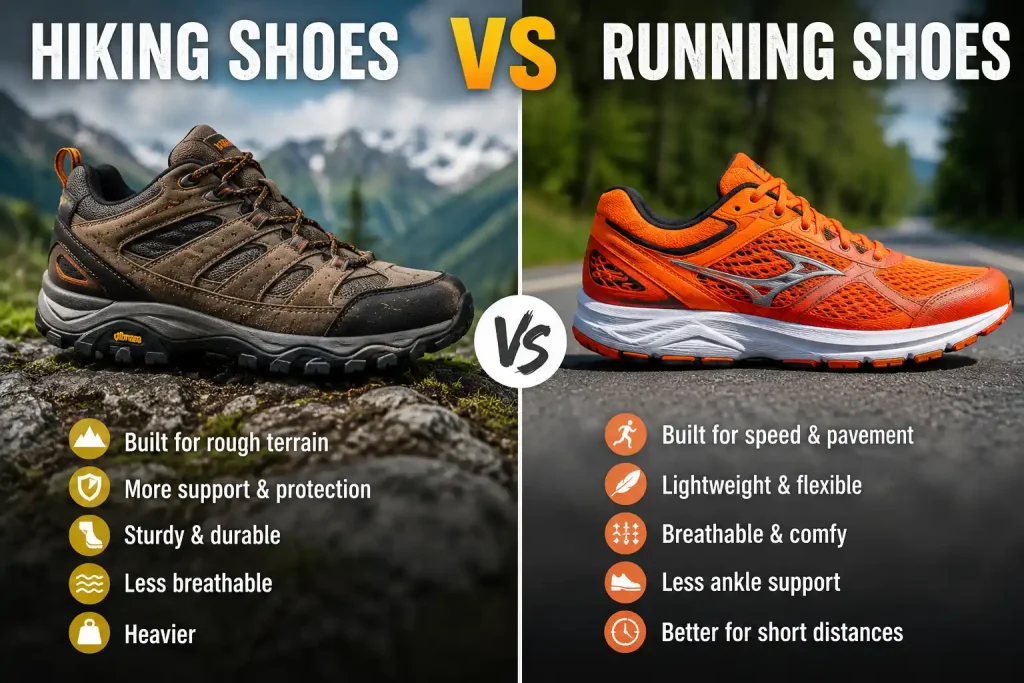
To understand which shoe you need, you have to look at how they are built. Running shoes are designed for one main goal: forward motion on flat surfaces. Hiking shoes are designed for something completely different: stability and protection on wild, unpredictable ground.
Let’s break down the main parts of the shoes so you can see the difference.
- The Outsole (The Bottom): Running shoes have flat, smooth rubber. This gives you speed on roads. Hiking shoes have deep, aggressive rubber bumps called “lugs.” These lugs act like teeth, biting into mud and loose dirt so you do not slip.
- The Midsole (The Cushion): Running shoes use soft, bouncy foam. They absorb the shock of hitting the pavement over and over. Hiking shoes use stiffer materials like polyurethane. They might not feel as bouncy, but they stop your feet from aching when you step on sharp rocks all day.
- The Upper (The Top Part): Running shoes use thin, highly breathable mesh. This keeps your feet cool but tears easily on thorns. Hiking shoes use tough materials like leather, thick nylon, or Kevlar. They usually have a hard rubber cap over the toes to protect you from stubbing your foot against roots.
Many beginners think that any athletic shoe will work for the woods. While that might be true for a quick walk in the local park, taking a regular road shoe into the mountains is a bad idea. Your feet will fatigue faster, and the shoes will likely get ruined.
How to Tell Which Shoe You Need for Your Next Hike
So what should you do? You need to match your shoe to the specific trail conditions. You also need to think about what you are carrying. Here is how to easily decide between the two.
First, think about the ground. If you are going to a well-maintained state park with crushed gravel paths, running shoes are totally fine. They will feel light and comfortable. However, if the trail description mentions scrambling over boulders, crossing streams, or navigating steep inclines, you need hiking shoes.
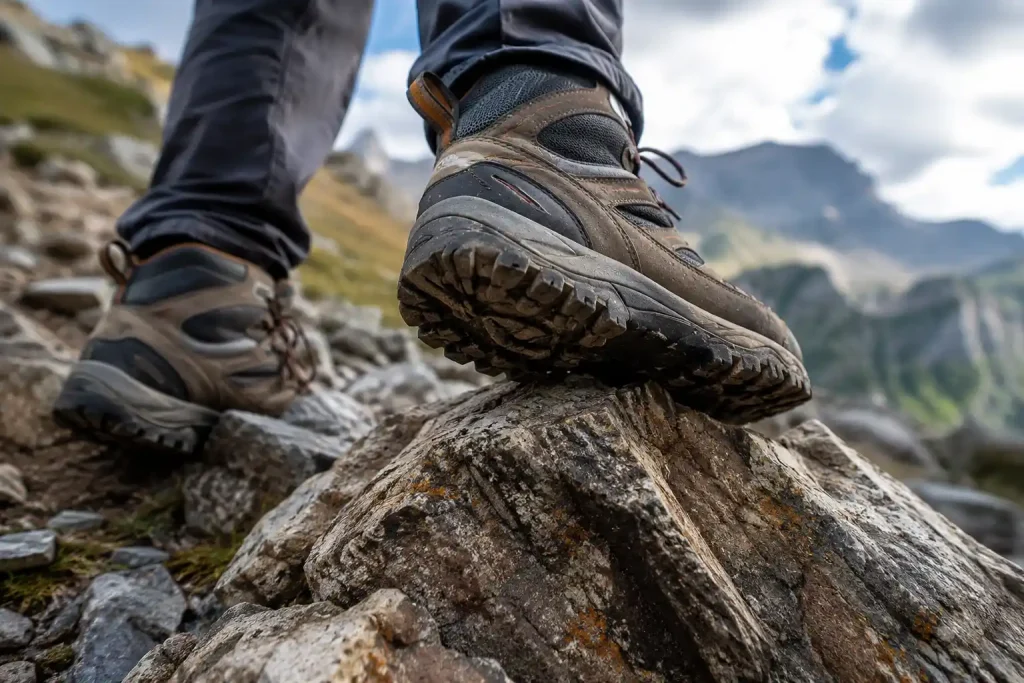
Second, think about your backpack. Are you just carrying a water bottle and a snack? Light shoes are great. Are you carrying a heavy multi-day backpack? You will want the stiff support of a hiking shoe to keep your ankles from rolling under the extra weight.
| Trail Condition | Best Shoe Choice | Why? |
|---|---|---|
| Paved Paths or Sidewalks | Running Shoes | Soft cushioning absorbs shock from hard man-made surfaces. |
| Smooth, Flat Dirt Trails | Running Shoes | Lightweight design saves energy and keeps feet cool. |
| Rocky, Root-Covered Trails | Hiking Shoes | Thick soles prevent stone bruising; toe caps prevent injury. |
| Muddy or Wet Terrain | Hiking Shoes | Deep lugs provide essential grip; waterproof options keep feet dry. |
Oscar’s Tip: Do not forget about trail running shoes! These are a fantastic middle ground. They offer the light weight of a running shoe but have the aggressive tread of a hiking shoe. I highly recommend them for experienced hikers who like to move fast.
Step by Step: How to Choose the Right Trail Footwear
Do you have a big trip coming up? Follow these simple steps before you leave the house. This will ensure you pick the right gear for the day.
- Check the weather forecast. If it is going to rain, or if it rained heavily the day before, the trail will be slick. Leave the running shoes at home and grab your hiking shoes for better traction.
- Check the trail length and elevation. A short, two-mile loop with no hills is easy on any shoe. But a ten-mile hike with thousands of feet of climbing requires serious support. Foot fatigue is real. A stiffer shoe helps your foot muscles relax.
- Weigh your gear. Put your fully loaded backpack on a scale. According to experts at the American Hiking Society, the more weight you carry, the more support your feet and ankles need to stay safe.
- Listen to your body. Do you have a history of twisting your ankles? Do your arches ache after a long walk? If you need extra stability, lean toward a dedicated hiking shoe or even a mid-rise hiking boot.
| Feature | Running Shoes | Hiking Shoes |
|---|---|---|
| Weight | Very light (8-12 oz per shoe) | Heavier (14-20+ oz per shoe) |
| Durability | Low on rugged trails | High (built for rocks and brush) |
| Traction | Poor on mud and wet rocks | Excellent on all natural terrain |
| Break-in Period | None (ready out of the box) | Short to medium break-in needed |
Common Mistakes to Avoid
Over the years, I have seen hikers make the same footwear mistakes over and over again. Here are a few traps you should avoid when picking out your shoes for the trail.
- Assuming heavier means better. You do not always need a giant, heavy leather boot. For many day hikes, a lightweight trail runner or low-top hiking shoe is plenty. Wearing too much shoe just wastes your energy.
- Wearing old, worn-out road shoes. If your running shoes have bald, smooth bottoms from hundreds of miles of street running, they are dangerous on a dirt trail. You will slide on every downhill section.
- Buying shoes that fit too tight. Your feet swell when you hike for miles. If you buy shoes that fit perfectly in the store, they will be too small on the mountain. Always size up at least a half size. The experts at Consumer Reports often note how critical toe-box room is for walking and running comfort.
- Ignoring break-in time. Never take a brand-new pair of stiff hiking shoes on a ten-mile hike. Wear them around your house and neighborhood for a few days first to soften them up.
Expert Tips from Oscar
I have hiked hundreds of miles, from muddy forests to high desert peaks. I have learned a few tricks about footwear the hard way. Let me share some of my favorite tips to help you get the most out of your shoes.
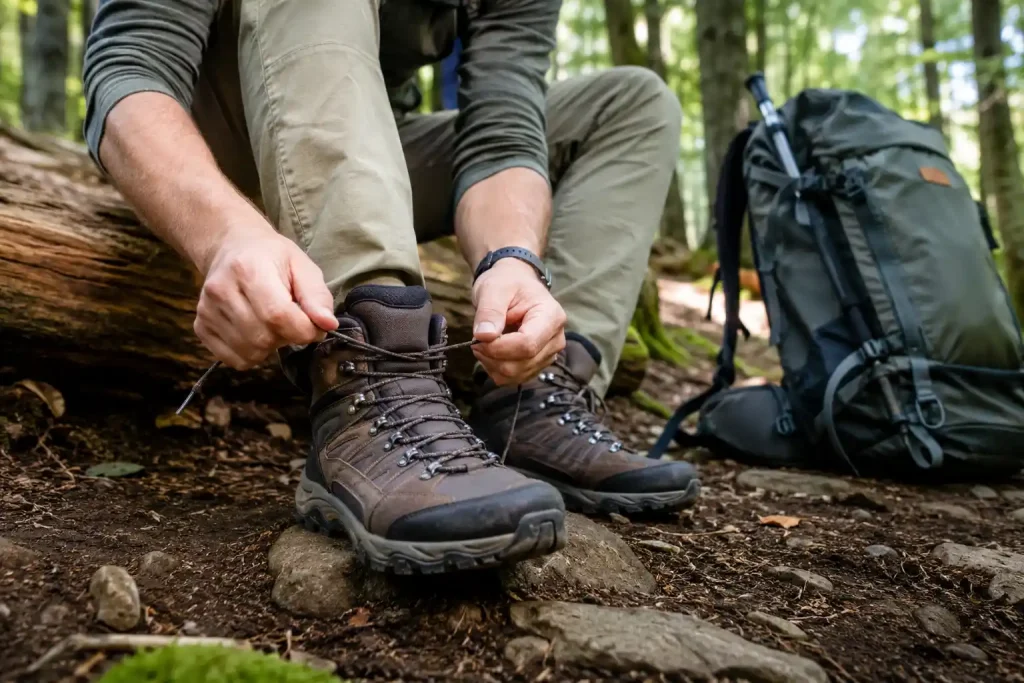
Oscar’s Tip: The “Thumbnail” Sizing Trick When you are trying on hiking shoes, slide your foot all the way to the front so your toes touch the tip. You should be able to slide your thumbnail between your heel and the back of the shoe. If you cannot fit your thumb back there, the shoes are too small. Your toes will slam into the front when walking downhill, causing black toenails!
Oscar’s Tip: The Bend Test Want to know how stiff a shoe is? Grab the heel in one hand and the toe in the other. Try to bend the shoe in half. A running shoe will fold easily. A good hiking shoe will only bend slightly near the ball of the foot. That stiffness is what acts as a shield against sharp rocks.
Oscar’s Tip: Pair with Good Socks The best shoes in the world will still give you blisters if you wear cheap cotton socks. Cotton traps sweat and stays wet. Always wear wool or synthetic hiking socks. They pull moisture away from your skin, keeping your feet dry and blister-free.
Key Takeaways
- Running shoes are best for flat, paved, or smooth urban trails where speed and comfort are the priority.
- Hiking shoes are essential for rocky, muddy, and rugged terrain because they offer better grip and foot protection.
- Trail running shoes are a great hybrid option, offering the lightweight feel of a runner with the aggressive tread of a hiker.
- Always match your footwear to your backpack weight. Heavy loads require the stiffer support of a hiking shoe.
- Never wear brand-new hiking shoes on a long trip without breaking them in first.
Frequently Asked Questions
Can I wear running shoes for hiking?
Yes, you can wear running shoes for hiking if the trail is flat, dry, and well-maintained. However, they lack the grip and durability needed for rocky, muddy, or steep terrain. If you hike often, you should invest in proper trail footwear.
What is the difference between trail running shoes and hiking shoes?
Trail running shoes are lighter, more flexible, and designed for speed on dirt paths. Hiking shoes are heavier, stiffer, and built to provide maximum durability, toe protection, and support when carrying a heavy backpack.
Do hiking shoes make a big difference?
Yes, hiking shoes make a massive difference on rough terrain. The stiff soles prevent your feet from bruising on sharp rocks, and the deep rubber lugs prevent you from slipping on wet mud and leaves.
Should hiking shoes be heavy or light?
For most day hikers, a lightweight hiking shoe is the best choice because it saves energy. Heavier shoes are only necessary if you are carrying a very heavy backpack or hiking in extreme off-trail conditions.
Why do my feet hurt after hiking in running shoes?
Running shoes have soft, flexible soles that let your foot feel every rock and root on the trail. Over several miles, this causes your foot muscles to overwork and fatigue, leading to soreness and arch pain.
Conclusion
Choosing between hiking shoes and running shoes does not have to be stressful. It all comes down to where you are going and what you are carrying. If you are sticking to the local park’s dirt paths for a quick hour of exercise, your regular running shoes will serve you just fine. But the moment the trail gets steep, rocky, or wet, you will be deeply thankful for the grip and armor of a solid hiking shoe.
My biggest piece of advice? Do not rush the decision. Go to a local gear shop, try on a few different styles, and walk around the store. Think about the trails you love to visit most. If you want to see everything else you need to pack for a perfect day on the trail, be sure to check out my complete day hiking gear checklist.
Stay safe out there, take care of your feet, and I will see you on the trail!
