Hey there, I’m Oscar. If you are new to the outdoors, you might hear people throw around words like “trail,” “hiking,” and “trekking” as if they all mean the exact same thing. Let me tell you, they don’t!
It can be super confusing when you are just trying to figure out what to do on a Saturday morning. You might look at a park map and wonder if you are about to go for a casual trail walk, a serious hike, or a full-blown trek. Trust me, I had the same questions when I first started exploring the backcountry.
Here’s the thing. Knowing the difference between trail vs hiking vs trekking matters. It helps you pick the right gear, plan the right amount of time, and stay safe. So, let’s break down exactly what each one means, what gear you need, and how to choose the best adventure for your next day off.
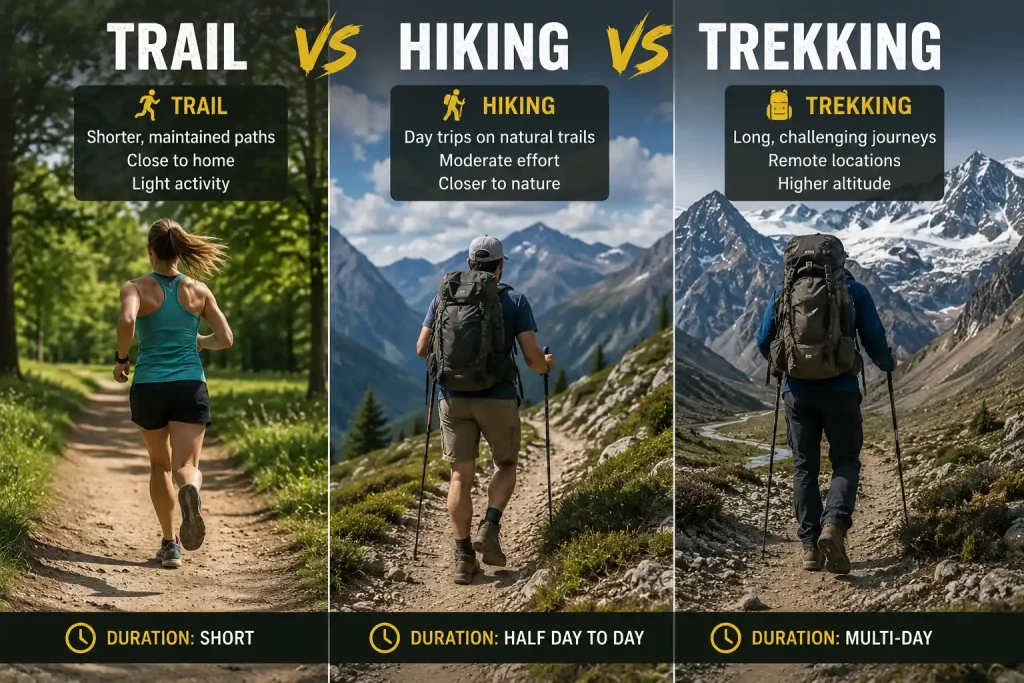
Trail walking is a casual walk on a flat, well-kept, or paved path that usually takes less than an hour or two. Hiking is walking on unpaved, natural terrain with elevation changes, usually lasting anywhere from a few hours to a full day. Trekking is a challenging, multi-day journey over rough, remote terrain where you carry all your survival and camping gear with you.
Trail vs Hiking vs Trekking What’s the Real Difference
What is a Trail Walk?
Let me explain trail walking first because it is the easiest way to get outside. A trail is simply a marked path. When people say they are going for a “trail walk” or hitting a “walking trail,” they usually mean something very relaxed.
Trail walking happens on flat ground. The path is often paved, covered in crushed gravel, or made of smooth dirt. You won’t find giant boulders to climb over or deep rivers to cross. You can usually wear your everyday running shoes or sneakers. These trails are mostly found in city parks, local nature reserves, or greenways.
The good news is that trail walking is perfect for beginners, kids, and older adults. You do not need special outdoor clothing or heavy hiking gear. A bottle of water and comfortable clothes are all you really need.
Terrain: Flat, smooth, paved, or groomed.
Time: 30 minutes to 2 hours.
Footwear: Sneakers or comfortable walking shoes.
Fitness Level: Beginner friendly.
What is Hiking?
Now, let’s talk about hiking. If you move from a city park to a state park or a national forest, you are probably going on a hike. Hiking involves walking on natural, unpaved surfaces. You will deal with dirt, rocks, tree roots, and mud.
Hiking also involves going up and down hills. Some hikes are easy and flat, while mountain hiking can be very steep and tiring. Hikes usually take longer than a simple trail walk. A quick day hike might take two hours, but a long day hike could take eight to ten hours.
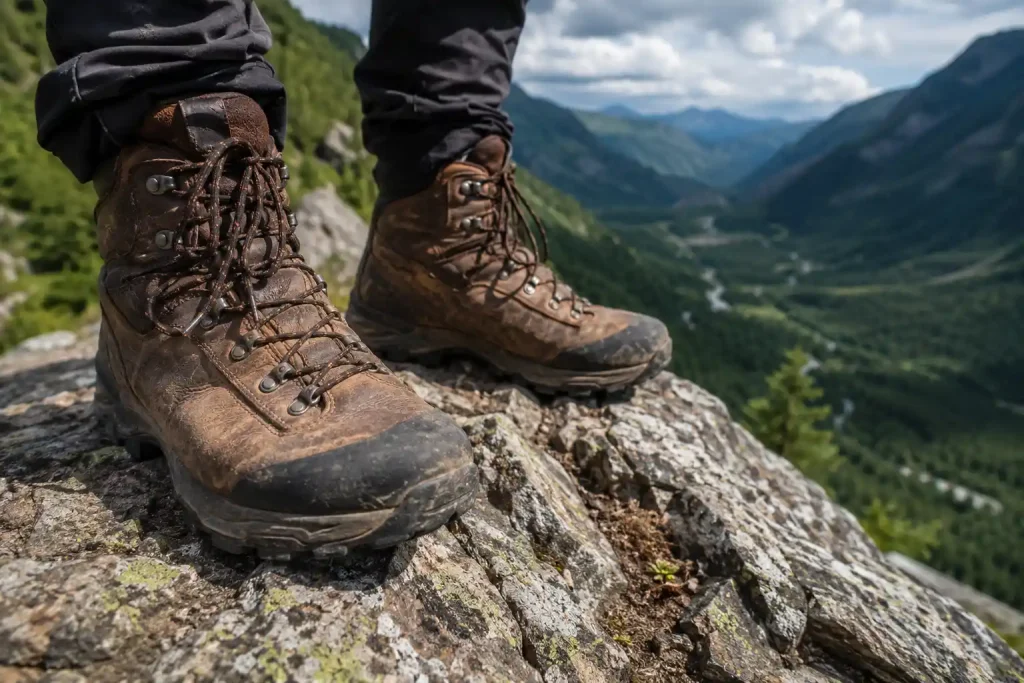
Because you are out in nature, away from your car, you need to be prepared. You will want a comfortable daypack to carry extra water, snacks, a first aid kit, and a rain jacket. This is where proper hiking shoes or boots start to matter because sneakers can slip on wet rocks.
Warning: Never assume a hiking trail will be as smooth as a city walking trail. Always check the trail difficulty rating on the National Park Service website or local park board before you start.
What is Trekking?
Trekking is a whole different beast. While a hike usually finishes in one day, trekking is a multi-day journey. When you trek, you do not go back to your car or a cozy hotel bed at the end of the day. You keep moving forward, sleeping in tents or small backcountry huts.
Trekking happens in remote areas, often far away from roads, towns, or cell phone service. Think about walking the Appalachian Trail, hiking to Everest Base Camp, or crossing the Andes. The terrain can be wild and harsh.
Because you are out there for days or weeks, you have to carry everything you need to survive. This means wearing a heavy backpacking pack filled with a tent, sleeping bag, cooking stove, food, and water filters. Trekking demands a high level of physical fitness and strong mental toughness.
hiker’s rugged leather hiking boots standing on a rocky mountain
How to Tell Which Activity is Right for You
So, which one should you choose? It all depends on your fitness, how much time you have, and what kind of gear you own. If you only have two hours on a Sunday afternoon, a local trail walk or a short hike is your best bet. If you have a long weekend and want a challenge, you might be ready for a short trek or backpacking trip.
Here is a simple breakdown to help you decide.
Feature
Trail Walking
Hiking
Trekking
Duration
Under 2 hours
2 to 10 hours (One day)
Multiple days to weeks
Terrain
Paved or smooth dirt
Uneven dirt, rocks, roots
Harsh, remote, extreme
Elevation
Mostly flat
Rolling hills to steep mountains
Major mountain passes
Backpack Needed
None or a small waist pack
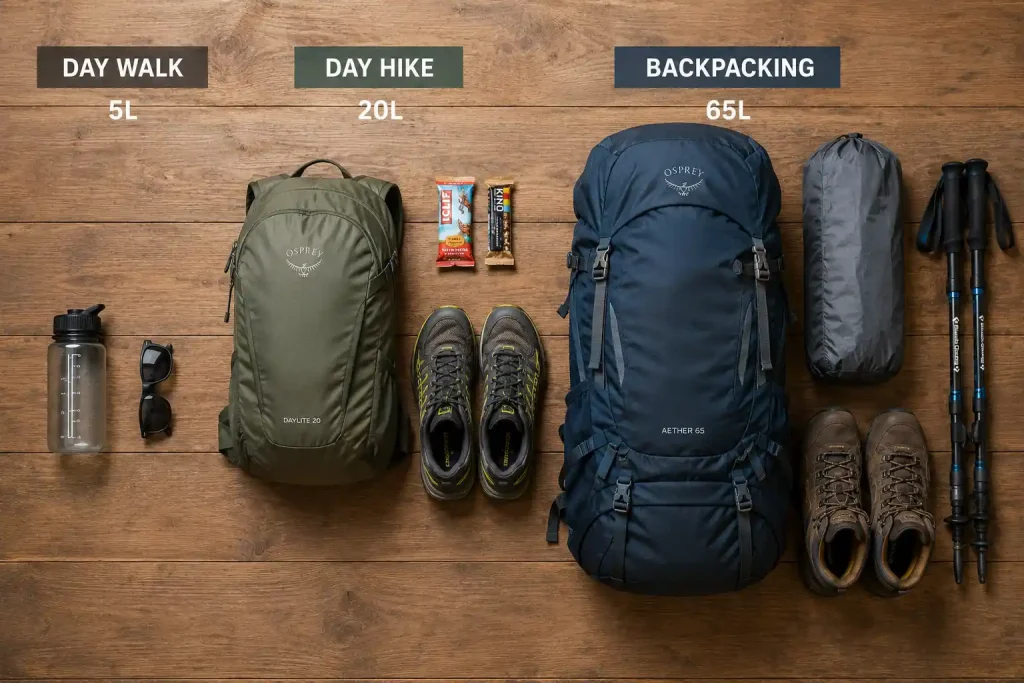
Daypack (10L – 30L)
Large backpack (50L – 75L)
Shelter
Go home after
Go home after
Tent or trail hut
How to Prepare for Your Next Adventure Step by Step
Getting ready for the outdoors does not have to be hard. But you do need to follow a few simple steps so you don’t get stuck in a bad situation. Here is how I prepare for any outdoor trip.
Check the weather forecast: Look at the weather for the exact park or mountain you are visiting, not just your home town. Weather changes fast in the woods.
Pick the right trail: Use a trail app or park map to find a route that fits your fitness level. Look at the total distance and the elevation gain.
Tell someone your plan: Always tell a friend or family member where you are going and when you plan to be back. This is a basic trail safety rule.
Pack your gear: For a trail walk, grab a water bottle. For a hike, pack a daypack with snacks and rain gear. For a trek, pack your full camp setup.
Lace up the right shoes: Wear comfortable sneakers for paved trails, trail runners for moderate hikes, and sturdy hiking boots for rocky treks.
gear setups on a wooden table
Essential Gear for Trail vs Hiking vs Trekking
Having the right gear makes everything better. You don’t want to carry a 50-pound backpack on a flat paved trail, and you definitely don’t want to wear plain sneakers on a snowy mountain pass. Here is a clear guide on what gear belongs to which activity.
Gear Item
Trail Walking
Day Hiking
Trekking
Footwear
Sneakers, running shoes
Trail runners or hiking shoes
Sturdy, waterproof hiking boots
Water Supply
1 reusable water bottle
2-3 liters in a hydration bladder
Water filter and large reservoirs
Navigation
Phone maps
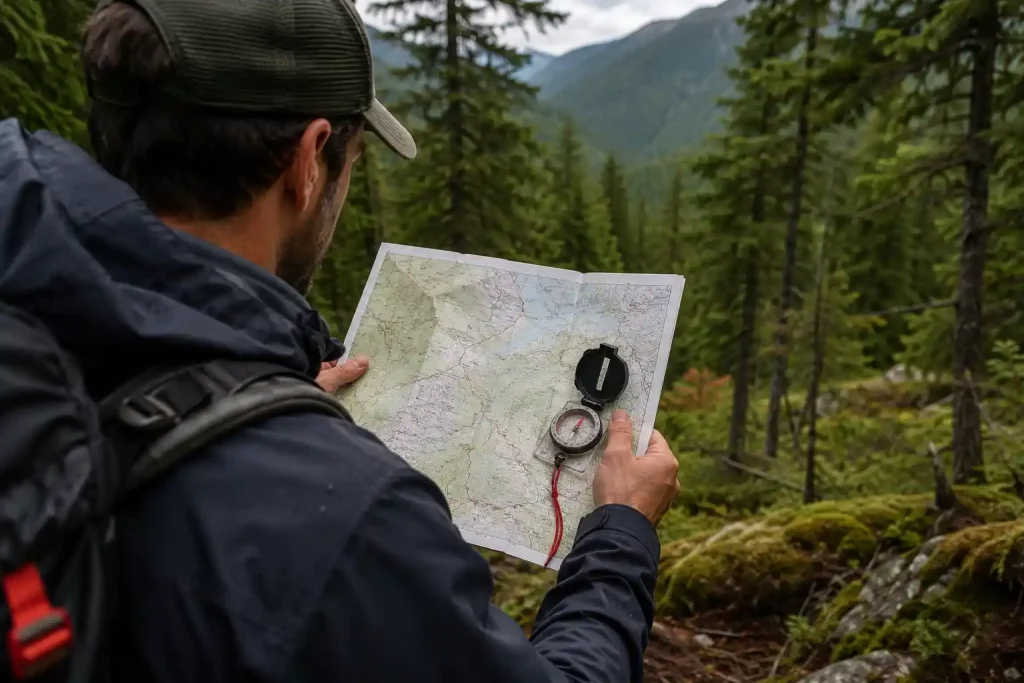
Paper map, compass, GPS app
GPS device, map, compass
Trekking Poles
Not needed
Optional for steep hills
Highly recommended
First Aid
Basic band-aids
Standard day hiker kit
Comprehensive survival medical kit
Oscar’s Tip: If you are looking to upgrade your footwear, check out our guide on the best hiking gear for beginners. Getting the right fit changes everything!
Common Mistakes to Avoid
Over the years, I have made plenty of mistakes on the trail. I want to save you the trouble. Here are some of the most common mistakes people make when they mix up walking, hiking, and trekking.
Wearing cotton clothes: Cotton soaks up sweat and stays wet. This can make you freeze if the wind picks up. Always wear moisture-wicking clothes like polyester or merino wool.
Underestimating the terrain: A 5-mile walk on a paved path takes less than two hours. A 5-mile hike up a rocky mountain can take four or five hours. Don’t let the distance fool you.
Not bringing enough water: You will sweat way more on a dirt hike than a flat walk. Pack more water than you think you need.
Relying only on a cell phone for directions: Cell service drops fast in nature. Always download offline maps or bring a paper map for real hikes and treks.
Breaking in boots on the trail: Never buy heavy trekking boots and wear them for the first time on a 10-mile hike. You will get terrible blisters. Break them in by wearing them around your house first.
Expert Tips from Oscar
Want to get better at hitting the trails? Here is some practical advice from my own time out in the woods.
Start small and build up. You don’t have to jump straight into trekking. Start with flat trail walks in your local park. Once those feel easy, find a trail with some hills. Then, try a three-hour hike. Slowly pushing your limits is the safest way to learn.
Pace yourself. Here’s the thing. Hiking is not a race. When you transition from walking to hiking, you will notice your heart rate spikes quickly on hills. Take smaller steps. If you can’t talk easily while hiking, you are going too fast.
Invest in your feet. If you only buy one piece of gear, make it great footwear. Good hiking shoes grip wet rocks and protect your toes from roots. Pair them with thick wool socks to prevent blisters.
hiker looking at a paper topographic map and a compass in his handsLearn to Leave No Trace. Whether you are on a paved path or a deep backcountry trek, you must protect nature. Pack out all your trash, stay on the marked trails, and never feed wild animals. You can learn more about these rules from trusted groups like Leave No Trace.
Key Takeaways
Trail walking is flat, easy, and fast. It requires almost no special gear.
Hiking involves natural, uneven terrain and elevation. It requires a daypack, water, and good shoes.
Trekking is a multi-day wilderness journey that demands heavy backpacks, camping gear, and high fitness.
Always match your shoes and your backpack size to the type of trip you are taking.
Never underestimate the time it takes to walk on dirt and rocks compared to a paved sidewalk.
Frequently Asked Questions
Is backpacking the same as trekking?
They are very similar, but slightly different. Backpacking usually refers to multi-day hiking where you carry your own tent and food. Trekking can also mean this, but trekking often implies a much longer, more difficult journey, sometimes using guide services or sleeping in village huts along the way.
Do I need trekking poles for day hiking?
You do not absolutely need them, but they help a lot. Trekking poles take the pressure off your knees when walking downhill and give you better balance on muddy or rocky trails. Many hikers love them for steep day hikes.
Can I use running shoes for hiking?
You can use running shoes for flat, smooth trail walks. However, for real hiking on dirt and rocks, standard running shoes lack the grip and toe protection you need. Trail running shoes or proper hiking boots are a much safer choice.
What is considered a trail?
A trail is any marked path designed for walking, hiking, or biking. Trails can be paved paths in a city, crushed gravel loops around a lake, or narrow dirt paths cut into a mountainside.
How many miles is a good day hike?
For beginners, a good day hike is usually between 2 to 5 miles, depending on the hills. Experienced hikers might cover 10 to 15 miles in a single day. Always focus on how long it takes rather than just the miles, because rocky hills slow you down.
Conclusion
So, what should you do next? The best way to understand the difference between trail walking, hiking, and trekking is to just get outside and experience it. Start with a beautiful trail walk at a local park. When you feel ready, grab a daypack and find a dirt trail in a nearby state park.
Don’t stress too much about the labels. Whether you call it a hike, a walk, or a trek, the important thing is that you are getting fresh air and moving your body. Just remember to pack enough water, wear the right shoes, and respect nature while you are out there.
If you are ready to take your next step into the woods, take a look at our guide on how to pack a daypack for a hike to make sure you have all the essentials before you leave the parking lot. See you on the trail!
To provide the best experiences, we use technologies like cookies to store and/or access device information. Consenting to these technologies will allow us to process data such as browsing behavior or unique IDs on this site. Not consenting or withdrawing consent, may adversely affect certain features and functions.
Functional
Always active
The technical storage or access is strictly necessary for the legitimate purpose of enabling the use of a specific service explicitly requested by the subscriber or user, or for the sole purpose of carrying out the transmission of a communication over an electronic communications network.
Preferences
The technical storage or access is necessary for the legitimate purpose of storing preferences that are not requested by the subscriber or user.
Statistics
The technical storage or access that is used exclusively for statistical purposes.The technical storage or access that is used exclusively for anonymous statistical purposes. Without a subpoena, voluntary compliance on the part of your Internet Service Provider, or additional records from a third party, information stored or retrieved for this purpose alone cannot usually be used to identify you.
Marketing
The technical storage or access is required to create user profiles to send advertising, or to track the user on a website or across several websites for similar marketing purposes.