
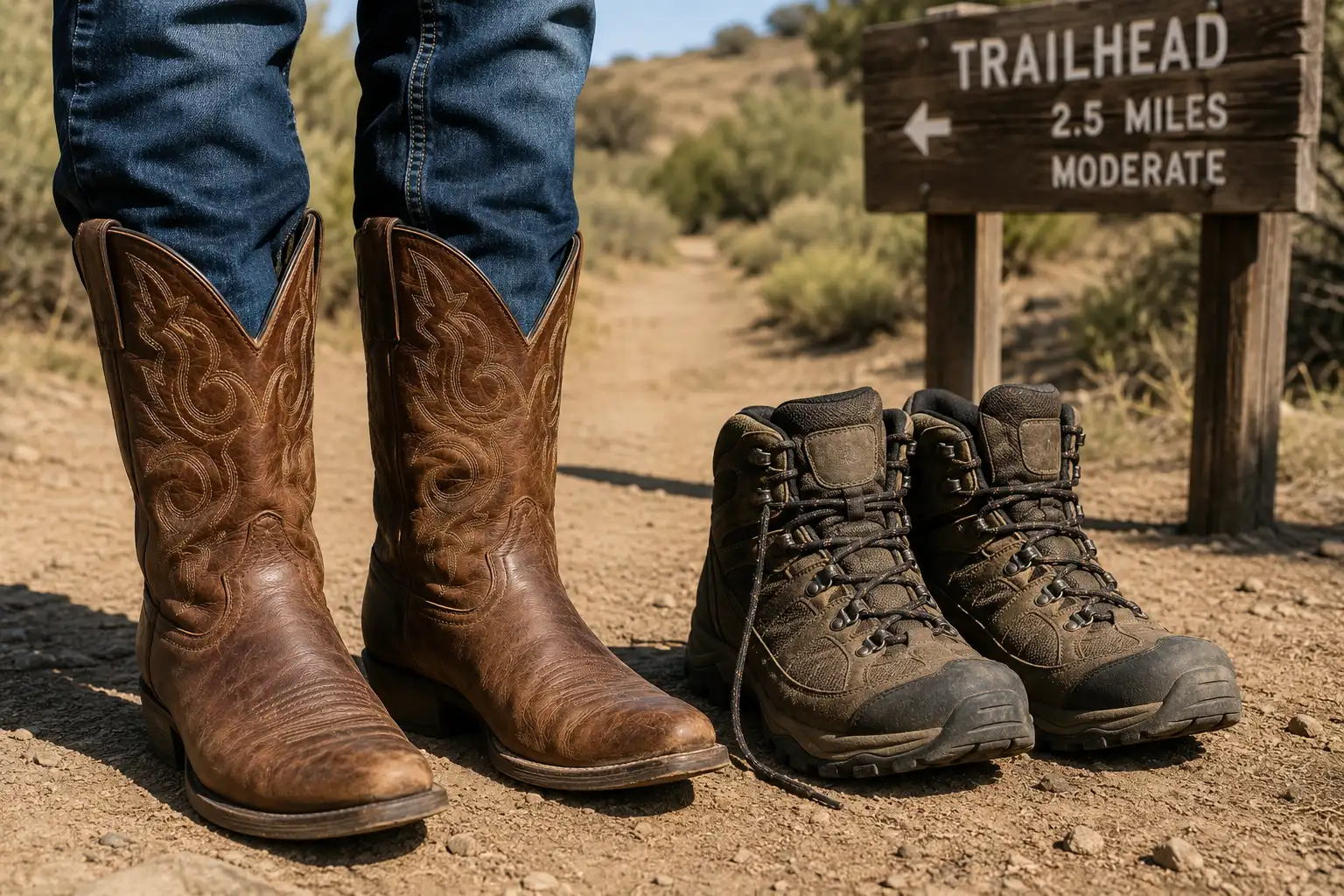
Hey there, I’m Oscar. If you are anything like me, you probably have a favorite pair of boots. Maybe they are a classic pair of leather cowboy boots that look great and feel perfectly broken in for running errands around town. But when it comes time to hit the dirt, a big question comes up. Should you wear them on the trail?
I get asked this all the time by beginner hikers who want to use the gear they already own. It makes sense. Good hiking gear can be expensive, and if you already have a sturdy pair of leather boots, why not use them? But hiking puts a very specific type of strain on your feet and ankles.
Here is the thing. Trail conditions are unpredictable. What works perfectly on a flat sidewalk or a ranch floor can quickly turn into a painful experience in the woods. Let me explain exactly how cowboy boots handle the trail, what you should watch out for, and how to keep your feet safe and happy on your next adventure.
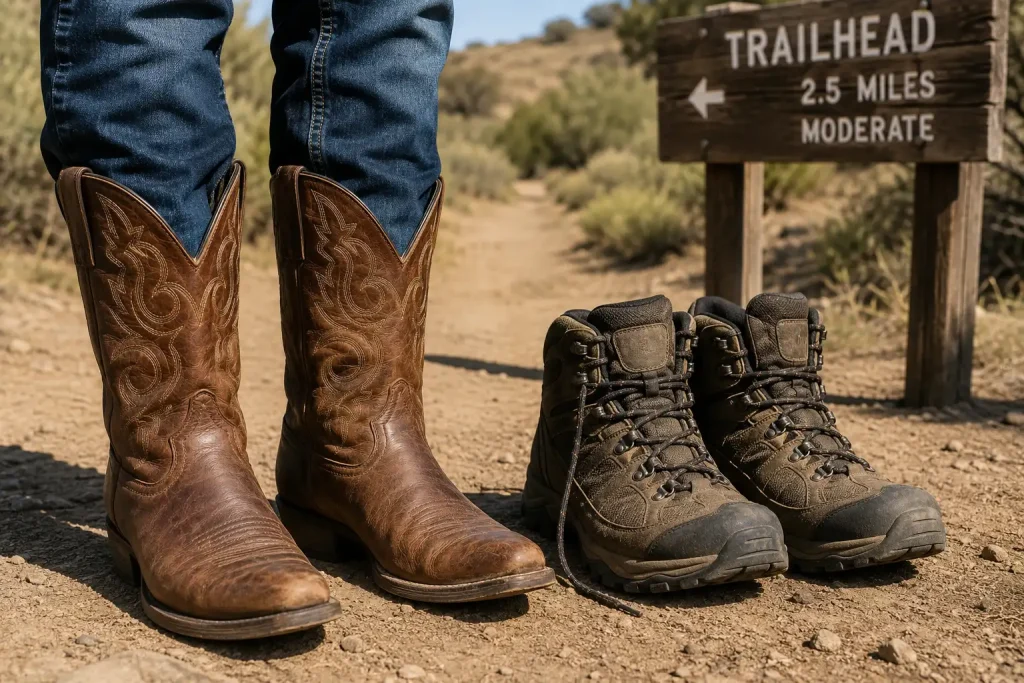
Quick Answer
No, cowboy boots are not good for hiking. They are designed for horseback riding, not for walking long distances over uneven terrain. Traditional cowboy boots have smooth leather soles that lack traction, a raised heel that increases the risk of rolling an ankle, and a loose fit that causes heel slip and severe blisters. For your safety and comfort, it is always best to wear purpose-built hiking shoes, trail runners, or hiking boots when exploring the outdoors.
What Hikers Should Know About Cowboy Boots on the Trail
To understand why cowboy boots struggle on a hike, we have to look at how they are built. Every piece of outdoor gear has a specific job. Cowboy boots were engineered over a century ago for a very specific task: keeping a rider’s foot secure in a stirrup.
Here is what makes them great for riding, but bad for hiking:
- The Heel: Cowboy boots have a distinct, raised heel. This stops a rider’s foot from sliding through a stirrup. But on a hiking trail, that high heel changes your natural walking stride. It pushes your weight forward and makes you highly unstable on rocky or uneven ground.
- The Sole: Most traditional cowboy boots have smooth leather soles. Leather is incredibly durable, but it offers zero traction. If you step on a wet rock, muddy roots, or loose gravel, you are going to slip.
- The Toe Box: Many western boots have a pointed or narrowed toe. When you hike downhill, your foot naturally slides forward. In a pointed boot, your toes will jam into the front, which can cause bruised toes and lost toenails.
- The Fit: Cowboy boots are designed to slip on and off. Because they lack laces, you cannot lock your heel into place. As you walk up an incline, your heel will lift inside the boot. This constant rubbing is a fast track to massive blisters.
While they are built tough, they just do not have the features needed to keep you safe and comfortable on a long day hike.
Signs You Should Adjust Your Hiking Plan or Gear
If you show up to a trailhead and realize your footwear is not up to the task, it is completely okay to change your plans. Pushing through pain or hiking in unsafe shoes is a quick way to ruin your weekend or cause a real emergency.
How do you know if you are wearing the wrong shoes for the trail? Pay attention to the ground and how your body feels. If the trail is flat, paved, or a very short, dry dirt path, you might be fine walking a mile in cowboy boots. But if the trail is steep, wet, or covered in rocks, you need to turn back.
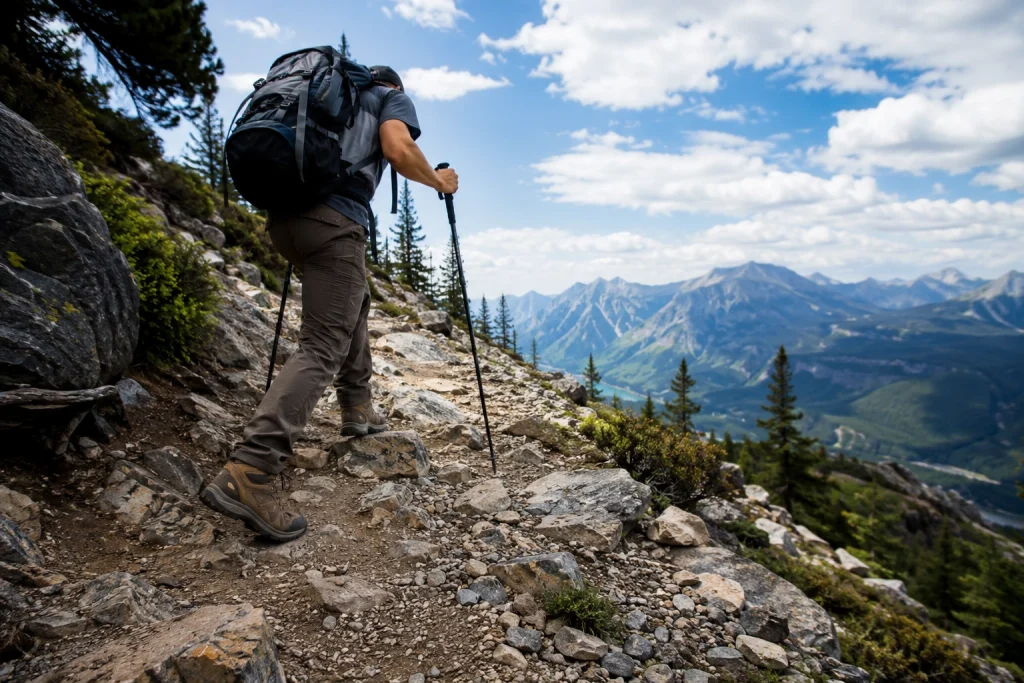
The table below breaks down the major differences between cowboy boots and hiking footwear so you can see exactly why trail-specific shoes matter.
| Feature | Cowboy Boots | Proper Hiking Boots |
|---|---|---|
| Traction (Grip) | Very low. Smooth leather soles slip easily on mud and rocks. | High. Rubber lugs grip uneven, wet, and loose terrain. |
| Ankle Support | Low. Tall shafts exist, but loose fit offers no real support. | High. Laces lock the ankle in place to prevent rolling. |
| Heel Design | Tall and narrow. Great for stirrups, bad for balance. | Flat and wide. Designed to absorb shock and provide balance. |
| Fit System | Slip-on. Causes heel lift and friction. | Laces. Allows you to secure your foot and adjust for swelling. |
| Breathability | Poor. Thick leather traps heat and sweat. | Good. Often uses mesh panels or breathable membranes. |
How to Handle Trail Footwear Step by Step
So, what should you do if you want to start hiking but are not sure what to put on your feet? Follow these practical steps to get ready for the trail.
- Assess your trail first. Check the weather and the trail description. Is it a paved nature walk or a rocky climb? For flat, dry, paved paths, a sturdy pair of sneakers is fine. For dirt, mud, and rocks, you need trail shoes.
- Choose footwear with rubber traction. Look for shoes or boots with thick rubber soles and deep lugs (the bumps on the bottom). Trail runners or beginner hiking shoes are perfect.
- Check your fit with laces. Make sure you can tie the shoes securely. You want your heel locked in place so it does not lift when you walk uphill. You also want a thumb-width of space in front of your toes so they do not jam when walking downhill.
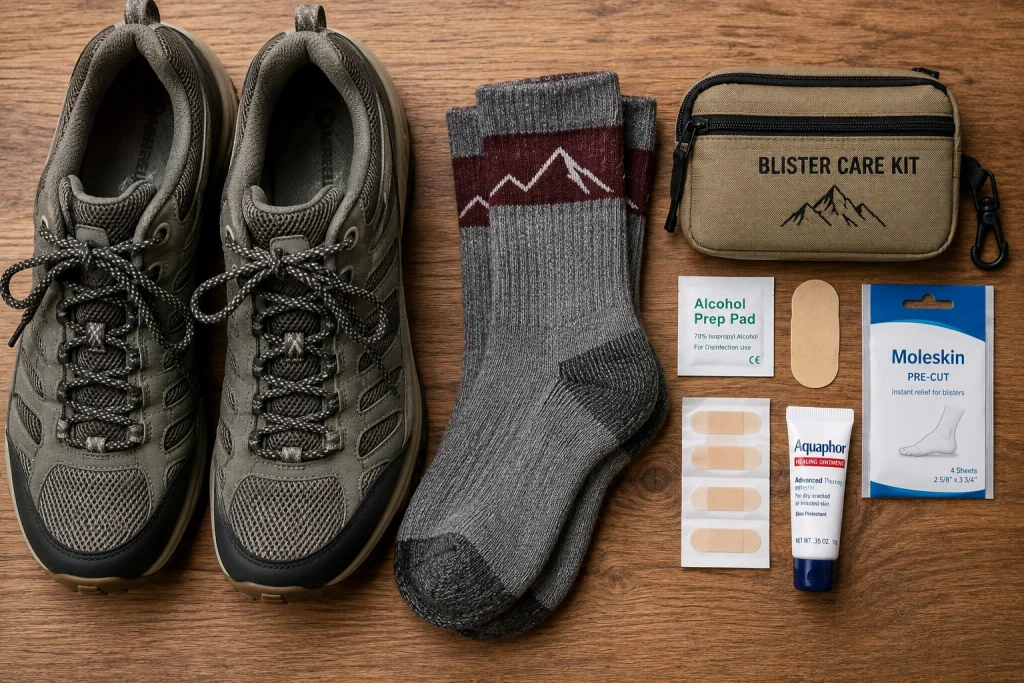
- Pair them with the right socks. Never wear cotton socks on a hike. Cotton traps sweat and causes blisters. Choose moisture-wicking socks made of merino wool or synthetic blends.
- Break them in before the hike. Never take a brand-new pair of boots straight to a long trail. Wear them around your house, while walking the dog, or at the grocery store for a few days first.
- Pack a basic first-aid kit. Even with the best boots, blisters can happen. Always pack some moleskin or blister bandages in your day pack.
When Cowboy Boots Fall Short: Key Problems
Using cowboy boots for hiking, especially on anything other than the most forgiving paths, introduces several significant problems. These issues directly impact your comfort, safety, and overall enjoyment of the outdoors.
The Real Risk of Slips and Sprains
This is arguably the most critical drawback. The smooth or minimally treaded soles of cowboy boots offer very little grip on loose dirt, gravel, mud, or wet rocks. This drastically increases your risk of slipping and losing your footing. Furthermore, the lack of substantial ankle support, as mentioned earlier, makes you far more susceptible to ankle rolls and sprains when traversing uneven ground.
Official safety guidelines for outdoor activities consistently emphasize proper footwear traction and support.
Foot Fatigue and Joint Strain
When you hike, your feet and legs absorb a significant amount of impact with every step. Hiking boots are designed with midsoles that provide excellent shock absorption, reducing the strain on your feet, ankles, knees, and hips. Cowboy boots typically lack this advanced cushioning. Per typical footwear engineering principles, this means your feet and joints will bear more of the direct impact, leading to accelerated fatigue, soreness, and potential joint pain, even on relatively moderate hikes.
Sore Feet on Uneven Ground
Beyond the general fatigue, uneven terrain presents its own set of challenges. When you step on rocks, roots, or uneven surfaces in footwear with inflexible soles or poor cushioning, you can feel every sharp edge and irregularity. This can lead to localized foot pain, bruising, and general discomfort over time. Hiking boots are built to provide a more stable platform and protective layer, allowing you to navigate challenging ground without feeling every bump and protrusion directly through your soles.
Cowboy boots, with their often thinner, less robust soles, simply don’t offer this level of protection or stability.
Cowboy Boot vs. Hiking Boot: Key Differences
The distinction between cowboy boots and hiking boots isn’t just aesthetic; it’s about fundamental design purpose driven by different activities. Each type of footwear serves its intended use exceptionally well, but their strengths don’t always translate.
Feature Breakdown: Sole, Support, and Feel
When we break down the core features, the divergence becomes clear. For instance, let’s consider a typical hiking boot sole from a major brand. Specs often confirm multi-directional lugs designed for grip on varied surfaces, with a 4-5mm lug depth. Contrast this with a traditional cowboy boot sole, which might feature a stacked leather or rubber heel and a flat or lightly textured sole, optimized for slipping into stirrups rather than clinging to a trail.
| Feature | Cowboy Boots | Hiking Boots (Typical) |
|---|---|---|
| Ankle Support | Low; flexible shaft. | Medium to High; reinforced and often padded collar. |
| Sole Tread | Smooth or minimal pattern; designed for grip in stirrups. | Aggressive, deep lugs; designed for maximum traction on loose/uneven terrain. |
| Midsole Cushioning | Minimal; relies on outsole and insole. | Significant; EVA or polyurethane for shock absorption. |
| Flexibility | Generally high flexibility throughout. | Varies, but typically stiffer in the forefoot and midfoot for stability. |
| Water Resistance | Varies by leather treatment; often less specialized. | Often features waterproof-breathable membranes (e.g., Gore-Tex). |
| Weight | Can be moderate to heavy. | Designed for efficiency, often lighter for performance. |
Navigating Trail Conditions: What to Consider
Before you even think about lacing up or pulling on a pair of boots for a hike, it’s crucial to assess the environment you’re heading into. The type of trail, its length, and your personal experience all play a massive role in determining what footwear is appropriate and safe.
Evaluating Your Route and Terrain
The first step is always knowing your trail. Are you heading out on a paved bike path that’s converted into a walking trail, or are you venturing into rocky, root-strewn singletrack? A well-maintained trail with a predictable surface will demand far less from your footwear than a path that requires careful foot placement. For example, if our research on trail surfaces indicates a high percentage of loose gravel or significant elevation changes on your chosen route, this immediately flags cowboy boots as a poor choice due to their inability to provide adequate grip and stability.
How Far Are You Really Going?
Distance is another major factor. A short, 1-mile loop around a lake is vastly different from a 10-mile trek through rolling hills. The longer the hike, the more impact your feet and legs will experience. What might feel okay for an hour can become agonizingly uncomfortable or even dangerous after several hours on the trail.
Our analysis of hiking duration consistently shows that comfort and support needs escalate significantly past the 2-3 hour mark, a threshold where dedicated hiking shoes or boots far outperform casual footwear. If you’re planning an all-day adventure, consider bringing along hiking meal prep ideas to keep your energy up.
Your Personal Comfort and Familiarity
You are the ultimate judge of what feels good on your feet. If you’ve worn a specific pair of cowboy boots for years and they are incredibly comfortable, offering no hot spots or rubbing, then for a very casual, short walk, they might feel adequate. However, this personal comfort is not a substitute for the engineered support and traction that hiking boots provide. It’s essential to distinguish between the comfort of a well-worn boot and the functional suitability of footwear for specific athletic demands.
Does It Matter if My Cowboy Boots Are Waterproof?
Many consider waterproof hiking boots a must-have, especially for unpredictable weather. But does the waterproof status of your cowboy boots make them a viable hiking option? The short answer is: it helps a bit, but it doesn’t fix the core issues.
If your cowboy boots boast a waterproof lining or treatment, they’ll certainly keep your feet drier if you encounter puddles or light rain. This is a plus, as wet feet can lead to blisters and discomfort. However, waterproofness alone does not equate to hiking suitability. A boot can be completely waterproof but still lack the essential ankle support, the aggressive tread needed for traction on slippery surfaces, and the shock-absorbing cushioning required for long distances.
For example, official standards for waterproof membranes in footwear, like those from Gore-Tex, focus on hydrostatic head ratings for water resistance and MVTR (Moisture Vapor Transmission Rate) for breathability. While these are excellent qualities for hiking boots, they don’t address the structural and functional components like sole grip or ankle stability. So, while waterproof cowboy boots might prevent soggy socks, they won’t necessarily prevent a twisted ankle on a muddy slope or foot pain after an hour on rocky ground.
Beginner’s Guide: Making the Right Footwear Choice
If you’re new to hiking, choosing the right gear can feel overwhelming. When it comes to footwear, however, the decision is usually straightforward for your safety and enjoyment. The goal is to select shoes that match the demands of the trail and your physical needs, ensuring you have a positive experience.
A Simple Decision Tree for Hikers
To make this clearer, think of it like this:
- What kind of trail are you planning?
- Paved path, flat park trail, very short (under 2 miles), minimal elevation: Consider well-worn, comfortable casual shoes or potentially your comfortable cowboy boots. (Proceed to Question 2).
- Uneven dirt path, gravel, roots, any significant elevation change, longer than 2 miles: STOP. Your cowboy boots are not suitable. You need dedicated hiking footwear. (See ‘Hiking Boots Are the Usual Go-To’ and ‘Alternatives’ sections above).
- If you proceeded from Question 1 (casual/short hike): How do your cowboy boots feel after 30 minutes of walking on a hard surface?
- Completely comfortable, no rubbing, no hot spots, good flex: They might be okay for your planned very casual outing. (Proceed to Question 3).
- Any discomfort, tightness, or stiffness: STOP. Even for a casual outing, they will likely cause problems. Consider comfortable sneakers or walking shoes designed for better foot support. For beginners, exploring options like trail runners vs hiking boots can be very informative.
- You’ve assessed your trail is casual and your boots feel great. Are you sure you want to proceed?
- Yes, I’m confident and the hike is extremely short and flat. You can proceed, but remain hyper-aware of your footing, your ankle stability, and any developing discomfort. Be ready to turn back.
- No, the risks (slipping, ankle twist, foot pain) seem too high, or I’m unsure. Strongly recommended: Invest in beginner-friendly hiking shoes or low-cut hiking boots. This is the safest and most comfortable option for enjoying the trail. Visit a reputable outdoor retailer for fitting advice. You might also want to look into a beginner hiking checklist so you know what else to pack.
Common Mistakes to Avoid
When it comes to your feet, small mistakes can lead to big problems. Here are a few common footwear traps that beginner hikers fall into.
- Ignoring hot spots: A hot spot is that warm, slightly painful rubbing feeling on your foot. It is the warning sign of a blister. Stop and tape it up immediately. Do not wait until it becomes a full blister.
- Wearing heavy winter boots in summer: Work boots or insulated winter boots might have good grip, but they will cook your feet in the summer heat, leading to massive sweating and skin damage.
- Thinking heavier is better: You do not need massive, heavy mountaineering boots for a simple day hike. Heavy boots drain your energy. Trail runners or lightweight hiking shoes are often a much better choice.
- Forgetting to trim your toenails: It sounds silly, but long toenails will repeatedly hit the front of your boot on downhill sections. This is incredibly painful and can cause you to lose a nail.
Practical Tips from Oscar
Over the years, I have seen a lot of folks struggling on the trail because of their footwear. I once saw a guy trying to hike a steep, muddy switchback in a pair of very expensive snake-skin cowboy boots. He was slipping with every step and looked miserable.
The good news is that you do not need to spend hundreds of dollars to get started. A basic pair of entry-level trail running shoes will serve you a thousand times better than the most expensive pair of cowboy boots. I highly recommend visiting a local outdoor store and having an employee measure your feet. Getting the right fit changes everything.
Key Takeaways
- Cowboy boots are made for riding, not hiking. They lack the traction and support needed for safe trail travel.
- Smooth leather soles are dangerous on wet rocks, mud, and loose dirt.
- The slip-on design of western boots causes heel lift, which quickly leads to painful blisters.
- Always choose footwear with rubber lugs (traction), a secure lacing system, and a roomy toe box.
- Never ignore a hot spot on your foot. Stop and apply blister care immediately.
Frequently Asked Questions
Can I wear cowboy boots for a short walk?
Yes, you can wear them for short walks on flat, paved, or well-groomed paths. However, if you are heading onto an unpaved, uneven, or steep hiking trail, you should change into proper hiking shoes to avoid slipping and getting blisters.
Do cowboy boots have enough grip for rocks?
No, most traditional cowboy boots have smooth leather soles that offer zero grip on rocks. Even boots with a thin rubber sole lack the deep treads (lugs) needed to safely grip uneven trail surfaces.
Why do my heels hurt when I walk in cowboy boots?
Because cowboy boots do not have laces, they rely on a loose fit around the ankle to slip on and off. When you walk, especially uphill, your heel lifts and rubs against the back of the boot, causing friction, pain, and blisters.
What are the best alternatives to cowboy boots for hiking?
Trail running shoes, lightweight day hiking shoes, and traditional hiking boots are the best alternatives. They offer rubber traction, secure laces, and breathable materials designed specifically for walking long distances.
Can I hike in work boots instead?
Work boots are better than cowboy boots because they usually have laces and rubber soles. However, they are often very heavy and stiff, which can make your legs tired quickly. Hiking-specific shoes are still the best choice for the trail.
Wrapping Up Your Footwear Choices
At the end of the day, hiking is supposed to be fun. You want to focus on the beautiful trees, the fresh air, and the sounds of nature, not the burning pain on the back of your heels. While cowboy boots have a rich history and look fantastic, they belong at the ranch or out on the town, not on a rocky mountain trail.
If you are planning your first trip into the woods, do yourself a favor and invest in footwear meant for the job. Pair those shoes with some good socks, and your feet will thank you. For more tips on keeping trails safe and enjoyable for everyone, I always recommend brushing up on the American Hiking Society guidelines.
Ready to get your gear sorted? Check out my guide on how to build a beginner hiking gear checklist so you have everything you need for a safe, comfortable day outside. See you on the trail!
