
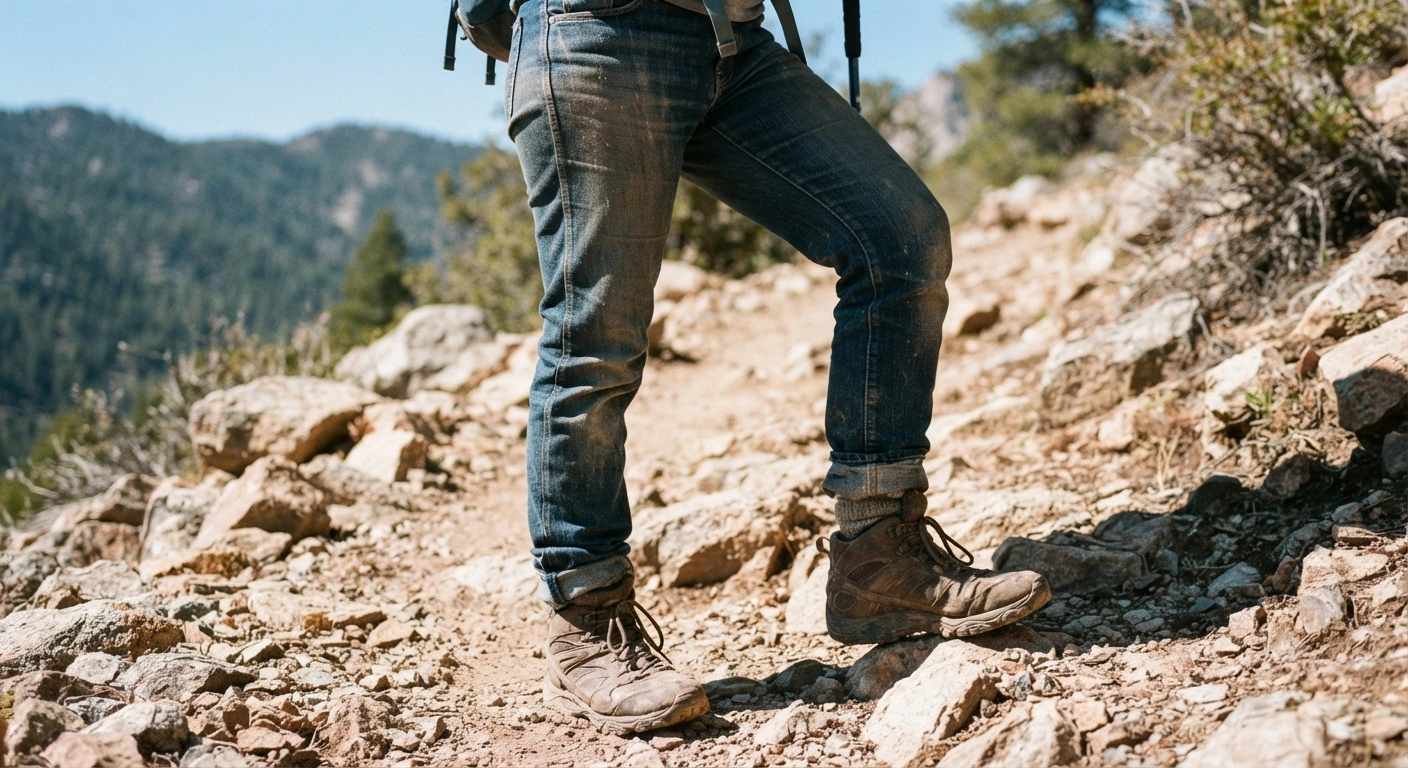
You are getting ready for a weekend trip. You look in your closet, trying to figure out what to wear on the trail. Your favorite pair of denim pants is sitting right there. They are tough, they look great, and you wear them every single day. So, you start to wonder, is jeans good for hiking? I get this question all the time from newer hikers. It is totally normal to want to use the clothes you already own before buying expensive outdoor gear.
Here’s the thing. While denim is an amazing fabric for working in a garage or hanging out in town, the wild woods are a very different environment. What feels perfectly comfortable on a city sidewalk can turn into a heavy, soggy, and painful mess on a steep dirt path. I remember my very first hike years ago. I wore my favorite blue jeans. By the end of the day, I was sweaty, covered in chafing marks, and totally miserable.
Before you lace up your shoes and head to the trailhead in your everyday denim, let me explain exactly what happens when you take cotton fabric into the outdoors. We will look at how denim handles sweat, rain, and steep hills. By the end of this guide, you will know exactly what to wear to stay comfortable and safe on your next adventure.
Quick Answer
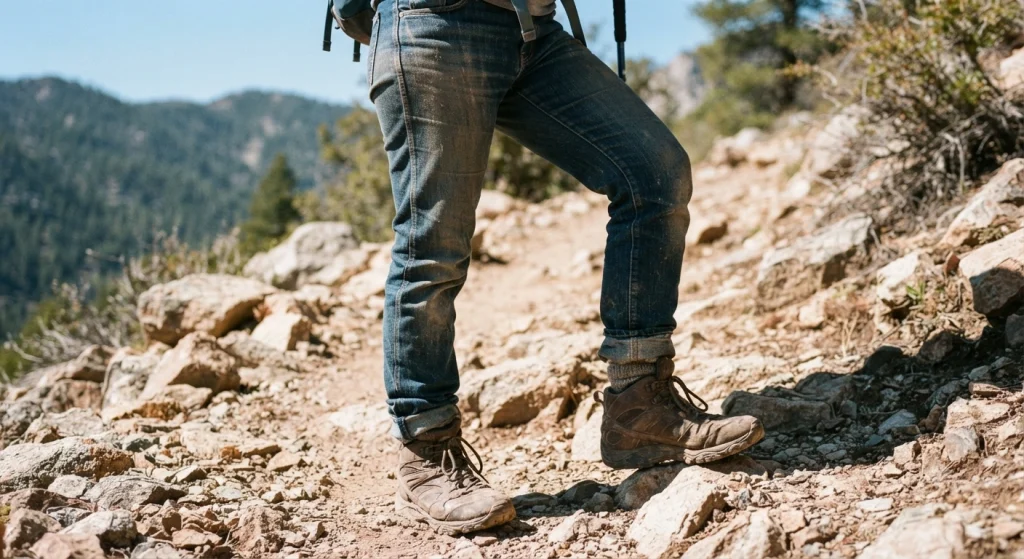
No, jeans are not good for hiking. Denim is made of heavy cotton, which traps heat, absorbs sweat, and takes a very long time to dry. When jeans get wet from rain or sweat, they become extremely heavy, cause painful chafing against your skin, and restrict your leg movement. In cold weather, wet denim pulls heat away from your body quickly, which can be dangerous. For hiking, it is always better to wear lightweight, breathable pants made of synthetic materials like nylon or polyester.
What Hikers Should Know About Hiking in Jeans
To understand why denim struggles on the trail, we need to talk about the fabric itself. Jeans are made from 100% cotton. Cotton is incredibly comfortable when it is dry. It feels soft against the skin. But cotton has a major weakness when it comes to the outdoors: it loves water. Cotton fibers soak up moisture like a sponge.
When you hike, you sweat. It is just a fact of outdoor life. If you are wearing synthetic hiking pants, the fabric pulls the sweat away from your skin and lets it evaporate into the air. This keeps you dry. But if you are wearing jeans, the cotton absorbs every drop of sweat. The fabric holds onto that moisture for hours. The more you sweat, the heavier and wetter your pants become.
Here are the main reasons why cotton denim fails on the trail:
- Poor moisture management: They soak up sweat and rain instantly.
- Slow drying time: Once wet, they stay wet for the rest of your trip.
- Extreme chafing: Wet denim rubbing against your legs creates painful skin sores.
- Restricted movement: Stiff denim makes it hard to step over large rocks or fallen trees.
- Weight: A pair of wet jeans can easily weigh several pounds, making your legs tired.
There is an old saying in the outdoor community: “Cotton kills.” This sounds dramatic, but it points to a real safety issue. If you are wearing wet jeans and the wind picks up or the sun goes down, that wet cotton will pull body heat away from you very fast. This can lead to a dangerous drop in body temperature. For official guidance on staying safe in cold and wet weather, always review the advice from the National Park Service on cold weather hiking before you go.
Signs You Should Adjust Your Hiking Plan or Gear
If you decide to wear jeans anyway for a short, casual walk, you need to pay close attention to your body and the weather. Trail conditions change fast. A sunny morning can turn into a rainy afternoon in a matter of minutes. A clothing choice that felt okay in the parking lot might become a serious problem two miles into the woods.
The good news is that your body will give you warning signs. The bad news is that many beginners try to act tough and ignore these warnings. If you feel your pants getting heavy with sweat, or if you feel a burning sensation on your inner thighs, you need to pay attention. Do not push through the pain. Chafing from wet denim can get so bad that it actually breaks the skin and makes it impossible to walk comfortably.
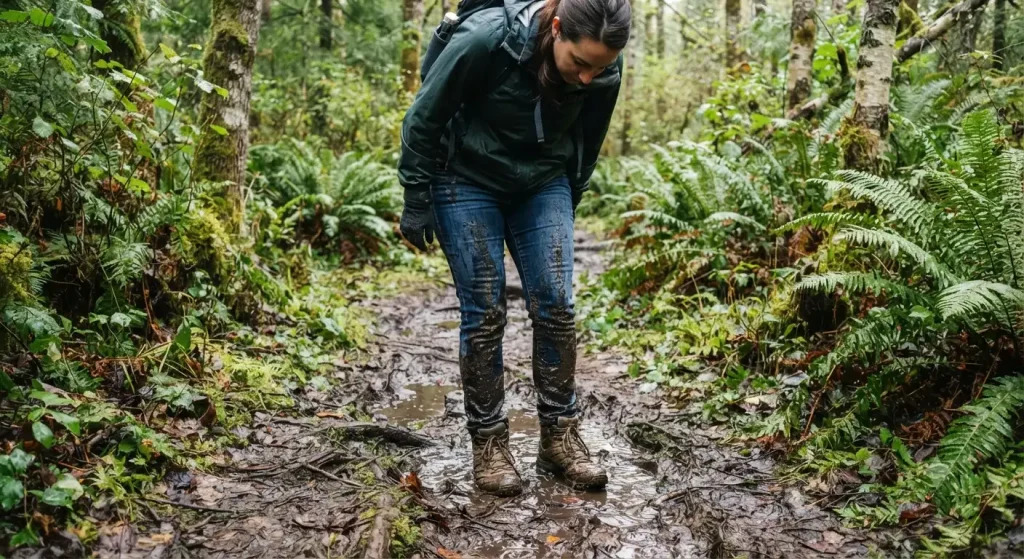
You also need to watch the sky. If you are wearing cotton and dark clouds roll in, it is usually time to turn around. Getting caught in a rainstorm while wearing jeans is a miserable experience. If you find yourself shivering, feeling clumsy, or having trouble thinking clearly because you are cold and wet, those are warning signs of hypothermia. Stop, seek shelter, and get dry if possible.
| Trail Condition or Feeling | What It Means | What You Should Do |
|---|---|---|
| Inner thighs feel hot or burning | Friction is causing chafing. | Stop and apply anti-chafe balm. Consider heading back. |
| Jeans feel heavy and stick to your legs | The cotton has absorbed too much sweat. | Take a break in the shade. Walk slower to sweat less. |
| Dark rain clouds are approaching quickly | You are about to get soaked and cold. | Turn around and head back to the trailhead immediately. |
| You are shivering in wet pants | Your body is losing heat too fast. | Find shelter, put on a dry layer, and end the hike safely. |
| Cannot step up onto tall rocks | The denim is restricting your mobility. | Find an easier path or turn back. Do not risk a fall. |
How to Choose the Right Trail Pants Step by Step
So what should you wear instead? You want clothing that works with your body, not against it. Getting the right pants is easy once you know what to look for. Follow these simple steps to prepare for your next trip safely.
- Check the weather forecast. A few days before your trip, look up the exact trail location on a reliable site like NOAA Weather. Check the temperature, wind, and rain chances. This tells you if you need shorts, light pants, or rain gear.
- Look for synthetic fabrics. Go to your closet or a store and look at the clothing tags. You want pants made of nylon, polyester, or a spandex blend. These materials are lightweight, stretch easily, and dry incredibly fast if they get wet.
- Do the squat test. Before you choose a pair of pants, put them on and do a deep squat in your living room. Try lifting your knee up to your chest. If the pants pinch, pull, or stop you from moving, they are not right for the trail. You need full freedom of movement.
- Pack a backup rain layer. Even if the weather looks clear, always carry a lightweight, waterproof rain shell in your backpack. If a sudden storm hits, you can pull these over your hiking pants to stay dry.
- Prepare your first-aid kit. Even with good pants, chafing can happen on long, hot days. Make sure your small trail first-aid kit has a stick of anti-chafe balm or petroleum jelly, plus some bandages.
What Makes a Good Hiking Pant? The Essentials
So, if jeans aren’t ideal, what should you look for in hiking pants? The focus shifts from pure durability to a balance of performance characteristics designed for movement and variable conditions. Modern hiking pants are engineered with specific materials and features to keep you comfortable and safe on the trail.
Moisture-Wicking and Quick-Drying Fabrics
The holy grail of hiking apparel is its ability to manage moisture. Unlike denim, high-performance hiking pants are made from synthetic fabrics like nylon, polyester, or blends that incorporate materials like spandex or elastane. These fabrics are designed to pull moisture (sweat or rain) away from your skin and spread it across the fabric’s surface, where it can evaporate quickly. Manufacturer specifications often quote drying times that are a fraction of that for cotton or denim.
Breathability and Flexibility
Good hiking pants allow your body to release heat and moisture vapor, preventing you from getting too hot and sweaty. Breathable fabrics create a more comfortable microclimate next to your skin, especially during strenuous activity. Additionally, the inclusion of materials like spandex or elastane provides stretch, offering a full range of motion. This flexibility is crucial for navigating uneven terrain, stepping over logs, or scrambling up rocky sections without feeling restricted.
You can find excellent starter guides on what to wear hiking for beginners that detail these fabric benefits.
Your Decision Tree: Choosing the Right Pants for Your Hike
Figuring out if jeans are appropriate boils down to a few key questions about your hike. Think of this as a quick checklist to avoid potential discomfort or issues on the trail. If the answer to most of these is “yes” or “uncertain,” it’s best to opt for specialized hiking pants.
Scenario 1: Short, Easy Walk on a Smooth Trail
Is your hike less than an hour, on a well-maintained path like a park trail or a wide, gravelly track? Are you certain the weather will stay dry and warm throughout your excursion? If you can honestly answer yes to both, then jeans might be adequate. You won’t be exerting yourself intensely, and the low risk of moisture or significant movement demands means your denim is less likely to cause problems.
This is the absolute best-case scenario for wearing jeans.
Scenario 2: Longer Hikes or Uneventful Terrain
Does your planned hike extend beyond an hour or two? Will the trail involve significant changes in elevation, rocky sections, tree roots, or require stepping over obstacles? If your answer is yes to either of these, you need to seriously reconsider jeans. Dedicated hiking pants are designed with stretch fabrics that allow for a much greater range of motion, essential for navigating difficult ground safely and efficiently.
For example, many synthetic blends offer up to 15% elastane for this purpose.
Scenario 3: Dealing with Rain or Water Crossings
What’s the weather forecast looking like? Is there any chance of rain, drizzle, or even just high humidity that could make things damp? Will you need to cross shallow streams or wade through wet grass? If the answer is yes to any of these, jeans are a bad idea.
Wet denim becomes heavy, cold, and prone to chafing. Specialized hiking pants, made from quick-drying synthetics, are designed to shed water and dry rapidly, keeping you warmer and more comfortable. Learning to how to stay hydrated on a hike is crucial, but so is staying dry.
Scenario 4: Cool or Unpredictable Weather Hikes
If the temperature is cool, or if the weather is known to change rapidly, jeans offer very little in terms of insulation or protection. They become cold and clammy when damp, significantly increasing the risk of hypothermia as your body struggles to stay warm. Technical hiking pants, on the other hand, are often made from materials that offer a better balance of breathability and some thermal retention, or they can be layered effectively. Some also feature UPF (Ultraviolet Protection Factor) ratings, an important consideration for sun exposure.
Scenario 5: Prioritizing Comfort and Performance
Ultimately, if your primary goal for hiking is to enjoy the experience, explore safely, and feel comfortable throughout your journey, jeans are unlikely to meet your needs. They simply don’t offer the same benefits as apparel engineered specifically for outdoor activity. While jeans are durable, they lack the moisture management, breathability, flexibility, and quick-drying capabilities that make dedicated hiking pants a far better choice for virtually any trail. Consider your priorities for the hike and select your gear accordingly.
Hiking Pant Alternatives to Consider
If your decision tree pointed away from jeans, you’re looking for something better suited for the trail. The good news is there’s a wide range of excellent options designed for hikers of all levels. These alternatives prioritize comfort, performance, and durability in outdoor conditions.
Synthetic Hiking Pants: The Go-To Choice
These are the workhorses of the hiking world. Typically made from nylon, polyester, or a blend of both, they are lightweight, incredibly durable, and astonishingly quick-drying. Most synthetic hiking pants also incorporate spandex or elastane for stretch, allowing for unrestricted movement whether you’re climbing rocks or just taking a big step over a fallen log. Many designs also offer features like gusseted crotches and articulated knees, which further enhance freedom of movement.
You can find these in various styles, from rugged tactical pants to more casual, everyday-looking trousers.
Common Mistakes to Avoid
When people try to force casual city clothes into the wilderness, things usually go wrong in very predictable ways. Avoid these common traps to keep your day enjoyable.
- Assuming “stretch denim” is fine. Many modern jeans have a little bit of spandex in them so they stretch. But they are still mostly cotton. They will still soak up water, stay wet, and cause chafing.
- Hiking in sweatpants. Sweatpants are just thick cotton. They are even worse than jeans because they are heavy, bulky, and offer no protection from the wind.
- Forgetting to test clothing on short walks. Never wear a brand new pair of pants on a ten-mile hike. Wear them on a short walk around your neighborhood first to make sure they do not rub weirdly.
- Not checking the tag. Just because a pair of pants is tan or green does not mean it is a hiking pant. Many casual cargo pants are made of 100% heavy cotton. Always read the materials tag.
- Leaving the rain gear at home. Believing that you can outrun a rainstorm is a classic beginner mistake. Always carry your basic safety gear.
Practical Tips from Oscar
I have seen plenty of hikers out in the woods wearing heavy denim. Some of them look okay for the first mile. But by the time they start climbing a hill, you can see the struggle on their faces. If you truly want to enjoy the outdoors, choosing the right clothes is a massive game-changer.
You do not have to spend a fortune on fancy gear. One of my favorite tricks is to visit a local thrift store. Look in the activewear or golf section. You can almost always find a pair of lightweight, synthetic athletic pants or golf pants for just a few dollars. They are breathable, stretchy, and perfect for beginner hiking. Just check the tag to ensure they are mostly polyester or nylon.
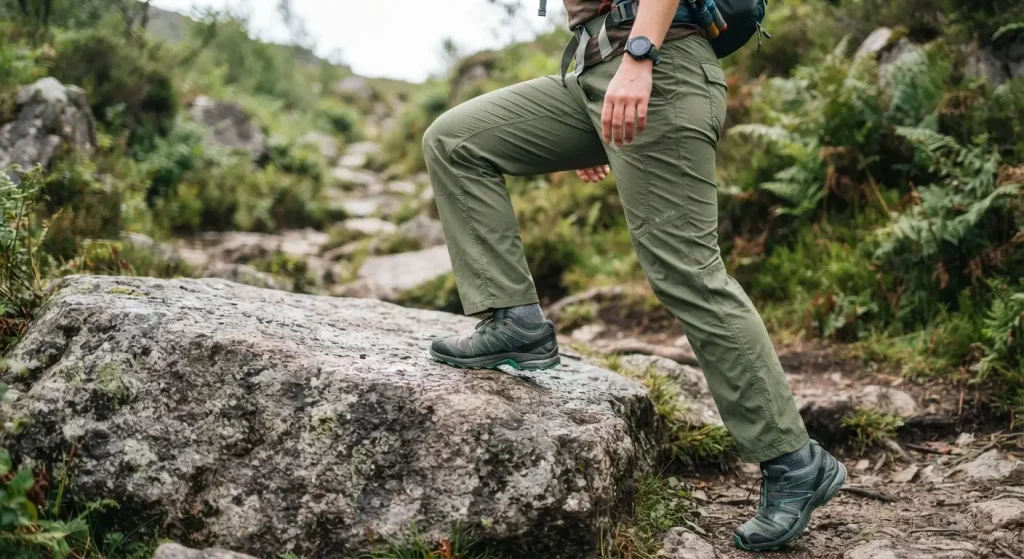
Let me talk about layers for a second. If you are hiking in the cooler months, you might think thick jeans will keep you warm. They will not. Wind cuts right through denim. Instead, wear a base layer of synthetic thermal leggings, and put a pair of loose, wind-resistant hiking pants over them. This system traps warm air, blocks the cold wind, and still lets you move easily.
Always remember that trail safety is your responsibility. Wear comfortable clothes, pack plenty of snacks, carry a lot of water, and review the Ten Essentials from the American Hiking Society before every single trip. A simple day hike is amazing when you are comfortable, but it can be terrible if your clothes are fighting against you.
Key Takeaways
- Denim jeans are a poor choice for hiking because they are made of heavy cotton.
- Cotton absorbs sweat and rain, stays wet for a long time, and becomes very heavy.
- Wet jeans cause severe skin chafing and restrict your ability to climb over rocks.
- In cold, wet weather, wearing cotton can dangerously lower your body temperature.
- Always choose lightweight, breathable pants made from synthetic materials like nylon or polyester.
Frequently Asked Questions
Can you wear jeans for a short, easy walk?
Yes, if you are taking a very short, flat walk on a dry day in a local park, jeans are perfectly fine. The problems start when you hike for miles, climb hills, or encounter rain and heavy sweat.
Why do hikers say cotton kills?
Hikers use this phrase because cotton absorbs water and loses all its ability to keep you warm. If you wear wet cotton in cold, windy weather, it pulls heat from your body fast, which can lead to dangerous hypothermia.
Are stretch jeans better for hiking than regular jeans?
Stretch jeans are slightly better because they allow more movement, but they are still mostly cotton. They will still absorb sweat, stay wet, and cause chafing, making them a bad choice for real trails.
What are the best pants to wear hiking?
The best hiking pants are made of lightweight, quick-drying synthetic materials like nylon, polyester, and spandex blends. They are breathable, stretch with your body, and protect your legs from the sun and brush.
Can I wear athletic leggings instead of hiking pants?
Yes, athletic leggings made of synthetic materials are great for hiking. They are stretchy, dry quickly, and prevent chafing. Just make sure they are not made of cotton, and know that thin leggings might snag on sharp branches.
Final Thoughts on Choosing Trail Clothes
At the end of the day, hiking is about enjoying nature, getting some fresh air, and having a good time. You do not need to spend hundreds of dollars on professional mountain gear to enjoy the woods. But leaving the heavy denim at home and wearing the right fabrics will make a massive difference in how much fun you have.
If you are planning your first real outdoor adventure, do yourself a huge favor and check your closet for some comfortable, synthetic athletic pants. Save the stylish jeans for the diner after the hike. If you want to know exactly what else you should wear and bring on your next trip, check out my beginner hiking gear checklist to make sure you are completely ready.
Stay safe, respect the trail, and I will see you out there.
