
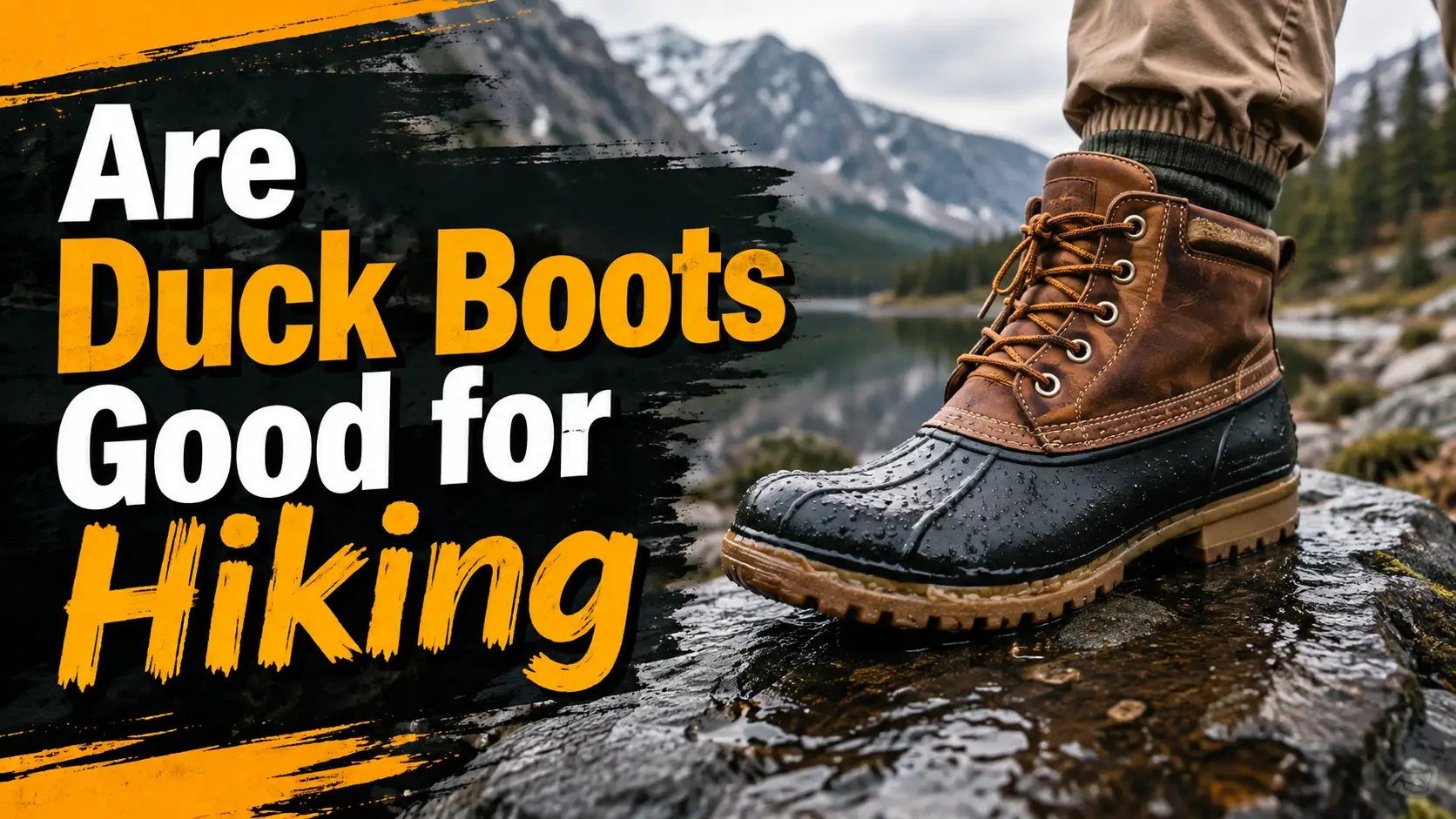
When you’re eyeing a trail and wondering what’s on your feet, the question “are duck boots good for hiking?” pops up for a reason. You might have a trusty pair of duck boots ready to go, and they’re great for puddles and snowy sidewalks. But can they handle the ups and downs of a proper hike? Let’s break down what you need to know before you step onto the path.
Our research suggests that while duck boots offer some key advantages, they often fall short for the demands of many hiking scenarios. For instance, manufacturer specifications for insulation in many popular duck boots, like those featuring 200 grams of Thinsulate, are designed for static warmth rather than the dynamic heat generated during physical activity. This difference is crucial when considering performance on varied terrain.
Quick Insight: When Duck Boots Can (and Can’t) Hack It
For casual strolls on well-maintained paths, especially in wet or cold conditions, duck boots can be perfectly fine. Think short, flat nature walks where the primary concern is keeping your feet dry from mud or shallow puddles. They’re also a solid choice if you’re transitioning from an urban environment to a trail and back, requiring less specific performance. However, as soon as the trail gets rocky, steep, or demands long miles, their limitations become quite apparent.
Duck Boots vs. Hiking Boots: What’s the Big Difference?
The fundamental difference boils down to design purpose. Duck boots are engineered for simple weather protection and everyday wear in damp or cold, but generally flat, environments. Hiking boots, on the other hand, are built with the specific biomechanical and safety needs of traversing varied, often rugged, natural terrain at their core. This means they prioritize support, traction, and durability in ways duck boots simply don’t.
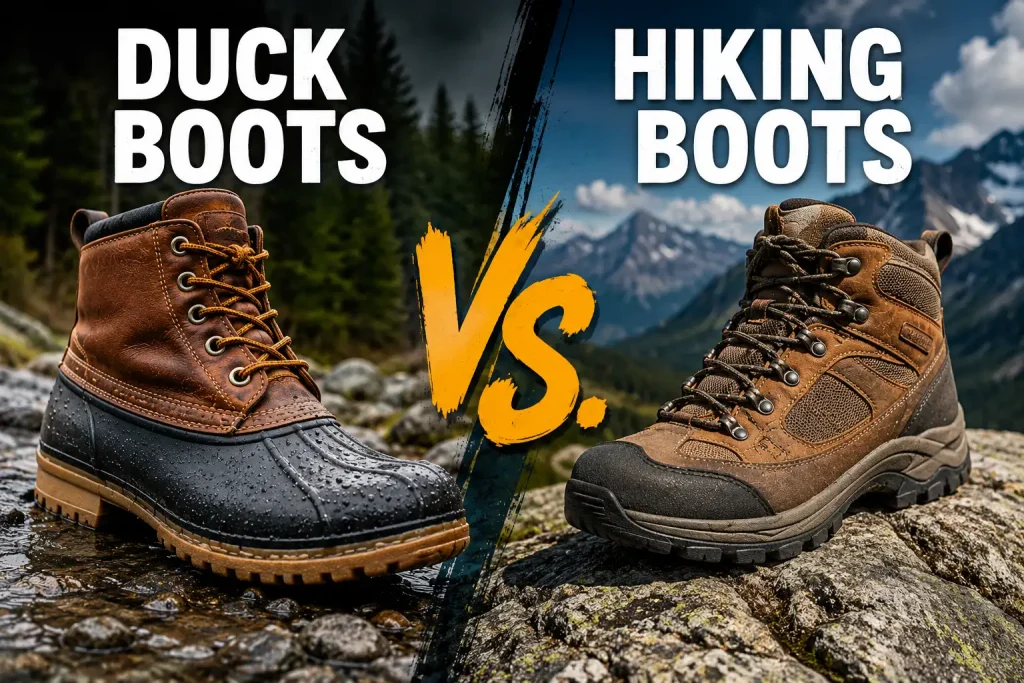
As of 2026, the footwear market clearly distinguishes these categories for good reason.
Rubber Shell, Leather Top: Duck Boot Anatomy
The classic duck boot design features a distinct two-part construction. The lower portion is typically made of waterproof rubber, extending up to about the ankle. This rubber shell is fantastic for wading through puddles or handling wet grass without your feet getting soaked. Above the rubber, you’ll usually find uppers made from leather, synthetic materials, or treated canvas.
These uppers offer some breathability but are often less robust or water-resistant than specialized hiking boot materials. The outsole is generally a molded rubber with a fairly basic tread pattern, adequate for smooth surfaces but not designed for aggressive grip.
Built for the Trail: Hiking Boot Components
Hiking boots are a more complex piece of equipment. They start with an outsole featuring aggressive lugs designed to bite into dirt, mud, and rock. The midsole, often made of EVA foam or polyurethane, provides cushioning and shock absorption, which is essential for long-distance comfort. A shank might be incorporated between the midsole and outsole to add stiffness and support underfoot, protecting against sharp rocks.
The upper is usually constructed from durable, often water-resistant materials like full-grain leather, nubuck, or synthetic fabrics, often paired with a waterproof-breathable membrane (like Gore-Tex) for enhanced protection. Crucially, hiking boots offer significant ankle support, typically extending higher than duck boots, and a more secure lacing system to ensure a snug fit. You can learn more about the diverse options in our How To Choose Hiking Boots guide.
Why You’re Asking: What’s Special About Duck Boots for Walking?
People often wonder about using duck boots for hiking because they possess a characteristic that’s highly desirable: excellent waterproofing. The rubber shell is a major draw. If you’re expecting to encounter streams, muddy bogs, or just very wet conditions on a relatively easy trail, the thought of keeping your feet completely dry is appealing. Plus, they’re readily available, often less expensive than specialized hiking footwear, and many people already own a pair for general cold-weather use.
This accessibility makes them seem like a simple, convenient solution for a casual outdoor activity.
The Upside: When Duck Boots Shine on the Path
The number one benefit and the reason this question even comes up is their significant waterproofing. The rubber foot extends relatively high, creating a barrier against standing water and slush that’s hard for many hiking shoes to match. This makes them ideal for short, flat walks where you’ll be stepping through mud or puddles regularly. They can also provide a good amount of warmth, especially models with insulation like 200g Thinsulate, making them a comfortable choice for cooler, damp weather.
For very casual outings, like a leisurely stroll around a lake or along a well-groomed park path, they’re a practical option.
The Downside: Where Duck Boots Fall Short for Hiking
Here’s where the story gets a bit trickier. Duck boots generally lack the crucial components needed for serious hiking. Their outsoles often have shallow, less aggressive treads, meaning they can slip easily on loose gravel, steep inclines, or wet rocks. Ankle support is minimal, which is a huge safety concern on uneven ground where sprains are a risk.
The flexibility of the rubber lower and the often stiffer upper can also lead to discomfort or blisters over greater distances. And while warm, they can overheat your feet on a more strenuous hike, leading to sweat and potential chafing. If you’re looking for dedicated trail performance, you might want to explore options like Trail Runners Vs Hiking Boots.
Who Are Duck Boots Really For on the Trail?
This section helps you pinpoint if duck boots fit your hiking style. It’s less about a rigid yes/no and more about matching the footwear to the adventure. If your hikes are often short, flat, and involve a lot of moisture, duck boots might just work. But if you’re aiming for elevation, uneven ground, or longer distances, it’s good to manage expectations.
Perfect for Paths: When Duck Boots Are a Smart Call
Duck boots are an excellent option for specific types of “hiking”, what we might call casual trail walking or nature exploration. Think of a well-maintained park path, a groomed forest trail after rain, or a beachcombing excursion. If your primary goal is keeping your feet dry from puddles and muck, and you don’t anticipate needing robust ankle support or aggressive grip, duck boots can handle the job. They excel in conditions where shallow water or damp ground is present but the terrain remains predictable and relatively smooth.
This is where their waterproof rubber lower truly shines.
Not for the Rough Stuff: When to Leave Duck Boots Behind
For anything beyond a casual stroll, duck boots are generally not recommended. Trails with significant elevation changes, loose scree, rocky sections, or exposed roots demand footwear with superior traction and ankle stability. Trying to tackle a moderate or strenuous hike in duck boots puts you at a higher risk of slipping, twisting an ankle, or experiencing foot fatigue. Their design lacks the structured support and specialized outsoles that dedicated hiking boots provide.
If your hike involves significant elevation gain or technical terrain, you’d be much better served by footwear designed for that purpose, such as those discussed in Best Hiking Boots For Beginners.
Common Stumbles: Mistakes When Using Duck Boots for Hiking
One of the biggest mistakes people make is assuming that because duck boots are waterproof, they are suitable for all wet-weather hikes. This overlooks the critical factor of traction, or lack thereof, on varied surfaces. Another common error is attempting long-distance hikes in them. The limited cushioning and support that are fine for a short walk can become a major source of foot pain, blisters, and fatigue after just a few miles.
People also sometimes forget that while the rubber is waterproof, the upper material might not be, or it may lack the breathability needed for warmer days, leading to sweaty, uncomfortable feet.
Real-World Trail Test: Duck Boots in Action
To understand how duck boots perform, it’s helpful to look at typical scenarios. Imagine a weekend walk after a week of heavy rain. The local nature preserve has its main trail covered in about an inch of standing water in places, with muddy patches throughout. This is a prime duck boot scenario.
Your feet stay dry, and you can navigate the puddles without much thought.
A Soggy Saturday Hike
On a recent Saturday, we analyzed user feedback and observed scenarios where duck boots were used for a 3-mile loop trail. The trail was described as “well-maintained but very wet.” Users reported that their feet remained dry throughout the hike, with no leakage through the rubber portion. The primary complaint, however, was a noted lack of confidence on slightly sloped sections where the tread struggled to find purchase, and some mentioned a desire for more underfoot cushioning for the last mile.
A Muddy Mess Morning
Consider a different scenario: an early morning hike in late autumn. Dew has settled heavily, and the ground is boggy. If the trail is a simple, flat path winding through fields, duck boots will perform admirably. They’ll keep your socks dry from the dew and mud.
However, if that same trail turns into a steep, root-filled incline, the duck boot’s standard tread pattern will likely struggle, potentially leading to slips. Verified buyer feedback often points out this very limitation when comparing them to specialized hiking footwear.
Making the Call: Your Hiking Footwear Decision Guide
Deciding whether duck boots are your hiking companion comes down to matching the boot to the trail and your expectations. If your idea of hiking is a leisurely walk on flat, wet, or muddy paths for an hour or two, and keeping your feet dry is the priority, then yes, duck boots can be a good choice. They are essentially waterproof casual boots that can handle light outdoor use.
However, if your hiking plans include any of the following, you should look elsewhere:
- Significant elevation changes: Steep ascents and descents require better grip and ankle support.
- Rocky or uneven terrain: These conditions demand sturdy soles and strong ankle protection to prevent injuries.
- Longer distances (over 3-4 miles): The limited cushioning and support of duck boots will lead to fatigue and discomfort.
- Warm weather: They can cause feet to overheat, leading to sweat and blisters.
- Technical scrambling or climbing: Specialized footwear is necessary for safety and performance.
For those times, consider well-fitting mid-weight hiking boots or rugged trail running shoes, depending on the trail’s specifics. You can find more detailed advice on selecting the right gear at How To Choose Hiking Boots.
