There is something completely magical about hitting the trail after the sun goes down. The woods get quiet, the summer heat fades away, and if you time it right, the stargazing is absolutely incredible. But let me be honest with you. Stepping into the dark woods for the first time can feel a little intimidating.
Here’s the thing. Everything looks, sounds, and feels different when you hike at night. A trail you have hiked a dozen times during the day can suddenly feel like an alien landscape. Without the right hiking gear and preparation, a fun evening walk can quickly turn into a stressful situation.
My name is Oscar, and I have spent countless hours backpacking and trail hiking under the stars. In this guide, I am going to show you exactly how to prepare for a night hike. We will cover the hiking essentials you need, how to pick the right trail, and the safety rules you must follow so you can enjoy the trail safely and confidently.
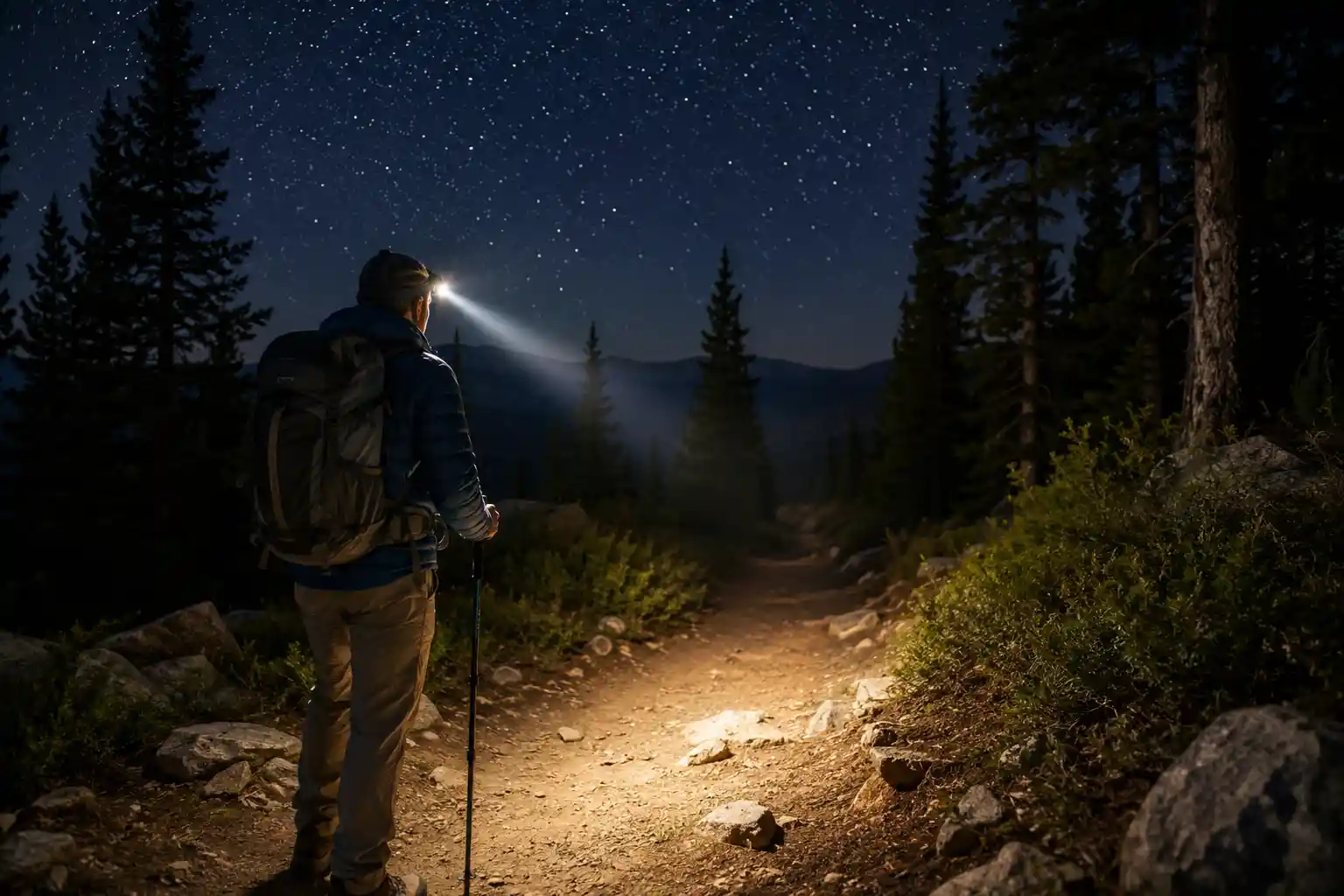
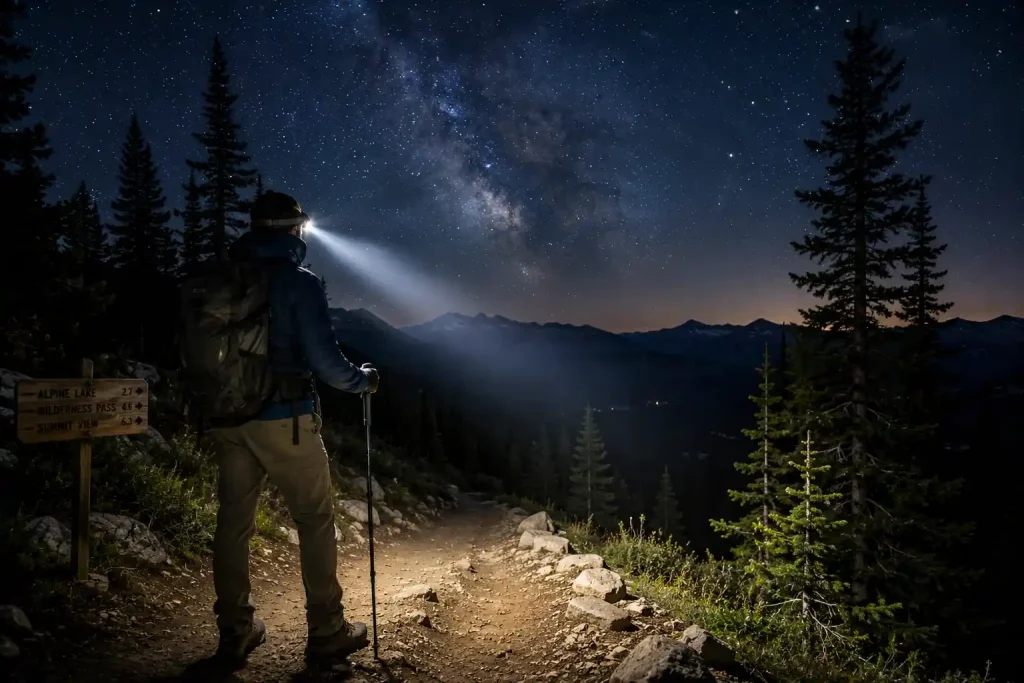
hiker standing on a dirt trail at night, wearing a bright headlamp illuminating the path ahead
To prepare for a night hike, you need to pack a reliable headlamp with extra batteries, wear warm layers to handle sudden temperature drops, and bring reliable navigation tools like a map and compass. Always choose a familiar, well-marked trail without dangerous drop-offs or complex water crossings. Never hike alone at night, and always tell someone at home your exact route and expected return time before you head out.
What Makes Night Hiking So Different?
If you are used to day hiking, you might think night hiking is the exact same thing, just with a flashlight. Let me explain why that is a dangerous assumption.
First, your vision changes completely. Human eyes take about 30 to 45 minutes to fully adjust to the dark. Even with a good headlamp, you lose your peripheral vision and your depth perception. This makes it much harder to judge how high a rock is or how deep a puddle might be.
Second, the weather shifts rapidly. Once the sun drops, the temperature can plummet, especially if you are mountain hiking or trekking in the desert. The sweat on your clothes from the hike up can quickly make you feel freezing cold.
Finally, the wildlife changes. Many animals are nocturnal or crepuscular, meaning they are most active at dawn and dusk. You are much more likely to hear rustling in the bushes or spot glowing eyes reflecting your headlamp beam. Being prepared helps you stay calm and respect the local wildlife.
How to Tell If Your Trail is Safe for a Night Hike
Not every trail is a good candidate for a night hike. In fact, some of the best daytime trails are terrible choices for the dark. You want a trail that is easy to follow and free of major hazards.
The good news is that finding a good night trail is easy if you know what to look for. You want wide paths, clear trail markers, and a route you already know well.
Trail Feature
Good for Night Hiking
Bad for Night Hiking
Familiarity
You have hiked it during the day multiple times.
You have never been on this trail before.
Terrain
Smooth dirt, wide paths, and gradual elevation changes.
Steep scrambles, loose scree, and cliff edges.
Navigation
Clear signs, reflective markers, and obvious paths.
Overgrown paths, confusing forks, or faint trails.
Water Crossings
Bridges or no water crossings at all.
Rock hopping across fast-moving rivers.
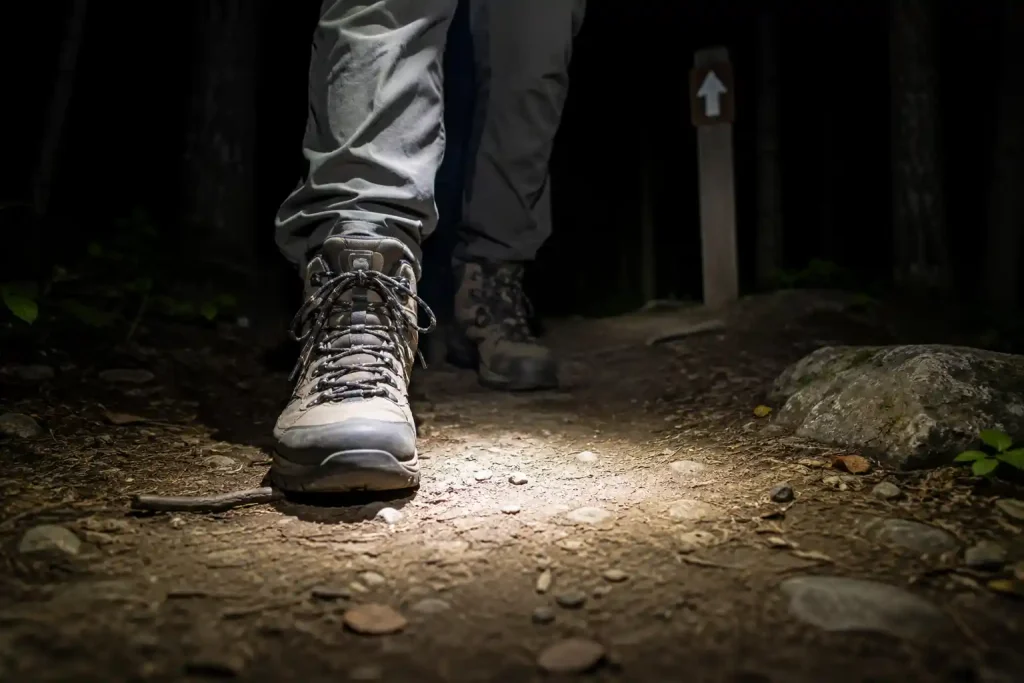
hiker’s hiking boots walking on a well-marked dirt trail at night
How to Prepare for a Night Hike Step by Step
Preparation is everything when it comes to outdoor gear and trail safety. Follow these steps to ensure your night hike goes smoothly from start to finish.
Pick a familiar and safe trail. As we discussed, choose a route you know like the back of your hand. Start with a short loop, maybe just one or two miles. You will be walking slower in the dark, so a trail that takes one hour during the day might take two hours at night.
Gear up with proper lighting. Do not rely on your smartphone flashlight. It drains your phone battery and gives you terrible light. You need a dedicated headlamp. According to Consumer Reports and other gear experts, you want a headlamp with at least 200 to 300 lumens for night hiking. Always bring a backup light source, like a small handheld flashlight, just in case your primary light fails.
Pack extra batteries. Cold weather drains batteries much faster than you might think. Always pack a fresh set of batteries or a fully charged power bank for your rechargeable headlamp. Keep them in a pocket close to your body so your body heat keeps them warm.
Layer your outdoor clothing. Dress in layers so you can adjust your temperature. Start with a moisture-wicking base layer. Add an insulating mid-layer like a fleece. Finally, pack a windproof or waterproof outer shell in your hiking backpack. When you stop to rest, throw that outer layer on immediately to trap your body heat.
Bring redundant navigation tools. Even on a trail you know, the dark plays tricks on your mind. A familiar rock formation looks completely different at midnight. Bring a physical paper map and a compass. If you use a GPS app on your phone, download the map for offline use before you leave home.
Buddy up and share your plan. Hiking alone at night increases your risk significantly. Go with a friend or a small group. Before you leave, tell a responsible friend or family member exactly where you are going, what trail you are taking, and when you plan to be back.
Pack your survival essentials. A night hike requires the same camping gear and survival items as a day hike, but they are even more important. Bring a first aid kit, extra water, high-energy snacks, a fire starter, and an emergency space blanket.
Gear Item
Why You Need It For Night Hiking
Primary Headlamp
Keeps your hands free. Illuminates the trail ahead. Look for one with a red-light mode.
Backup Flashlight
Essential if your headlamp breaks or dies. Never rely on just one light source.
Trekking Poles
Helps you keep your balance since your depth perception is reduced in the dark.
Clear Safety Glasses
Protects your eyes from low-hanging branches you might not see in the shadows.
Extra Layers
Protects you from sudden temperature drops after the sun goes down.
Common Mistakes to Avoid
Over the years, I have seen hikers make a lot of mistakes when trying to hike at night. Here are a few things you absolutely must avoid.
Using white light constantly: Blasting a high-beam white light ruins your natural night vision and blinds your hiking partners.
Moving too fast: It is easy to trip over roots and rocks. Slow your pace down by at least 30 percent compared to your day hiking speed.
Ignoring the weather forecast: A sudden rainstorm in the dark is incredibly disorienting and dangerous. Always check the weather before heading out.
Relying entirely on a phone: Phones die, get dropped, or lose signal. A phone should never be your only map or your only flashlight.
Being too quiet: You do not want to startle nocturnal wildlife like bears or mountain lions. Talk to your hiking buddies normally so animals know you are coming.
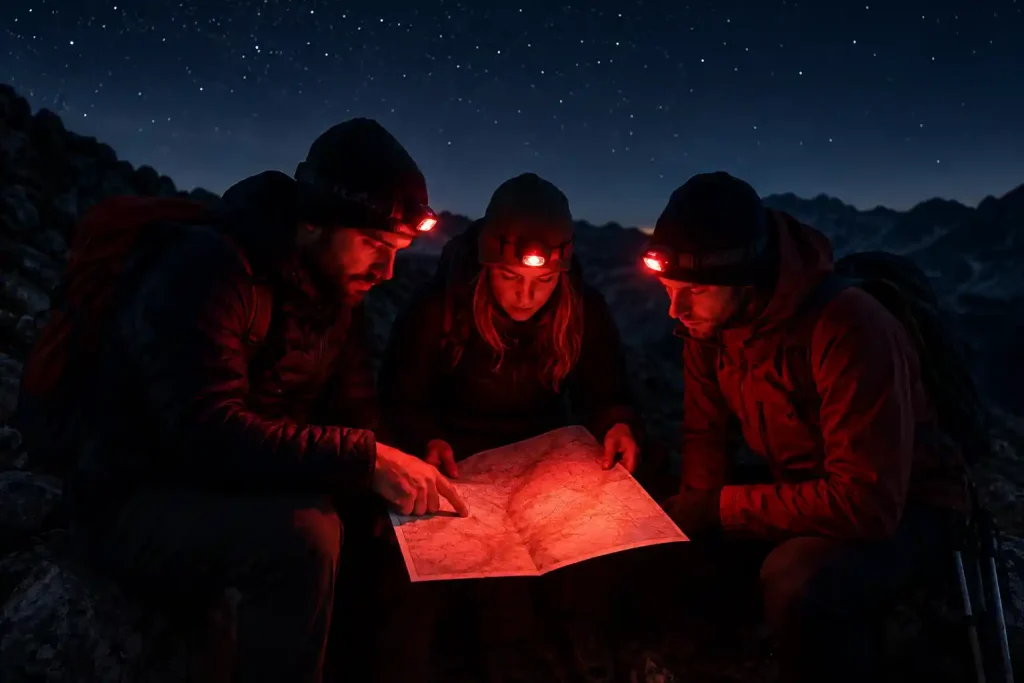
group of three hikers taking a break on a mountain trail at night
Expert Tips from Oscar
So what should you do to make your night hike truly enjoyable? Here are a few practical tips I have picked up from years of backpacking.
Oscar’s Tip: Master the Red Light Trick
Most good headlamps have a red light mode. Use it! Red light does not ruin your natural night vision the way white light does. Once your eyes adjust to the dark, switch your headlamp to red. You will be amazed at how well you can see the trail and the stars at the same time.
Oscar’s Tip: Use the Look-Back Method
Trails look completely different when you are walking in the opposite direction, especially in the dark. Every 15 minutes, stop, turn around, and shine your light back the way you came. Memorize what the trail junctions look like from that angle. It makes the hike back to the car much easier.
Oscar’s Tip: Keep Your Light Out of People’s Eyes
When you turn to talk to your hiking buddy, look down at their hiking shoes or turn your headlamp off entirely. Shining a 300-lumen beam directly into your friend’s face will blind them for several minutes, making the trail dangerous for them.
Warning: Wildlife Etiquette
If you see glowing eyes in the woods, do not panic. Stop walking, group up with your buddies, and make calm, steady noise. Never run. Most animals will simply wander away once they realize you are humans. The National Park Service recommends giving wildlife plenty of space and never approaching them in the dark.
Key Takeaways
Always bring a primary headlamp, a backup flashlight, and extra batteries.
Choose a familiar trail with clear markings and minimal hazards like cliffs or water crossings.
Dress in layers to handle the inevitable drop in temperature after dark.
Slow down your pace to compensate for reduced depth perception and hidden obstacles.
Hike with a buddy, share your itinerary with someone back home, and make noise to avoid startling wildlife.
Frequently Asked Questions
Is it safe to hike at night?
Yes, night hiking is generally safe if you are properly prepared. You must bring adequate lighting, hike on a familiar trail, and wear proper hiking gear. Hiking with a buddy and letting someone know your plans significantly increases your safety.
How many lumens do I need for a night hike?
For standard trail hiking, a headlamp with 200 to 300 lumens is usually perfect. If you are doing faster activities like trail running or navigating complex off-trail routes, you may want 400 lumens or more.
Can I just use my phone flashlight for a night hike?
No, you should never rely on your phone flashlight for a night hike. Phone lights cast a wide, weak beam that does not reach far down the trail. Plus, using the light will quickly drain your battery, which you may need for emergency navigation or calls.
What should I do if I see an animal on a night hike?
Stop moving, group together with your hiking partners, and make calm, normal noises by talking. Do not run and do not approach the animal. Give the wildlife plenty of time and space to leave the area before continuing.
Do I need special hiking boots for night hiking?
You do not need special shoes just for the dark, but you should wear sturdy hiking boots or trail shoes with excellent grip. Because your depth perception is worse at night, good ankle support and traction will help prevent rolled ankles on unseen rocks.
Why do headlamps have a red light?
The red light mode is designed to preserve your natural night vision. White light causes your pupils to constrict, making it hard to see in the dark once the light is off. Red light allows you to see your map or immediate surroundings without resetting your eyes.
Final Thoughts Before You Hit the Trail
Night hiking is an amazing way to experience the outdoors from a completely new perspective. It takes a little extra planning, a solid hiking backpack filled with the right gear, and a healthy respect for the dark. But once you get out there, the peacefulness of the trail is totally worth the effort.
Take it slow on your first few outings. Stick to easy trails, pack extra warm clothes, and enjoy the stars. Once you get comfortable walking in the beam of a headlamp, a whole new world of outdoor adventure opens up to you.
If you want to make sure you have everything you need before stepping into the woods, be sure to check out my guide on day hiking essentials. Most of the gear overlaps perfectly, giving you a great foundation for your nighttime adventures. Stay safe out there, and happy hiking!
To provide the best experiences, we use technologies like cookies to store and/or access device information. Consenting to these technologies will allow us to process data such as browsing behavior or unique IDs on this site. Not consenting or withdrawing consent, may adversely affect certain features and functions.
Functional
Always active
The technical storage or access is strictly necessary for the legitimate purpose of enabling the use of a specific service explicitly requested by the subscriber or user, or for the sole purpose of carrying out the transmission of a communication over an electronic communications network.
Preferences
The technical storage or access is necessary for the legitimate purpose of storing preferences that are not requested by the subscriber or user.
Statistics
The technical storage or access that is used exclusively for statistical purposes.The technical storage or access that is used exclusively for anonymous statistical purposes. Without a subpoena, voluntary compliance on the part of your Internet Service Provider, or additional records from a third party, information stored or retrieved for this purpose alone cannot usually be used to identify you.
Marketing
The technical storage or access is required to create user profiles to send advertising, or to track the user on a website or across several websites for similar marketing purposes.