
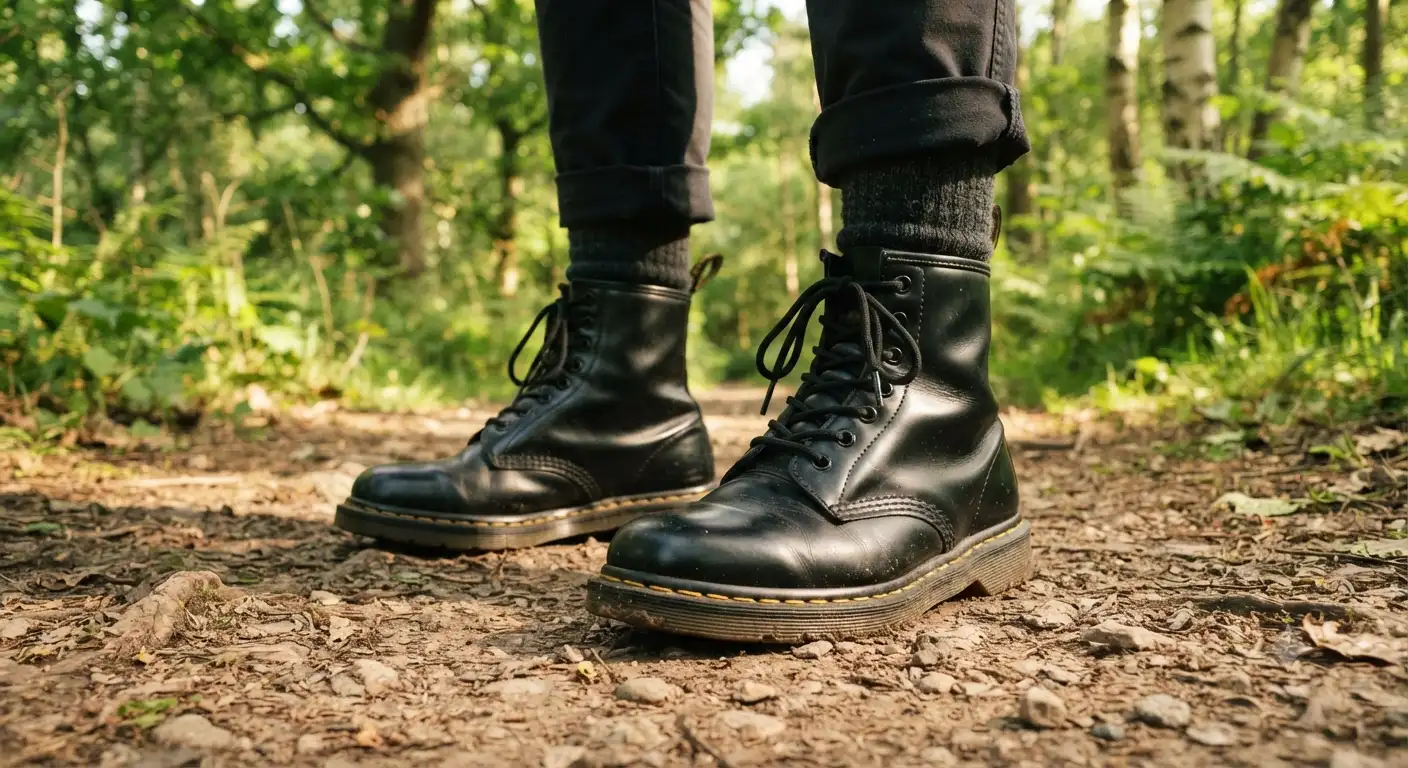
You stare at your closet before a weekend trip, looking at those classic heavy boots. You wonder, are Doc Martens good for hiking? I get this question all the time from newer hikers. Buying a fresh pair of expensive outdoor shoes feels like a big step if you only hit the trails a few times a year. So, you look at your everyday boots and hope they can do the job.
Here is the thing. I love a good pair of sturdy leather boots for walking around town. They look great, they last for years, and they feel incredibly tough. But the wild woods and the concrete sidewalk are very different places. What works perfectly on a city street might make you completely miserable on a muddy dirt path miles from your car.
Before you lace up those classic Docs and head to the trailhead, let me explain exactly what happens when you take them off the pavement. We will look at how they handle dirt, loose rocks, and steep hills. By the end of this guide, you will know if your favorite boots belong on your next adventure, or if they should stay safely at home.
Quick Answer: Are Doc Martens Good for Hiking?
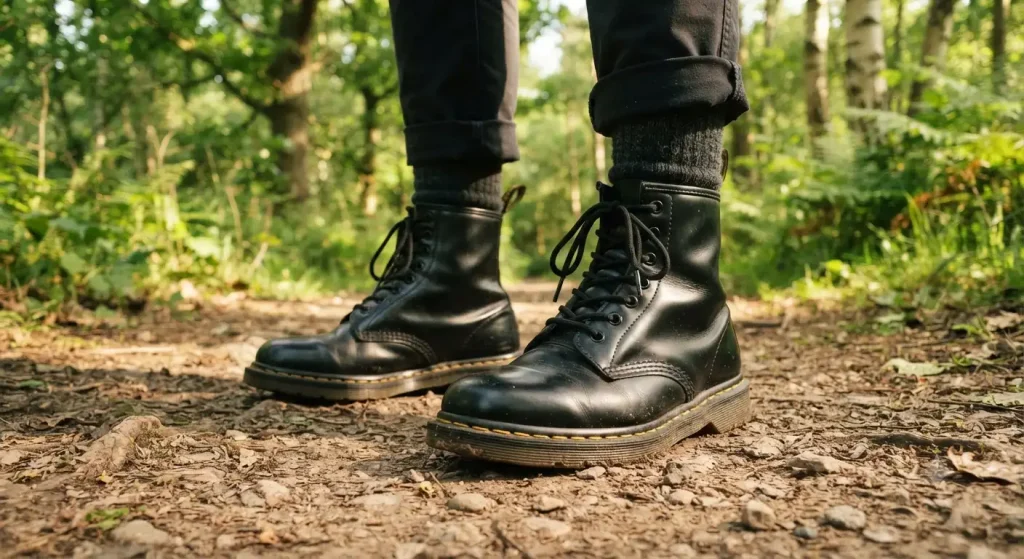
The short answer is no, Doc Martens are not a good choice for serious hiking. While they are highly durable and have thick soles, they are far too heavy, lack proper ankle support, and do not breathe well enough for long trail days. Furthermore, their flat outsoles have very poor traction on mud and wet rocks. However, if you are just taking a short, casual walk on a flat and completely dry nature path, a fully broken-in pair can safely get the job done.
What Hikers Should Know About Hiking in Doc Martens
To understand why these famous boots struggle on the trail, we need to look at how they are built. Doc Martens were originally created as work boots for factory floors and postal workers. They were designed to protect feet from heavy drops and prevent slipping on smooth, oily surfaces. They were absolutely not built for climbing rocky mountains, crossing moving streams, or stepping over slippery tree roots.
The first major issue is the raw weight. A standard pair of size nine Docs weighs about three full pounds. That might not sound like a lot when you hold them in your hands in your bedroom. But lifting three pounds with every single step adds up incredibly fast on an incline. After just two miles, that extra bulk pulling on your legs will make your leg muscles feel much more tired than if you wore standard trail shoes. Modern hiking shoes and trail runners often weigh half as much, giving you much more energy.
Next is the issue of breathability. These boots use thick, stiff leather covered in a heavy plastic-like finish. This makes them incredibly tough and highly resistant to scuffs. But it also means fresh air cannot flow in, and hot air cannot flow out. When you hike, your feet sweat naturally. In a normal hiking boot, breathable mesh sections let that moisture escape. In Docs, the sweat stays trapped inside the boot. Wet feet become soft, and soft feet rubbing against stiff leather leads directly to severe and painful blisters.
Let’s talk about the outsoles. The famous AirWair soles are springy and comfortable for standing all day on hard floors. They resist punctures very well. But look closely at the bottom of the boot. The tread pattern is quite shallow and flat. It lacks the deep, aggressive rubber lugs you find on real hiking boots. Because of this smooth design, the soles will easily slip on mud, wet grass, and slick rocks. You will simply not have the mechanical grip you need to push yourself up a steep, loose dirt hill safely.
Finally, there is the problem of ankle support and flexibility. Yes, the high-top versions come up well past your ankle. But the leather up there is thinner and lacks the thickly padded, structured support of a dedicated hiking boot collar. Furthermore, the stiff sole does not bend easily. When you step on an angled rock, a good hiking shoe flexes with your foot. A stiff factory boot acts like a rigid board, which can throw off your balance and strain your knees on uneven ground.
Signs You Should Adjust Your Hiking Plan or Footwear
If you decide to wear your everyday boots on the trail anyway, you need to pay close attention to your body and your surroundings. Trail conditions can change in a matter of minutes. A shoe that feels perfectly fine in the paved parking lot can become a dangerous problem two miles deep into the woods.
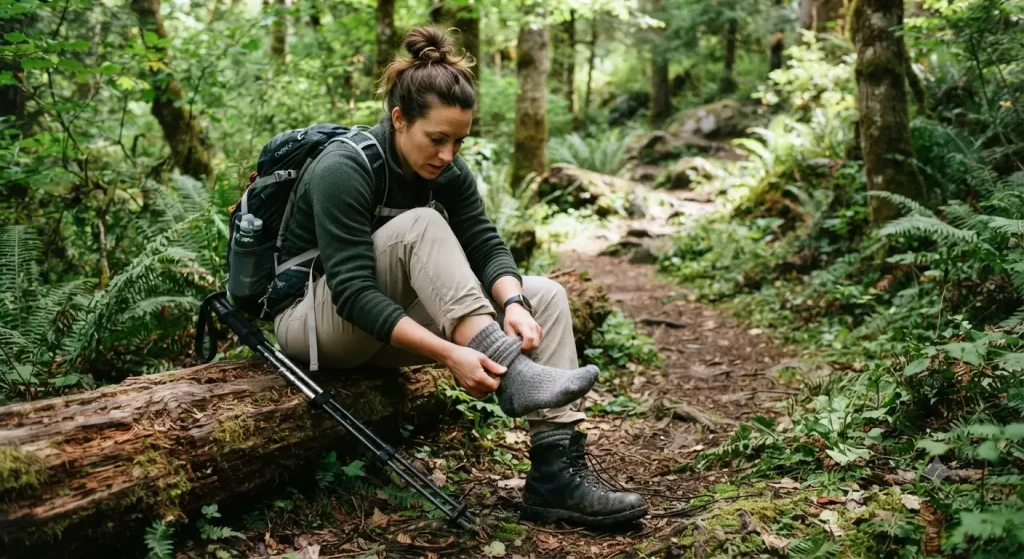
The good news is that your feet will usually warn you before things get too bad. The bad news is that many beginners ignore these clear warnings. If you feel a hot spot forming on your heel or your toes pinching against the front, stop walking immediately. Do not try to push through the pain. A hot spot will turn into a blister very fast. Take a break, sit down, apply a blister bandage, and consider turning back if the pain continues with every step.
You also need to watch the weather and the trail surface closely. If the sky turns dark and rain begins to fall, a flat dirt path will quickly turn into slick mud. Because your boots lack deep traction lugs, you will quickly lose your footing. If you find yourself slipping, sliding, or struggling to maintain your balance, it is time to turn around. Slipping on a rock can easily lead to a twisted ankle or worse.
| Trail Condition or Feeling | What It Means | What You Should Do |
|---|---|---|
| Slight rubbing or heat on your heel | A painful blister is about to form. | Stop and apply a blister pad immediately. |
| Legs feel heavily fatigued early on | The boots are too heavy for the incline. | Shorten your planned route and turn back early. |
| Slipping frequently on dirt or rocks | Your flat soles lack the necessary traction. | Turn around. Do not attempt steep or rocky sections. |
| Trail turns into thick, wet mud | Your boots will sink and lose all grip. | Find a dry alternative path or safely end the hike. |
| Dark clouds and sudden heavy rain | Rocks and roots will become very slick. | Head back to the trailhead before conditions worsen. |
How to Handle a Hike in Doc Martens Step by Step
So what should you do if you are on vacation, you only packed your Docs, and your friends want to go for a sudden hike? You can still join them, but you need to prepare properly. Taking a few extra steps before you leave will make a massive difference in your overall comfort and safety.
- Make sure they are fully broken in. Never take a brand new pair of stiff leather boots on a hike. You must spend weeks wearing them around town first. If they do not bend comfortably when you walk, they are not ready for the trail.
- Wear the right socks. Put away your thin cotton ankle socks right now. You need thick, tall wool hiking socks. Wool pulls sweat away from your skin naturally, which helps prevent blisters. The socks must reach higher than the top of the boot to stop the stiff leather collar from rubbing your skin raw.
- Apply a waterproofing treatment. Standard Docs are somewhat water-resistant, but they are not totally waterproof. Water can easily seep in through the heavy stitching and the lace holes. Rub a leather wax or spray a waterproofing treatment on them before you go. This will help keep morning dew and light mud from soaking your feet.
- Pack a serious blister kit. You must carry a small first-aid kit on every hike, but today you need extra blister supplies. Pack moleskin, dedicated blister pads, and strong athletic tape. Keep them in an easy-to-reach pocket of your backpack. You can review the Ten Essentials from the American Hiking Society to ensure your kit is fully stocked.
- Choose a safe, easy trail. Pick a route that is completely flat, dry, and well-maintained. Look for wide dirt paths or crushed gravel trails in local parks. Avoid routes with steep elevation gains, rock scrambles, water crossings, or heavy roots. Keep the total distance under three or four miles.
Common Mistakes to Avoid
When people try to force urban footwear into the wilderness, things usually go wrong in very predictable ways. Avoid these common traps to keep your day enjoyable and safe.
- Ignoring the break-in period. Thinking you can tough out the pain of new leather is the fastest way to ruin a weekend. Blisters from stiff leather are severe and take days to heal.
- Hiking in wet weather. Rain makes the trail slick, and smooth soles cannot handle slick mud. You will spend the whole hike staring at your feet, terrified of falling.
- Tying the laces too loose. You might want to loosen the laces to give your feet breathing room. But loose laces allow your heel to slide up and down with every single step, which creates massive friction and painful sores.
- Leaving the map at home. Just because you chose an easy trail does not mean you can ignore basic navigation. Always carry a paper trail map or download an offline map app before you lose cell service.
- Forgetting hydration. Heavy boots make you work much harder. You will sweat more and need more water than you realize. Always bring a full water bottle or hydration bladder.
Practical Tips from Oscar
I have seen plenty of hikers out in the woods wearing jeans and fashion boots. Some of them look perfectly happy walking a mile. Most of them look like they are in silent pain. If you truly want to enjoy the outdoors, your footwear is the single most important piece of gear you can invest in.
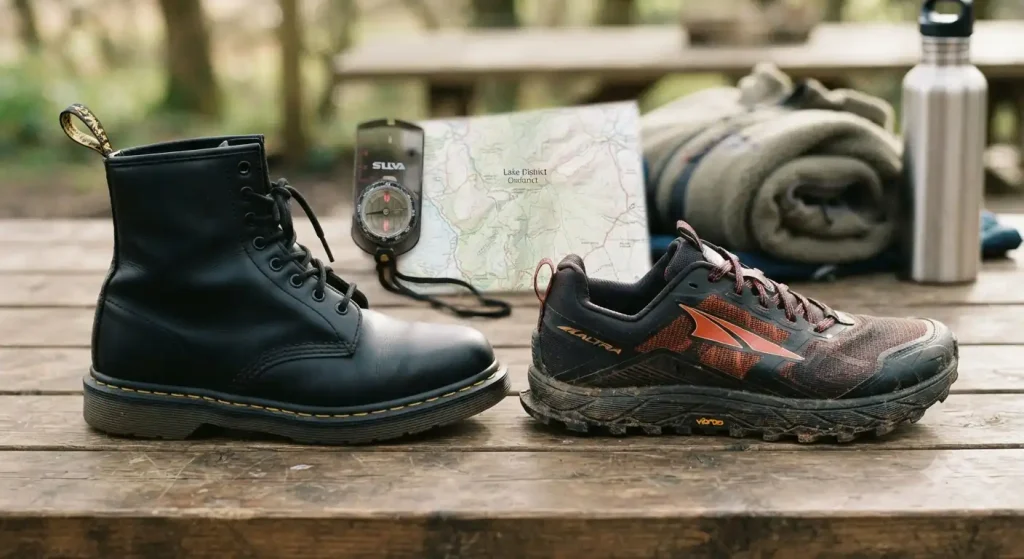
If you are serious about getting into hiking, I highly recommend renting or buying a dedicated pair of entry-level hiking shoes or trail runners. They do not have to be expensive. Even a basic pair of trail runners will offer better grip, better ventilation, and far less weight than a premium pair of heavy factory work boots.
When you do head out for a light walk in your everyday boots, listen to your feet constantly. Take frequent breaks. Sit on a rock, take off your boots, and let your socks air out for ten minutes. Cooling your feet down reduces swelling and dries out trapped sweat, which is your absolute best defense against friction.
Always remember that trail safety is your responsibility. Wear comfortable layers, pack snacks, carry a headlamp in case you take longer than expected, and tell someone where you are going. A simple day hike can turn into a long night if you twist an ankle because your smooth shoes slipped on a wet rock. Finally, remember to follow Leave No Trace principles if you ever need to treat a blister—pack out all used bandages and wrappers in your backpack.
Key Takeaways
- Doc Martens are too heavy, stiff, and lack the necessary traction for serious hiking trails.
- They do not breathe well, meaning sweat stays trapped inside, greatly increasing the risk of severe blisters.
- Their smooth factory soles are dangerous on steep, wet, muddy, or rocky terrain.
- If you must wear them, stick to flat, dry, well-maintained paths that are only a few miles long.
- Always wear thick wool socks, ensure the boots are fully broken in, and carry dedicated blister treatment supplies.
Comparing Features: Docs vs. Dedicated Hiking Boots
To truly understand why Dr. Martens aren’t the go-to for most hiking adventures, a direct feature-by-feature comparison with boots built for the trail is illuminating. This isn’t about saying one is “bad,” but about understanding what each is optimized for. For example, if you’re looking at a well-equipped day hike, you’ll want specific features that are often absent in fashion-forward footwear.
Ankle Support Showdown
- Dr. Martens: Offer a decent cuff height, typically around 8 inches for popular models. However, the leather is quite stiff and the lacing system mainly focuses on a snug overall fit rather than dynamic ankle stabilization. This means your ankle has a lot of freedom to move sideways.
- Hiking Boots: Designed with a more structured upper, often incorporating stiffer panels and a lacing system that allows for a more precise, locked-in fit. This provides crucial support against awkward twists and rolls on uneven ground, significantly reducing the risk of ankle sprains. Specialized hiking boots will use materials and construction that prioritize this stability.
Traction Analysis: Grip on the Trail
- Dr. Martens: The iconic sole pattern of most Dr. Martens is relatively flat with shallow grooves. While it provides adequate grip on smooth, hard surfaces like pavement or packed earth, it lacks the deep, self-cleaning lugs needed for reliable traction on loose dirt, mud, or wet, slippery rocks. Aggregate user feedback indicates a tendency to slip on scree or wet surfaces.
- Hiking Boots: Feature aggressive, widely spaced lugs made from specialized rubber compounds. These are engineered to bite into various terrains, shedding mud and debris effectively, and providing superior grip on ascents, and descents, and across uneven ground. This enhanced traction is paramount for preventing falls and maintaining control.
Comfort & Flexibility on Rough Ground
- Dr. Martens: The Goodyear welt construction of Dr. Martens leads to a sole that is quite stiff and doesn’t flex much with the foot’s natural movement. While this can be comfortable for a while on level ground, extended hiking on varied terrain can lead to foot fatigue and discomfort as the foot is forced to work harder. This rigidity can also create pressure points.
- Hiking Boots: Constructed to offer a better blend of flexibility and support. A good hiking boot will have a sole that flexes at the ball of the foot, allowing for a more natural stride. They also typically incorporate more robust cushioning systems, like EVA midsoles, to absorb shock over many miles, reducing impact on joints and enhancing overall comfort for prolonged outdoor activity.
Protection and Durability for the Outdoors
- Dr. Martens: The thick leather upper is certainly durable and can withstand a fair amount of abrasion from general use. However, it’s often treated for appearance rather than full weatherproofing. This means they aren’t typically waterproof and can let water seep in easily from puddles, wet grass, or streams.
- Hiking Boots: Many hiking boots incorporate waterproof-breathable membranes, such as Gore-Tex, or use specially treated leathers and synthetic materials to keep water out while allowing sweat to escape. This keeps your feet dry and comfortable in wet conditions. Furthermore, hiking boots often feature reinforced toe caps and randing (a rubber strip around the lower edge) to protect against impacts from rocks and roots.
When Can You Actually Hike in Docs?
So, we’ve established that Dr. Martens aren’t ideal for most hiking scenarios, but are there any situations where they might be okay? The answer is a qualified and very limited “yes,” but it’s crucial to understand the boundaries.
Short, Easy Paths: Maybe
If your idea of hiking involves a leisurely stroll on a well-maintained, paved nature path or a very short, flat trail in a local park, your Dr. Martens might suffice. In these specific conditions, where there’s little risk of twisting an ankle, minimal elevation change, and no exposure to mud or water, they could technically work. Think of it as a slightly more protective option than a casual shoe for a very mild walk.
For reference, if you’re considering options for beginners, you can find great guidance on how to choose hiking boots that are genuinely suitable.
When to Leave the Docs at Home
However, you should definitely reconsider Docs for anything more demanding. This includes:
- Uneven Terrain: Trails with significant rocks, roots, or loose scree. The limited traction and ankle support become a real concern here.
- Longer Distances: Hikes exceeding two to three miles. Foot fatigue and discomfort will set in much faster than with proper hiking footwear.
- Wet Conditions: Puddles, stream crossings, rain, or even dew-heavy grass will quickly lead to soaked feet, increasing the risk of blisters and cold.
- Steep Inclines/Declines: The lack of aggressive tread and supportive ankle can make these sections treacherous.
Essentially, if your hike involves anything beyond a mostly flat, dry, and predictable surface, it’s wise to opt for footwear specifically designed for the trail.
Smart Alternatives for Happy Hiking Feet
If you’re looking for footwear that offers durability and a bit of that sturdy boot feel but is actually built for the demands of the trail, there are several excellent alternatives to Dr. Martens. Choosing the right pair can make a world of difference in your hiking experience, preventing discomfort and keeping you safe.
Lightweight Hiking Shoes
These look a bit like beefed-up trail running shoes. They offer great breathability, flexibility, and excellent traction, making them ideal for well-maintained trails and day hikes where you don’t need substantial ankle support. Many hikers find they offer a great balance of agility and protection, and they often break in very quickly. For those new to hiking, exploring our guide on best hiking boots for beginners can provide a good starting point.
Mid-Weight Hiking Boots
These are a more traditional choice and offer a higher cut for better ankle support, along with more robust cushioning and protection. They are made for tackling more varied terrain, longer distances, and carrying moderate loads. If you plan on tackling moderate to challenging day hikes or weekend backpacking trips, these are often the sweet spot. Many options are also waterproof, which is a major plus for unpredictable weather.
You can learn more about why waterproof hiking boots are worth it.
Heavy-Duty Backpacking Boots
For serious hikers tackling multi-day treks with heavy backpacks or navigating very rugged, off-trail conditions, heavy-duty backpacking boots are the way to go. They offer the maximum in ankle support, underfoot protection, and durability. These boots are built to withstand extreme use and provide stability when carrying significant weight over long distances.
Avoiding Common Pitfalls on the Trail
When discussing footwear for hiking, it’s vital to touch on the common mistakes people make that can turn a pleasant outing into a painful ordeal. Often, these errors stem from underestimating the trail or not understanding the capabilities of their gear, whether it’s unsuitable boots or other equipment.
The Mistake of Underestimating Terrain
A significant pitfall is assuming a trail is “easy” or “just a walk” without proper footwear. Even a seemingly simple path can present hidden challenges like loose rocks concealed by leaves, unexpected muddy patches after rain, or uneven ground that can lead to ankle rolls. Wearing footwear with insufficient tread or ankle support in these situations is a recipe for a fall or injury. For example, if you’re planning a hike, understanding the typical trail conditions at your destination is key.
As of 2026, many national park services offer detailed trail reports that are invaluable resources for preparation.
Ignoring Foot Fatigue
Another common mistake is pushing through foot fatigue, especially on longer hikes, while wearing inadequate footwear. When your feet are tired, they function less effectively, and the risk of missteps increases dramatically. Wearing shoes like Dr. Martens, which lack the shock absorption and responsive flexibility of hiking boots, can exacerbate this fatigue.
This can lead to blisters, soreness, and a general decrease in hiking enjoyment. Properly fueling your body for a hike, with ideas found in hiking meal prep ideas, can help, but the right footwear is foundational.
Frequently Asked Questions
Are Doc Martens waterproof enough for hiking?
Standard leather Doc Martens are water-resistant but not fully waterproof. Water can eventually seep through the leather, heavy stitching, and lace holes. If you step in a deep puddle or hike in heavy rain, your feet will absolutely get wet.
Do Doc Martens have good traction for hiking?
No, they do not have good traction for outdoor trails. Their flat soles are designed to grip smooth, oily factory floors, not loose dirt, mud, or wet rocks. You will easily slip on steep or slick outdoor surfaces.
How long does it take to break in Doc Martens?
It can take anywhere from three to six weeks of regular wear to fully break in a new pair. The thick leather is notoriously stiff at first. Never take a brand new, unbroken pair on a hike, or you will suffer severe and painful blisters.
Can I wear Doc Martens for winter hiking?
They are a very poor choice for winter hiking. The leather gets cold quickly, they lack internal insulation, and the smooth soles are dangerous on ice and snow. You need dedicated winter hiking boots with proper grip and warmth.
Are there any Doc Martens made specifically for hiking?
While some models like the Combs Tech offer a slightly more rugged look, the brand does not make dedicated technical hiking boots. They still lack the specialized deep lugs, mesh breathability, and trail support found in true outdoor footwear.
Final Thoughts on Hitting the Trail
At the end of the day, hiking is about enjoying nature and challenging yourself safely. You do not need to spend hundreds of dollars on professional expedition gear to enjoy the woods. But wearing the right tool for the job makes a massive difference. While your Docs are incredibly cool and tough for the city, they are simply not built for the unpredictable wild.
If you are planning your first real outdoor adventure, do your feet a huge favor and pick up a pair of real hiking shoes. Save the stylish leather boots for the brewery after the hike. If you want to know exactly what else you should bring on your next trip, check out my beginner hiking gear checklist to make sure your backpack is completely ready for anything.
Stay safe, respect the trail, and I will see you out there.

1 thought on “Are Doc Martens Good for Hiking? A Practical Trail Guide”