
Thinking about whether military boots could work for your next trek? It’s a common question, wondering if gear built for the battlefield can handle the demands of the trail. While they look tough, they’re designed with very different priorities than dedicated hiking footwear.
Our research shows that while both types of boots offer protection, their core features and intended uses diverge significantly. Military boots often prioritize robust protection and load-bearing support for demanding operational environments, which can translate to drawbacks on the trail. For instance, many military boot models exceed 2.5 pounds (1.13 kg) per boot, a considerable weight that rapidly increases fatigue on long hikes.
Quick Answer: Military Boots vs. Hiking Boots
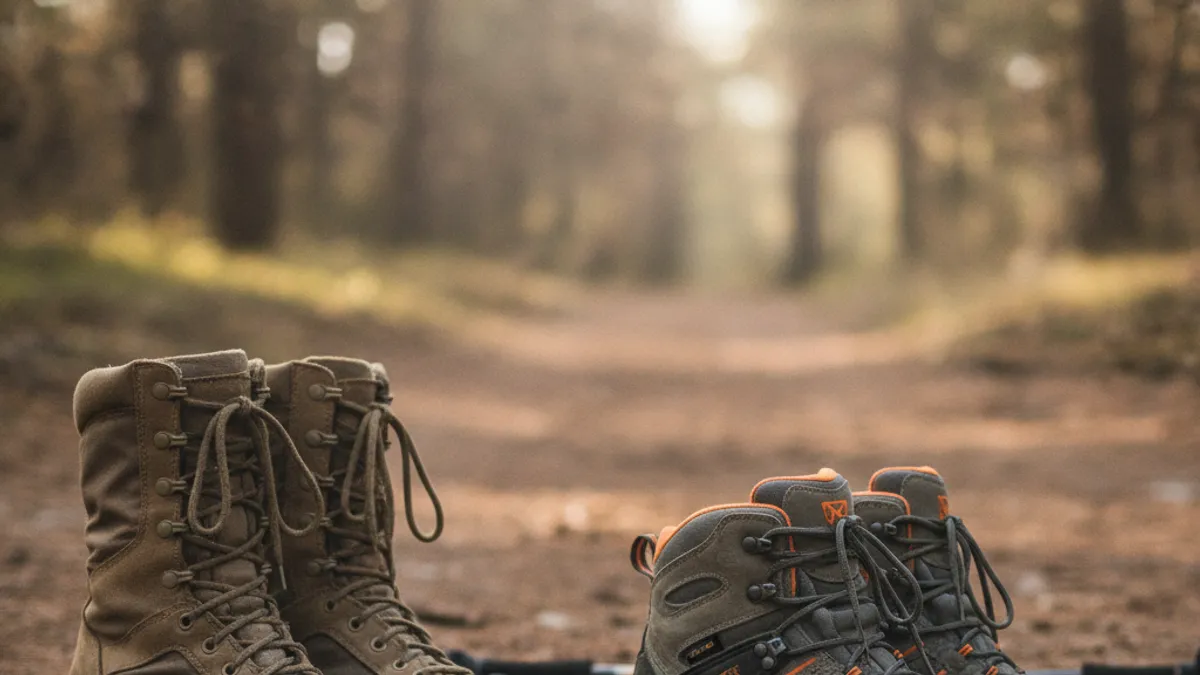
No, generally military boots are not ideal for sustained hiking compared to purpose-built hiking boots. While they offer durability and ankle support, their weight, stiffness, and lack of breathability typically lead to increased fatigue, discomfort, and a higher risk of blisters on the trail. Hiking boots are engineered with a specific balance of flexibility, cushioning, and breathability crucial for enjoyable and safe long-distance walking on varied terrain.
Why This Comparison Matters for Your Feet
Choosing the right footwear is probably the single most important gear decision you’ll make for a hike. Your feet are your foundation, and when they’re unhappy, the whole experience suffers. Understanding the differences between military boots and hiking boots can save you a lot of discomfort, potential injury, and unnecessary fatigue on the trail. It’s about matching the tool to the job.
Military Boots: Built for the Battlefield, Not the Trail
Military boots are constructed with extreme conditions and the unique needs of soldiers in mind. This means things like navigating difficult terrain under heavy load, providing protection from debris, and withstanding rigorous use in tactical situations. The design philosophy centers on ruggedness and resilience, which aren’t always the primary factors for recreational hiking.
Durability and Protection: What They Get Right
One of the main appeals of military boots is their reputation for incredible durability. Constructed from thick leather, high-denier synthetics, and tough rubber compounds, these boots are designed to withstand a tremendous amount of abuse. They often feature reinforced toe caps and sturdy heel counters, providing excellent protection against impacts from rocks, roots, or falling objects. This robustness can be reassuring if you’re concerned about damaging your footwear on particularly challenging or debris-strewn paths.
Weight, Stiffness, and Breathability: Where They Fall Short
However, that formidable build comes with significant trade-offs for hikers. Military boots are notably heavy, with many models weighing well over 2 pounds (0.9 kg) each. This extra weight on your feet is a major contributor to fatigue over miles, as your legs have to work harder with every step. Furthermore, they tend to be very stiff; while this offers stability for carrying loads, it limits natural foot articulation and can make walking feel more laborious and less fluid than with flexible hiking boots.
Manufacturer specifications often highlight water resistance, but this frequently comes at the expense of breathability, trapping heat and moisture inside. This can quickly lead to sweaty feet, skin irritation, and blisters, especially during warmer weather or on strenuous ascents.
Hiking Boots: Engineered for Every Step
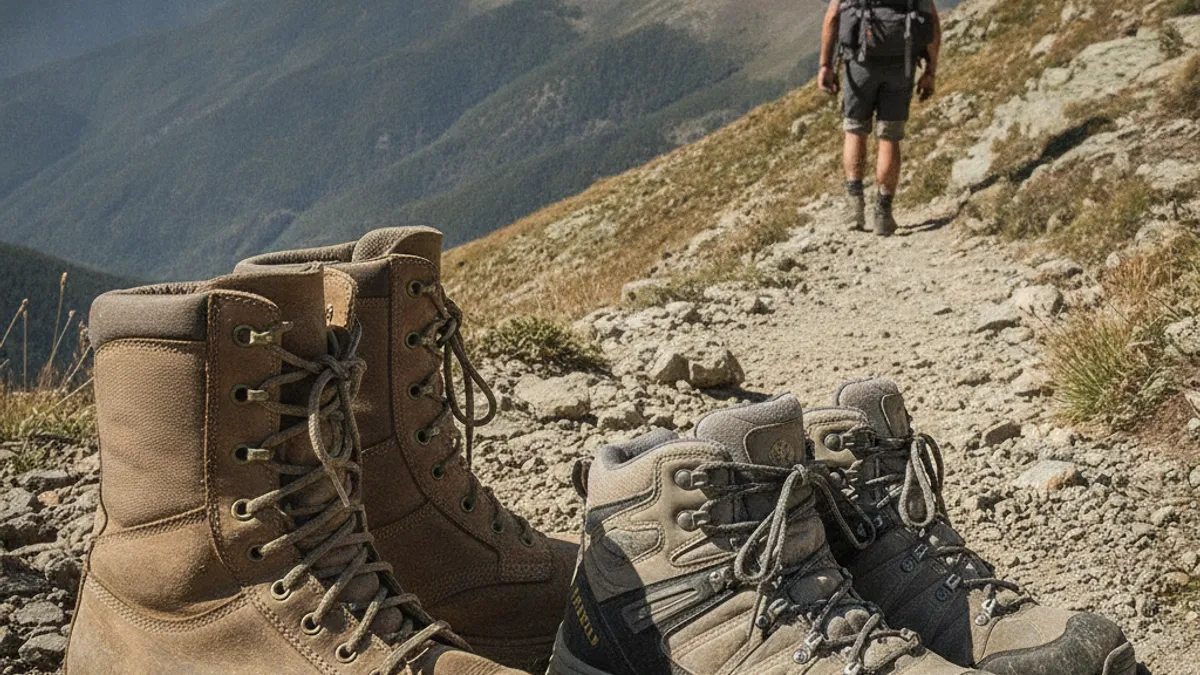
In contrast, hiking boots are specifically designed with the repetitive motion and varied demands of walking long distances on trails in mind. Their entire construction is about balancing support, comfort, and performance across different terrains and conditions. The goal is to make your feet feel as good on mile 10 as they did on mile 1.
Key Features of Dedicated Hiking Footwear
Hiking boots excel by incorporating features tailored for trail use. You’ll find outsoles with aggressive lug patterns designed for superior traction on dirt, mud, and rock, often utilizing specialized rubber compounds like Vibram® for excellent grip and durability. Midsole cushioning, usually made from EVA or polyurethane, absorbs shock from impacts, reducing stress on your joints and feet. Ankle support varies by boot type, from low-cut trail runners to mid- and high-cut boots, all designed to move with your foot rather than restricting it.
Materials are chosen for a balance of durability, breathability, and water resistance, often employing membranes like GORE-TEX® to manage moisture effectively.
The Crucial Role of Fit in Hiking Boots
When discussing hiking boots, fit isn’t just important; it’s paramount. A proper fit ensures your toes have enough room to wiggle and don’t jam into the front of the boot when descending, your heel stays locked in place without excessive rubbing, and there’s no pinching or pressure points anywhere. This is why trying on hiking boots, ideally at the end of the day when your feet are slightly swollen, is so critical. The boot should feel snug and supportive but not tight.
This careful balance is what allows you to hike comfortably for hours, a level of comfort generally difficult to achieve with the stiffness and weight of traditional military boots.
Side-by-Side: Military Boots vs. Hiking Boots
When you’re trying to decide what goes on your feet, it helps to see the differences clearly. Military boots and hiking boots share a goal of protecting your feet, but how they achieve that and where they stop is very different. Think of it like comparing a specialized tool to a multi-tool; one might be superb at its core function, while the other is good at many things but not exceptional at any single one.
Military Boots: Built for the Battlefield, Not the Trail
Military boots are constructed with extreme conditions and the unique needs of soldiers in mind. This means things like navigating difficult terrain under heavy load, providing protection from debris, and withstanding rigorous use in tactical situations. The design philosophy centers on ruggedness and resilience, which aren’t always the primary factors for recreational hiking.
Durability and Protection: What They Get Right
One of the main appeals of military boots is their reputation for incredible durability. Constructed from thick leather, high-denier synthetics, and tough rubber compounds, these boots are designed to withstand a tremendous amount of abuse. They often feature reinforced toe caps and sturdy heel counters, providing excellent protection against impacts from rocks, roots, or falling objects. This robustness can be reassuring if you’re concerned about damaging your footwear on particularly challenging or debris-strewn paths.
Weight, Stiffness, and Breathability: Where They Fall Short
However, that formidable build comes with significant trade-offs for hikers. Military boots are notably heavy, with many models weighing well over 2 pounds (0.9 kg) each. This extra weight on your feet is a major contributor to fatigue over miles, as your legs have to work harder with every step. Furthermore, they tend to be very stiff; while this offers stability for carrying loads, it limits natural foot articulation and can make walking feel more laborious and less fluid than with flexible hiking boots.
Manufacturer specifications often highlight water resistance, but this frequently comes at the expense of breathability, trapping heat and moisture inside. This can quickly lead to sweaty feet, skin irritation, and blisters, especially during warmer weather or on strenuous ascents.
Hiking Boots: Engineered for Every Step
In contrast, hiking boots are specifically designed with the repetitive motion and varied demands of walking long distances on trails in mind. Their entire construction is about balancing support, comfort, and performance across different terrains and conditions. The goal is to make your feet feel as good on mile 10 as they did on mile 1.
Key Features of Dedicated Hiking Footwear
Hiking boots excel by incorporating features tailored for trail use. You’ll find outsoles with aggressive lug patterns designed for superior traction on dirt, mud, and rock, often utilizing specialized rubber compounds like Vibram® for excellent grip and durability. Midsole cushioning, usually made from EVA or polyurethane, absorbs shock from impacts, reducing stress on your joints and feet. Ankle support varies by boot type, from low-cut trail runners to mid- and high-cut boots, all designed to move with your foot rather than restricting it.
Materials are chosen for a balance of durability, breathability, and water resistance, often employing membranes like GORE-TEX® to manage moisture effectively.
The Crucial Role of Fit in Hiking Boots
When discussing hiking boots, fit isn’t just important; it’s paramount. A proper fit ensures your toes have enough room to wiggle and don’t jam into the front of the boot when descending, your heel stays locked in place without excessive rubbing, and there’s no pinching or pressure points anywhere. This is why trying on hiking boots, ideally at the end of the day when your feet are slightly swollen, is so critical. The boot should feel snug and supportive but not tight.
This careful balance is what allows you to hike comfortably for hours, a level of comfort generally difficult to achieve with the stiffness and weight of traditional military boots.
Who Are Military Boots Best For (and When NOT to Use Them)
Military boots can be a justifiable choice in very specific, limited scenarios for outdoor activities, but these usually don’t involve traditional hiking. If you already own a pair of sturdy, well-maintained military boots and are planning a very short, casual walk on a relatively flat, well-trodden path, they might suffice for an hour or two. They can also be suitable if your primary concern is extreme durability and protection in a very static environment, as opposed to sustained, dynamic movement.
Casual Walks and Budget Considerations
For someone on a very tight budget who already has military boots, using them for short, infrequent walks might seem like a practical solution. They can offer a basic level of foot protection and grip for such situations.
However, it’s crucial to acknowledge the limitations. Even for short walks, the weight can be noticeable and tiring. If your goal is to enjoy nature and build stamina, investing in proper hiking boots for beginners will offer a far superior experience. These are designed to minimize fatigue and maximize comfort, allowing you to focus on the trail ahead.
Why They’re Not Ideal for Long Hikes
For extended hikes, backpacking trips, or any activity involving significant mileage and varied terrain, military boots quickly become a liability. The cumulative effect of their weight means you’re burning more energy just walking, leading to faster exhaustion. The stiffness that provides support can also cause friction and hot spots, which are precursors to painful blisters.
Imagine carrying a heavy pack for hours; now add boots that feel like anchors. That’s what military boots can feel like on a long trek. Water resistance can also be a double-edged sword; if moisture does get in, it’s very slow to dry, leaving your feet damp and prone to problems. Unless your activity specifically demands the unique properties of military footwear, dedicating yourself to using proper hiking footwear is the way to go.
Hiking Boots: Choosing the Right Pair for You
The world of hiking boots is vast, ranging from lightweight trail sneakers to robust backpacking boots. The “right” pair depends entirely on the type of hiking you plan to do. Understanding these categories helps you match your footwear to your intended adventures, ensuring comfort and performance.
Lightweight Hikers vs. Mid-Weight Backpackers
Lightweight hiking boots, often resembling sturdy athletic shoes or low-cut boots, are ideal for day hikes on well-maintained trails. They offer excellent flexibility and breathability, minimizing foot fatigue. If your hikes are generally less than 10 miles and you aren’t carrying a heavy pack, these are a great option.
Mid-weight hiking boots provide more ankle support and underfoot protection, making them suitable for longer day hikes or shorter backpacking trips with moderate loads. They offer a good compromise between the nimbleness of trail shoes and the support of heavier boots. For treks involving uneven terrain or carrying a pack of 20-30 pounds (9-14 kg), these hit a sweet spot.
Trail Running Shoes: A Lighter Alternative
For very fast-paced hiking or “fastpacking,” trail running shoes are an excellent alternative to consider. These are incredibly lightweight, highly breathable, and very flexible. While they offer less ankle support and overall protection than boots, their agility and comfort are unmatched for covering ground quickly. They are best suited for experienced hikers who have strong ankles and are primarily concerned with speed and minimal weight.
If you’re curious about their suitability, comparing trail runners vs hiking boots can offer deeper insight.
Common Mistakes When Choosing Hiking Footwear
One of the biggest missteps people make is assuming any sturdy boot will do, much like considering military boots for hiking. Another common error is not trying boots on properly. This means wearing the socks you’d use on a hike and checking the fit towards the end of the day when feet are swollen.
A frequent mistake is also buying boots that are too stiff for the intended use; overly stiff boots can hinder natural movement and cause discomfort on easier trails. Conversely, choosing boots with insufficient support for a heavy pack can lead to strains and aches. Finally, overlooking breathability is a recipe for blister-inducing sweat, especially in warmer climates.
Expert Tips for Boot Selection and Fit
When you’re in the store, don’t rush. Walk around, use the incline ramp if available, and pay attention to how your foot moves within the boot. Make sure there’s about a finger’s width of space between your longest toe and the front of the boot when your heel is firmly against the back. This prevents toe bang on descents.
Pay close attention to any pressure points or rubbing, especially around the ankle and Achilles tendon. If possible, test the boots with a weight in your backpack to simulate real hiking conditions. Remember, the goal is a secure, supportive fit that feels comfortable from the moment you put them on, not something you hope will get better with weeks of painful breaking in. For many, consulting with knowledgeable staff at outdoor gear shops can make a significant difference in finding the perfect pair of how to choose hiking boots.
Common Mistakes When Choosing Hiking Footwear
One of the biggest missteps people make is assuming any sturdy boot will do, much like considering military boots for hiking. Another common error is not trying boots on properly. This means wearing the socks you’d use on a hike and checking the fit towards the end of the day when feet are swollen.
A frequent mistake is also buying boots that are too stiff for the intended use; overly stiff boots can hinder natural movement and cause discomfort on easier trails. Conversely, choosing boots with insufficient support for a heavy pack can lead to strains and aches. Finally, overlooking breathability is a recipe for blister-inducing sweat, especially in warmer climates.
Expert Tips for Boot Selection and Fit
When you’re in the store, don’t rush. Walk around, use the incline ramp if available, and pay attention to how your foot moves within the boot. Make sure there’s about a finger’s width of space between your longest toe and the front of the boot when your heel is firmly against the back. This prevents toe bang on descents.
Pay close attention to any pressure points or rubbing, especially around the ankle and Achilles tendon. If possible, test the boots with a weight in your backpack to simulate real hiking conditions. Remember, the goal is a secure, supportive fit that feels comfortable from the moment you put them on, not something you hope will get better with weeks of painful breaking in. For many, consulting with knowledgeable staff at outdoor gear shops can make a significant difference in finding the perfect pair of how to choose hiking boots.
Final Verdict: When to Reach for Hiking Boots
Ultimately, if your aim is enjoyable and comfortable hiking, the answer is clear: dedicated hiking boots are almost always the superior choice over military boots. Military footwear is purpose-built for a very different set of challenges, prioritizing ruggedness and protection over the flexibility, breathability, and lightweight comfort essential for covering miles on the trail. For any serious hiker, investing in appropriate footwear is not just about comfort; it’s about injury prevention and maximizing your enjoyment of the outdoors.
Why Hiking Boots Beat Military Boots for Trails
Hiking boots are meticulously designed for the biomechanics of walking long distances. Their construction maximizes shock absorption through cushioned midsoles, preventing joint pain and foot fatigue. The outsoles are engineered for maximum grip on varied surfaces like dirt, mud, and rock, reducing the risk of slips and falls. Furthermore, the lighter weight and flexible design promote a natural stride, reducing overall energy expenditure during your hike.
This focus on comfort and efficiency is a world away from the stiff, heavy build of most military boots. If you’re looking to make hiking a regular pursuit, proper footwear is non-negotiable. Investing in a good pair of hiking backpack essentials is key, but your boots are arguably even more critical for comfort and safety.
Military Boots: Use Cases Outside of Combat
While not ideal for hiking, military boots do have their place in other outdoor or work-related scenarios. Their inherent durability and protective features make them suitable for certain types of vocational work where heavy-duty footwear is required, such as construction or demanding landscaping. Some individuals also opt for them for activities where extreme grit and abrasion resistance are paramount, and weight is a lesser concern. For instance, certain obstacle course races or survival training exercises might benefit from their robust build.
However, even in these contexts, specialized footwear often exists that offers a better balance of protection and performance.
