
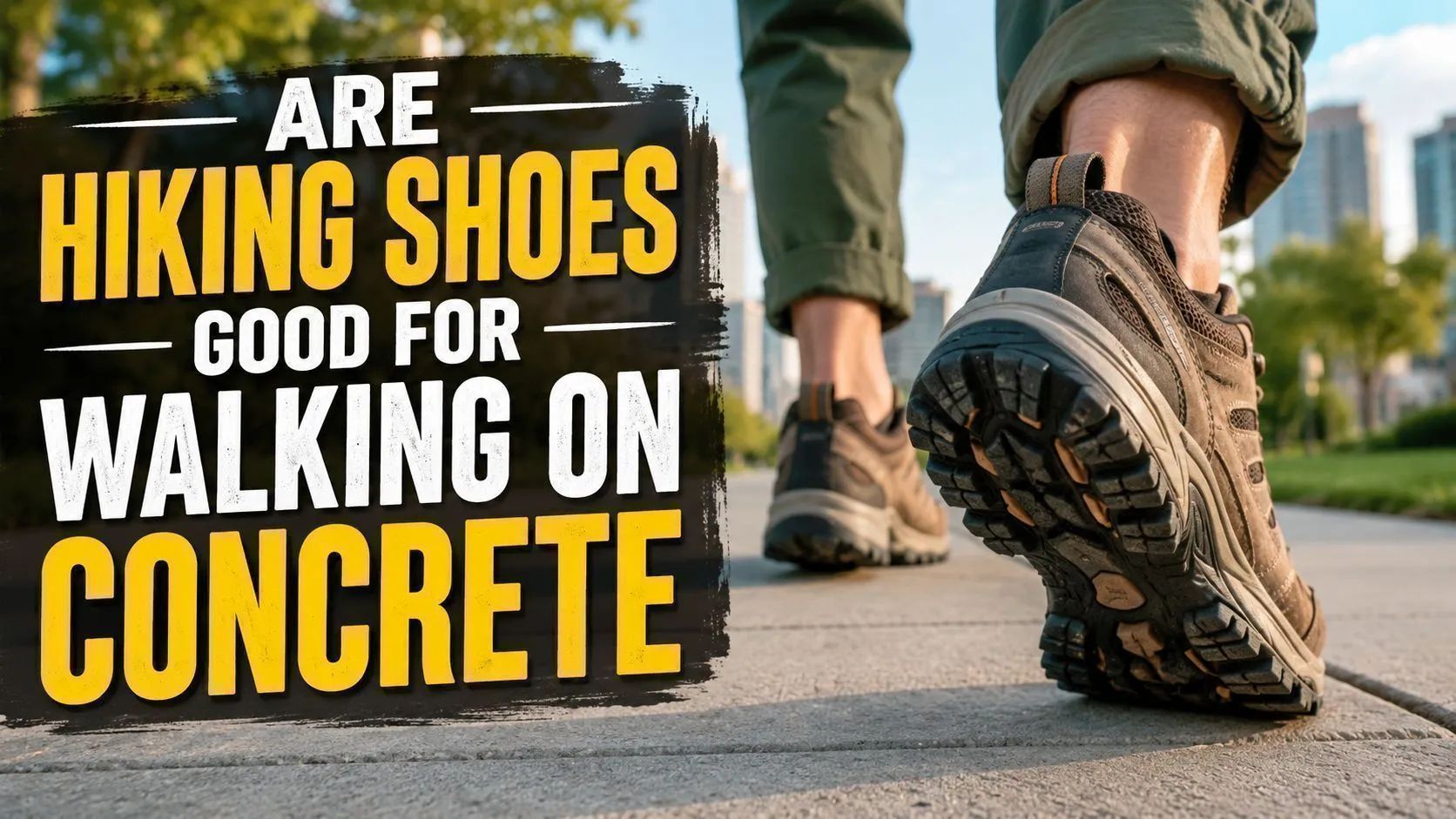
Hey there, I am Oscar. If you have ever invested in a great pair of trail shoes, you probably want to wear them everywhere. I completely understand. You spend good money on comfortable gear, and suddenly, you wonder: are hiking shoes good for walking on concrete?
It is a question I hear all the time from new hikers, urban backpackers, and everyday walkers who just want supportive footwear. Maybe you are planning a trip where you will hike a dirt trail in the morning and walk around paved city streets in the afternoon. Or maybe you just want to use your hiking shoes for your daily neighborhood walk.
Here is the thing. While you certainly can wear your trail shoes on pavement, it might not be the best idea for your feet—or your wallet. Let me explain exactly how concrete affects your hiking footwear, what it does to your joints, and how to choose the right gear for your daily adventures.
Quick Answer
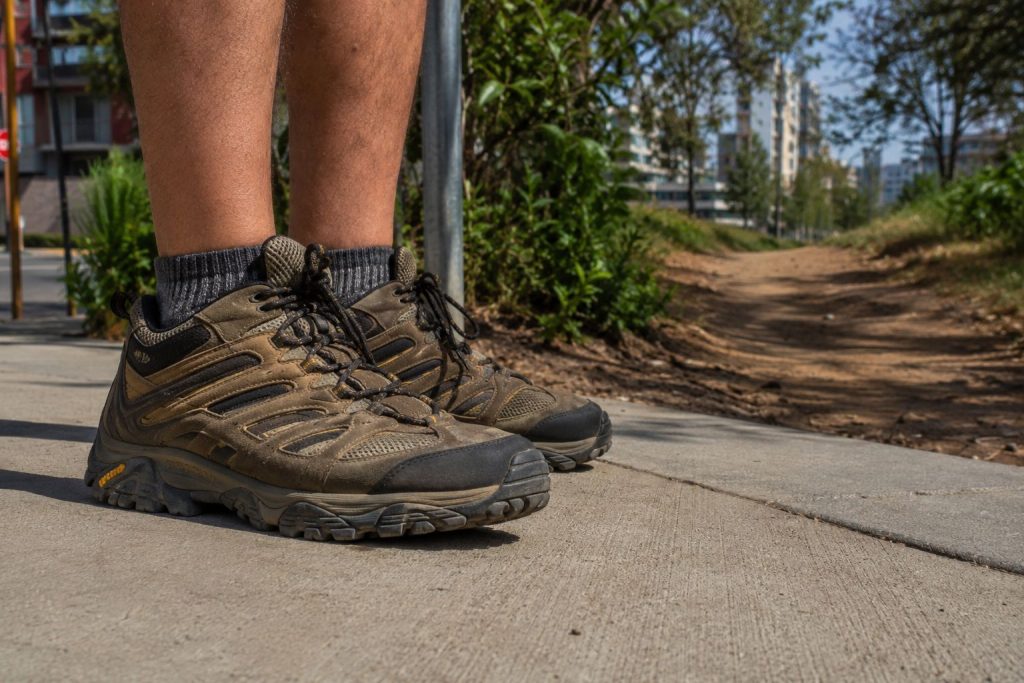
Yes, you can walk on concrete in hiking shoes, but it is not ideal for long periods. Hiking shoes are built with soft, grippy rubber outsoles designed to grab onto dirt and rocks. Hard concrete acts like sandpaper, wearing down this specialized tread much faster than normal dirt trails. Additionally, the stiff soles and heavy build of hiking shoes can cause foot fatigue and joint pain when walking on hard, flat pavement for hours at a time.
What Hikers Should Know About Walking on Pavement
To understand why concrete and hiking shoes clash, we need to look at how trail shoes are built. Walking shoes and running shoes are made for flat, hard surfaces. Hiking shoes are engineered for uneven, unpredictable terrain.
The most important part of your hiking shoe is the outsole. This is the bottom layer of rubber that touches the ground. Hiking shoe outsoles feature thick, deep rubber bumps called “lugs.” These lugs act like the tires on a mountain bike. They dig into loose mud, gravel, and dirt to keep you from slipping.
However, the rubber used on hiking shoes is often softer and stickier than the rubber on regular street shoes. This soft rubber is a lifesaver on a slick granite boulder, but when you grind it against a concrete sidewalk, it wears away quickly.
- Tread Loss: Concrete will shave down the deep lugs on your hiking shoes, reducing their grip for your next actual hike.
- Stiffness: Hiking shoes often have stiff midsoles or hard plastic “rock plates” to protect your feet from sharp stones. On concrete, this stiffness prevents your foot from moving naturally.
- Weight: Trail footwear is heavier than regular walking gear. Picking up that extra weight on a flat sidewalk wastes your energy.
- Slipping Hazards: Believe it or not, the hard rubber lugs of heavy hiking boots can actually be dangerously slippery on smooth, wet concrete or indoor tile floors.
If you are planning a trip that involves both paved paths and rugged trails, it is smart to understand the basics of hiking gear so you know exactly what your footwear is designed to handle.
Signs You Should Adjust Your Hiking Plan, Gear, or Trail Choice
Sometimes you do not realize you are wearing the wrong shoes until your body—or your gear—starts complaining. If you frequently wear your trail shoes on pavement, pay attention to these warning signs.
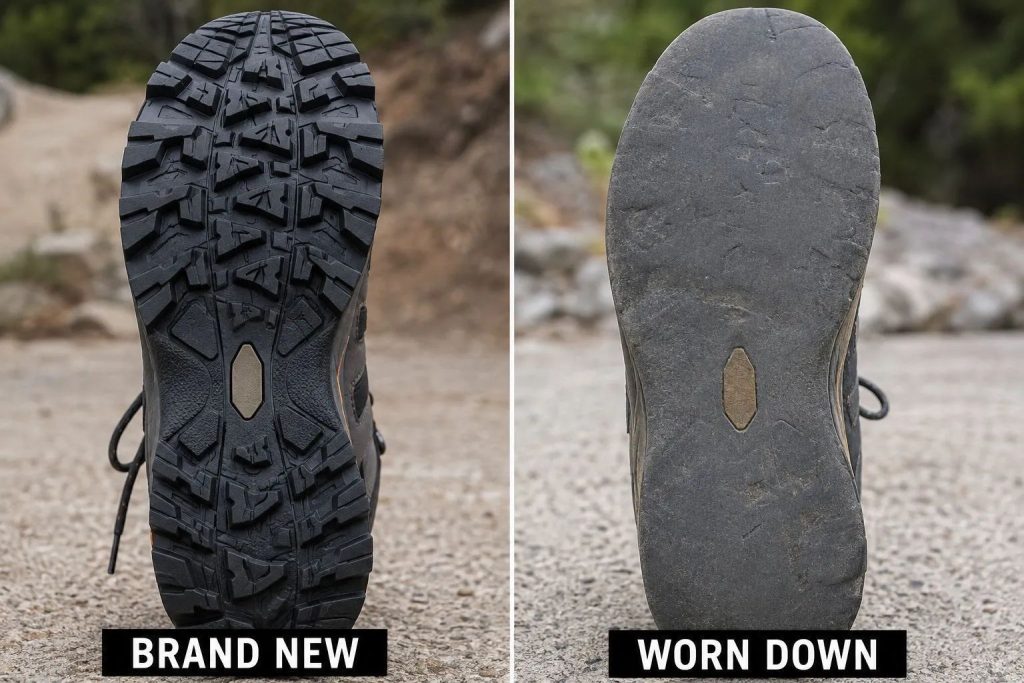
First, look at the bottom of your shoes. Are the lugs under the heel or the ball of your foot looking smooth and flat? That is a clear sign that hard surfaces are eating away at your tread. If you take those worn-down shoes onto a muddy trail, you are at a much higher risk of slipping and falling.
Second, listen to your body. If you feel sharp pain in your heels, aching in your shins, or stiffness in your lower back after walking around town, your hiking shoes might be the culprit. The lack of shock absorption on flat concrete sends the impact straight up your legs.
| Feature | Hiking Shoes on Concrete | Walking Shoes on Concrete |
|---|---|---|
| Rubber Durability | Wears down quickly like an eraser | Designed to withstand hard pavement |
| Shock Absorption | Firm; designed for soft dirt and mud | High; absorbs repetitive flat impacts |
| Flexibility | Stiff to protect feet from sharp rocks | Flexible to allow a smooth walking stride |
| Traction | Can be slippery on smooth, wet pavement | Grips flat urban surfaces perfectly |
If you are exploring a national or state park, keep in mind that many popular, accessible viewpoints have paved paths. You can always check official trail safety and planning guides to see if your planned route is paved or natural dirt.
How to Handle This Hiking Topic Step by Step
So, what should you do if your weekend plans involve a mix of urban exploring and dirt trails? You do not have to buy a dozen different pairs of shoes. You just need to plan ahead. Follow these simple steps to protect your feet and your gear.
- Research your route ahead of time. Look at a trail map or an offline map app before you leave your house. If the trail description says “paved path” or “boardwalk,” you do not need heavy hiking shoes. Standard athletic shoes will work better.
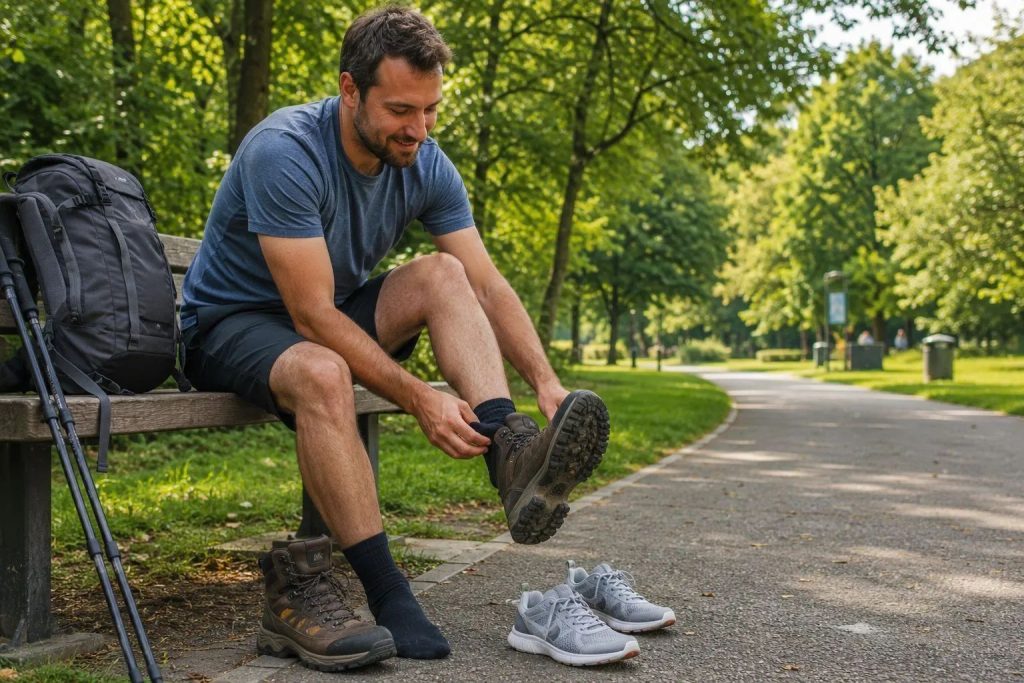
- Pack a lightweight change of shoes. If you are traveling or backpacking through a mix of towns and forests, bring a lightweight pair of foam sandals or running shoes in your backpack. Wear your hiking shoes on the dirt, and swap them out when you hit the pavement.
- Consider trail running shoes. If you must wear one shoe for everything, look into trail runners. They are lighter and have more cushioning than traditional hiking boots, making them a great middle-ground for mixed terrain.
- Shorten your stride on hard surfaces. If you get caught walking on miles of concrete in stiff boots, take shorter steps. This reduces the heavy heel-strike impact that travels up your knees and back.
- Clean your treads after city walking. Sidewalks are full of oil, chemicals, and road salt. When you get home, rinse the bottom of your hiking shoes with plain water to keep the rubber from breaking down prematurely.
Common Mistakes to Avoid
When it comes to footwear, beginners often make a few painful mistakes. Avoid these common traps to keep your feet happy and your shoes lasting longer.
- Breaking in heavy boots on the sidewalk. Walking around your neighborhood on hard concrete is not the best way to break in new hiking boots. The hard surface will just cause blisters. Break them in on grass or a local dirt path instead.
- Ignoring worn-out treads. Do not take hiking shoes with smoothed-out soles onto steep, rocky trails. You will not have the grip you need to stay safe.
- Overestimating your need for heavy gear. You do not need stiff, heavy boots for a flat, paved walking trail in a local park. Match your footwear to the actual terrain.
- Wearing the wrong socks. If you walk on concrete in stiff shoes while wearing thin, everyday cotton socks, you will likely get blisters. Always wear padded wool or synthetic hiking socks to help absorb the shock.
Practical Tips from Oscar
Over the years, I have ruined a few expensive pairs of hiking shoes by wearing them as my everyday grocery-getting shoes. I learned my lesson the hard way. Here are a few practical tips from my own trail planning habits.
Key Takeaways
- Walking on concrete in hiking shoes will wear down the expensive rubber tread much faster than dirt trails.
- Stiff hiking shoes lack the shock absorption needed for hard pavement, which can lead to foot fatigue and joint pain.
- Hard rubber lugs can be surprisingly slippery on smooth, wet concrete or indoor tile.
- If your route includes both pavement and dirt, trail running shoes are often a better, more comfortable compromise.
- Always check your route ahead of time and match your footwear to the surface you will be walking on.
Frequently Asked Questions
Will concrete ruin my hiking shoes?
Concrete will not instantly destroy your hiking shoes, but it will wear down the rubber tread very quickly. Over time, walking on hard pavement acts like sandpaper, leaving your shoes smooth and unsafe for actual dirt trails.
Can I wear trail running shoes on pavement?
Yes, trail running shoes are much better on pavement than heavy hiking boots because they have softer foam cushioning. However, just like hiking shoes, their grippy rubber lugs will wear out faster on concrete than on dirt.
Are hiking boots bad for your feet on flat ground?
Hiking boots can cause foot pain on flat ground because they are built with stiff soles to protect your feet from jagged rocks. This stiffness prevents your foot from flexing naturally on a flat sidewalk, leading to sore arches and tired legs.
What is the best shoe for mixed trail and city walking?
A lightweight trail running shoe or a flexible, low-cut hiking shoe is usually the best choice for mixed terrain. They offer enough grip for moderate dirt trails while providing enough cushioning for paved city streets.
Why do my feet hurt after walking on pavement in hiking boots?
Your feet likely hurt because hiking boots lack the flexible shock absorption found in regular walking shoes. Every step on hard pavement sends a shock straight through the stiff boot into your heels, knees, and lower back.
Conclusion
The bottom line is simple. While hiking shoes are fantastic tools for conquering roots, rocks, and mud, they are simply not designed for the concrete jungle. Wearing them on pavement for a quick walk to the trailhead is completely fine. But if you make a habit of wearing them on city sidewalks, you will wear out your expensive gear and probably end up with aching feet.
If you are planning your next outdoor adventure, take a few minutes to review your route. Pack a lightweight pair of walking shoes if you know you will be hitting the pavement. Taking care of your feet is the most important part of outdoor travel.
Before you pack for your next trip, be sure to review our beginner hiking gear checklist to make sure you have the right footwear, clothing, and safety items for the terrain ahead. Stay safe out there, and happy hiking!
