
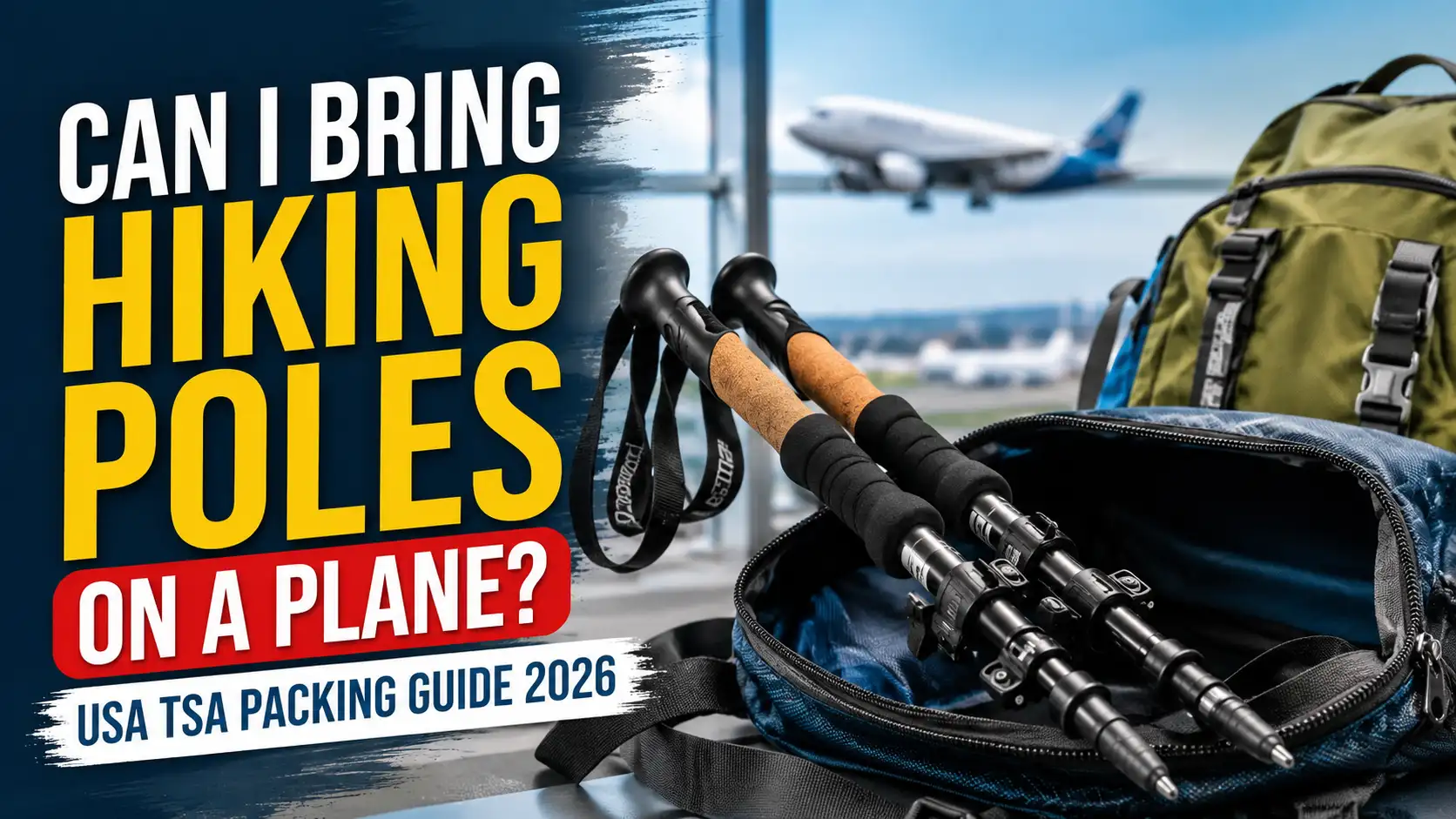
I remember planning my first big hiking trip to the mountains. I had my favorite boots, my trusted daypack, and my comfortable clothing layers all laid out on the floor. But as I started packing my bags, a sudden thought stopped me in my tracks: Can I bring hiking poles on a plane?
It is a question almost every traveling hiker asks at some point. Trekking poles are amazing for protecting your knees on steep downhills and keeping your balance on rocky trails. However, you absolutely do not want to arrive at airport security only to watch an agent throw your expensive gear into the trash bin.
If you are flying to your next outdoor adventure, you need to know the rules. Let me explain exactly how to fly with your trekking poles, how to pack them safely, and what your options are if you prefer to travel light.
Quick Answer
No, you cannot bring standard hiking poles on a plane in a carry-on bag. The Transportation Security Administration (TSA) strictly requires all hiking and trekking poles to be packed inside your checked luggage. Because they have sharp metal tips and a solid frame, they are considered a security risk in the airplane cabin. If you want to use your own trekking poles on the trail, you must check your bag at the ticket counter.
What Hikers Should Know About Flying With Gear
Airport security rules can feel confusing, but when it comes to outdoor gear, the rules are usually built around safety. Here is the thing: hiking poles are designed to grip dirt, rock, and ice. To do this, they have hard, sharp carbide or steel tips. In the eyes of airport security, those sharp tips are dangerous.
The Transportation Security Administration (TSA) guidelines are very clear. Hiking poles, trekking poles, ski poles, and walking sticks must go in checked baggage. Even if you put soft rubber tips over the metal spikes, the TSA agents will still ask you to check them or leave them behind.
Here are a few more things every traveling hiker should understand:
- Size does not matter: Even if you own highly compact Z-folding carbon fiber poles that fit easily inside a small backpack, they are still banned from the airplane cabin.
- Tent stakes face the same rules: If you are packing for a backpacking trip, your metal tent poles and tent stakes must also go into your checked luggage.
- TSA agents have the final say: Even if you read something different on a travel forum, the security officer at the checkpoint makes the final decision. Arguing will not help you keep your gear.
- International rules are similar: Most international airport security agencies share the same rules as the USA regarding sharp outdoor gear.
The good news is that flying with your gear is very easy once you accept that you need to check a bag. You just need to protect your poles and your backpack during the flight.
Signs You Should Adjust Your Hiking Plan or Gear Choice
Sometimes, checking a bag is not an option. Maybe your airline charges high fees for checked luggage, or maybe you are taking a quick weekend trip and only want to carry a small backpack. If you cannot check your hiking poles, you need to adjust your trail plan.
Before you fly, look at the weather, the trail conditions, and your own physical needs. If you are hiking a flat, paved path, you might not need poles at all. If you are tackling steep, rocky switchbacks, you will definitely want them. Never hike a dangerous or slippery route just because you left your safety gear at home.
If you are trying to decide whether to bring your poles or leave them behind, use this simple guide to help you choose the best option for your trip.
| Your Travel Situation | The Best Choice | Why This Works |
|---|---|---|
| You are flying with a large checked suitcase or duffel bag. | Pack your poles. | You already paid for a checked bag. It is free and easy to toss your folded poles inside. |
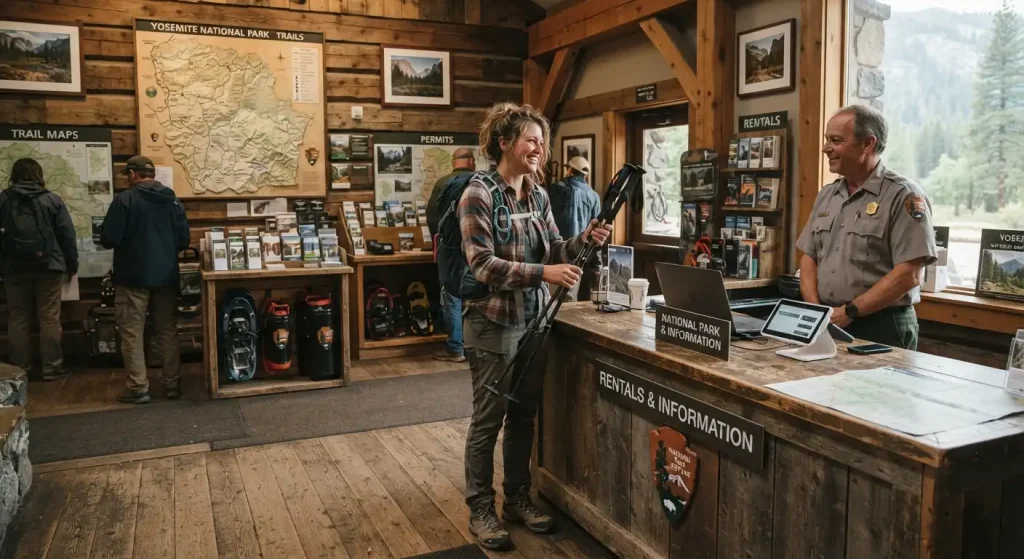
| You are flying carry-on only to save money on baggage fees. | Rent poles at your destination. | Many outdoor stores near major parks rent quality trekking poles for just a few dollars a day. |
| You are hiking easy, flat, well-maintained trails. | Leave poles at home. | If your knees are healthy and the trail is flat, you likely do not need the extra support. |
| You are backpacking a rugged, multi-day mountain route. | Check a bag or mail your poles. | Your safety matters most. You need poles for steep grades and river crossings. Mail them ahead if you refuse to check a bag. |
How to Pack Hiking Poles Safely Step by Step
If you decide to check your poles, you must pack them correctly. Baggage handlers work fast, and airplane cargo holds can be rough. If you just throw loose poles into a bag, the sharp metal tips can poke right through the fabric of your luggage. Worse, a heavy suitcase could crush and snap a fragile carbon fiber pole.
Follow these safe packing steps to make sure your gear arrives in perfect condition.
- Clean your gear: Before packing, wipe off all mud, dirt, and leaves. Transporting soil to a new environment can spread invasive plant seeds. The National Park Service asks all hikers to clean their gear to protect local ecosystems.
- Remove the baskets: Twist off the round plastic mud baskets or snow baskets near the bottom of the poles. These stick out and can easily snap off under pressure inside a suitcase. Put them in a small zipper bag.
- Collapse the poles completely: If you have telescopic poles, push the sections all the way in and lock them tightly. If you have folding Z-poles, fold them up and secure them with their velcro strap.
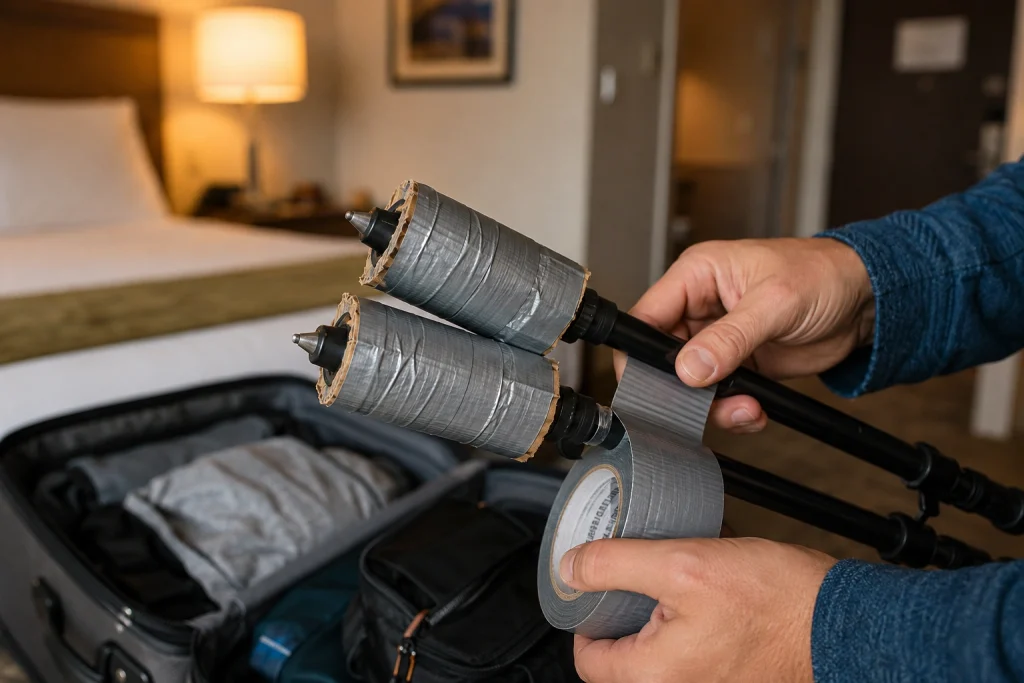
- Cover the sharp metal tips: Push your rubber walking tips over the hard carbide spikes. If you do not have rubber tips, wrap the metal spikes tightly in thick cardboard and heavy tape.
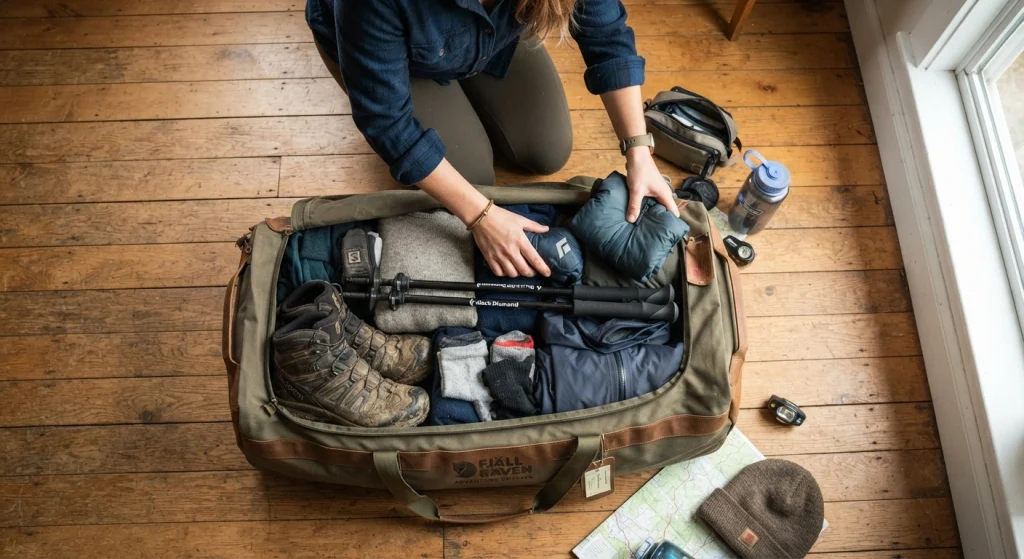
- Pad the poles with clothing: Roll your poles inside your soft hiking clothes. Wrapping them in a fleece jacket or heavy hiking pants gives them excellent padding against bumps.
- Pack them in the center of your bag: Place the wrapped poles directly in the middle of your suitcase or duffel bag. Do not put them near the outer edges where they might take a direct hit from other luggage.
Common Packing Mistakes to Avoid
Over the years, I have seen many hikers make simple packing mistakes that ruined their gear or caused headaches at the airport. Avoid these common errors on your next trip.
- Sticking poles in backpack side pockets: Never leave poles strapped to the outside of your backpack when checking it. Airport conveyor belts will catch the straps and rip the poles right off.
- Arguing with security agents: If you accidentally bring them to the carry-on security line, stay calm. Simply ask the agent if you can go back to the ticket counter to check your bag.
- Packing wet gear: If you hiked in the rain before your flight home, dry your poles before packing them. Sealing wet metal in a dark suitcase can cause rust or corrosion on the locking mechanisms.
- Forgetting the rubber tips: If you cover the metal spikes with rubber tips for the flight, remember to take those rubber tips off when you get to a dirt trail. Otherwise, they will slip off in the mud and become litter.
Practical Trail Tips from Oscar
Traveling with outdoor gear gets much easier with practice. Here are a few tricks I use whenever I fly out for a big hiking or backpacking trip.
Key Takeaways
- Hiking and trekking poles are strictly forbidden in airplane carry-on bags.
- You must pack your poles securely inside checked luggage.
- Always cover the sharp carbide tips with rubber protectors or thick cardboard so they do not puncture your bag.
- Never leave poles strapped to the outside of a backpack when checking it, as conveyor belts can destroy them.
- If you travel carry-on only, your best option is to rent trekking poles at a local gear shop near your destination.
Frequently Asked Questions
Can I bring folding Z-poles in my carry-on bag?
No. Even if your trekking poles fold up small enough to fit inside a daypack, the TSA will not allow them in the cabin. The rules apply to the sharp tips and rigid materials, not the overall folded size.
What if I use my hiking pole as a walking cane for an injury?
Mobility aids like canes and walkers are allowed in the cabin. However, a standard trekking pole is usually not classified as a mobility aid by TSA agents. If you rely on a mobility device, it is much safer to travel with a standard medical cane and pack your hiking poles in your checked bag.
Do airlines charge extra fees for hiking poles?
No, airlines do not charge a special fee just for hiking poles. They are treated like any other item inside your luggage. You will only pay the standard checked bag fee that applies to your suitcase or duffel bag.
Can I bring rubber-tipped hiking poles on a plane?
Even if you permanently attach soft rubber tips to your hiking poles, they must still be checked. The TSA views the rigid shaft of the pole as a potential security risk in the cabin, regardless of what is covering the tip.
Where can I rent trekking poles if I do not check a bag?
Many outdoor retailers, local gear outfitters, and guided tour companies located near popular national parks offer gear rentals. You can often rent high-quality poles by the day or week for a very low cost.
Will carbon fiber hiking poles break in a checked bag?
Carbon fiber is strong but can crack under heavy sideways pressure. To keep them safe, collapse them fully, wrap them tightly inside thick clothing like a fleece jacket, and pack them in the very center of your luggage away from the edges.
Wrapping Up Your Travel Plans
Planning a hiking trip should be fun, not stressful. Now that you know the rules, you can pack your bags with total confidence. Just remember the golden rule of flying with outdoor gear: if it has sharp points, metal spikes, or a rigid frame, hand it over to the ticket counter.
Whether you choose to check your trusty poles in a duffel bag or travel light and rent a pair near the trailhead, the most important thing is that you get out there and enjoy nature safely. Protecting your knees with good poles is always worth the minor packing hassle.
If you are working on the rest of your packing list, make sure you take a look at our complete beginner hiking gear checklist before your next flight. Pack smart, double-check your gear, and have an amazing time out on the trail!
