
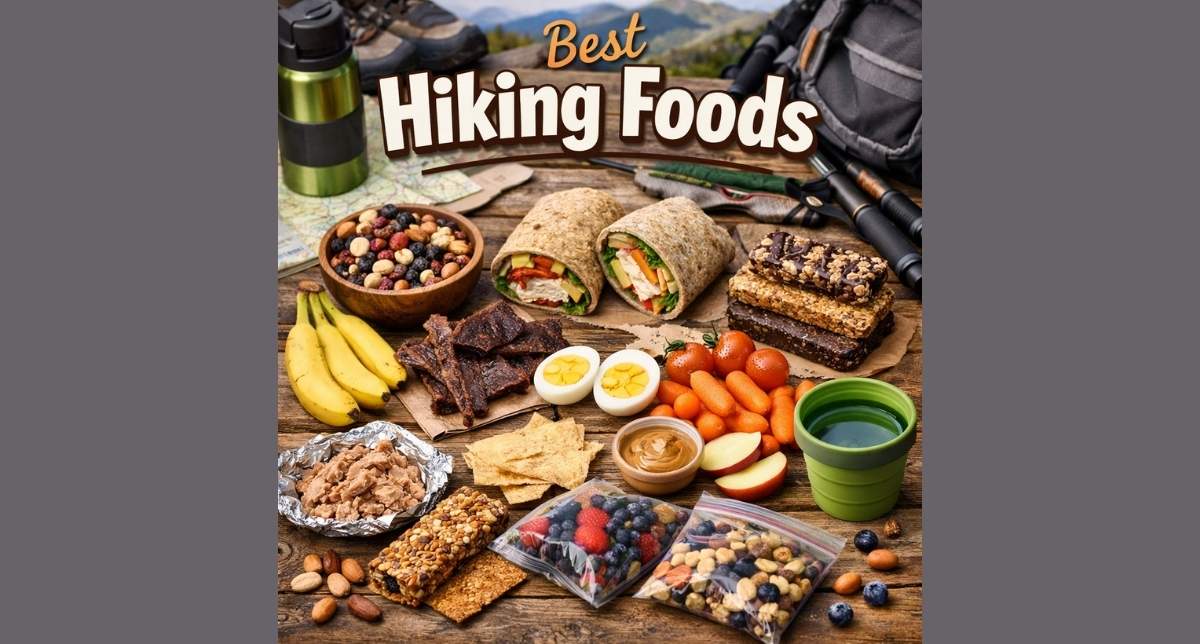
I hit the wall at mile 11 on a ridge trail in Colorado. Not from bad weather. Not from tired legs. From pure stupidity — I packed light on food because I didn’t want the extra weight.
By the time I was two miles from the trailhead, I was shuffling. My legs felt heavy, my focus was gone, and I stopped three times to sit on rocks I didn’t need to sit on. I made it back. But barely. And the whole drive home I kept thinking: I know better than this.
That was six years ago. Since then, I’ve hiked thousands of miles across the Rockies, the Cascades, and the Appalachians. I’ve tested more food combinations than I can count — in summer heat, early spring snow, and every condition between. I know what works, what falls apart at mile 8, and what I’d never put in my pack again.
In this article, I’ll show you exactly what to eat on a long hike. You’ll learn how to pick foods with real calorie density, which no-fridge meals actually hold up on trail, and how to time your eating so you finish strong instead of limping back to your car.

Why Food Choices Matter More on Long Hikes
On a long hike, the food you pack is not a comfort item — it’s fuel. Your body burns 400–600 calories per hour on a demanding trail, and once your glycogen stores run low, your legs and your brain both start to fail.
Most hikers know to bring snacks. What they get wrong is the type of food, the amount, and the timing. A bag of chips and a granola bar might be fine for a 3-mile walk. For an 8-hour push through elevation, you need a real food strategy.
What Happens to Your Body After Mile 5
Your muscles store glycogen — a fast-burning carbohydrate fuel. For most people, those stores start running low somewhere between mile 4 and mile 6 on a hard day. When that happens, your pace drops, your legs get heavy, and your thinking gets foggy.
This is called bonking, and it hits differently on a long trail than it does in a gym. There’s no option to stop. You still have miles to cover. Your body starts pulling energy from fat, which is slower to use and less efficient for high-effort movement.
Eating the right foods at the right times can delay that crossover point significantly. That’s the whole game on long hikes.
Why Regular Hiking Snacks Fall Short
A standard granola bar has about 190 calories. That’s maybe 20 minutes of hiking fuel. Most people pack four or five of them for an 8-hour day and wonder why they feel wrecked by the afternoon.
The problem is calorie volume. Trail snacks that feel like “enough” usually aren’t. You need variety — a mix of fast-burning carbs, slow-burning fats, and some protein — spaced out through the whole day.
Store-bought trail mix helps, but most commercial versions are loaded with cheap filler. Raisins and corn chips are not your friend at mile 9.
Calorie Density vs. Pack Weight Trade-Off
Calorie density means calories per ounce. On a long hike, you want the most energy for the least weight. A food that’s 150 calories per ounce beats one that’s 80 calories per ounce every time — especially when you’re already carrying water, layers, and a first aid kit.
Nuts, nut butters, and dried fruit are some of the most calorie-dense foods you can carry. Whole foods like apples and sandwiches are heavy and low on return. It’s not that they taste bad. It’s that you’re carrying water weight when you don’t need to.
This single shift — thinking in calories per ounce instead of just “enough food” — changed how I pack.
How Hiking Terrain Affects Your Fuel Needs
Flat trail burns far fewer calories than steep elevation. A 10-mile hike on even ground might cost you 600–800 calories per hour at a steady pace. That same 10 miles with 3,000 feet of elevation gain can push well past 1,000 calories per hour on the climbs.
Heat is another multiplier. Hiking in the Arizona desert in June or on sun-exposed Southern Appalachian ridges in August costs more energy than the same trail in fall. Your body works harder to stay cool, and you sweat out electrolytes that affect muscle performance.
Know your terrain before you pack. A flat coastal trail and a big mountain day are completely different fuel problems.
I tracked my food intake on a hard Colorado day — 12 miles, 4,200 feet of gain — and ran the numbers when I got home. I was 1,600 calories short of what I burned. That one calculation permanently changed how seriously I take trail food.

How Many Calories Do You Actually Need?
For an 8–12 mile hike with moderate elevation, most adults burn between 2,500 and 4,500 calories total. Body weight, pace, and terrain all affect that number — but the practical answer is: almost certainly more than you think.
The goal is not to precisely replace every calorie you burn. The goal is to stay fueled enough that your energy doesn’t crash before you’re done. That typically means eating every 60–90 minutes and targeting at least 200–300 calories per hour of hiking.
Average Calorie Burn on an 8–12 Mile Hike
A rough way to estimate: multiply your body weight in pounds by 0.3 to 0.4 for each mile hiked on flat terrain. Add more if you’re climbing — steep elevation can double the per-mile cost.
A 175-pound person hiking 10 flat miles burns roughly 525–700 calories in trail movement alone. Add in a few thousand feet of gain and that number climbs to 900–1,200 calories for the hiking portion. Over a full day, including time at camp or on breaks, total burn often reaches 3,000–4,000 calories.
These are rough estimates. But they’re a lot more useful than just tossing whatever looks good into your pack.
Why Most Hikers Under-Eat on Trail
Two things cause this. First, people don’t feel hungry until they’re already depleted. Exercise suppresses appetite, especially in cool conditions. By the time your body sends a hunger signal on trail, you’re often already behind.
Second, people pack for taste and convenience instead of calories. They grab what’s easy — a couple of bars, some crackers, a bag of chips — and assume it’s enough. It rarely is for an 8+ mile day.
Eat before you’re hungry. Set a timer if you have to. Consistent small amounts all day will beat one big lunch every time.
Calorie Density Explained Simply
Calories per ounce is the number that matters. Here’s a quick frame of reference: almonds clock in around 165 calories per ounce. Peanut butter is around 170. A typical apple is about 17 calories per ounce, which means you’re carrying mostly water.
This doesn’t mean every food has to be maximally dense. But your core fuel sources — the things you’re eating most of — should be high on that scale. Use fruit and other lower-density options as extras, not your main energy supply.
How to Estimate Your Personal Calorie Needs
The night before a long hike, I do a simple calculation. I estimate my total mileage and elevation gain, then use a rough per-mile burn rate adjusted for my weight. I add about 600 calories for baseline daily function and come up with a target.
Then I actually count what I’m packing. This sounds like overkill but it takes about 10 minutes and has saved me from bonking on more than one big day. You’d be surprised how often your “enough” comes up short when you actually run the numbers.
Macro Breakdown for Hiking — Carbs, Protein, Fat
Carbs are your primary fuel — fast to use, easy to carry, quick to refill glycogen. Plan for roughly 60% of your trail calories to come from carbs, especially in the first half of the day.
Fat is your endurance fuel — slower to convert, but extremely calorie-dense and critical once your glycogen starts dropping. Protein helps reduce muscle breakdown on long days and keeps you feeling full longer, though it’s less urgent than the other two.
A practical breakdown: front-load carbs in the morning, mix in fat-heavy snacks through the middle of the day, and rely on a combination of all three at your midday meal.
The first time I actually planned my trail food around this framework — a 14-mile day in the Cascades — I felt genuinely different at mile 11. Not great, but present. I finished strong instead of shuffling. That was the moment this became a non-negotiable part of my pre-hike routine.
Best Carb-Rich Foods for Hiking Energy
The best carb-rich foods for hiking include oats, whole grain wraps, dates, rice cakes, and dried fruit. They’re shelf-stable, lightweight, and easy to eat on the move.
Carbs are not the enemy on trail — they’re your main power source. The key is choosing the right kind and pairing them with fat and protein so your energy stays even all day.
Why Carbs Are Your Primary Trail Fuel
Your muscles run on glycogen, which comes from carbohydrates. In the first few hours of a hard hike, your body is burning mostly stored glycogen. When you eat carbs while hiking, you’re topping off that supply and extending how long you can stay at a strong pace.
Simple carbs — like fruit, gummies, or white rice — break down fast. Complex carbs — like oats or whole grain wraps — break down slowly. Both have a role. Fast carbs give you a quick boost when you feel your energy dropping. Slow carbs give you a longer, steadier burn.
Best Complex Carbs for Sustained Energy
Oats are my go-to morning food before a big day. I eat a big bowl before I leave home, and I often pack overnight oats in a small container for a mid-morning top-up. They’re filling, slow to digest, and carry well in cool conditions.
Whole grain tortillas are one of the most practical carb sources on trail. They fold flat, don’t crumble, and hold up in a pack all day. Pair them with peanut butter, hard cheese, or jerky and you’ve got a real meal — not just a snack.
Rice cakes are underrated. They’re light, low-mess, and work as a base for nut butter or honey. Dehydrated sweet potato slices are another one I keep coming back to — dense, sweet, and surprisingly good after the first hour on a cold morning.
Best Simple Carbs for Mid-Hike Boosts
Dates are my single most-used trail food. They’re about 67 calories each, naturally sweet, and hit your bloodstream fast when you need a quick boost. I pair them with a few almonds to slow the sugar hit slightly.
Dried mango, apricots, and raisins all work well in this role. Gummy chews — the kind marketed for endurance athletes — are also good for quick energy mid-climb. Fruit strips are another solid option, especially for newer hikers who don’t want to carry loose dried fruit.
The thing to avoid is relying only on simple carbs. They’re great for a 20-minute boost, but they won’t carry you through two more hours without something slower behind them.
How to Use Carbs in the First Half of a Long Day
I front-load my carbs. The first three hours of a hike, I eat mostly complex carb sources — oats, wraps, rice cakes — to keep my glycogen topped off. I don’t save the good stuff for later. By midday, I’m shifting toward more fat and protein.
This means by the time my glycogen naturally starts dropping, I’ve been running on good fuel, not scraping the bottom. The afternoon bonk is real, but it’s much softer when you’ve eaten well early.
Carb-Rich Options That Don’t Need Refrigeration
Every carb source I use on trail is fully shelf-stable. Tortillas keep for days. Dates last weeks. Dried fruit, rice cakes, oats, and instant grains all travel without any cold chain.
If you’re planning a full day on a remote trail — say, a long ridge route in the Wind River Range or a full-length section in Olympic National Park — you want food that can sit in a 70-degree pack for 8 hours without any safety concerns. These foods do that.
I used to grab energy bars for the first several miles and couldn’t figure out why I crashed so reliably around hour three. Then I switched to a date-and-almond combo for the first four miles of a Rocky Mountain day hike. The energy curve flattened out. I didn’t feel a crash. I just felt steady — and that change has stuck with me ever since.

Best Protein & Fat Foods for Endurance on Trail
The best high-protein, high-fat foods for long hikes are jerky, hard cheese, salami, almonds, and peanut butter. They’re calorie-dense, need no refrigeration, and become your most important fuel source as the day goes on.
After the first few hours, your glycogen supply starts to thin. Your body shifts toward fat as a primary fuel. If you haven’t been eating fat throughout the day, that transition hits hard. These are the foods that keep that shift smooth.
Why Fat Becomes Critical After the First Few Hours
Fat gives you about 9 calories per gram — more than double what carbs provide. It digests slowly, which means it fuels you for a long time without requiring constant top-ups. On an all-day hike, fat-rich foods are what keep you functional from mile 6 to mile 12.
Fat also keeps you full. When you’re carrying a limited food supply and trying to space out your eating, high-fat foods do more with less. A few tablespoons of peanut butter with some crackers will hold you longer than another granola bar.
Best Nut-Based Options for Trail
Almonds are my default. About 165 calories per ounce, easy to eat, and they pair with almost everything — dates, dried fruit, dark chocolate, cheese. I keep a bag in my hip belt pocket and eat a small handful every 90 minutes or so.
Cashews are slightly softer and more palatable for people who find almonds too dry. Mixed nuts work well if you want variety. Nut butter packets — single-serve squeeze packs — are excellent because they’re easy to eat without utensils and pair well with wraps, crackers, or dried fruit.
I don’t mess with heavily flavored nut mixes. The salt and seasoning are fine, but honey-roasted or candy-coated versions add sugar without real benefit. Plain or lightly salted is where I stay.
Jerky and Meat Sticks — What to Look For
Jerky is one of the best trail foods available. High protein, low weight, fully shelf-stable, and satisfying in a way that most plant-based snacks aren’t after a hard climb. Look for options with at least 7–8 grams of protein per ounce and moderate sodium — not the max-salt versions that make your lips feel like sandpaper by mile 6.
Beef jerky is the most common. Turkey jerky is a bit leaner if you’re watching fat intake. Salmon jerky is excellent — high in omega-3s, with a different flavor profile that prevents trail food fatigue on longer days.
Meat sticks like biltong or high-quality snack sticks are worth exploring. They often have better texture than standard jerky and hold up well in pack heat.
Hard Cheese and Salami for Longer Hauls
This combination got me through a two-day trip in the San Juan Mountains when my other food ran low. Hard cheeses like Parmesan, aged cheddar, or Manchego can sit at room temperature for days without spoiling. Salami and hard cured meats are the same. Together, they make a genuinely satisfying lunch — protein, fat, salt — without any refrigeration.
The key is choosing actual hard cheese, not processed cheese slices. Hard aged cheese has low moisture content, which is why it stays safe without refrigeration. Soft cheese, fresh mozzarella, or anything “creamy” will not survive a warm pack.
Pair hard cheese and salami with whole grain crackers or a tortilla and you have a 400–500 calorie meal that weighs almost nothing.
Peanut Butter as a Secret Weapon
Peanut butter is roughly 170 calories per ounce. It has fat, protein, and a small amount of carbs. It requires no prep, no utensils if you use packets, and pairs with anything. I use it on wraps, on crackers, straight from the packet when I need fast calories and my hands are dirty.
I always carry at least two single-serve packets on any hike over 8 miles. They’ve pulled me through some genuinely bad energy lows — on a brutal climb in the Whites, on a 14-mile desert day in Utah when I underestimated the heat. Cheap, effective, and reliable.
On that two-day trip in the San Juans, my partner and I ate through our main food supply faster than planned on day one. Day two, we had hard cheese, salami, a few nut packets, and some crackers left. It was enough — more than enough, actually — and we hiked 9 miles back to the trailhead at a solid pace. That combo has been in my kit ever since.
No-Refrigeration Hiking Meals (Lunch & Dinner on Trail)
Good no-refrigeration hiking meals include hard cheese and salami wraps, peanut butter and honey tortillas, dehydrated backpacking meals, tuna packets with crackers, and instant mashed potatoes with olive oil. All are shelf-stable and easy to carry.
You don’t need a cooler or a stove to eat well on trail. You need a few shelf-stable ingredients and a plan. Here’s what I’ve used for years on all-day routes and multi-day trips alike.
Wrap-Based Hiking Lunches That Hold Up in a Pack
A whole grain tortilla is the most versatile hiking lunch base I’ve found. It doesn’t crumble, doesn’t need refrigeration, and works with a dozen different fillings. I wrap mine tightly in foil so it holds its shape in a pack.
My most common build: tortilla, peanut butter, honey, and a few strips of jerky. Sometimes I go savory: hard cheese, salami, and a drizzle of hot sauce. Either version gives me 400–500 calories, takes 3 minutes to make the night before, and tastes genuinely good at mile 7.
The trick is wrapping them well and keeping them toward the top of your pack so they don’t get crushed by your water bottle or bear canister.
Dehydrated and Freeze-Dried Meal Options
Dehydrated and freeze-dried meals are designed specifically for backpacking. They’re cooked, then dehydrated so all the water is removed. You add boiling water at camp and eat out of the bag. Some brands make cold-soak versions that only need cold water — useful on day hikes where you don’t want to carry a stove.
When reading labels, look for at least 500 calories per serving and a protein content of 15–20 grams or more. Some budget brands are mostly carbs with minimal protein, which isn’t enough for a hard day. Brands like Mountain House, Backpacker’s Pantry, and Good To-Go have solid options worth trying.
Dehydrated meals work best for dinner on multi-day trips or as a real lunch option on remote all-day routes where you want something hot.
DIY No-Cook Hiking Meals Oscar Actually Makes
My go-to no-cook hiking lunch is what I call the “flat kit.” I pack a tortilla, a peanut butter packet, a small bag of dried fruit, and 2 ounces of jerky. Total weight: under 6 ounces. Total calories: around 600. Total prep time: 0 minutes on trail — everything is pre-packed at home.
Another option I use regularly: a tuna packet (the foil kind, no liquid to drain), eaten straight from the packet with some whole grain crackers and a few olives from a small sealed cup. High protein, high fat, satisfying, and easy. The tuna packets I use are about 100 calories each, so I take two.
For day hikes where I want something more filling, I sometimes pack instant ramen with an olive oil sachet and a hard-boiled egg in a small sealed container. It takes a stove but weighs almost nothing and feels like a real meal at the turnaround point.
Shelf-Stable Options Beyond the Obvious
Instant mashed potatoes are a staple I don’t see mentioned enough. They’re light, high-carb, fast to prepare with boiling water, and with a packet of olive oil and some salt, they’re genuinely satisfying after 7+ miles on trail. Try them on a fall day in the Blue Ridge or on a cool Pacific Northwest morning and you’ll understand why backpackers swear by them.
Olive oil sachets deserve their own mention. Pure fat — 120 calories per tablespoon — they add calories to any meal with zero prep. I add them to instant mashed potatoes, ramen, or sometimes just eat one straight when I need fat fast. Small, light, and extremely calorie-dense.
Ramen noodles without the broth packet are another good option. Cook them, add olive oil, some soy sauce from a small packet, and whatever you have on hand. It takes 5 minutes and delivers around 400 calories per serving.
How to Keep Food From Getting Crushed in a Pack
Soft foods like wraps and crackers need a hard container or very deliberate packing placement. I use a small hard-sided plastic food container for anything that would be damaged by compression — usually whatever my lunch wrap is.
Everything else I organize by how often I need it. Snacks go in my hip belt pockets, so I don’t have to take off my pack to eat them. My main lunch goes in the top lid or top compartment. Water, rain gear, and heavier items sit lower.
Don’t bury your food. If getting to your snacks requires unpacking your entire bag, you won’t eat often enough. And on a long day, that matters.
I’ve made the same wrap before nearly every long day hike for three years. Peanut butter, honey, jerky, whole grain tortilla. It takes 90 seconds to put together the night before, wraps flat, and tastes better at mile 8 than just about anything else I’ve tried. I keep waiting to get tired of it. I haven’t yet.

Best Hiking Snacks for Quick Energy
The best quick-energy hiking snacks are dates, nuts, energy bars with a good fat-to-sugar ratio, trail mix with nut and dried fruit bases, and electrolyte chews. They’re fast to eat, require no prep, and keep your energy from dropping between meals.
Snacks are where most hikers either get it right or fall apart. The goal is consistent energy — not peaks and crashes. These options keep things steady.
Trail Mix — What to Put In It and What to Skip
Good trail mix is not the stuff in the grocery store bag with mostly raisins and peanuts. Build your own and you’ll feel the difference. My standard mix: almonds, cashews, dark chocolate chips, dried mango or apricots, and a small amount of pumpkin seeds.
This version hits about 150–170 calories per ounce, has a mix of fast and slow fuel, and tastes good through hour 6 without making you reach for something else. The chocolate chips aren’t just for flavor — they add fat and a small sugar hit.
What to skip: corn nuts, yogurt chips, sweetened coconut flakes, and anything with mostly cereal or granola as a base. These bring the calorie density way down and add bulk without energy.
Energy Bars — What Actually Works vs. What’s Just Sugar
Most energy bars are marketing more than nutrition. A bar that’s 25 grams of sugar and 4 grams of fat will give you a 20-minute burst followed by a sharp drop. That’s the last thing you want at mile 7.
Look for bars with at least 10 grams of fat, 5+ grams of protein, and under 20 grams of sugar. Bars in the RXBar, Larabar (higher fat varieties), and Picky Bar family tend to hit these marks. Read the label, not the front of the package — “all-natural” means nothing if the macro split is poor.
I usually carry one or two bars as backup fuel, not as my primary snack source. They’re convenient but expensive per calorie compared to nuts and dried fruit.
Electrolyte Snacks and Why They Matter on Hot Days
When you sweat, you lose sodium, potassium, and magnesium. On a hot day on an exposed trail — think a summer ridge hike in the Smokies, or anything in the Southwest desert between June and September — electrolyte loss becomes a real problem. Muscle cramps, headaches, and low energy are often hydration and electrolyte issues more than food issues.
Salty snacks help replace sodium naturally. Lightly salted nuts, jerky, and pretzels all do double duty as calories and electrolyte sources. Electrolyte chews or tablets are worth carrying on hot days — they’re light and take up almost no space.
Don’t count on plain water to fix a cramp at mile 9. Eat something salty earlier in the day and you’ll likely avoid the problem.
Dried Fruit Combos That Keep Energy Steady
Dried fruit is one of the most efficient trail snacks available. Dates: 67 calories each, almost pure carbs, hit fast. Apricots: good potassium source and slightly slower-burning than dates. Dried mango: sweet, easy to eat, pairs well with nuts for a complete snack.
I rarely eat dried fruit alone. A small handful of almonds alongside a few dates is a much better snack than either one separately — the fat from the nuts slows the sugar absorption and gives you a longer energy window.
Raisins are fine but overused in most trail mixes. They’re lower calorie-density than other options and don’t add much flavor. I use them when I have them but don’t go out of my way to pack them.
Snack Timing on an 8+ Mile Day
I eat something every 60–90 minutes regardless of hunger. On a hard day, I set a reminder on my watch. It’s not the most romantic system, but it works. Waiting until you’re hungry on trail is almost always waiting too long.
My typical schedule on a 10-mile day: eat a solid breakfast before leaving home, then a snack at mile 2, again around mile 4–5, a real lunch at the halfway point, and one or two snacks on the way back. That’s 5–6 eating moments spaced through the day, never more than 90 minutes apart.
This keeps my blood sugar stable, my legs moving, and my mood intact — which anyone who’s been around a hungry, bonking hiker knows matters more than you’d think.
Mile 9 on a brutal August day in the Adirondacks — I hit a wall I hadn’t expected. I’d eaten less than usual because of the heat and lost more electrolytes than I realized. A handful of lightly salted almonds, two dates, and a swig of electrolyte water got me moving again within 15 minutes. That snack combo has lived in my hip belt pocket on every hot-weather hike since.
How to Pack and Time Your Trail Food
To pack food for a long hike: plan around 200–300 calories per hour, pack food you can reach without stopping, eat every 60–90 minutes, and build your kit the night before so nothing gets forgotten at the trailhead.
Packing isn’t just about what you bring. It’s about where it goes in your pack and when it hits your stomach. Both matter more than most people realize.
How to Build a Full-Day Food Plan
The night before a long hike, I lay out everything I’m planning to bring and actually count the calories. I target my estimated burn — usually 2,500–3,500 for a hard 10-mile day — then build toward that number with foods I know sit well on trail.
I plan three tiers: main meals, scheduled snacks, and emergency extras. The main meal is usually my midday wrap. Snacks are what I eat every 90 minutes. Emergency extras are two small backup foods — usually a peanut butter packet and a handful of dates — that I only touch if my plan goes sideways.
This three-tier system means I always have food, even if I hike longer than planned or someone in my group runs low.
How to Organize Food in Your Pack for Easy Access
Hip belt pockets are the most valuable real estate on your pack. I keep my most frequently eaten snacks there — a small bag of trail mix, a few dates, electrolyte chews. I can grab and eat without slowing down.
The top lid compartment holds my midday meal and a secondary snack. Everything else — backup food, anything for dinner if it’s a two-day — lives in the main compartment. The rule is: the more often you need it, the easier it should be to reach.
Don’t pack your lunch at the bottom of your bag under your sleeping pad. That’s how people skip meals on trail.
How Often to Eat on a Long Hike
Every 60–90 minutes. That’s the window that works for most people. The 90-minute rule is a decent starting point — eat a small snack every time you’ve been moving for 90 minutes. But learn to also read your own signals.
Some days you’ll need to eat more often. Cold weather, steep terrain, and unexpected mileage additions all increase your burn rate. On a high-effort section, eat before the hard climb — not after you’re already depleted.
The goal is never to feel full. You want to feel even — steady energy, no dragging legs, clear head.
Water and Food Interaction — Why Hydration Affects Appetite
Dehydration suppresses hunger. This is a well-documented issue for hikers. When you’re not drinking enough, your body often masks hunger signals, so you skip snacks and then wonder why you feel terrible at mile 8.
Drink consistently throughout the day — not just when you’re thirsty — and your appetite signals will stay more accurate. When I notice I haven’t eaten in a while and don’t feel hungry, my first check is how much I’ve been drinking. Most of the time, I’m behind on water.
Keeping both dialed in is how you finish a long hike feeling capable instead of wrecked.
The first time I planned my food by calorie-per-ounce was for a 14-mile day in the North Cascades. I sat at the kitchen table the night before with a food scale, a spreadsheet, and a cup of coffee. It took about 20 minutes. That day, I had more energy at mile 11 than I usually have at mile 7. The planning is the work. The hiking just becomes the fun part.

Foods to Avoid on Long Hikes
On a long hike, avoid high-fiber raw vegetables, full sandwiches with condiments, heavily sweetened snacks, and anything that requires cold storage. These foods either spoil, cause digestive issues, or crash your energy when you need it most.
The wrong food choices don’t just under-fuel you — they can cause real problems on trail. Here’s what to leave behind.
Heavy, Hard-to-Digest Foods That Slow You Down
High-fiber raw vegetables — broccoli, cabbage, beans — are rough choices for a hard hiking day. They’re slow to digest and can cause significant bloating and discomfort when you’re exerting yourself. Your body is already working hard. Don’t add digestive stress to the list.
Greasy foods are another one. Fried chicken from the trailhead store, a fast-food breakfast burrito on the way to the trailhead, anything heavy and oily — these sit in your gut and compete with your circulation. Blood your body wants to send to your legs is stuck dealing with your stomach.
Foods That Spoil Fast Without Refrigeration
Anything with mayonnaise is a no. Full deli sandwiches, egg salad, potato salad, soft cheeses — all of these become food safety problems within a couple of hours in a warm pack.
Fresh cut fruit like watermelon or berries are fine for a short morning hike but won’t last a full day. Cooked eggs, dairy-based dips, and yogurt containers are also risky. If it would normally live in your fridge, it probably doesn’t belong in a pack that’s going to sit in 70–80 degree heat for 8 hours.
High-Sugar Foods That Spike and Crash Your Energy
Candy bars, standard cookies, and those heavily sweetened “sports” snacks that are mostly corn syrup will give you about 20 minutes of energy followed by a crash that feels worse than if you hadn’t eaten at all. Your blood sugar spikes, your body dumps insulin, and you bottom out.
The trailhead camp store version of this is the 300-calorie “energy bar” that’s 28 grams of sugar and 2 grams of fat. It looks like trail food. It’s not.
I’ve made this mistake. Grabbed something sweet at a gas station on the way to the trailhead, felt great for the first mile, and then spent miles 3 and 4 feeling like I was hiking through sand.
Foods That Don’t Travel Well
Chips crush into powder at the bottom of a pack within the first hour. Chocolate without a hard shell melts into a brown mess in summer heat. Soft bread turns into a dense brick when compressed by your water bottles and gear.
If it needs a plate to be edible, it doesn’t belong on trail. If it’s going to make your pack a disaster to clean out, leave it. Stick to foods that hold up — tortillas, bars, nuts, dried fruit, packets — and your trail day stays simple.
I brought a full deli turkey sandwich on a July hike in the Blue Ridge — mayonnaise, lettuce, the whole setup. By noon it was warm, the bread was soggy, and the lettuce had turned. I ate it anyway. I spent the afternoon hiking faster than I wanted to because I was nervous. Lesson learned, permanently. Nothing with mayo, nothing soft, nothing that needs a fridge. Not ever.
FAQ — Long Hike Food Questions Answered {#section9}
What is the best food to bring on a long hike?
The best food for a long hike combines calorie density with shelf stability. Nuts, nut butter, jerky, hard cheese, whole grain wraps, dried fruit, and trail mix are all solid choices. You want a mix of carbs for quick energy, fat for endurance, and protein to keep your muscles working and your hunger at bay.
How much food should I bring on an 8-mile hike?
For an 8-mile hike with moderate terrain, most adults should bring enough food for 1,500–2,500 calories, depending on elevation, pace, and body weight. Pack more than you think you need. Running out of food on trail is much worse than carrying a few extra ounces home. A good rough rule is 200 calories per mile for moderate terrain.
What should I eat the morning before a long hike?
Eat a solid, carb-heavy breakfast 60–90 minutes before you start hiking. Oatmeal with nut butter and fruit, whole grain toast with eggs, or a smoothie with protein are all good choices. You want to start with your glycogen stores full. Skipping breakfast and “eating on trail” is one of the most common reasons hikers bonk early.
Can I bring sandwiches on a day hike?
Yes — with the right build. Avoid anything with mayo, soft cheese, or condiments that spoil quickly. A hard cheese and salami sandwich on whole grain bread, wrapped tightly in foil, can last a full day in a pack without any food safety concerns. Stick to shelf-stable fillings and you’ll be fine.
What snacks give you the most energy while hiking?
Dates, almonds, peanut butter packets, and jerky are among the most energy-efficient hiking snacks. They combine fast and slow-burning fuel sources and are calorie-dense per ounce. Eat a mix of quick carbs and fat together — like a few dates with a handful of almonds — to get both a fast energy hit and a longer-lasting burn.
How do you keep food cold on a long hike without a cooler?
For most long hikes, the better strategy is to stop needing cold food. Use shelf-stable options: hard cheese, cured meats, nut-based snacks, dehydrated meals, and foil-packed proteins. If you need something cold for a short hike, a small insulated bag with a thin ice pack can buy you a few hours. But for 8+ mile days, pack for no refrigeration from the start.
What do experienced hikers eat on the trail?
Experienced hikers tend to eat less processed food than beginners and focus more on calorie density and meal timing. Common choices include hard cheese and salami wraps, homemade trail mix with nuts and dried fruit, peanut butter packets, quality jerky, dates, and instant meals for longer trips. The pattern is simple, portable, and calorie-efficient.
Is trail mix enough food for a long hike?
Trail mix alone is not enough for an 8+ mile hike. It can be a solid part of your food kit, but you’ll also need a proper meal and a variety of macro sources. A good trail mix covers your snack needs, but without a substantial midday meal and regular protein and fat sources through the day, you’re likely to run low on energy before you finish.
Conclusion
Food has probably saved me from more bad hiking days than any piece of gear I’ve ever bought. Getting this right doesn’t require a nutritionist or a complicated plan. It just requires thinking it through before you leave the car.
The core of it is simple: pack more than you think you need, choose foods that are calorie-dense and shelf-stable, eat every 60–90 minutes regardless of hunger, and front-load your carbs early in the day. Those four habits will change how you feel on any long hike.
My three non-negotiables — the things that are always in my pack on any hike over 8 miles: a peanut butter packet, a small bag of almonds and dates, and at least one real meal with protein and fat. Everything else adjusts based on the day.
If you’re heading out on a long trail soon, put your food kit together the night before. Count the calories. Pack more. You’ll thank yourself somewhere around mile 9.
I’d love to hear what you eat on long hiking days — drop your go-to trail food in the comments below. And if you want to make sure your pack is set up to carry all of this properly, check out my guide to the best daypacks for long hikes.
Read More:
→ Best hiking snacks for energy
→ Hiking meal prep ideas
→ Hiking calorie intake guide
→ Backpacking tips for beginners

Oscar is a passionate hiker and outdoor enthusiast who has explored trails across mountains, forests, and national parks. He created Oscar Hikes to share honest, beginner-friendly advice on hiking gear, trail safety, and outdoor preparation — so every first-timer can hit the trail with confidence. When he’s not hiking, he’s testing gear and writing guides to make your next adventure easier.
6 thoughts on “Best Food to Bring on a Long Hike (8+ Miles): Calories, Carbs & Real Trail Meals”