
You’ve got those trusty hiking boots, and you’re wondering, “Are hiking boots good for work?” It’s a common thought, especially when those boots feel like extensions of your own feet after a long trail. The truth is, they can be, but it really boils down to what you do for a living and what your job demands.
It’s not a simple yes or no. For example, a construction site with potential falling hazards requires footwear that meets specific safety standards, like OSHA regulations which often mandate protective toe caps and puncture-resistant soles. Most casual hiking boots just don’t offer that crucial protection. So, let’s break down when your favorite trail companions might actually be work-appropriate, and when you’ll want to stick to dedicated work boots.
What Kind of Work Are We Talking About?
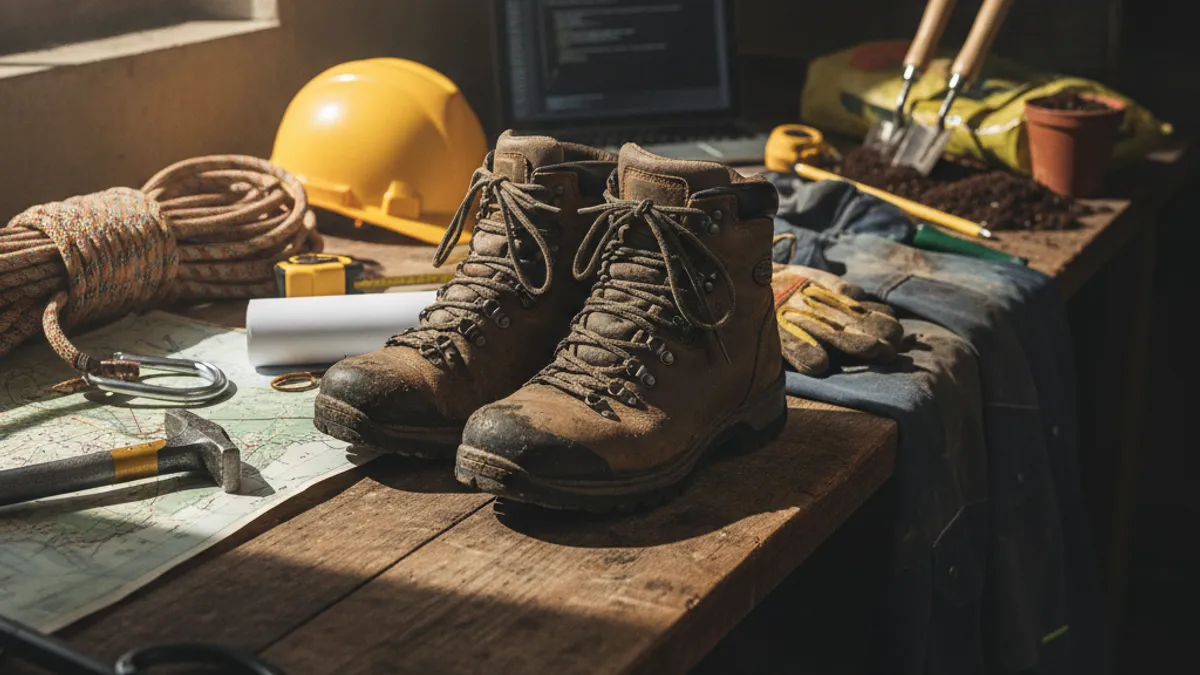
This is your first and most important checkpoint. The environment and tasks of your job dictate everything about what kind of footwear you need. If your work mostly involves sitting at a desk or moving around a clean, dry office, even a lightweight hiking shoe is likely overkill and might even look a bit out of place.
On the other hand, if your job involves being on your feet all day, navigating varied surfaces, or dealing with potentially hazardous conditions, the conversation changes dramatically. We need to look at the specific demands your role places on your feet.
Jobs Where Hiking Boots Are Likely Overkill
If your day-to-day involves minimal physical exertion and no specific footwear requirements, your hiking boots are almost certainly overkill. Think about administrative roles, most office jobs, or light retail positions where you’re not constantly on the move or exposed to hazards. The heavy-duty construction, ankle support, and aggressive tread meant for rocky trails are simply not needed here. Using them might even lead to discomfort due to their weight and bulk in a controlled environment.
Jobs Where Hiking Boots Might Work (But We Need to Check)
This is the gray area, and it’s where many people start to wonder. If your job involves a lot of walking, standing for extended periods, or navigating outdoor environments that aren’t overly hazardous, your hiking boots could potentially fit the bill. Positions like park rangers, outdoor educators, or certain types of delivery drivers might find their hiking footwear suitable, provided it meets any basic safety or appearance guidelines. This is also where roles with a very casual dress code might make room for them.
However, even here, we must consider specific job requirements, especially concerning sole grip and durability.
Jobs Where Specific Footwear is Essential
Then there are jobs that have non-negotiable footwear needs. For anything involving construction, manufacturing, warehousing, or heavy industrial work, standard hiking boots will almost certainly fall short. These roles frequently require features like steel toes or composite toe caps to protect against falling objects, puncture-resistant soles to prevent injuries from sharp debris, and specialized slip-resistant outsoles designed for oily or wet factory floors. Jobs that require compliance with safety standards like those set by OSHA demand footwear engineered specifically to meet those rigorous protections.
If your job falls into this category, looking at dedicated work boots is your only safe option.
What Does Your Job Actually Require?
Beyond just the general environment, your job has specific needs that footwear must address. These are the critical details that will either make your hiking boots a viable option or rule them out entirely. It’s about looking at the actual tasks and conditions you face every single day.
Slip Resistance: Are Your Boots Ready for Spills?
Can your hiking boots handle a slick floor? Many hiking boots, especially those with aggressive lug patterns, offer good traction on natural surfaces like dirt, mud, and rocks. However, they aren’t typically designed or tested for the high levels of slip and oil resistance required in many workplaces. Aggregate user reviews for general-purpose hiking boots often highlight that their grip can be unpredictable on smooth, wet, or greasy surfaces found in restaurant kitchens, mechanic shops, or some retail settings.
Work boots, on the other hand, often feature specialized rubber compounds and sole designs that are specifically tested to exceed minimum slip-resistance standards, ensuring your safety where spills are common.
Protection: Toe Caps, Puncture Plates, and More
This is where a significant difference often lies. Safety toe caps, whether steel or composite, are a standard requirement in many industrial and construction jobs to guard against crushing injuries from falling objects. Manufacturer specifications for work boots clearly list the protective toe type and impact/compression ratings. Most hiking boots, even robust ones, do not include any form of toe protection.
Similarly, jobs where you might step on nails or other sharp debris require puncture-resistant midsoles. While some high-end hiking boots might offer decent underfoot protection from rocks, they rarely meet the strict puncture resistance standards needed for industrial safety. You might also encounter jobs requiring Metatarsal guards to protect the top of the foot, a feature virtually unheard of in hiking boots.
Terrain: From Office Floors to Rough Ground
This is perhaps where hiking boots shine and where they might find a work application. If your job involves a lot of walking on uneven, natural terrain, think park maintenance, outdoor event setup, agricultural work, or surveying, then the terrain-handling capabilities of hiking boots are a definite plus. Their sturdy construction, stable midsoles, and aggressive outsoles are built for precisely this. However, if your work primarily takes place on smooth, consistent surfaces like concrete, asphalt, or indoor flooring, the extra bulk and aggressive tread might not be necessary and could even cause premature wear on the boots or feel awkward.
Dress Code: Appearance Matters
Beyond safety and function, how you present yourself is a factor in many jobs. For roles that are customer-facing or operate in more formal business environments, the rugged, utilitarian look of most hiking boots simply won’t align with the expected professional appearance. Work boots, while also often rugged, come in a wider range of styles, some of which are designed to be more aesthetically pleasing or less visually obtrusive than a typical hiking boot. If your workplace has a clear dress code, adhering to it is crucial, and hiking boots are often excluded unless specifically permitted.
When Hiking Boots Could Be a Good Fit for Work
This is where we get more specific. If your job involves a consistent need for your feet to perform in ways similar to hiking, your existing boots might actually be a strong contender. It’s not just about comfort; it’s about whether the boot’s inherent design matches the physical demands you’ll face.
Outdoor & Field Roles
For individuals whose jobs are essentially outdoor expeditions, hiking boots are often the ideal choice. Think about park rangers patrolling vast natural areas, environmental scientists conducting fieldwork, or trail maintenance crews working in rugged landscapes. Their daily tasks often mirror strenuous hikes, requiring excellent ankle support to prevent twists on uneven terrain, durable outsoles for grip on dirt and rock, and good waterproofing to handle stream crossings or wet conditions. For these professionals, specialized hiking boots, perhaps even trail runners depending on preference and specific needs, are a practical and often necessary piece of equipment.
Very Casual Environments
Some workplaces, particularly those with an extremely relaxed culture or focused on outdoor recreation, might find hiking boots perfectly acceptable. Imagine working at an outdoor summer camp, a rural adventure center, or even in certain groundskeeping roles where the dress code is minimal and the work involves being outdoors. As long as there are no specific safety concerns like falling objects or serious slip hazards, and the visual appearance doesn’t clash with the company’s informal vibe, hiking boots can serve well. However, even in these settings, it’s always wise to confirm any subtle expectations regarding professional presentation.
Why Hiking Boots Usually Aren’t the Best Work Shoe
Despite their comfort and durability on trails, hiking boots typically fall short when it comes to the specific, often rigorous, requirements of most workplaces. They’re engineered for a different set of challenges than what your average job throws at you.
Safety Standards and Regulations
Many jobs mandate specific footwear standards that hiking boots simply don’t meet. For instance, in the United States, OSHA regulations often require safety-toe footwear. These boots must be tested to meet standards for impact and compression resistance, typically ANSI Z41 or ASTM F2413. Manufacturer specifications for work boots will clearly state if they meet these standards, often listing them as “ASTM F2413-18 I/75 C/75” for electrical hazard or protective toe protection.
Standard hiking boots are not subjected to these types of tests, meaning they won’t provide the legally required protection in jobs where it’s mandated. Relying on them could put you at risk and violate workplace safety rules.
Missing Essential Work Boot Features
Beyond safety toes, work boots are designed with unique features critical for job performance and safety. Consider slip resistance: while hiking boots offer good grip on trails, work boots often incorporate specialized rubber compounds and tread patterns tested for extreme oil and slip resistance on surfaces like wet concrete or kitchen floors. Puncture-resistant plates in the sole, designed to prevent nails or sharp debris from penetrating, are another common work boot feature absent in most hiking footwear. Even features like extended ankle support with specific stiffness ratings or durable scuff-resistant materials for climbing ladders are more common in work boots.
Overkill and Discomfort for Long Shifts
Even if your job doesn’t have strict safety regulations, hiking boots can simply be too much boot for a typical workday. Their robust construction, aggressive tread, and often substantial weight are designed for uneven, demanding outdoor terrain. Wearing them for 8-10 hours a day on smoother, flatter surfaces can lead to unnecessary foot fatigue, overheating, and even discomfort. While some hiking boots are lightweight, many are built for durability over long miles, which can translate to stiffness and a lack of flexibility needed for standing or moving around a workplace.
Your feet might thank you for something lighter and more breathable after a full shift.
Your Work Footwear Decision Guide
Deciding whether your hiking boots are suitable for work requires a structured approach. It’s not just about how they feel on your feet, but about systematically checking them against the realities of your job. This guide helps you walk through the process logically.
Step 1: Assess Your Job’s Demands
Start by thoroughly evaluating the physical environment and tasks of your job. Are you primarily indoors or outdoors? What kind of surfaces do you walk on daily, smooth concrete, gravel, wet floors, or natural terrain? Do you carry heavy loads or work at heights?
Identify any potential hazards, such as falling objects, sharp debris, or slippery conditions. Additionally, consider the general nature of your work, such as whether it’s physically demanding, involves extensive standing, or requires specific movements. This initial assessment is crucial for understanding your footwear needs.
Step 2: Check Your Company’s Footwear Policy
Most companies, especially those with any level of risk or professional standards, will have a written policy regarding employee footwear. This policy typically outlines specific requirements for safety features, acceptable styles, and any restrictions. Look for details on required toe protection (e.g., steel-toe, composite-toe), slip resistance ratings, or prohibitions against certain types of footwear, like open-toed shoes or, in some cases, casual boots. If your company doesn’t have a formal policy, this is still a good opportunity to think about the unstated expectations for appearance and safety in your role.
Step 3: Talk to Your Supervisor
If the policy isn’t clear, or if you’re on the fence about whether your hiking boots meet the criteria, the best next step is to speak directly with your supervisor or HR department. They can provide definitive clarification on what is and isn’t acceptable for your specific position. Don’t assume; ask directly if your hiking boots meet the workplace safety and appearance standards. This conversation can prevent misunderstandings and ensure you’re making a compliant and safe choice for your daily work.
It’s always better to get direct approval than to face issues later.
Alternatives to Hiking Boots for Work
Given that hiking boots often don’t meet the unique demands of many jobs, it’s crucial to know what other footwear options exist. Choosing the right work boot can significantly impact your safety, comfort, and efficiency throughout the workday, as well as your long-term foot health.
Dedicated Work Boots Explained
Work boots are engineered with specific job functions and safety requirements in mind, setting them apart from casual or athletic footwear. They generally fall into categories based on protection levels and intended use. For instance, safety-toe work boots include reinforced toe caps, steel, alloy, or composite, to shield against impact and compression hazards, meeting standards like ASTM F2413. Puncture-resistant work boots feature tough plates in the sole to prevent sharp objects from piercing through. Additionally, many work boots are designed with specialized slip-resistant outsoles, tested to perform on oily or wet surfaces where regular boots might fail.
Beyond protection, they often use durable, abrasion-resistant materials and offer robust ankle support tailored for standing and moving on potentially uneven job sites.
Other Footwear Options for Specific Roles
If a full-blown work boot seems excessive, or if your job has unique needs, other specialized footwear might be more suitable. Athletic shoes or trail running shoes can be appropriate for jobs that require a lot of walking but have minimal hazards and a very casual dress code, offering comfort and breathability. For roles in food service or healthcare where extreme slip resistance and easy sanitation are paramount, many companies offer slip-resistant athletic shoes or dedicated clogs designed for those specific environments. Even some waterproof hiking sandals might be an option for very specific outdoor roles where foot ventilation and quick drying are priorities and hazards are low, though these are less common for general work. The key is matching the shoe’s features to the job’s demands.
Common Mistakes to Avoid When Choosing Work Footwear
When deciding on footwear for your job, it’s easy to fall into a few common traps that can lead to discomfort, injury, or even workplace issues. Being aware of these pitfalls can help you make a much wiser choice.
Assuming Hiking Boots Are Always Safe
One of the biggest mistakes people make is assuming that because hiking boots are sturdy and comfortable for outdoor adventures, they are automatically safe for any work environment. This is rarely the case. As we’ve discussed, most hiking boots lack the essential safety features like protective toe caps or certified slip resistance required by many jobs. Relying on them in a hazardous environment can lead to serious injuries that could have been prevented with proper work boots.
Safety should always be the top priority.
Ignoring Safety Regulations
Another frequent error is overlooking or not understanding workplace safety regulations, such as those from OSHA or specific industry standards. These aren’t just suggestions; they are often legal requirements designed to protect workers. Failing to comply with footwear requirements can result in disciplinary action, inability to perform certain tasks, or, more importantly, exposing yourself to significant risk. Always verify if your job mandates specific safety certifications for footwear, and ensure any boot you choose meets those explicit standards.
Not Considering Specific Job Hazards
Sometimes, individuals choose footwear based on general comfort or appearance without fully analyzing the specific risks of their job. For example, someone working in a warehouse might choose a lightweight, comfortable boot but neglect to ensure it has adequate puncture resistance for the floors, or sufficient ankle support for navigating pallet jacks. It’s crucial to perform a detailed hazard assessment for your role. What are the specific risks, sharp objects, chemicals, slippery surfaces, heavy equipment, and does your chosen footwear actively mitigate them?
Your footwear should be a tool that enhances your safety, not a point of vulnerability.
Final Verdict: Hiking Boots for Work?
In most professional settings, the answer is generally no, hiking boots are not a suitable replacement for dedicated work boots. While they offer a great combination of comfort and durability for trails, they typically lack the critical safety features, like protective toes, puncture resistance, and certified slip resistance, required by many workplaces. Furthermore, their design is often ill-suited for the specific hazards and dress codes found in industrial, construction, or many service environments.
However, there are specific niches where hiking boots might be acceptable. If your job inherently involves extensive hiking or traversing rugged natural terrain, and your company has a very casual dress code with no specific safety mandates beyond basic traction, your hiking boots could be a viable option. For these particular roles, they provide the necessary support and grip. Ultimately, the decision hinges on a thorough assessment of your job’s demands, adherence to company policy, and consultation with your supervisor to ensure both safety and compliance.
