
Hi, I’m Oscar. Have you ever been halfway through a day hiking trip, noticed dark storm clouds rolling in, and asked yourself, can you run in hiking boots? Or maybe you just love the ankle support of your sturdy boots but want to mix a little jogging into your weekend trail routine. It is a really common question for beginner hiking enthusiasts.
Here’s the thing. When you are out on the trail, situations change quickly. Sometimes you need to move fast. But wearing heavy, stiff outdoor footwear changes how your body moves. If you try to sprint down a rocky path in gear made for slow, steady climbing, you might end up with painful blisters or a twisted ankle.
In this guide, I will explain what happens to your feet when you pick up the pace in heavy trail footwear. We will cover how to move quickly if an emergency happens, why boot design matters, and when you should really just stick to walking. Let’s get into it.
Quick Answer
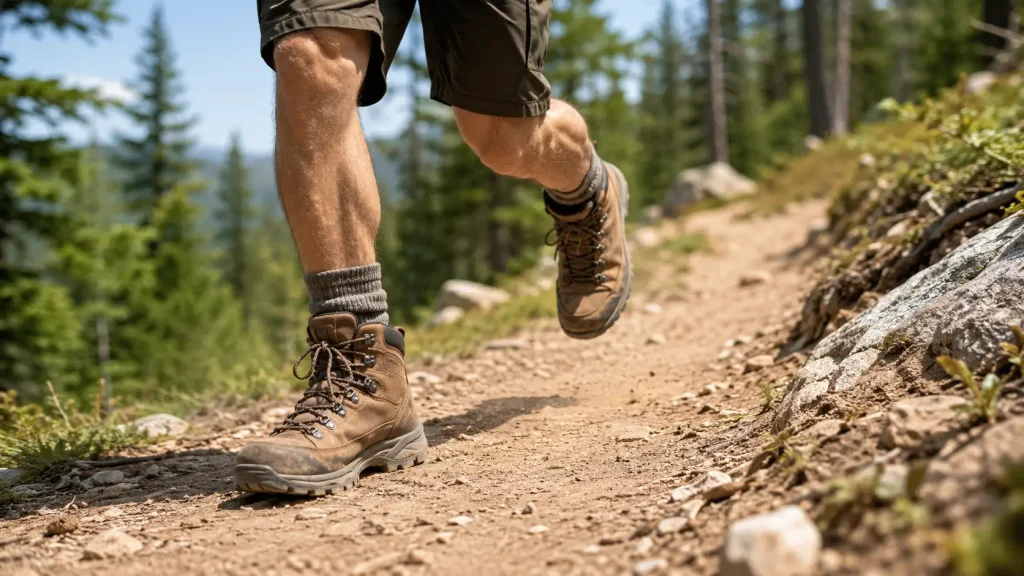
So, can you run in hiking boots? Yes, you can run in them for short distances if you are in a sudden emergency, like escaping a fast-moving thunderstorm or getting away from a trail hazard. However, hiking boots are not built for running. They are heavy, stiff, and lack the flexible cushioning needed for a running stride. Running in them for long distances can easily cause blisters, knee pain, or tripping accidents. If you want to run on trails regularly, you should wear trail running shoes instead of heavy boots.
What Hikers Should Know About Running in Boots
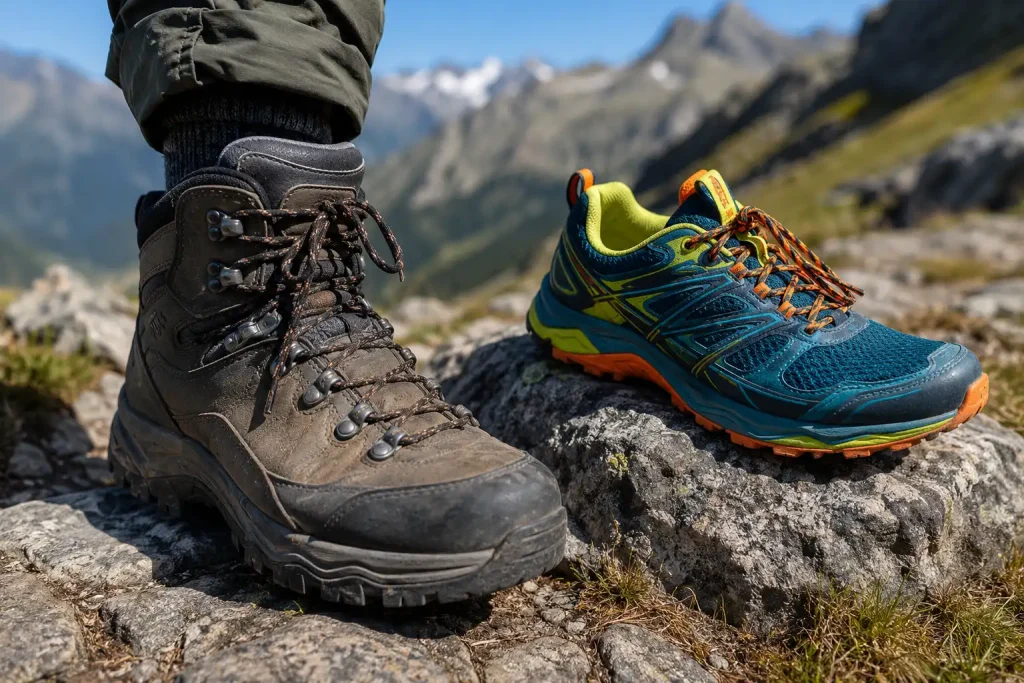
To understand why running in boots feels so strange, we need to look at how hiking gear is made. Hiking boots are built for slow, stable outdoor safety. They are designed to protect your feet from sharp rocks, thick mud, and snake bites. They are not built for speed.
The first big issue is weight. A standard pair of hiking boots can weigh two to three pounds. Lifting that extra weight with every single running step takes a massive amount of energy. Your legs will get tired much faster than they would in lightweight running shoes. This heavy feeling can make your running form sloppy, which leads to trips and falls.
The second issue is stiffness. Inside the sole of a good hiking boot, there is a stiff piece of material called a shank. This keeps the boot from bending when you step on a sharp rock. But when you run, your foot needs to bend and roll naturally from the heel to the toes. A stiff boot stops this natural motion, forcing your knees and hips to absorb the shock.
Finally, there is ankle support. The high collars on boots are great for stopping ankle sprains when you are walking with a heavy backpack. However, running requires your ankles to flex forward and backward freely. High boots lock your ankles in place, which changes your running stride completely.
- Weight: Boots are much heavier than sneakers, causing faster muscle fatigue.
- Stiffness: Boot soles do not flex, which throws off your natural running stride.
- Traction: Boot lugs grip mud well, but they can easily catch on roots if you are moving too fast.
- Breathability: Thick leather traps heat, making your feet sweat heavily when you run.
For a great breakdown on how different footwear affects your feet, I always recommend reading the footwear advice from the American Hiking Society.
Can You Run in Hiking Boots Safely? Signs You Should Adjust Your Plan
Sometimes, moving fast is not a choice. If you hear thunder clapping close by, you might need to jog to safety. But how do you know if running in your boots is doing more harm than good? You need to listen to your body and look at the trail conditions.
The first sign you need to slow down is a “hot spot.” This is a warm, stinging feeling on your heel or toes. It happens because your heel is lifting and rubbing inside the stiff boot as you run. If you ignore a hot spot, it will become a massive blister in just a few minutes. If you feel this, stop running immediately.
Another warning sign is knee or lower back pain. Because boots do not cushion a running impact well, that shock travels straight up your legs. If your joints start aching, your body is telling you the boots are too hard for a running stride.
You also need to check the trail. If the path is covered in wet roots, loose rocks, or steep drops, running in bulky boots is highly dangerous. You are much more likely to clip a toe and take a hard fall. In these cases, fast, focused walking is much safer than jogging.
| Footwear Type | Best Use on the Trail | Running Comfort Level | Flexibility |
|---|---|---|---|
| Heavy Hiking Boots | Backpacking, rough rocks, snow, deep mud | Very Poor (Emergencies only) | Very Stiff |
| Low-Top Hiking Shoes | Day hiking, well-maintained dirt trails | Fair (Okay for short, slow jogs) | Moderate |
| Trail Running Shoes | Fast packing, trail running, dry weather | Excellent (Built for speed) | Very Flexible |
Always remember that trail safety comes first. If you are ever caught in severe weather like a lightning storm, check the safety guidelines from NOAA Weather to know the safest actions to take.
How to Handle Running in Boots Step by Step
Let me explain what to do if you actually find yourself in a situation where you need to run in your boots. Maybe you are trying to catch a shuttle bus back to the trailhead, or you need to get below the tree line quickly. Follow these steps to keep yourself safe.
- Shorten your stride. Do not try to take long, leaping steps. Keep your steps short and quick. This keeps your weight centered over your feet and reduces the heavy impact on your knees.
- Land on your midfoot. Try not to strike the ground with your heel first. Because boots have stiff heels, a heel strike sends a shock right up your leg. Land gently on the middle of your foot.
- Watch the trail constantly. Hiking boots have wide, thick soles that easily clip rocks and roots. Keep your eyes locked on the ground five to ten feet ahead of you.
- Secure your gear. If you are wearing a backpack, pull the chest and waist straps tight. A bouncing backpack will throw you off balance when you try to run.
- Loosen the top laces. If you have 30 seconds to spare, loosen the very top hooks of your boot laces. This gives your ankles a tiny bit more room to flex forward as you run.
- Use your trekking poles carefully. If you have trekking poles, plant them firmly with each step to keep your balance, or tuck them safely under your arm so they do not trip you.
Common Mistakes to Avoid
When beginners try to run in trail boots, they often make a few painful mistakes. Here is what you should avoid if you want to protect your feet and your gear.
- Running downhill: Never try to sprint down a steep hill in stiff boots. Your toes will repeatedly smash into the hard front of the boot, which can cause bruised or lost toenails (often called “toe bang”).
- Ignoring your socks: Running makes your feet sweat heavily. If you are wearing thick winter wool socks or cotton socks, your feet will overheat and blister quickly.
- Trying to run through mud: Boots hold mud in their deep lugs. If you run through wet mud, your boots become incredibly heavy and slippery. Walk slowly through mud instead.
- Running off the trail: Never take shortcuts off the marked path to save time. It damages the environment and increases your chance of stepping in holes. Always follow Leave No Trace principles.
- Forgetting to hydrate: Running takes a lot of effort in heavy gear. Do not get so focused on moving fast that you forget to drink water from your hydration bladder or water bottle.
Practical Tips from Oscar
I have learned a lot of lessons the hard way out on the trails. While I firmly believe that walking is always better than running in heavy gear, I know things happen. Here are a few practical tips from my own hiking experiences.
Key Takeaways
- You can run in hiking boots for short distances during emergencies, but they are not made for regular jogging.
- The heavy weight and stiff soles of boots make running exhausting and change your natural running form.
- Running in stiff boots greatly increases your chances of getting painful blisters and bruised toes.
- If you have to move quickly, fast-paced walking is much safer than trying to jog in heavy gear.
- If you want to run on trails often, invest in a good pair of flexible, lightweight trail running shoes instead.
Frequently Asked Questions
Is it bad for hiking boots if I run in them?
Running in hiking boots will not immediately destroy them, but it can wear out the soft rubber soles much faster. The aggressive bending motion can also crease the leather or synthetic materials more than normal walking would.
Can I jog in winter hiking boots?
You should avoid jogging in winter hiking boots unless it is an absolute emergency. Winter boots are extremely heavy, insulated, and stiff, making running incredibly difficult and likely to cause you to overheat.
How can I move faster on a trail without running?
To move faster without running, shorten your walking stride, increase your step rate, and use trekking poles to help push you forward. This technique, called fast-hiking, is safer and more efficient in heavy boots.
Are trail running shoes better for hiking than boots?
Many hikers prefer trail runners because they are lightweight, breathable, and flexible. However, they do not offer the ankle support, durability, or deep mud protection that traditional hiking boots provide.
Why do my toes hurt when I try to run in boots?
Your toes hurt because they are sliding forward and smashing into the hard toe cap of the boot with every running step. This is especially common if you try to run downhill.
What should I do if I get a blister from running in my boots?
If you get a blister, stop immediately. Clean the area, apply a blister pad or moleskin to protect it from further rubbing, and switch back to a slow, steady walking pace.
Conclusion
So, the good news is that if you find yourself in a tight spot, yes, you can run in your hiking boots to get to safety. But for everyday outdoor travel, running in heavy boots is a fast track to sore feet, aching knees, and ruined toenails. Always let your footwear do the job it was designed for. Boots are for steady, safe walking.
If you find that you love moving fast on the trail, it might be time to leave the boots at home and pick up some lightweight trail shoes. Take a look at my beginner hiking gear checklist to see how you can lighten your load and make your next adventure a lot more comfortable.
Stay safe out there, take your time, and enjoy the hike!
