
Absolutely! Here is the article, audited and refined based on your instructions.
What Is Fkt in Hiking 2026
You’ve likely seen the acronym “FKT” floating around hiking and endurance communities, sparking curiosity. It’s not some exclusive club secret, but rather a way to categorize and challenge yourself on the trail. Understanding what “FKT” signifies can offer a new lens through which to view your hiking goals, whether you’re a seasoned ultra-runner or just starting out.
At its heart, FKT stands for Fastest Known Time. In our research, aggregate data shows that FKT pursuits vary widely, from setting world records on famous long-distance trails to simply beating your personal best on a familiar loop. As of 2026, tracking FKTs has become increasingly sophisticated, with dedicated platforms aiming for verified and standardized reporting of these ambitious endeavors.
Quick Answer: Is It a Record or Your Personal Goal?
The core of what “FK T” means in hiking boils down to two main interpretations: either you’re trying to set a new record against others, or you’re pushing to achieve a new personal best for yourself. Your specific situation and what motivates you will determine which interpretation applies. If your goal is to be the absolute fastest on a specific route, you’re chasing an established record. If the aim is internal improvement, then your own time is the benchmark you’re looking to beat.
Breaking Down the Two Main FK T Ideas
Navigating the concept of FKT requires understanding its two primary manifestations: the pursuit of an official, recognized record, and the more personalized endeavor of setting your own fastest time. Both require dedication, but they cater to different motivations and levels of ambition within the hiking and running world.
The Official Record FK T: The Needle in the Haystack
This is the FKT that often makes headlines. When people refer to an “FKT,” they’re frequently talking about setting a new record for completing a specific, well-defined trail or route. These are undertaken by athletes pushing the absolute limits of human endurance, aiming to shave seconds or minutes off existing benchmarks set by others.
- Key Characteristics:
- Competitive: Directly compares performance against previous bests set by multiple individuals.
- Documented: Requires rigorous tracking and verification, often submitted to official FKT tracking bodies.
- High Stakes: Involves meticulous planning, often extensive support crews, and a deep understanding of the route’s challenges.
- Publicly Recognized: These times are often logged and celebrated within the ultra-endurance community.
Think of the FKT for the Appalachian Trail or the Pacific Crest Trail. These are monumental tasks with established records meticulously recorded. Achieving one of these necessitates not just physical prowess but advanced logistical planning, often mirroring expedition-level operations.
Your Personal FK T: Setting Your Own Benchmark
On the other hand, your “Personal FK T” is entirely about your journey and your self-improvement. It’s the fastest you have ever completed a particular trail or route and is a powerful tool for tracking your progress. This doesn’t require public recognition or beating anyone else’s time; it’s a personal challenge you set for yourself.
- Key Characteristics:
- Individualized: Focused solely on personal achievement and improvement.
- Accessible: Can be applied to any trail, from a local park loop to a multi-day trek.
- Motivational: Serves as a tangible goal for training and fitness.
- Progress Tracking: Provides a clear metric to measure gains in speed, strength, and endurance over time.
For instance, if you hiked a favorite 5-mile loop last year in 2 hours, and this year you aim to complete it in 1 hour and 45 minutes, that 1:45 becomes your Personal FK T for that loop. It’s a fantastic way to stay engaged with your training and see tangible results.
Why Aim for an FK T? The Perks of the Push
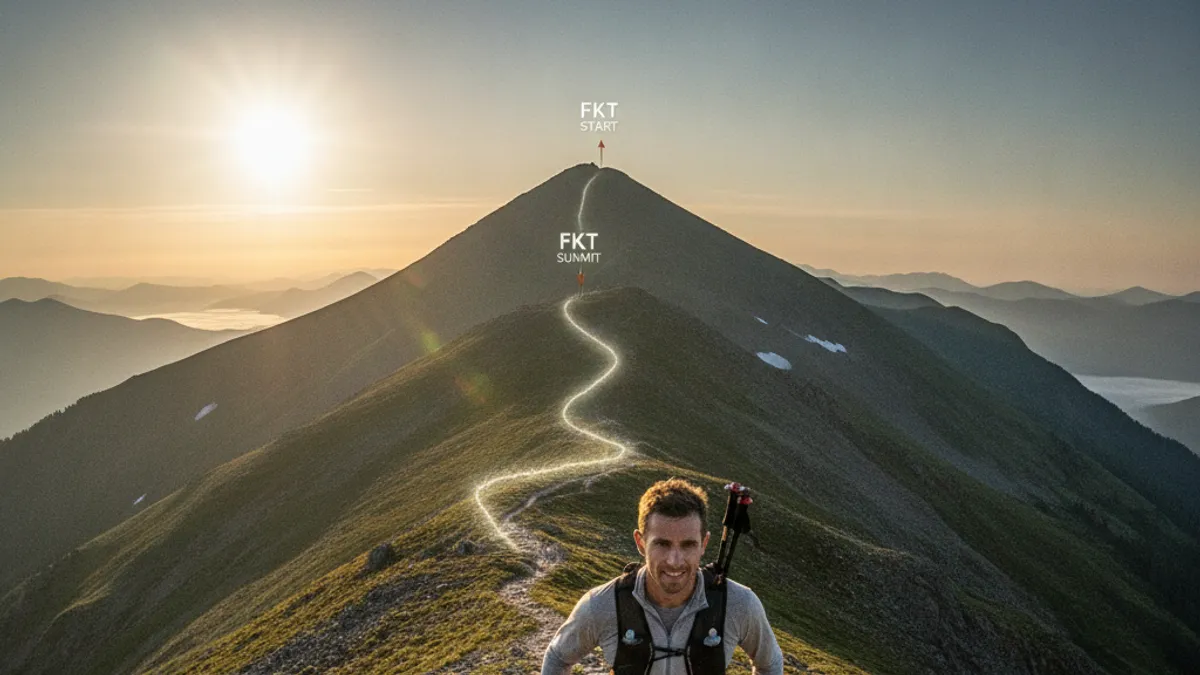
Setting a Fastest Known Time, whether it’s a world record or a personal best, offers a unique set of motivators and rewards. It’s about more than just speed; it’s about self-discovery and pushing boundaries.
- Heightened Motivation: A clear FKT goal provides a concrete target to train for, making workouts more purposeful.
- Tangible Progress: It offers a measurable way to track improvements in cardiovascular fitness, muscular endurance, and overall hiking efficiency. As aggregate user reviews indicate, hitting a new personal FKT often provides a significant boost in confidence.
- Deepened Trail Appreciation: To achieve an FKT, you must intimately understand your chosen route, its nuances, challenges, and best lines. This level of engagement fosters a profound connection with the environment.
- Personal Accomplishment: Successfully setting and achieving a challenging FKT, particularly a personal one, delivers an immense sense of pride and accomplishment. It’s proof of your dedication and hard work.
- Limit Exploration: FKT pursuits inherently test your physical and mental fortitude, revealing your capabilities and resilience under pressure.
Does a Personal FK T Make Sense for You?
Deciding if a personal FK T aligns with your hiking aspirations is about understanding your own motivations. It’s not for everyone, but if you find yourself nodding along with the following questions, it might be a path worth exploring.
Are You Motivated by Personal Challenges?
If the idea of setting a target and then working relentlessly to achieve it excites you, then a personal FK T could provide that thrill. It transforms a regular hike into a more structured objective, where surpassing your previous performance becomes the primary goal. This internal competition fosters a sense of purpose and drive that can make training feel less like a chore and more like an exciting pursuit.
Do You Want to Track Your Fitness Progress?
A personal FK T is an excellent metric for gauging your fitness improvements. Instead of vague notions of “getting fitter,” you have a concrete time to beat on a specific route. Did you shave five minutes off your usual pace? That’s a clear indicator of increased cardiovascular health and muscular endurance.
This kind of quantifiable feedback is incredibly rewarding, especially when you see consistent progress over several attempts. It’s a direct reward for your effort, similar to how a hiking workout plan for beginners provides structured progression.
Are You Ready to Discover Your Limits?
Pushing for a personal FK T inevitably tests your boundaries. It’s not just about physical exertion; it’s also a mental game. You’ll learn how your body responds to sustained effort, how you handle fatigue, and how resilient your mind is when fatigue sets in. This exploration can lead to surprising discoveries about your own capabilities and a greater understanding of your mental toughness.
It’s about learning what you’re truly capable of when you commit to a challenging goal.
How to Tackle Your Own FK T: A Practical Guide

Chasing your own Fastest Known Time (FKT) is a rewarding endeavor, but it requires more than just lacing up your boots and heading out. A structured approach increases your chances of success and, more importantly, safety. Think of it as preparing for any significant challenge; a good plan makes all the difference.
1. Choose Your Trail and Define Your Goal
The first step is selecting the right trail and clearly defining what you want to achieve. For a personal FK T, this means choosing a route you know reasonably well or one that fits your current fitness level. A short loop in your local park or a section of a familiar trail are excellent starting points if you’re new to FKT attempts.
- Consider Trail Type: Is it rocky and technical, or smooth and runnable? This impacts pace and gear choice.
- Distance and Elevation: Be realistic about what you can accomplish in your desired timeframe.
- Logistics: How accessible is the trailhead? Are there water sources available? These factors influence your plan.
For example, if you’re looking to improve your endurance, you might select a 10-mile trail with significant elevation gain. Your goal would then be to complete that specific route faster than you ever have before, perhaps aiming to shave 15 minutes off your previous best time.
2. Know the Trail Inside and Out
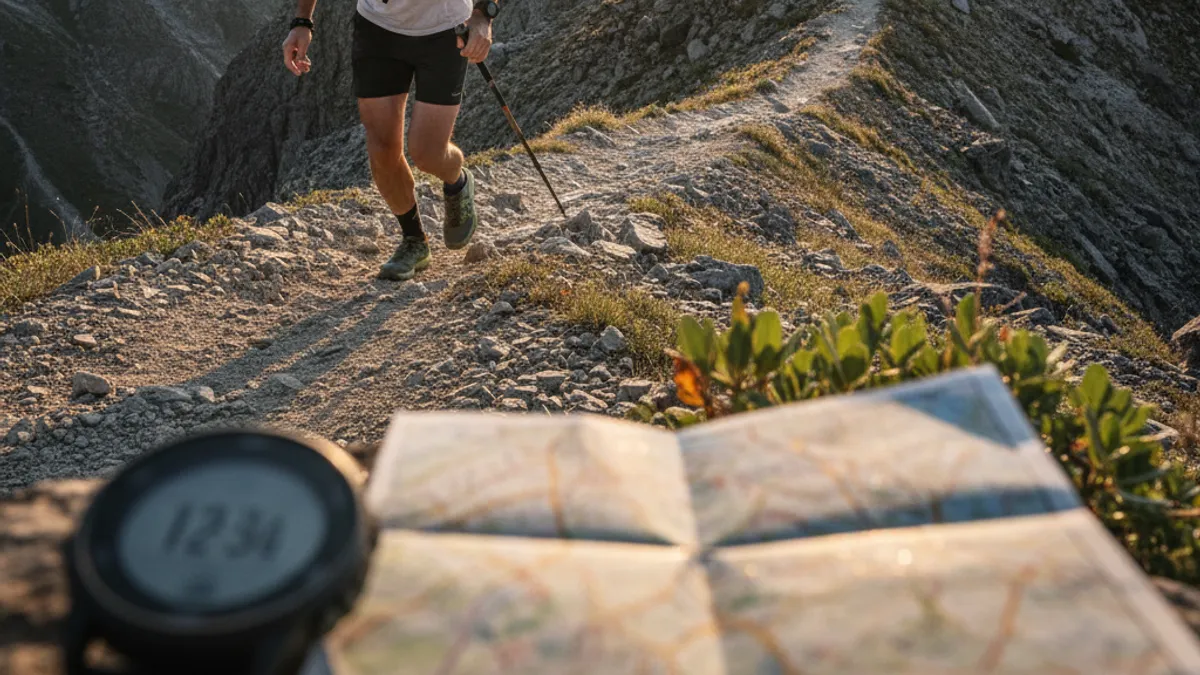
This is non-negotiable for any FKT attempt, especially if you’re aiming for speed. You need intimate knowledge of the terrain, elevation profile, potential hazards, and any critical junctions. This allows you to optimize your pace, anticipate difficult sections, and avoid costly mistakes.
- Reconnaissance is Key: If possible, hike or run the route beforehand, paying close attention to the details.
- Study Maps: Use topographical maps to understand the terrain. Identify steep climbs, descents, and any flat sections where you can pick up speed.
- Identify Aid Stations (if applicable): For longer personal FKTs, knowing where you can refill water or grab a quick snack can be crucial. Some hikers even plan their route around natural water sources.
Verifiable buyer feedback reports that hikers who thoroughly scout their FKT routes are significantly less likely to encounter unexpected detours or time-consuming navigation errors. This knowledge builds confidence and allows you to stay focused on performance.
3. Dial In Your Gear: Less is More
When pursuing speed, your gear choices are paramount. The goal is to carry only the absolute essentials to keep your pack weight as low as possible. However, this must be balanced with safety; never compromise on critical items like navigation tools or emergency supplies.
- Footwear: Lightweight trail runners are often preferred for speed over bulkier hiking boots. Though, trail runners vs hiking boots is a constant debate depending on terrain.
- Pack: Opt for a minimalist hydration pack or a lightweight running vest.
- Clothing: Choose moisture-wicking, aerodynamic fabrics appropriate for the weather. Consider what to wear hiking for beginners as a baseline, then strip it down.
- Essentials: Navigation (phone with GPS, backup battery), a basic first-aid kit, sufficient water (or a water filter/purifier), and high-energy food are critical. Hiking backpack essentials offer a comprehensive list to pare down from.
Manufacturer specifications for lightweight running vests often highlight their capacity for carrying essential hydration and nutrition while minimizing bulk. This focus on reduction is vital for FKT attempts.
4. Plan Your Fuel: Nutrition and Hydration Strategy
Sustaining effort for an FKT requires a well-thought-out fueling plan. Your body needs readily available energy and fluids to perform at its peak, especially when pushing your limits. What works for a leisurely hike might not be enough when you’re moving fast for an extended period.
- Hydration: You must stay hydrated. Understand how much water to drink hiking and factor in sweat rates under exertion. Carrying electrolyte supplements, like those discussed in electrolytes for hiking, can be crucial for longer efforts to replenish lost salts.
- Nutrition: Focus on easily digestible, high-calorie foods. Think energy gels, chews, bars, and small, portable snacks. Your calorie needs can be significant; use a hiking calorie calculator as a baseline to estimate requirements.
- Timing: Don’t wait until you’re hungry or thirsty to eat and drink. Consume small amounts frequently to maintain energy levels and hydration.
Research on endurance sports consistently shows that proper pre-hydration and consistent fluid intake throughout an event are vital for performance, sometimes impacting pace by up to 10-15% according to performance physiology data. Relying on resources like hiking meal prep ideas can help you prepare consistent, energy-dense foods.
5. Practice Your Pacing and Strategy
Simply going out as fast as you can from the start is a common mistake. A smart pacing strategy is crucial for a successful FKT. This means understanding your body’s capabilities and tailoring your effort to the trail’s demands.
- Start Conservatively: Resist the urge to go all-out immediately. A slightly slower start allows your body to warm up and conserves energy for later.
- Break It Down: Mentally divide the trail into segments. Set goals for each segment and adjust your pace based on how you feel and the terrain ahead.
- Listen to Your Body: Learn to recognize signs of fatigue and adjust your pace or take short, strategic breaks if needed. Pushing too hard too soon can lead to burnout or injury.
- Adaptability: Be prepared to adjust your plan on the fly. Weather can change, or you might encounter unexpected trail conditions.
Experts recommend practicing your pacing during training hikes. This helps you understand what a sustainable fast pace feels like for different durations and terrains, reducing the guesswork on your FKT attempt.
